Rock soapwort
Saponaria ocymoides. Family Caryophyllaceae. Groundcover.
Also called Rock soap-wort, Tumbling Ted.
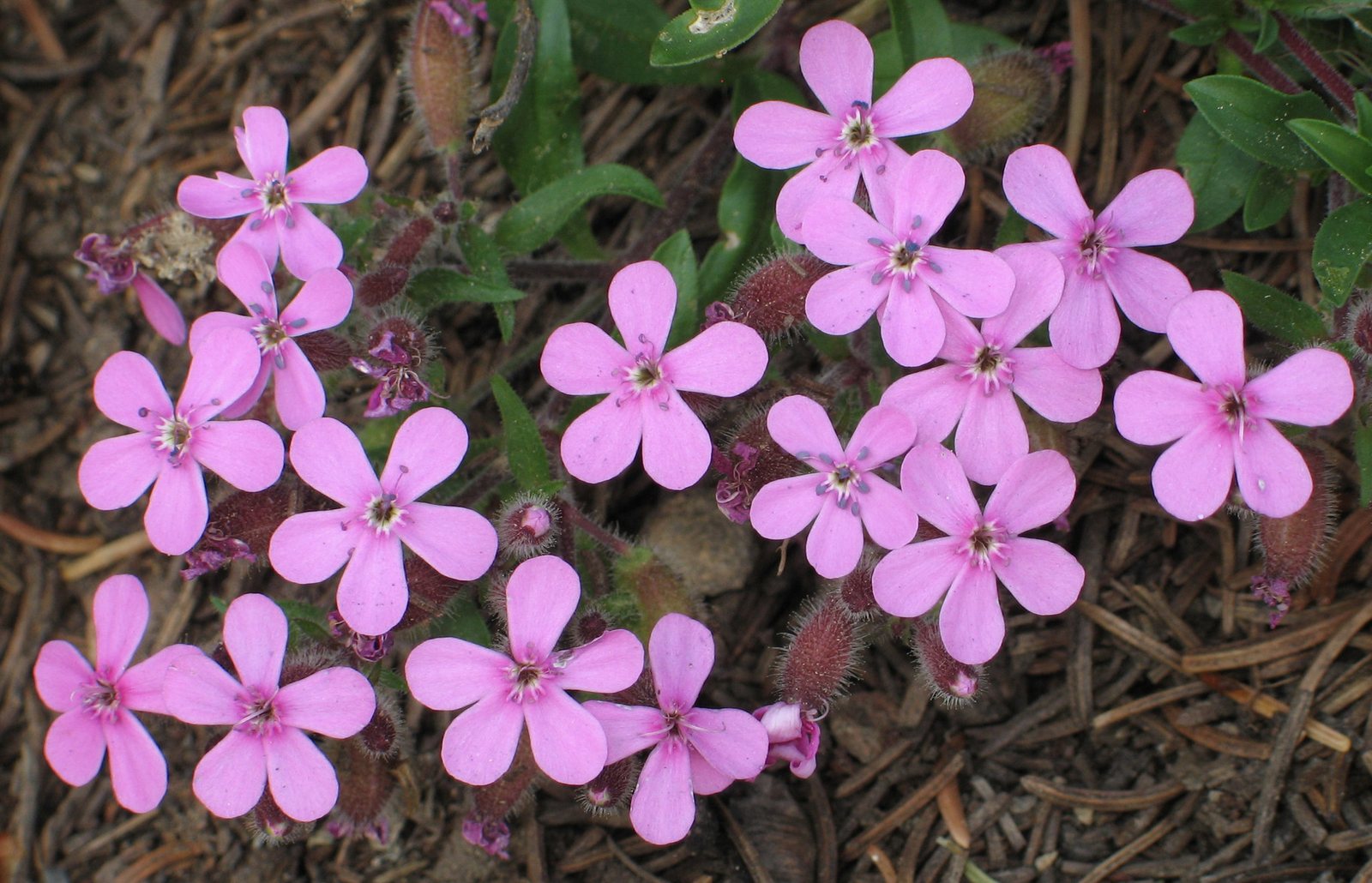
Rock soapwort is a low, spreading perennial that forms loose mats covered with small pink flowers in late spring and early summer. Grow it in sunny, well-drained places where its stems can trail over stones, wall edges or gravel.
At a glance
- Sun
- Full sun; tolerates light shade, but flowers less freely.
- Water
- Water regularly while establishing, then mainly during prolonged dry spells. Avoid persistently wet soil, especially in winter.
- Soil
- Well-drained sandy, gritty or stony soil; tolerates poor soil and neutral to alkaline conditions. Heavy clay needs substantial drainage improvement or a raised planting position.
- Height
- 0.5-0.75 ft (0.15-0.23 m)
- Spread
- 1-2 ft (0.3-0.6 m)
- Flowers
- Late spring to early summer; masses of small, five-petalled pink flowers.
- Foliage
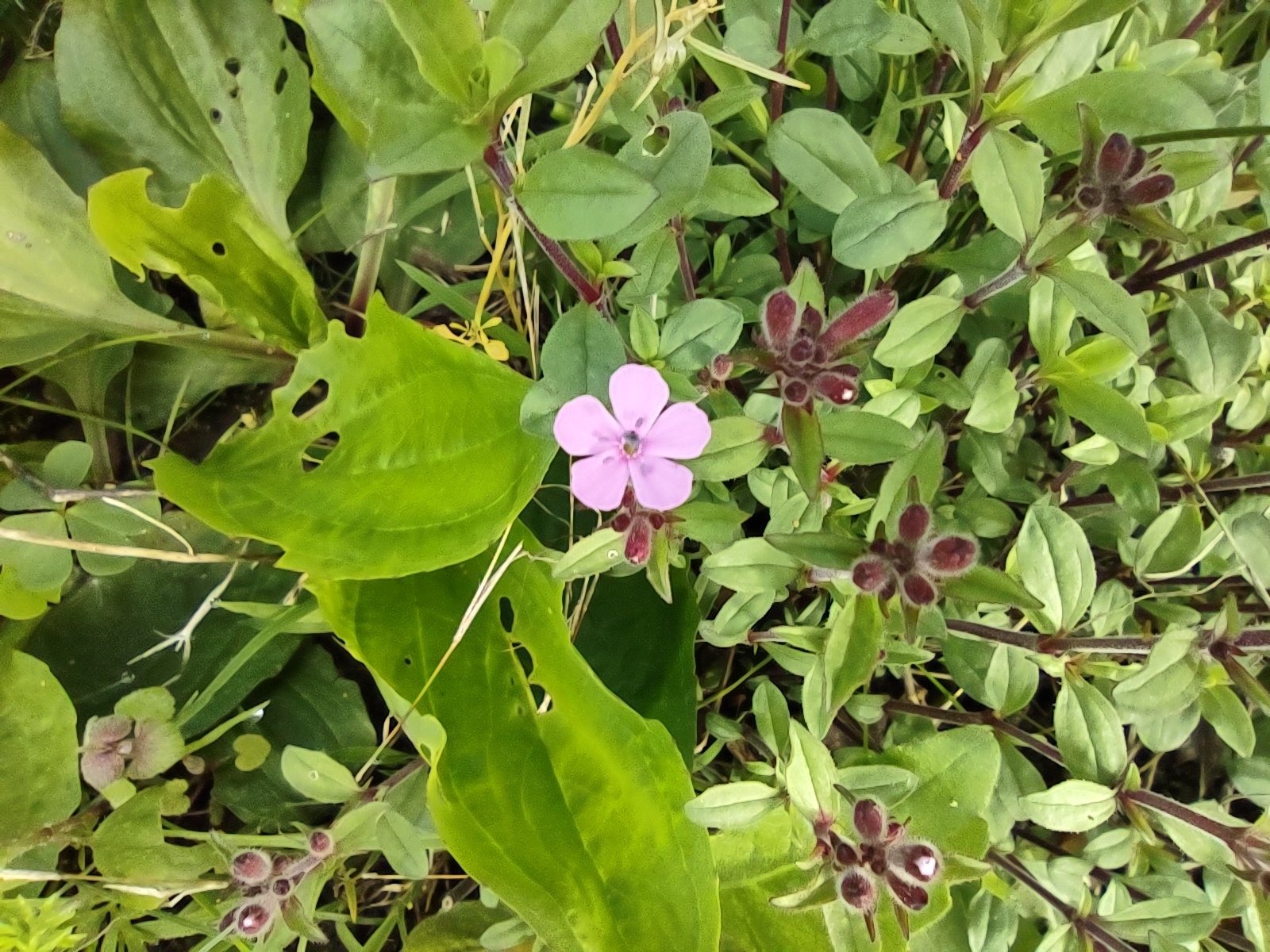
- Small, oval to lance-shaped green leaves on trailing stems; evergreen in mild climates but often semi-evergreen or dormant in cold winters.
- Growth
- Moderate to fast in suitable conditions.
- Care needed
- Low
The year at a glance
- Pollinators
- Deer resistant
- Drought tolerant
- Cold hardy
- Low allergen
| J | F | M | A | M | J | J | A | S | O | N | D | |
|---|---|---|---|---|---|---|---|---|---|---|---|---|
| Flowers | ||||||||||||
| Plant |
Northern hemisphere months. In Australia, shift them by six.
- Difficulty
- Easy
- Toughness
- Very tough
Will it suit your garden?
Pick your zone, country, light and whether you have pets.
Full sun is 6 or more hours of direct sun a day, part shade 3 to 6 hours, shade under 3.
How it grows
Planting day
0.2 ft (0.05 m)
After 1 year
0.4 ft (0.12 m)
After 2 years
0.6 ft (0.19 m)
full size
About 2 years to full size.
From a typical nursery size, at an average rate for this kind of plant. A rule of thumb, not a forecast.
Good to know
- Cats and dogs
- Mildly toxic: may upset a stomach
- In the garden
- Spreads vigorously: plan to contain it.
- Growth rate
- Fast
Care
Jobs through the year
- WaterApr–May, Sep, every 14 days
- Water established plants only during dry spells; water new plants when the surface dries.
- WaterJun–Aug, every 14 days
- Water established plants only during prolonged drought, allowing soil to dry between soakings.
- MulchMar–Apr
- Use a thin gravel mulch and keep the crown free of moisture-holding material.
- PruneMar
- Trim out dead and winter-damaged stems.
- PruneJun–Jul
- Shear back by about one-third after flowering to maintain shape and reduce self-seeding.
- ProtectOct–Nov
- Clear fallen leaves and prevent winter water collecting around the crown.
- Water new plants when the soil begins to dry; reduce watering once they are rooted.
- Keep the crown out of hollows where winter water collects.
- Skip routine feeding in ordinary garden soil; rich feeding encourages loose growth.
- Use a thin gravel mulch rather than moisture-holding mulch around the crown.
- Remove unwanted seedlings while small.
Pruning. After the main flowering period, shear back by about one-third to keep the mat compact and reduce self-seeding. Trim out dead or winter-damaged stems in spring.
Through the year
- Early spring
- Remove winter-damaged stems and check that drainage around the crown is clear.
- Spring
- Plant in a sunny, freely drained position and water until established.
- Late spring
- Check nearby gravel and crevices for unwanted seedlings and pull them out.
- Early summer
- Shear back after the main flush of flowers to tidy the mat and limit seed production.
- Summer
- Water established plants only during prolonged drought; take non-flowering shoot cuttings if more plants are wanted.
- Autumn
- Clear fallen leaves from the mat so the foliage and crown do not stay wet.
In the garden
- Let it spill over low retaining walls to soften stone edges with pink flowers.
- Plant between rocks on a sunny slope, with low sedums and dwarf irises.
- Use along gravel-path edges where its loose mats can spread without covering taller plants.
- Grow at the front of a dry, sunny border with catmint and small ornamental alliums.
Garden styles it suits: Alpine rock garden, Dry gravel garden, Cottage garden, Mediterranean, Low-maintenance and Pastel border.
Plant it with: Creeping thyme, Dwarf bearded iris, Catmint, Candytuft, Low-growing sedums and Ornamental alliums.
Wildlife: The flowers provide nectar and pollen for bees and other visiting insects.
Problems to watch for
- Crown or root rot in wet soil: improve drainage, move plants to raised ground and avoid frequent watering.
- Sparse flowering in shade: move to a sunnier position.
- Loose, sprawling growth in rich soil: stop feeding and shear lightly after flowering.
- Unwanted self-seeding: trim off faded flowers before seed ripens and remove seedlings promptly.
Safety
Contains saponins, particularly in the roots. Treat all parts as potentially harmful if eaten by people, cats, dogs or horses; ingestion may cause vomiting, diarrhoea or other digestive upset. Species-specific poisoning information is limited, so do not use it as food or allow animals to graze it.
Easily confused with
Common soapwort (Saponaria officinalis)
Much taller and more upright, with larger leaves and pale pink or white flowers; it spreads strongly by underground runners rather than forming a low trailing mat.
Creeping phlox (Phlox subulata)
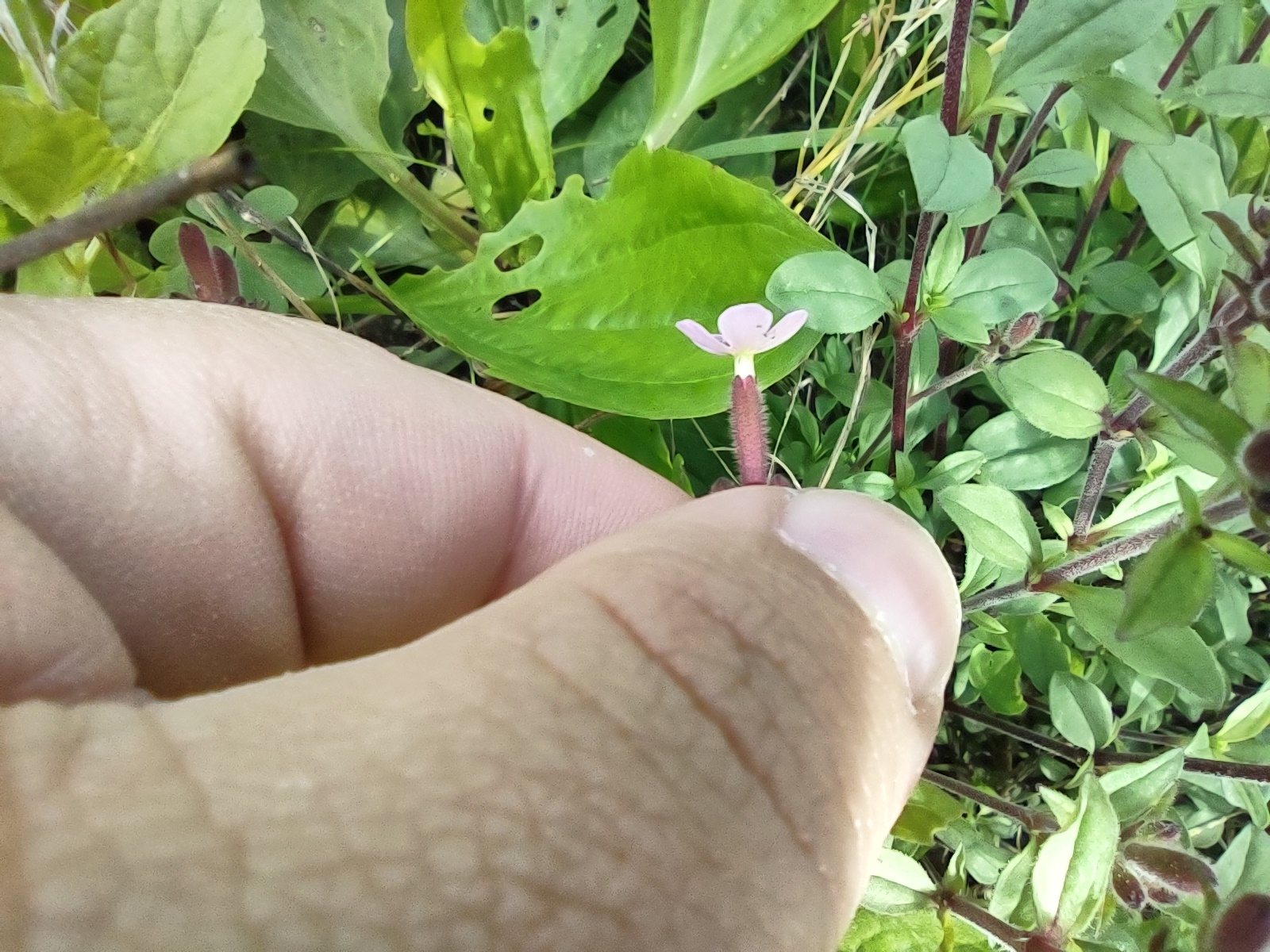
Has narrow, needle-like leaves and flatter flowers with distinctly notched petal tips; rock soapwort has broader leaves and flowers emerging from conspicuous tubular calyces.
False rock cress (Aubrieta deltoidea)
Its flowers have four petals rather than five, and its small leaves often have toothed edges.
The name
Saponaria comes from the Latin sapo, meaning soap, referring to its lather-forming saponins, while ocymoides means resembling basil.
Propagation. Sow seed in spring, divide rooted portions of the mat in spring, or take non-flowering shoot cuttings in summer. Seedlings may vary in flower colour and habit.
Checked against open data
- Accepted botanical name
- Saponaria ocymoides
- In the US and Canada
- Introduced in the lower 48 states.
- Native range
- Austria, Corse, France, Germany, Italy, Sardegna, Spain, Switzerland and Yugoslavia.
- Measured
- Average height 10 cm.
Sources: GBIF (CC BY 4.0), USDA PLANTS and Trefle (CC BY 4.0). The care and design notes are LandscapeGPT's own.
See it in your own yard.
Upload a photo of your yard and see it redesigned with plants that suit your climate, each checked against your zone.