Rodgersia
Rodgersia podophylla. Family Saxifragaceae. Perennial.
Also called Rodgers' bronze-leaf.
Rodgersia is a large, clump-forming perennial grown for its bold, divided leaves, which emerge bronze before turning green. Airy sprays of creamy-white flowers rise above the foliage in summer. It suits cool, moist gardens but struggles in dry soil and hot, exposed sites.
At a glance
- Sun
- Partial shade, ideally with morning sun and afternoon shade. Full sun is suitable only where summers are cool and soil stays consistently moist.
- Water
- Needs consistently moist soil; water deeply during dry spells. Do not let the root zone dry out.
- Soil
- Humus-rich, moisture-retentive soil, preferably slightly acidic to neutral. Tolerates heavy soil if it is not stagnant or permanently waterlogged.
- Height
- 3-5 ft (0.9-1.5 m), including flower stems
- Spread
- 3-5 ft (0.9-1.5 m)
- Flowers
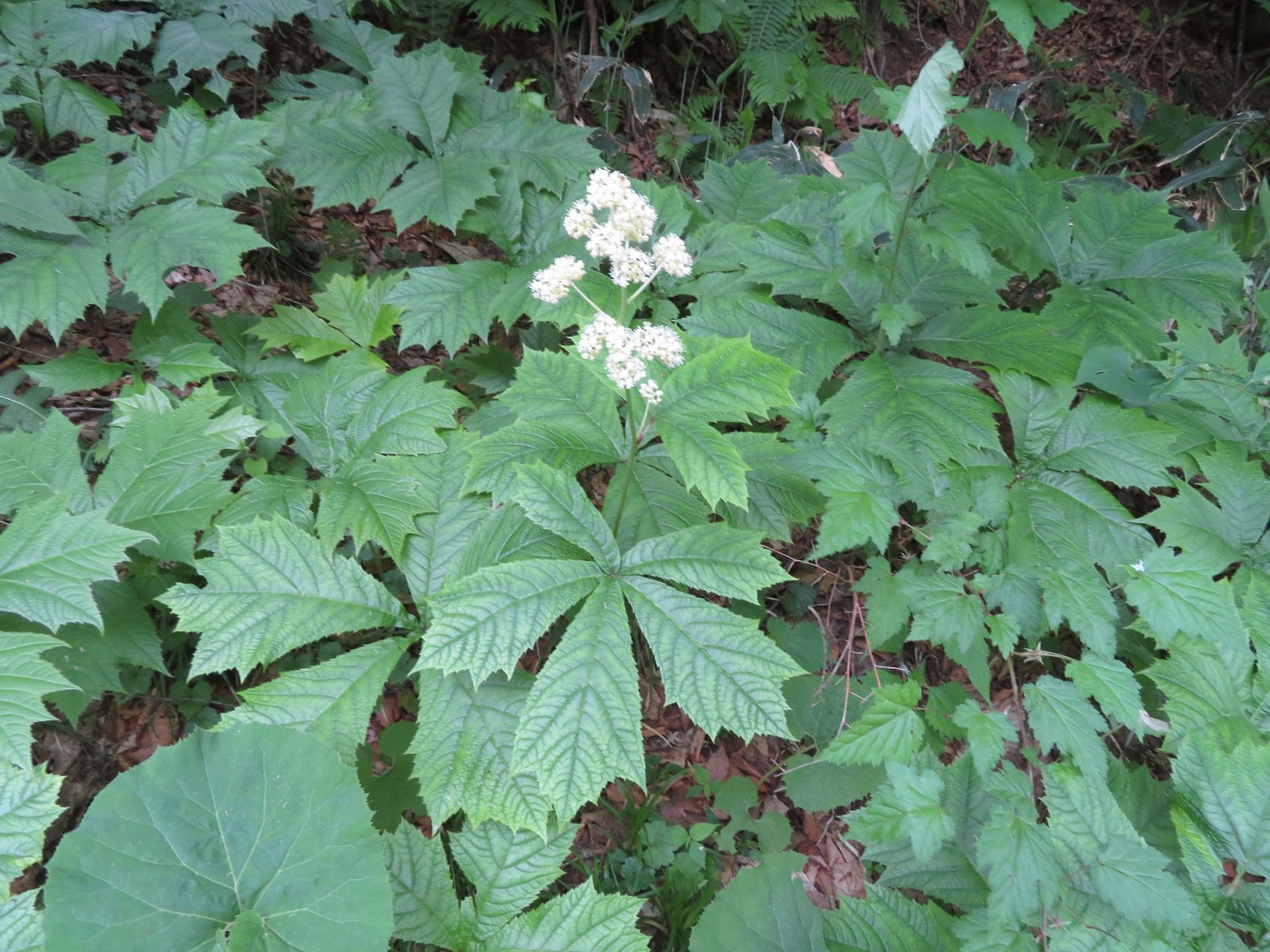
- Early to midsummer; branched sprays of small creamy-white flowers.
- Foliage
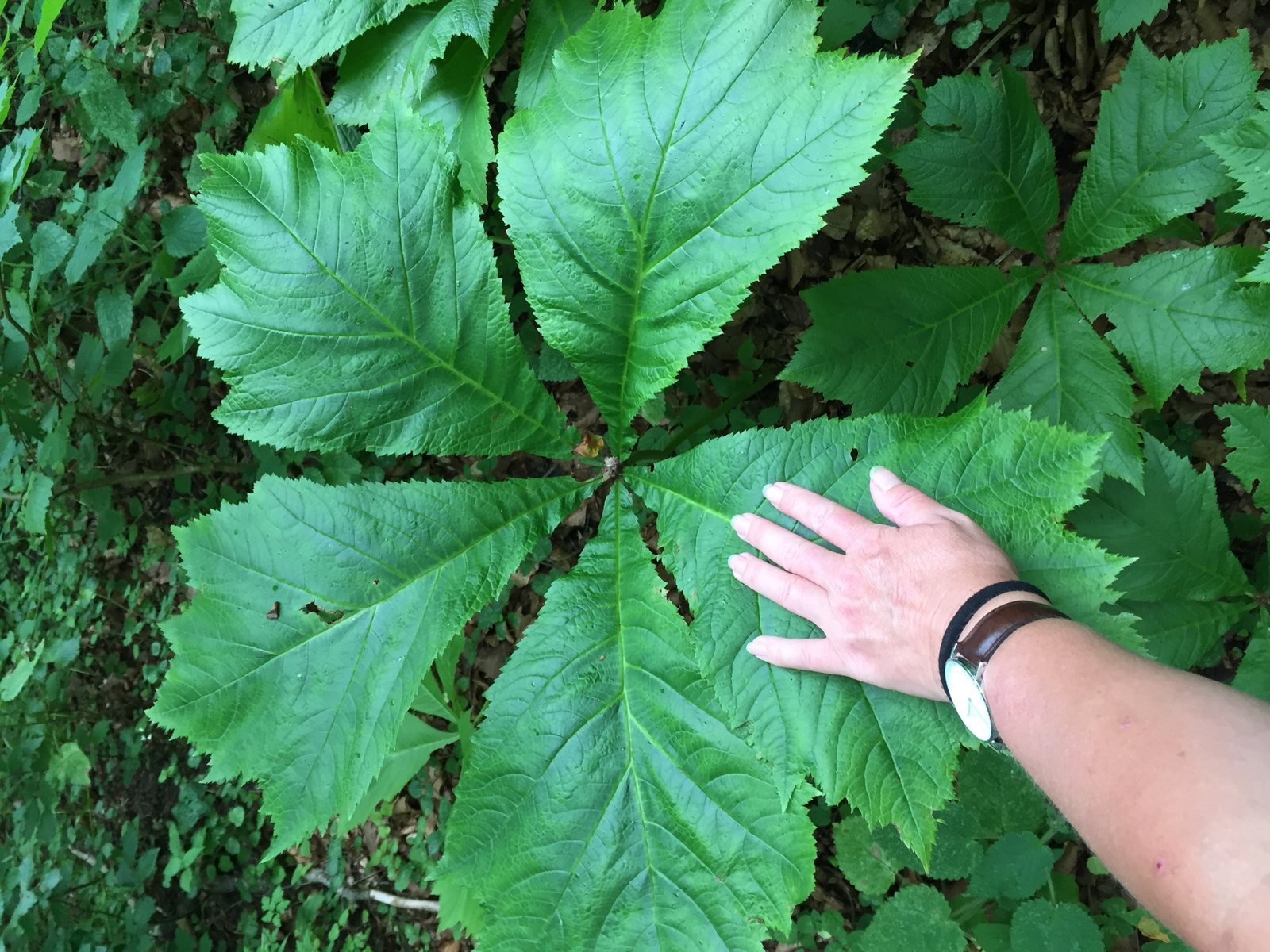
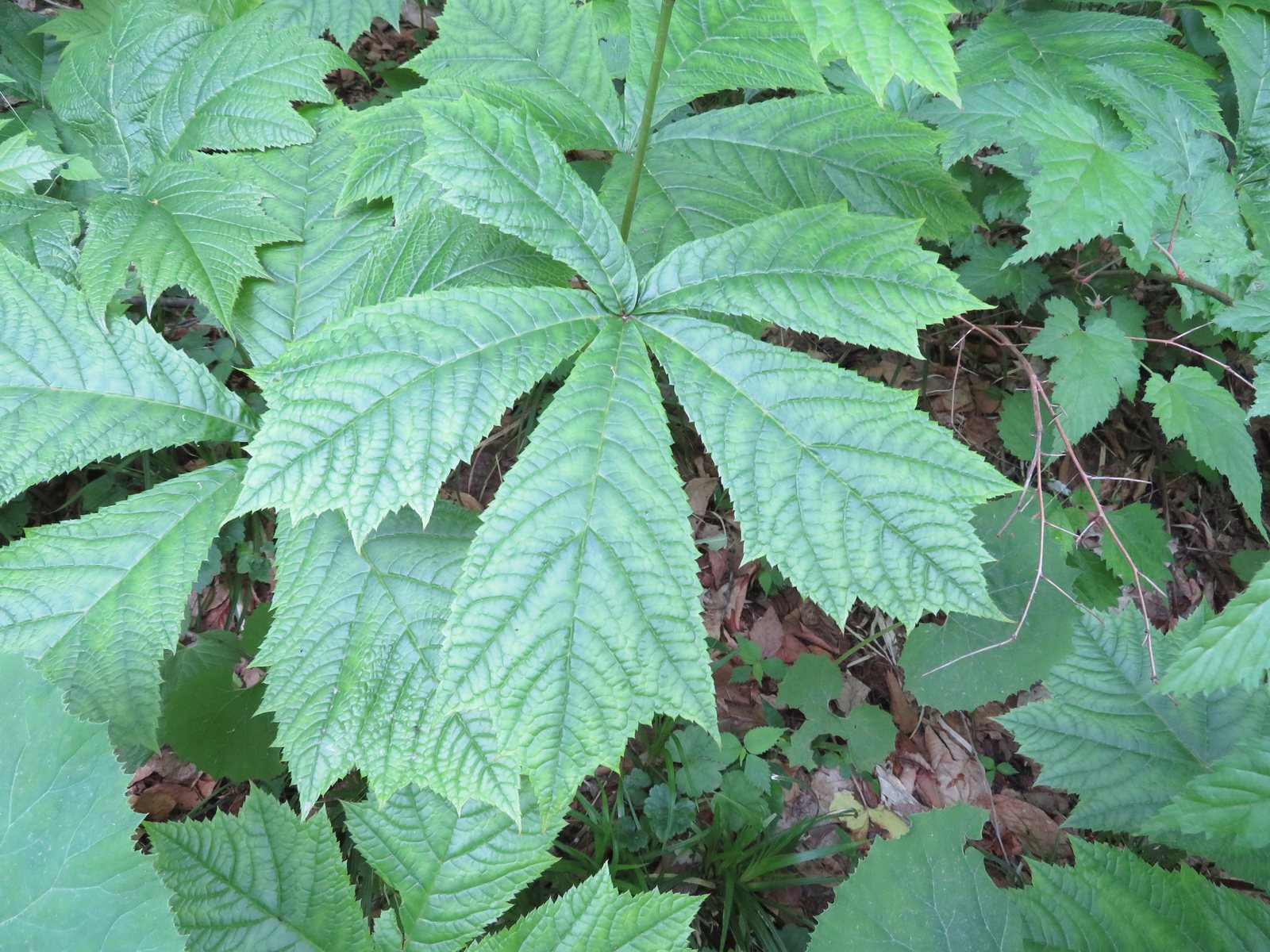
- Large, palmately divided leaves, usually with five broad, toothed leaflets whose tips are lobed. Young foliage is bronze, becoming deep green; autumn colour can include bronze and red.
- Growth
- Moderate once established; slow to settle after planting or division.
- Care needed
- Medium
The year at a glance
- Pollinators
- Deer resistant
- Wildlife
- Low allergen
| J | F | M | A | M | J | J | A | S | O | N | D | |
|---|---|---|---|---|---|---|---|---|---|---|---|---|
| Flowers | ||||||||||||
| Fruit | ||||||||||||
| Plant |
Northern hemisphere months. In Australia, shift them by six.
- Difficulty
- Moderate
- Toughness
- Fairly tough
Will it suit your garden?
Pick your zone, country, light and whether you have pets.
Full sun is 6 or more hours of direct sun a day, part shade 3 to 6 hours, shade under 3.
How it grows
Planting day
1 ft (0.3 m)
After 1 year
1.7 ft (0.53 m)
After 2 years
2.5 ft (0.76 m)
After 3 years
3 ft (0.99 m)
After 5 years
4 ft (1.2 m)
full size
About 4 years to full size.
From a typical nursery size, at an average rate for this kind of plant. A rule of thumb, not a forecast.
Good to know
- Cats and dogs
- Safe
- Growth rate
- Slow
Care
Jobs through the year
- WaterApr–May, Sep–Oct, every 7 days
- Water established plants if rain is insufficient to keep roots moist; young plants need closer attention.
- WaterJun–Aug, every 4 days
- Water deeply as soil begins to dry; never let roots dry out, especially in the first year.
- MulchMar–Apr
- Apply compost or leaf mould to retain moisture, keeping emerging shoots clear.
- FeedApr
- Feed lightly only if growth is weak; omit additional feed in rich soil.
- DivideMar–Apr
- Divide only when necessary while dormant or just starting growth; water divisions thoroughly.
- PruneFeb–Mar
- Cut remaining dead foliage and flower stems to ground level before shoots emerge.
- ProtectMar–May
- Cover emerging leaves with fleece when late frost is forecast.
- ProtectMar–May
- Inspect young shoots for slugs and snails and remove pests.
- PruneMay
- Remove frost-blackened leaves after the risk of further hard frost has passed.
- Water deeply whenever the soil begins to dry, especially during the first growing season.
- Apply a layer of compost or leaf mould in spring to retain moisture, keeping it clear of emerging shoots.
- Choose a position sheltered from drying winds and strong afternoon sun.
- Feed lightly in spring if growth is weak; rich soil usually needs no additional fertiliser.
- Divide only when necessary, in early spring, as established clumps dislike disturbance.
Pruning. Cut dead leaves and flower stems to ground level in late autumn or late winter, before new shoots emerge. Remove frost-damaged spring leaves once the risk of further hard frost has passed.
Through the year
- Late winter
- Clear away remaining dead stems and foliage before new growth starts.
- Early spring
- Plant or divide while dormant or just starting into growth; water thoroughly.
- Spring
- Mulch with compost or leaf mould and protect emerging leaves with fleece if a late frost is forecast.
- Summer
- Check soil moisture regularly and water deeply during dry weather.
- Late summer
- Remove spent flower stems if you prefer a tidier appearance.
- Autumn
- Leave healthy fading foliage for autumn colour, then remove it after it collapses.
In the garden
- Plant beside a pond or stream where the roots stay moist but are not submerged.
- Use as a bold foliage anchor in a shaded border with ferns and hostas.
- Group beneath deciduous trees where soil moisture can be maintained without heavy root competition.
- Pair with astilbes and Japanese primroses for contrasting foliage and successive flowers.
Garden styles it suits: Woodland, Bog garden, Japanese, Architectural minimal, Blues and silvers and Pacific Northwest woodland.
Plant it with: Hostas, Astilbes, Japanese primroses, Lady ferns, Siberian bugloss and Ligularias.
Wildlife: The small summer flowers attract visiting insects, including bees and flies. Dense foliage provides shelter for small garden animals.
Problems to watch for
- Brown, crisp leaf edges usually indicate drought, hot sun or drying wind; water deeply, mulch and provide more shelter or afternoon shade.
- Late spring frost can blacken emerging foliage; cover shoots with fleece when frost is forecast and remove damaged leaves afterward.
- Slugs and snails may damage young shoots; inspect at dusk, remove pests and use wildlife-conscious controls where needed.
- Rot and poor growth can occur in stagnant, waterlogged soil; improve drainage or move the plant to moist ground above the waterline.
Safety
Not known to be toxic to people, cats, dogs or horses. No particular plant part is recognised as poisonous, but species-specific safety information is limited; it is an ornamental, not a food plant.
Easily confused with
Horse-chestnut-leaved rodgersia (Rodgersia aesculifolia)
Its narrower leaflets resemble horse-chestnut leaves and lack the conspicuously lobed tips typical of Rodgersia podophylla.
Featherleaf rodgersia (Rodgersia pinnata)
Its leaflets are arranged along a short central stalk rather than radiating as distinctly from one point; flower colour may be white or pink.
Shieldleaf (Astilboides tabularis)
It has large, undivided, rounded leaves with the stalk attached beneath the blade, rather than separate leaflets.
The name
Rodgersia honours the American naval officer John Rodgers, while podophylla means foot-leaved, referring to the leaf shape.
Propagation. Divide established clumps in early spring, taking substantial pieces of rhizome with roots and at least one healthy growing point. Seed can also be sown fresh, but germination and establishment can be slow.
Checked against open data
- Accepted botanical name
- Rodgersia podophylla
- Native range
- Japan, Korea and Manchuria.
Sources: GBIF (CC BY 4.0) and Trefle (CC BY 4.0). The care and design notes are LandscapeGPT's own.
See it in your own yard.
Upload a photo of your yard and see it redesigned with plants that suit your climate, each checked against your zone.