Ruby Falls redbud
Cercis canadensis 'Ruby Falls'. Family Fabaceae. Tree.
Also called Ruby Falls eastern redbud, Weeping purple-leaved redbud.
Ruby Falls is a small, deciduous redbud with weeping branches, heart-shaped purple leaves and rosy-pink flowers on bare stems in spring. Gardeners grow it as a compact specimen for its cascading outline and foliage colour; its eventual height depends partly on how the main stem is trained.
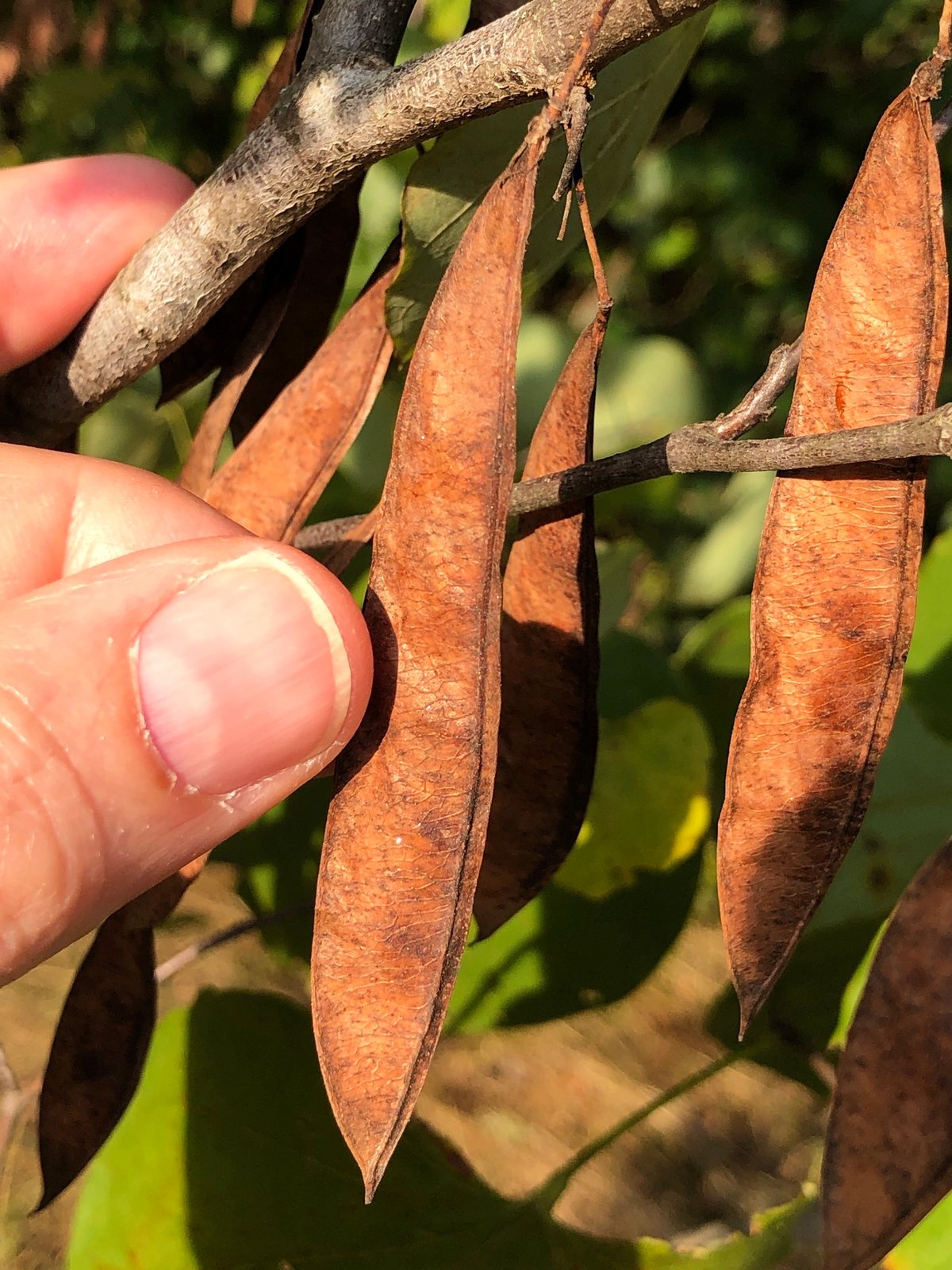
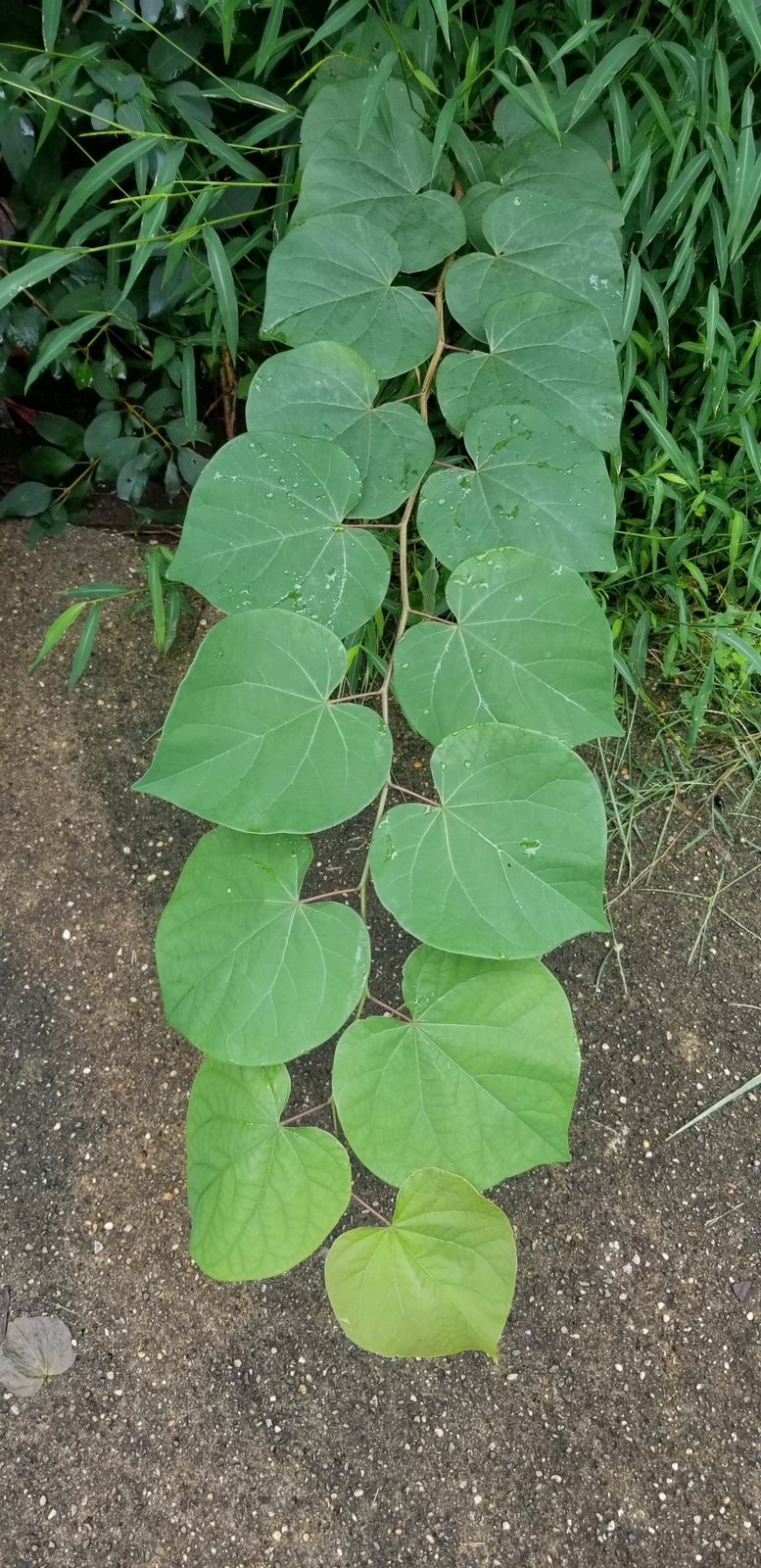
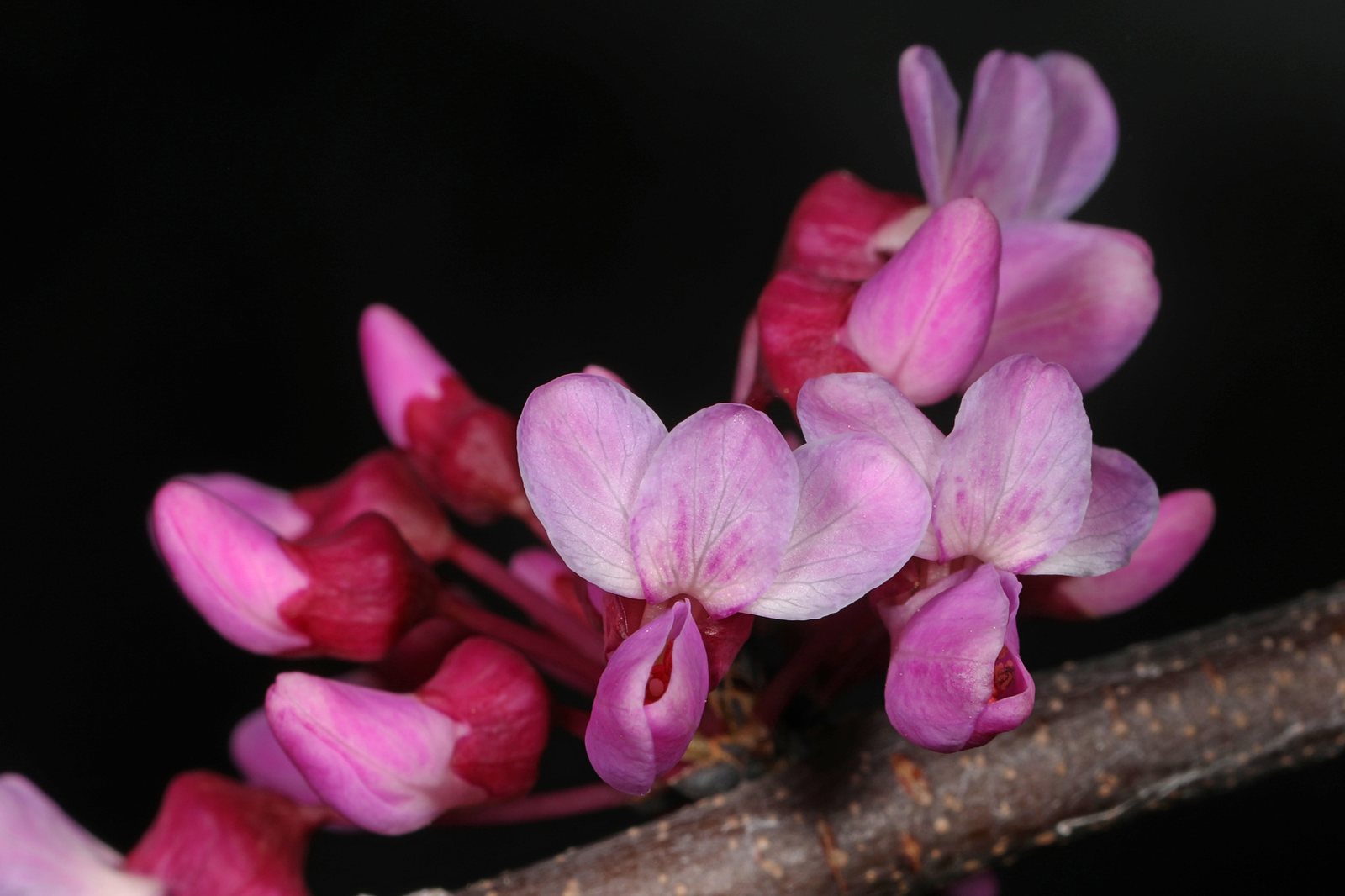
At a glance
- Sun
- Full sun to partial shade; purple foliage colours best with good light, but afternoon shade helps in hot, dry climates.
- Water
- Moderate; keep the root zone evenly moist while establishing, then water deeply during prolonged dry spells. Avoid waterlogged ground.
- Soil
- Well-drained loam, clay or sandy soil with some organic matter; tolerates acidic to alkaline conditions.
- Height
- 6-8 ft (1.8-2.4 m)
- Spread
- 4-6 ft (1.2-1.8 m)
- Flowers
- Early to mid-spring, before the leaves; small rosy-pink to purple-pink flowers cluster along bare branches.
- Foliage
- Heart-shaped leaves emerge deep burgundy-purple, often becoming greener or bronze-purple as summer progresses; autumn colour is variable, sometimes yellow.
- Growth
- Moderate; size and outline depend on staking and training.
- Care needed
- Medium
The year at a glance
- Pollinators
- Wildlife
- Low allergen
| J | F | M | A | M | J | J | A | S | O | N | D | |
|---|---|---|---|---|---|---|---|---|---|---|---|---|
| Flowers | ||||||||||||
| Fruit | ||||||||||||
| Plant |
Northern hemisphere months. In Australia, shift them by six.
- Difficulty
- Moderate
- Toughness
- Fairly tough
Will it suit your garden?
Pick your zone, country, light and whether you have pets.
Full sun is 6 or more hours of direct sun a day, part shade 3 to 6 hours, shade under 3.
How it grows
Planting day
7 ft (2 m)
After 1 year
7 ft (2 m)
After 2 years
7 ft (2 m)
After 3 years
7 ft (2 m)
After 5 years
7 ft (2 m)
About 20 years to full size.
From a typical nursery size, at an average rate for this kind of plant. A rule of thumb, not a forecast.
Good to know
- Cats and dogs
- Safe
- Native to
- the US and Canada
- Growth rate
- Moderate
Care
Jobs through the year
- WaterApr–May, Sep–Oct, every 14 days
- Water established trees deeply if dry; check young trees more often during their first two growing seasons.
- WaterJun–Aug, every 7 days
- Water deeply during dry spells, allowing drainage; young trees need more frequent checks.
- MulchMar–Apr
- Refresh organic mulch to 5–8 cm deep, keeping the trunk, root flare and graft clear.
- PruneApr–May
- After flowering, remove damaged or crossing branches and graft suckers; avoid heavy pruning.
- ProtectJan–Feb, Nov–Dec
- Guard young trunks against browsing and check that stake ties are not rubbing or constricting.
- Plant with the root flare at soil level and the graft union above the soil; choose the position carefully because established redbuds resent transplanting.
- Water deeply during the first two growing seasons whenever the upper soil begins to dry.
- Apply 2-3 in (5-8 cm) of organic mulch, keeping it clear of the trunk.
- Stake the main stem only if needed to establish the desired height; check ties regularly and remove support once the stem is stable.
- Use compost rather than routine heavy feeding; apply fertiliser only where growth or a soil test indicates a deficiency.
- The zone range given is for eastern redbud as a species; Ruby Falls is usually recommended for zones 5-9, so choose a sheltered site and seek local advice in zone 4.
Pruning. Prune lightly just after flowering, removing dead, damaged or crossing branches and shortening trailing shoots only where they obstruct access. Remove shoots arising below the graft promptly, and avoid heavy pruning or cutting back the trained main stem.
Through the year
- Early spring
- Plant while dormant if the ground is workable and not waterlogged; in cold districts, favour spring over autumn planting.
- Spring
- Refresh mulch and check that the graft union and trunk base remain uncovered.
- Late spring
- After flowering, prune lightly and remove any shoots growing from below the graft.
- Summer
- Water during dry spells and inspect leaves and branches for scorch, scale insects or dieback.
- Autumn
- Plant in mild climates while the soil is still warm; water thoroughly and mulch.
- Winter
- Check stakes and ties, and protect young trunks from rabbits or other browsing animals where necessary.
In the garden
- Use as a single focal tree in a small lawn or courtyard bed, leaving room for the branches to cascade.
- Place against pale paving or a light-coloured wall to make the purple foliage and weeping outline easier to see.
- Underplant with low, shade-tolerant groundcovers that leave the trunk base clear.
- Pair with green or silver foliage in a mixed border for contrast without relying on flowers.
Garden styles it suits: Small-space, Modern courtyard, Architectural minimal, Cottage garden, Romantic rose garden and Woodland.
Plant it with: Coral bells, Japanese forest grass, Hellebores, Foamflower, Siberian bugloss and Snowdrops.
Wildlife: Spring flowers provide pollen and nectar for bees. Branches offer cover and perching places for small birds, although this compact cultivar provides less habitat than a full-sized eastern redbud.
Problems to watch for
- Canker and branch dieback: prune affected branches back into healthy wood in dry weather, disinfect tools between cuts and reduce drought stress; extensive trunk cankers may require replacement.
- Verticillium wilt: sudden wilting or one-sided dieback needs diagnosis; there is no reliable cure, and a badly affected tree should be removed rather than replaced with another susceptible tree.
- Scale insects: inspect stems for attached bumps and sticky honeydew; remove small infestations by hand or use a locally approved horticultural oil according to its label.
- Leaf scorch and premature leaf drop: water deeply during drought, mulch the root zone and provide afternoon shade in very hot sites; do not compensate by keeping poorly drained soil saturated.
Safety
Not known to be toxic to people, cats, dogs or horses. No part is recognised as a serious poisoning hazard, although chewing plant material can cause stomach upset and the ornamental tree should not be treated as animal feed.
Easily confused with
Lavender Twist redbud (Cercis canadensis 'Covey')
Also compact and weeping, but its leaves are green rather than the deep purple of young Ruby Falls foliage.
Forest Pansy redbud (Cercis canadensis 'Forest Pansy')
Has similar purple, heart-shaped leaves but develops into a much larger, upright, spreading tree rather than a compact weeping one.
The name
Redbud refers to the reddish flower buds, while the cultivar name Ruby Falls describes its rich purple-red foliage and cascading branches.
Propagation. Usually propagated by grafting or budding onto eastern redbud rootstock. Seedlings do not reliably retain the purple foliage and weeping habit; check local plant variety rights or patent restrictions before propagating this cultivar.
Checked against open data
- Accepted botanical name
- Cercis canadensis
- In the US and Canada
- Native in Canada and the lower 48 states.
- Native range
- Alabama, Arkansas, Connecticut, Delaware, District of Columbia, Florida, Georgia, Illinois, Indiana, Iowa, Kansas and Kentucky.
- Measured
- Soil pH 5 to 7.9. Average height 535 cm.
Sources: GBIF (CC BY 4.0), USDA PLANTS and Trefle (CC BY 4.0). The care and design notes are LandscapeGPT's own.
See it in your own yard.
Upload a photo of your yard and see it redesigned with plants that suit your climate, each checked against your zone.