Ruby grass
Melinis nerviglumis. Family Poaceae. Ornamental grass.
Also called Pink bubble grass, Bristle-leaved red top.
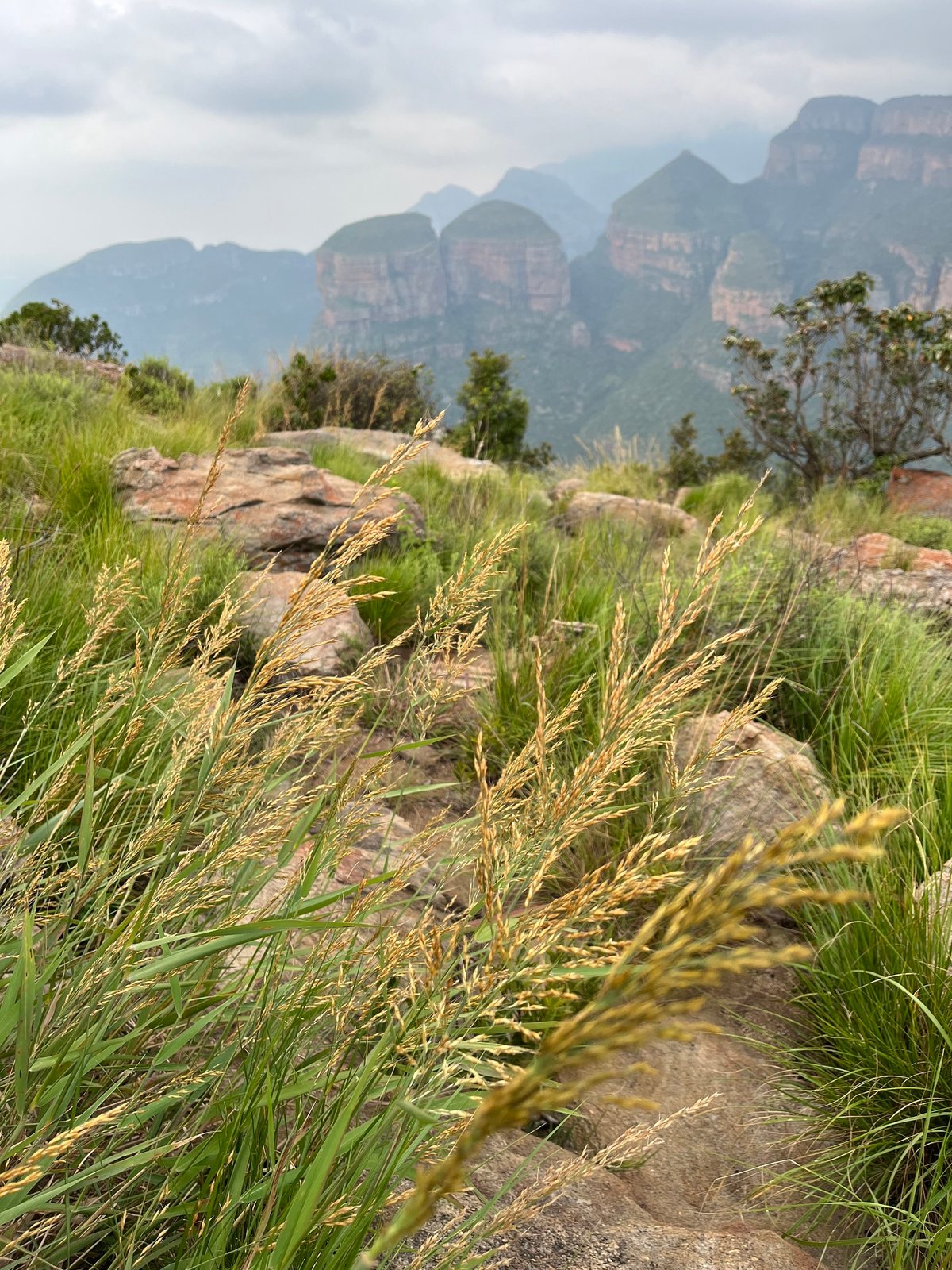
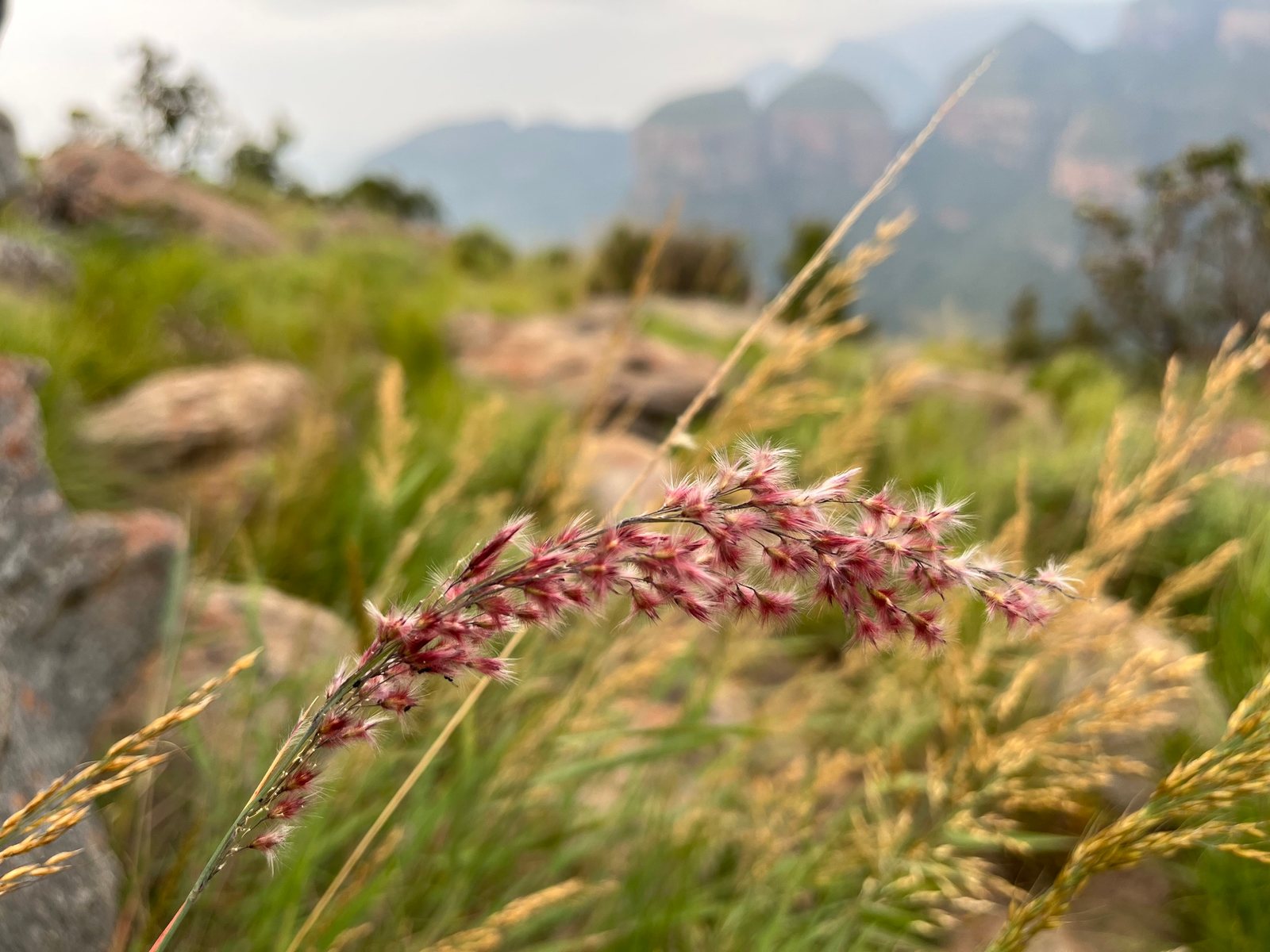
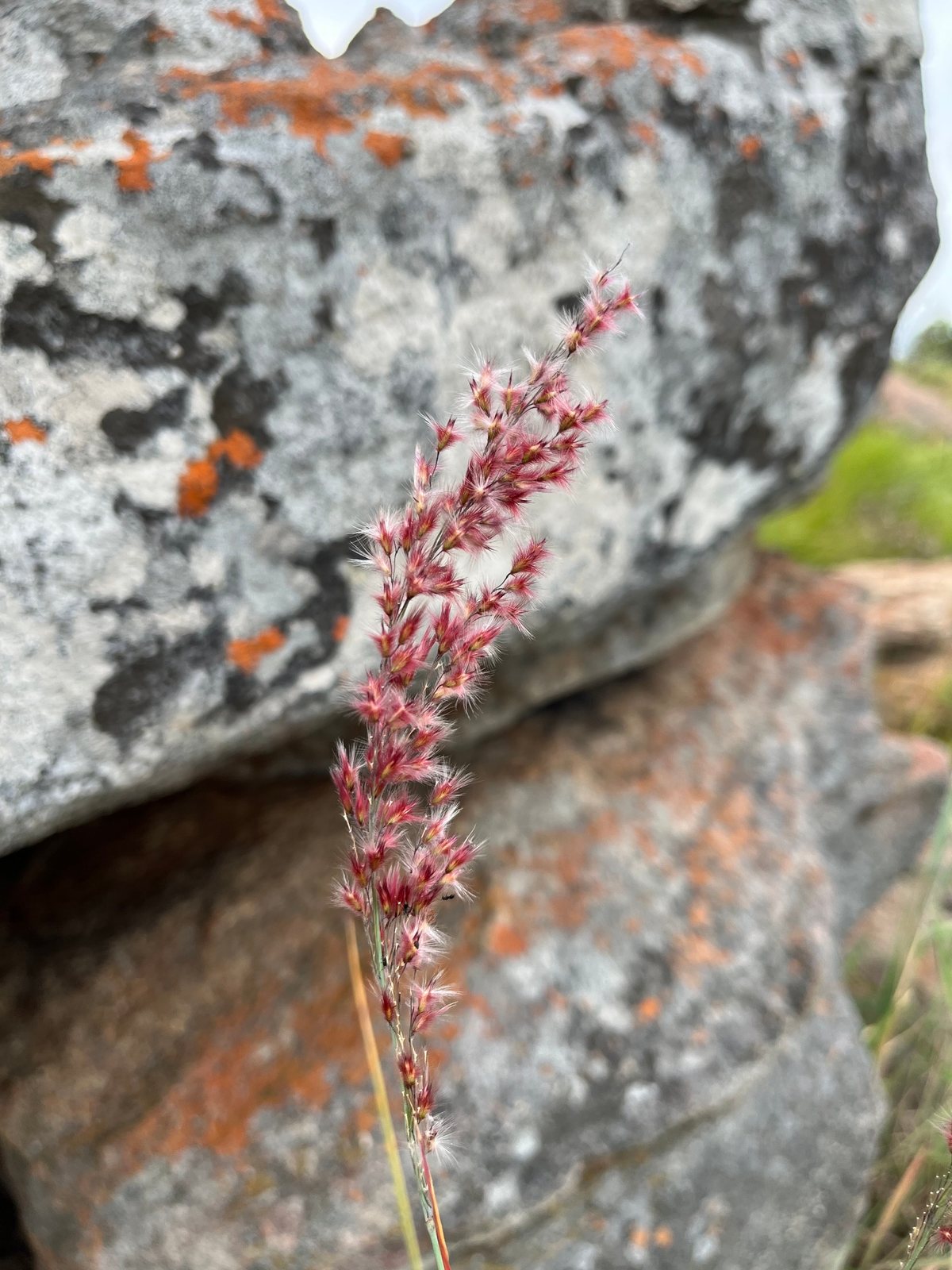
Ruby grass is a small, clump-forming African grass grown for its airy, ruby-pink flower heads, which fade to pale pink and silver. It is a tender perennial in warm climates and is grown as an annual in colder gardens, including much of the United Kingdom and Canada.
At a glance
- Sun
- Full sun; flowering is weaker and stems may flop in shade.
- Water
- Water regularly while establishing, then let the soil dry between waterings. Established plants tolerate short dry spells, but containers need more frequent watering.
- Soil
- Well-drained sandy, gravelly or loamy soil; tolerates relatively poor soil but dislikes waterlogged ground, especially in winter.
- Height
- 1.5-2.5 ft (0.45-0.75 m), including flower stems
- Spread
- 1-2 ft (0.3-0.6 m)
- Flowers
- Summer into autumn; soft, hairy flower heads open ruby-pink and fade through pale pink to silvery cream.
- Foliage
- Evergreen. Narrow, arching, blue-green to grey-green blades forming a compact tuft; foliage turns straw-coloured after frost.
- Growth
- Moderate to fast in warm weather
- Care needed
- Low
The year at a glance
- Deer resistant
- Drought tolerant
- Heat tolerant
- Wildlife
| J | F | M | A | M | J | J | A | S | O | N | D | |
|---|---|---|---|---|---|---|---|---|---|---|---|---|
| Flowers | ||||||||||||
| Fruit | ||||||||||||
| Plant |
Northern hemisphere months. In Australia, shift them by six.
- Difficulty
- Moderate
- Toughness
- Fairly tough
Will it suit your garden?
Pick your zone, country, light and whether you have pets.
Full sun is 6 or more hours of direct sun a day, part shade 3 to 6 hours, shade under 3.
How it grows
Planting day
1.1 ft (0.35 m)
After 1 year
1.6 ft (0.48 m)
After 2 years
2 ft (0.6 m)
full size
About 2 years to full size.
From a typical nursery size, at an average rate for this kind of plant. A rule of thumb, not a forecast.
Good to know
- Cats and dogs
- Safe
- Growth rate
- Fast
Care
Jobs through the year
- WaterMay–Jun, every 7 days
- Water in-ground plants only when soil has dried; newly planted clumps need closer checks.
- WaterJul–Aug, every 7 days
- Water established plants deeply if soil is dry; allow it to dry between waterings.
- WaterSep–Oct, every 14 days
- Water only if soil is dry; avoid wet crowns as temperatures fall.
- PruneApr–May
- Trim successfully overwintered clumps to 10-15 cm before fresh growth develops.
- DivideApr–May
- Divide crowded overwintered clumps as growth resumes, keeping divisions frost-free.
- ProtectSep–Oct
- Usually grown as an annual here; pot up plants to save and move into bright frost-free cover before frost.
- Plant after frost risk has passed, in a sunny position with freely draining soil.
- Water newly planted clumps until established; thereafter water when the soil has dried.
- Feed sparingly in spring; rich soil and heavy feeding can produce floppy growth.
- Keep mulch clear of the crown and avoid sites that stay wet through winter.
- In cold regions, grow it as an annual or overwinter a container in a bright, frost-free place.
Pruning. In spring, before new growth develops, cut old or frost-damaged foliage back to about 4-6 in (10-15 cm). In frost-free gardens, comb out dead blades and remove spent flower stems; remove seed heads before they shed if seedlings are unwanted.
Through the year
- Early spring
- Sow seed indoors in warmth and bright light if raising plants for summer.
- Spring
- Trim overwintered clumps before new growth and divide crowded plants as growth resumes.
- Late spring
- Plant out after the last frost, allowing room for each clump to spread.
- Summer
- Check containers regularly and water when the compost starts to dry.
- Late summer
- Remove fading flower heads before seed disperses where self-seeding is a concern.
- Autumn
- Move plants intended for overwintering under bright, frost-free cover before frost; keep barely moist.
In the garden
- Plant in small groups near the front of a sunny border for soft pink colour and movement.
- Combine with purple-flowered salvias and pale-flowered perennials for a light, informal planting.
- Use in gravel gardens with other plants that need sharp drainage.
- Grow in containers where backlighting can highlight the silky flower heads.
Garden styles it suits: New perennial (prairie), Dry gravel garden, Modern Mediterranean, Cottage garden, Sensory garden and Small-space.
Plant it with: Salvia, Gaura, Verbena, Lavender, Yarrow and Sedum.
Wildlife: The clumps provide shelter for small garden animals. Flowers are wind-pollinated and are not a significant nectar source for bees or butterflies.
Problems to watch for
- Crown or root rot in wet soil: improve drainage, keep mulch away from the crown and avoid excessive winter watering.
- Winter loss from frost: treat as an annual outside its hardy range or overwinter containers under frost-free cover.
- Flopping or sparse flowering: move to full sun and reduce feeding.
- Unwanted seedlings in warm climates: remove flower heads before seed ripens and pull seedlings while small.
Safety
Not known to be toxic to people, cats, dogs or horses. No particular part is recognised as poisonous, although species-specific toxicity information is limited.
Where it spreads. Has escaped cultivation in Australia and can self-seed beyond gardens in warm climates. Check state and local weed guidance before planting; do not confuse it with the more widely invasive Natal grass, Melinis repens.
Easily confused with
Natal grass (Melinis repens)
Also has silky pink flower heads, but usually has broader, flatter leaves and a looser, less compact habit. Ruby grass has finer leaves and a more distinct perennial tussock.
Pink muhly grass (Muhlenbergia capillaris)
Usually forms a larger clump with a much broader cloud of tiny pink flowers; ruby grass carries smaller, more distinct silky flower heads.
The name
The common name ruby grass refers to the rich pink-red colour of its newly opened flower heads.
Propagation. Sow seed in warmth in spring, barely covering it, or divide established clumps in spring once active growth begins. Seed-grown plants may vary; divide named cultivars to retain their characteristics.
Checked against open data
- Accepted botanical name
- Melinis nerviglumis
- Native range
- Angola, Botswana, Burundi, Cape Provinces, Caprivi Strip, Congo, Ethiopia, Free State, Gabon, Kenya, KwaZulu-Natal and Lesotho.
Sources: GBIF (CC BY 4.0) and Trefle (CC BY 4.0). The care and design notes are LandscapeGPT's own.
See it in your own yard.
Upload a photo of your yard and see it redesigned with plants that suit your climate, each checked against your zone.