Ruby Slippers oakleaf hydrangea
Hydrangea quercifolia 'Ruby Slippers'. Family Hydrangeaceae. Shrub.
Also called Hydrangea quercifolia 'Ruby Slippers'.
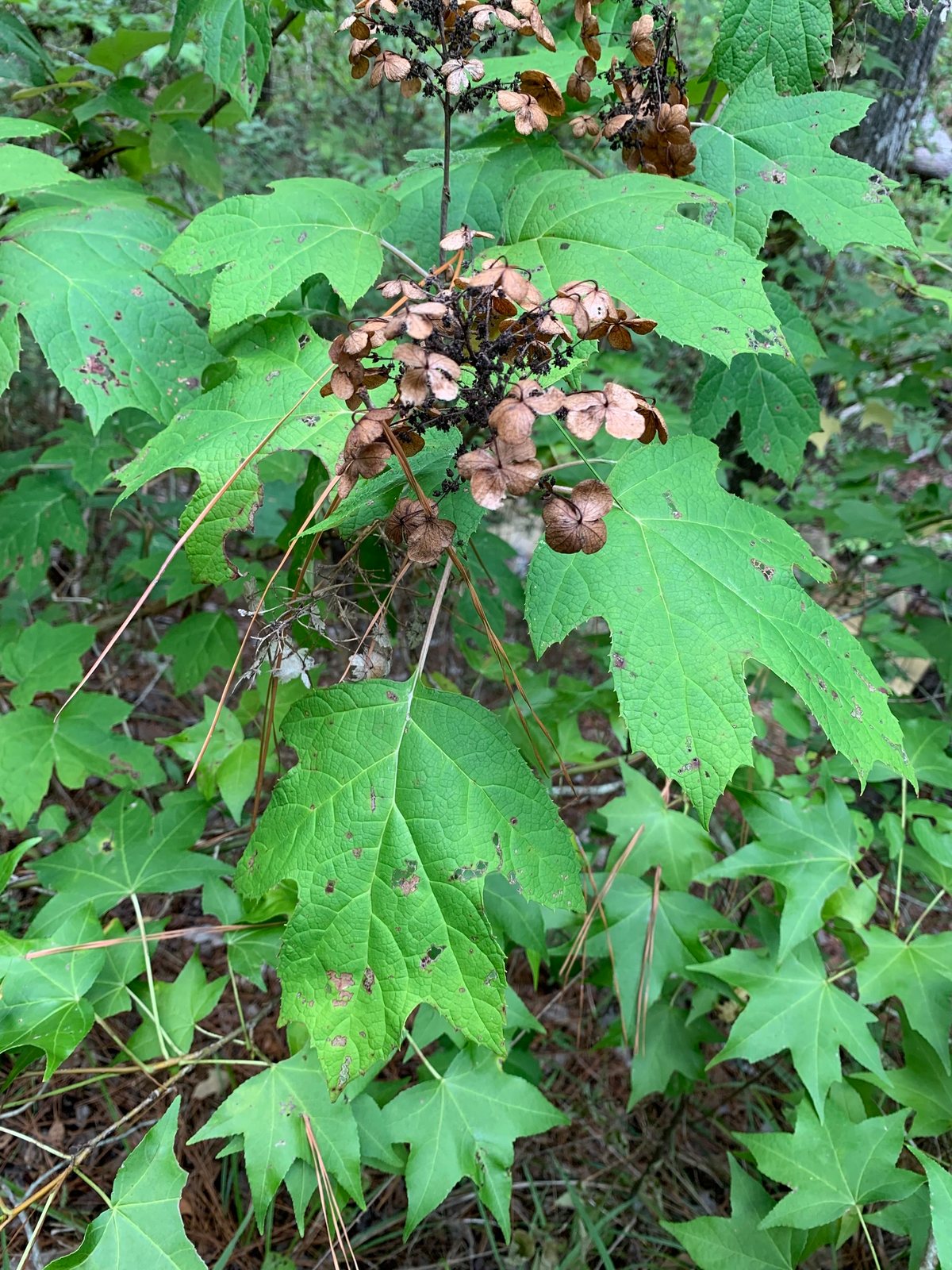
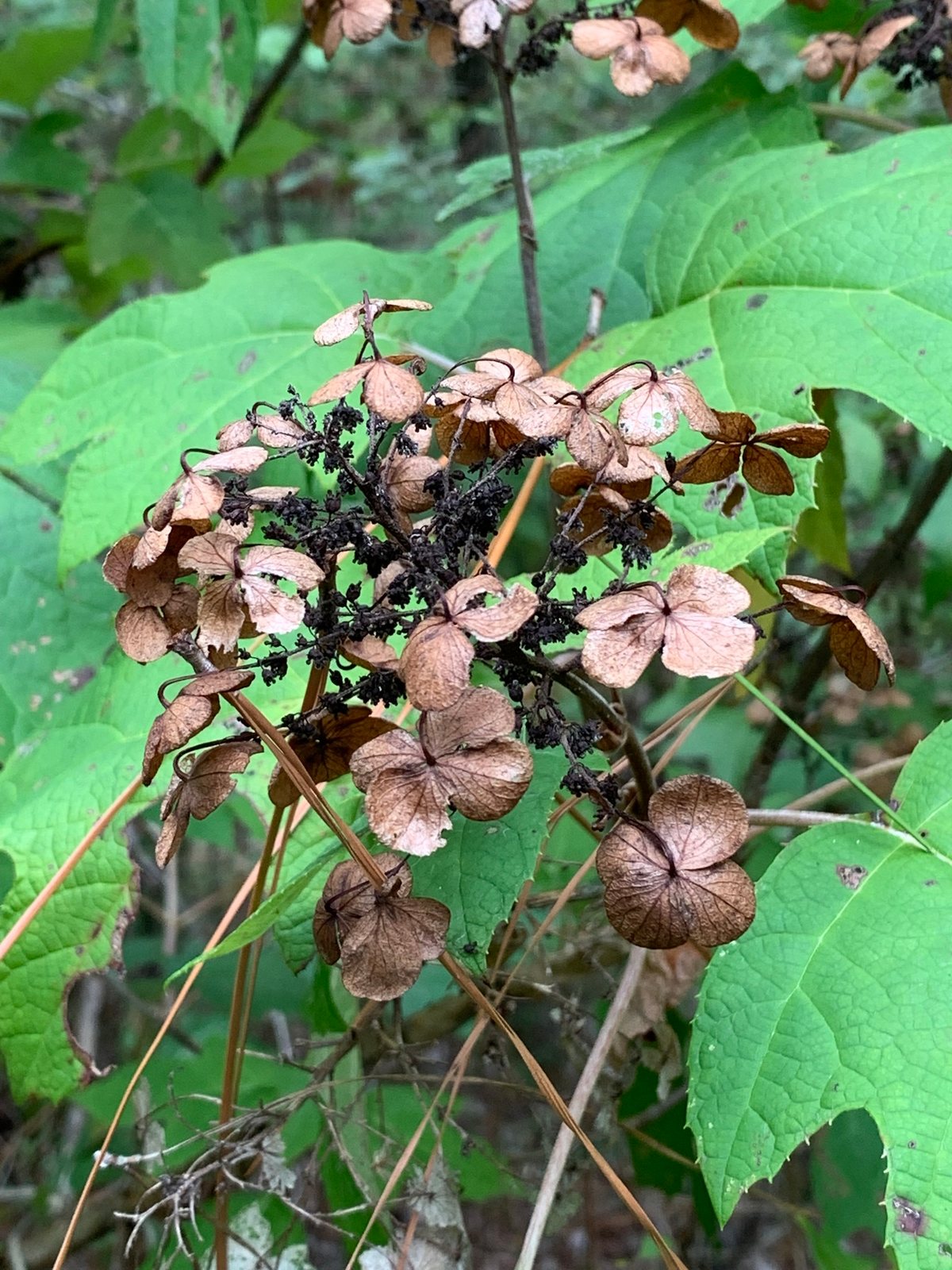
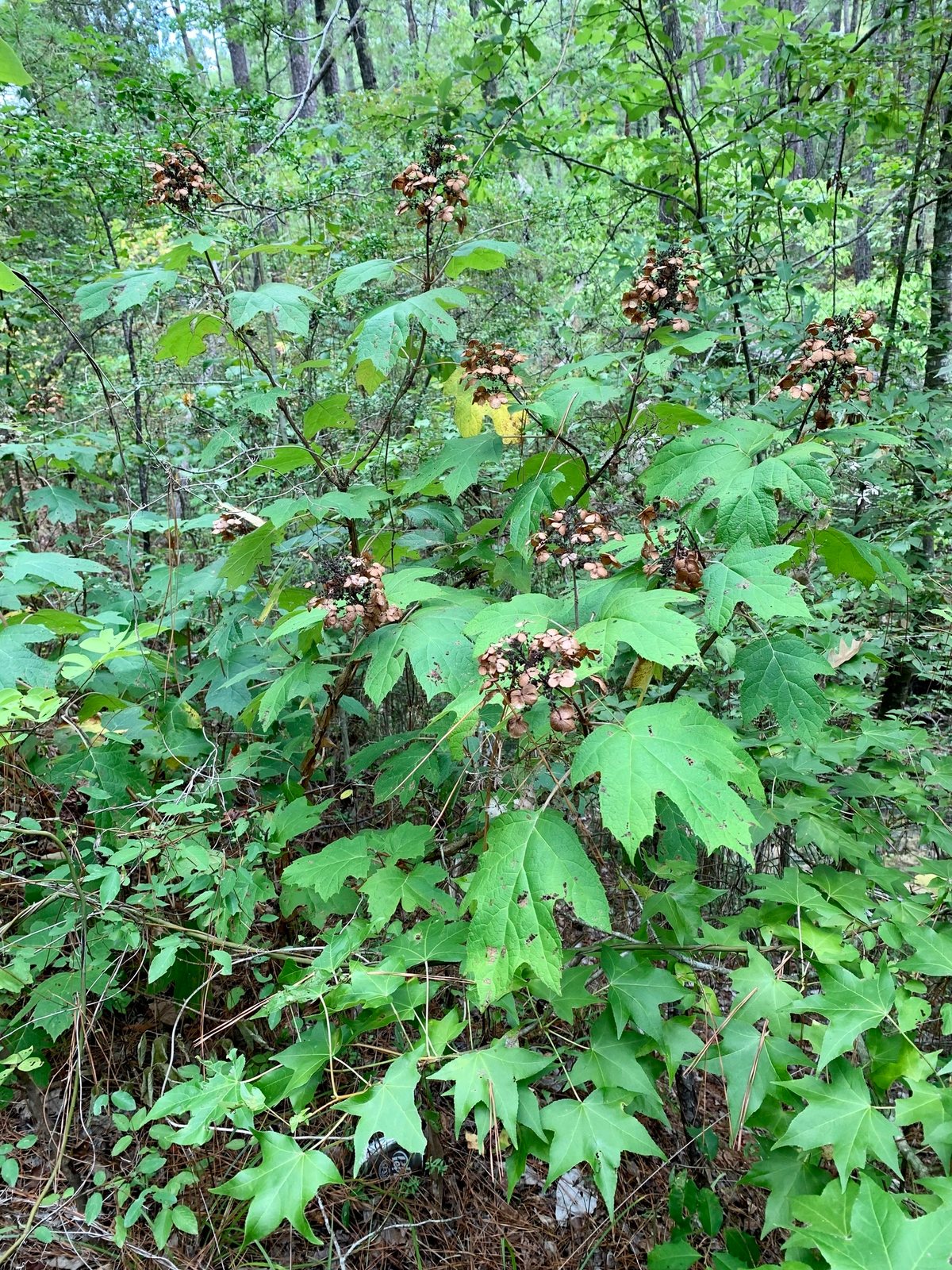
A compact, deciduous oakleaf hydrangea grown for upright flower clusters that open white, turn pink and deepen to rose-red as they age. Its lobed leaves develop burgundy and purple autumn colour, making it useful in small gardens and mixed shrub borders.
At a glance
- Sun
- Partial shade, ideally morning sun and afternoon shade. Tolerates more sun in cool climates if the soil stays moist.
- Water
- Keep evenly moist during establishment and water deeply during prolonged dry spells. Established plants tolerate some dryness, but not persistent waterlogging.
- Soil
- Humus-rich, well-drained soil, preferably slightly acidic to neutral. Avoid wet clay and very dry, shallow soil.
- Height
- 3-4 ft (0.9-1.2 m)
- Spread
- 4-5 ft (1.2-1.5 m)
- Flowers
- Late spring through summer; upright, cone-shaped clusters open white, age pink and deepen to rose-red. Colour development varies with weather and exposure.
- Foliage
- Large, deeply lobed, oak-like green leaves with softly hairy undersides; usually burgundy, red or purple in autumn.
- Growth
- Moderate
- Care needed
- Low
The year at a glance
- Heat tolerant
- Wildlife
- Low allergen
| J | F | M | A | M | J | J | A | S | O | N | D | |
|---|---|---|---|---|---|---|---|---|---|---|---|---|
| Flowers | ||||||||||||
| Plant |
Northern hemisphere months. In Australia, shift them by six.
- Difficulty
- Easy
- Toughness
- Fairly tough
Will it suit your garden?
Pick your zone, country, light and whether you have pets.
Full sun is 6 or more hours of direct sun a day, part shade 3 to 6 hours, shade under 3.
How it grows
Planting day
1.6 ft (0.5 m)
After 1 year
2 ft (0.61 m)
After 2 years
2.4 ft (0.72 m)
After 3 years
2.7 ft (0.83 m)
After 5 years
3 ft (1.1 m)
full size
About 5 years to full size.
From a typical nursery size, at an average rate for this kind of plant. A rule of thumb, not a forecast.
Good to know
- Cats and dogs
- Toxic
- Native to
- the US
- Growth rate
- Moderate
Care
Jobs through the year
- WaterApr–May, Sep–Oct, every 21 days
- For established plants in the ground, water deeply only if soil is dry; check young plants more often.
- WaterJun–Aug, every 14 days
- Water established shrubs deeply during prolonged dry spells; keep newly planted roots evenly moist.
- MulchMar–Apr
- Maintain 5–8 cm of organic mulch, leaving a gap around stems.
- FeedApr
- Top-dress with compost; add a modest balanced feed only if growth is weak.
- PruneApr
- Wait for visible live buds before removing winter-killed wood.
- PruneJul–Aug
- If shaping is necessary, prune selected stems immediately after flowering; retain old wood for next year's blooms.
- ProtectJan–Feb, Dec
- Shelter young shrubs from drying winter winds and severe cold.
- Water deeply through the first growing season whenever the root zone begins to dry.
- Apply 2-3 in (5-8 cm) of organic mulch, keeping it clear of the stems.
- Top-dress with compost in spring; use a modest amount of balanced fertiliser only if growth is weak.
- Provide afternoon shade in hot climates and shelter from drying winds.
- Leave enough space for its broad mature spread rather than repeatedly clipping it back.
Pruning. Flowers form on old wood, so prune only if needed, immediately after flowering; shorten selected stems rather than shearing the whole shrub. Remove dead or winter-damaged wood in spring once live buds are visible.
Through the year
- Spring
- Plant once the soil is workable, water thoroughly and mulch the root zone.
- Mid-spring
- Check for live buds before removing winter-killed stem tips; top-dress with compost.
- Summer
- Water deeply during dry spells, especially on recently planted shrubs.
- After flowering
- If necessary, remove a few awkward stems or shorten branches before next year's flower buds develop.
- Autumn
- Plant in mild climates while the soil is warm; keep fallen diseased leaves out of the mulch.
- Winter
- Leave healthy stems and dried flower heads intact; protect young plants from exposed, drying conditions.
In the garden
- Plant beneath high-canopied deciduous trees where it receives filtered light without severe root competition.
- Use as a compact foundation shrub, allowing room for its spreading branches beside paths and windows.
- Group in a mixed border with ferns, sedges and spring-flowering perennials for contrasting leaf shapes.
- Place where its autumn foliage and peeling bark can be seen from the house.
Garden styles it suits: Woodland, Small-space, Traditional, Cottage garden, Autumn colour and Southern.
Plant it with: Christmas fern, Japanese forest grass, Coral bells, Foamflower, Hellebores and Hostas.
Wildlife: Its dense growth offers shelter for small birds and other garden wildlife. The showy flowers are largely sterile, so it is not a strong choice for providing nectar and pollen.
Problems to watch for
- Few flowers: winter damage, deep shade or pruning at the wrong time can remove flower buds; choose a sheltered, brighter site and prune only after flowering.
- Leaf scorch or persistent wilting: check soil moisture, water deeply when dry and provide afternoon shade in hot locations.
- Fungal leaf spots: improve airflow, water at soil level and remove fallen affected leaves; minor spotting rarely needs treatment.
- Root rot in wet soil: improve drainage or move the shrub to a raised planting area; do not keep the root zone saturated.
Safety
Toxic if eaten by cats, dogs, horses or people. All parts contain cyanogenic compounds, particularly leaves and flower buds; ingestion usually causes digestive upset, but larger amounts can cause serious poisoning. Seek medical or veterinary advice after ingestion.
Easily confused with
Panicle hydrangea (Hydrangea paniculata)
Also bears cone-shaped flowers that may turn pink, but its leaves are oval and pointed rather than deeply oak-lobed; it generally flowers later on new growth.
Smooth hydrangea (Hydrangea arborescens)
Has unlobed, broadly oval leaves and rounded or flattened flower heads rather than the elongated cones and oak-like leaves of Ruby Slippers.
The name
Hydrangea refers to a water vessel, describing the seed capsules, while quercifolia means oak-leaved and refers to the lobed foliage.
Propagation. Propagate by softwood cuttings in late spring or early summer, or by layering a low branch. Seedlings will not reliably retain the cultivar's compact habit and flower characteristics.
Checked against open data
- Accepted botanical name
- Hydrangea quercifolia
- In the US and Canada
- Native in the lower 48 states.
- Native range
- Alabama, Florida, Georgia, Louisiana, Mississippi, South Carolina and Tennessee.
- Measured
- Soil pH 4.6 to 7.5. Average height 183 cm.
Sources: GBIF (CC BY 4.0), USDA PLANTS and Trefle (CC BY 4.0). The care and design notes are LandscapeGPT's own.
See it in your own yard.
Upload a photo of your yard and see it redesigned with plants that suit your climate, each checked against your zone.