Safari Sunset conebush
Leucadendron 'Safari Sunset'. Family Proteaceae. Shrub.
Also called Leucadendron 'Safari Sunset', Safari Sunset leucadendron.
An upright evergreen shrub grown for its burgundy-red shoot tips and colourful bracts surrounding small flower heads in winter and spring. This South African hybrid makes a strong foliage accent and provides long-lasting cutting stems. It needs excellent drainage and mild winters; in colder regions, grow it in a container with bright, frost-free winter shelter.
At a glance
- Sun
- Full sun; good light is essential for strong growth and rich bract colour.
- Water
- Water regularly during establishment, then deeply during prolonged dry spells. Allow the soil surface to dry between waterings; avoid persistently wet roots.
- Soil
- Very well-drained, preferably acidic to neutral soil with low phosphorus levels. Sandy or gravelly soil is suitable; avoid waterlogged clay and heavily enriched planting holes.
- Height
- 6-10 ft (1.8-3 m)
- Spread
- 5-8 ft (1.5-2.4 m)
- Flowers
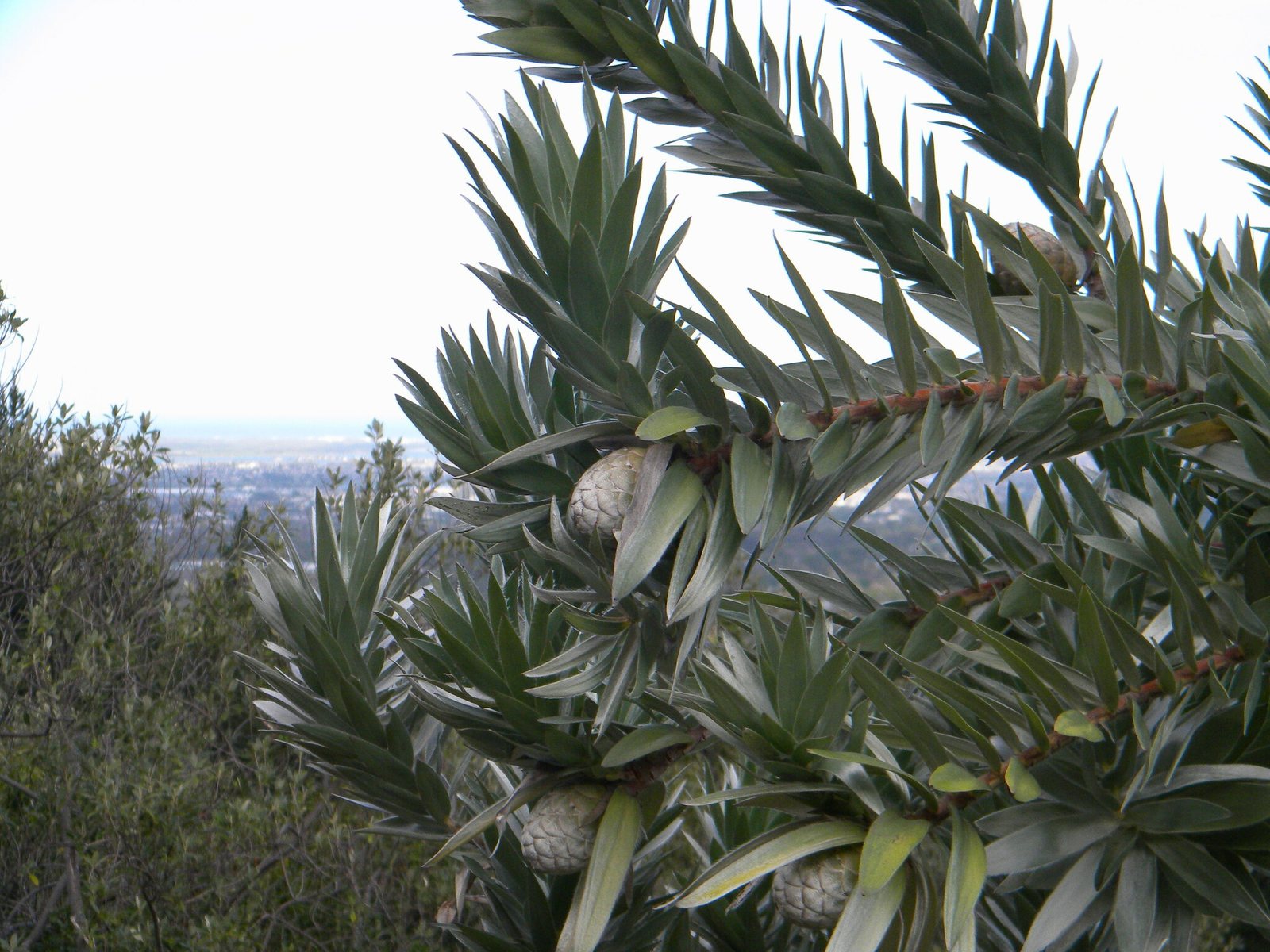
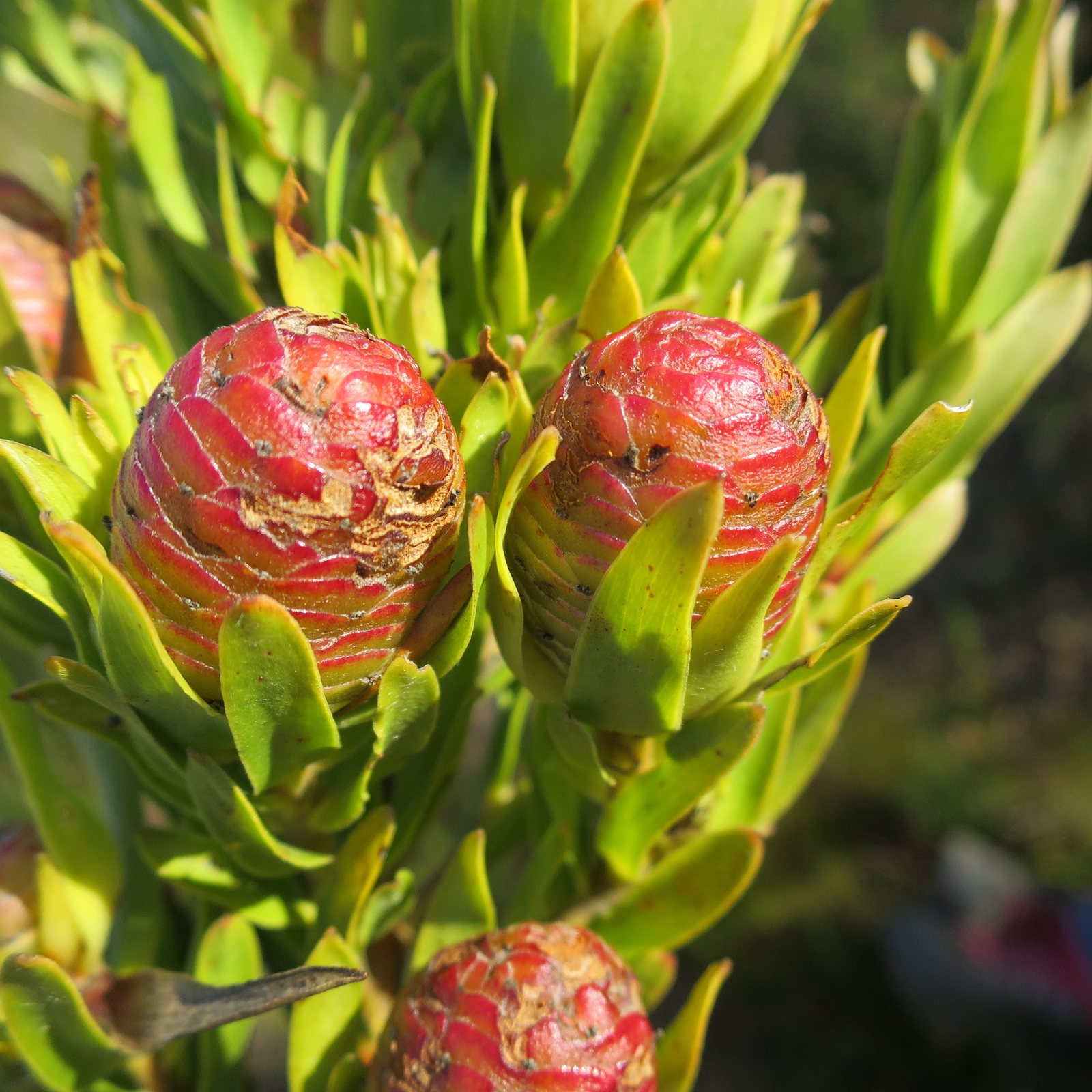
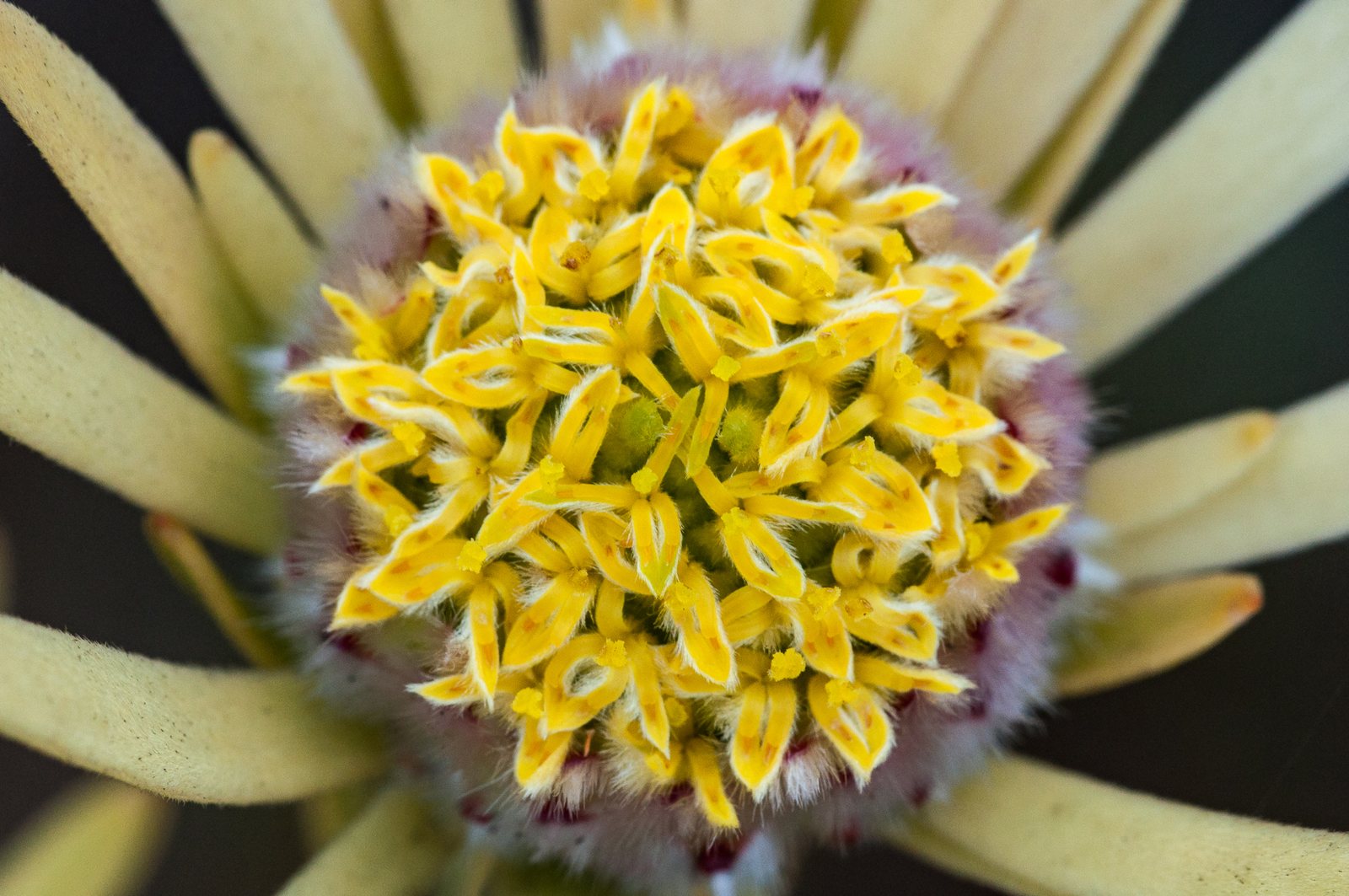
- Winter to spring: small yellowish flower heads surrounded by conspicuous red to burgundy bracts. This female cultivar develops cone-like seed heads.
- Foliage
- Evergreen. Narrow, leathery green leaves on upright stems; upper leaves and bracts develop red and burgundy colouring, especially in cooler weather.
- Growth
- Moderate to fast in suitable conditions.
- Care needed
- Medium
The year at a glance
- Drought tolerant
- Heat tolerant
- Wildlife
- Low allergen
| J | F | M | A | M | J | J | A | S | O | N | D | |
|---|---|---|---|---|---|---|---|---|---|---|---|---|
| Flowers | ||||||||||||
| Fruit | ||||||||||||
| Plant |
Northern hemisphere months. In Australia, shift them by six.
- Difficulty
- Hard
- Toughness
- Needs looking after
Will it suit your garden?
Pick your zone, country, light and whether you have pets.
Full sun is 6 or more hours of direct sun a day, part shade 3 to 6 hours, shade under 3.
How it grows
Planting day
1.6 ft (0.5 m)
After 1 year
3 ft (0.98 m)
After 2 years
5 ft (1.5 m)
After 3 years
6 ft (1.9 m)
After 5 years
8 ft (2.4 m)
full size
About 4 years to full size.
From a typical nursery size, at an average rate for this kind of plant. A rule of thumb, not a forecast.
Good to know
- Cats and dogs
- Safe
- Growth rate
- Fast
Care
Jobs through the year
- WaterApr–May, Sep–Oct, every 14 days
- For established plants in suitable ground, water only when dry; young plants and pots need more.
- WaterJun–Aug, every 14 days
- Deep-water established plants during prolonged dry spells, letting the surface dry between waterings.
- WaterJan–Mar, Nov–Dec, every 14 days
- Check overwintering pots and water sparingly only when needed; never leave them standing in water.
- FeedApr
- Feed only if needed with low-phosphorus protea fertilizer; avoid manure, bone meal and general feeds.
- MulchMay
- Apply a light, low-nutrient mulch without covering the stem base or disturbing shallow roots.
- PruneMay–Jun
- After flowering and bract display, shorten stems above leafy side shoots; never cut into bare wood.
- ProtectJan–Apr, Oct–Dec
- In zone 6–7 or most UK gardens, overwinter in bright frost-free shelter; outdoor fleece is insufficient.
- Water deeply through the first growing season, allowing excess water to drain away.
- Do not use general-purpose high-phosphorus fertilisers, manure or bone meal; use a low-phosphorus protea fertiliser only if needed.
- Apply a light mulch, keeping it clear of the stem base, and avoid digging around the shallow roots.
- Use a freely draining, low-phosphorus potting mix for containers and never leave pots standing in water.
- Protect from hard frost and cold, drying winds; move container plants into bright, frost-free shelter before freezing weather.
Pruning. Prune after flowering and the main bract display, shortening flowered stems above leafy side shoots to encourage branching. Always retain healthy leaves below each cut; do not cut back into bare old wood.
Through the year
- Spring
- Plant after frost danger has passed, using a sunny site with excellent drainage.
- Late spring
- After the main display, shorten flowered stems while retaining leafy growth below each cut.
- Summer
- Check soil moisture during dry spells, especially around new plants and in containers.
- Late summer
- Take semi-ripe cuttings from healthy, non-flowering shoots.
- Autumn
- Check drainage and move container plants under bright, frost-free cover where winters are cold.
- Winter
- Enjoy or cut coloured stems, leaving leafy growth on the plant; water sheltered pots sparingly without letting them dry out completely.
In the garden
- Use as a burgundy focal shrub in a sunny gravel garden with silver foliage and ornamental grasses.
- Plant in a loose screen or informal hedge where winters are mild.
- Grow in a large, well-drained container beside a sunny terrace, allowing room for its mature width.
- Combine with other low-phosphorus, drought-tolerant shrubs in Mediterranean or fynbos-style planting.
- Include in a cutting garden for coloured winter and spring stems.
Garden styles it suits: Architectural minimal, Modern Mediterranean, Dry gravel garden, Coastal, South African fynbos and Winter interest.
Plant it with: Rosemary, Lavender, Rockrose, Kangaroo paw, Blue fescue and Lomandra.
Wildlife: The small flowers can attract insects, although this cultivar is grown chiefly for its bracts and foliage. Dense mature growth can provide shelter for small birds.
Problems to watch for
- Root rot, including Phytophthora, causes wilting and dieback in wet soil: improve drainage, reduce watering and remove badly affected plants.
- Phosphorus toxicity can cause leaf damage and decline: stop unsuitable fertilisers and use only low-phosphorus products intended for proteas.
- Frost can blacken shoot tips or kill plants: provide a sheltered position and move pots into frost-free cover.
- Scale insects may infest stems and leaves: inspect regularly, remove small infestations by hand and use an appropriately labelled treatment if necessary.
Safety
Not known to be toxic to people, cats, dogs or horses, but specific safety information for this cultivar is limited. No particular part is established as poisonous; do not treat the leaves, bracts or seeds as edible.
Easily confused with
Jester conebush (Leucadendron 'Jester')
Has conspicuously cream-edged, often pink-flushed foliage; Safari Sunset has unvariegated green leaves below its coloured tips.
Pincushion protea (Leucospermum cordifolium)
Produces rounded orange, yellow or red pincushion flowers with projecting styles, rather than small cone-like heads surrounded by coloured leafy bracts.
The name
Leucadendron comes from Greek words meaning 'white tree', referring to the silvery appearance of the silver tree, an early-known member of the genus.
Propagation. Take semi-ripe cuttings in late summer using clean tools and a very freely draining propagation mix. Rooting can be slow and uneven; seed will not reproduce this hybrid cultivar reliably.
Checked against open data
- Accepted botanical name
- Leucadendron
Sources: GBIF (CC BY 4.0). The care and design notes are LandscapeGPT's own.
See it in your own yard.
Upload a photo of your yard and see it redesigned with plants that suit your climate, each checked against your zone.