Saffron crocus
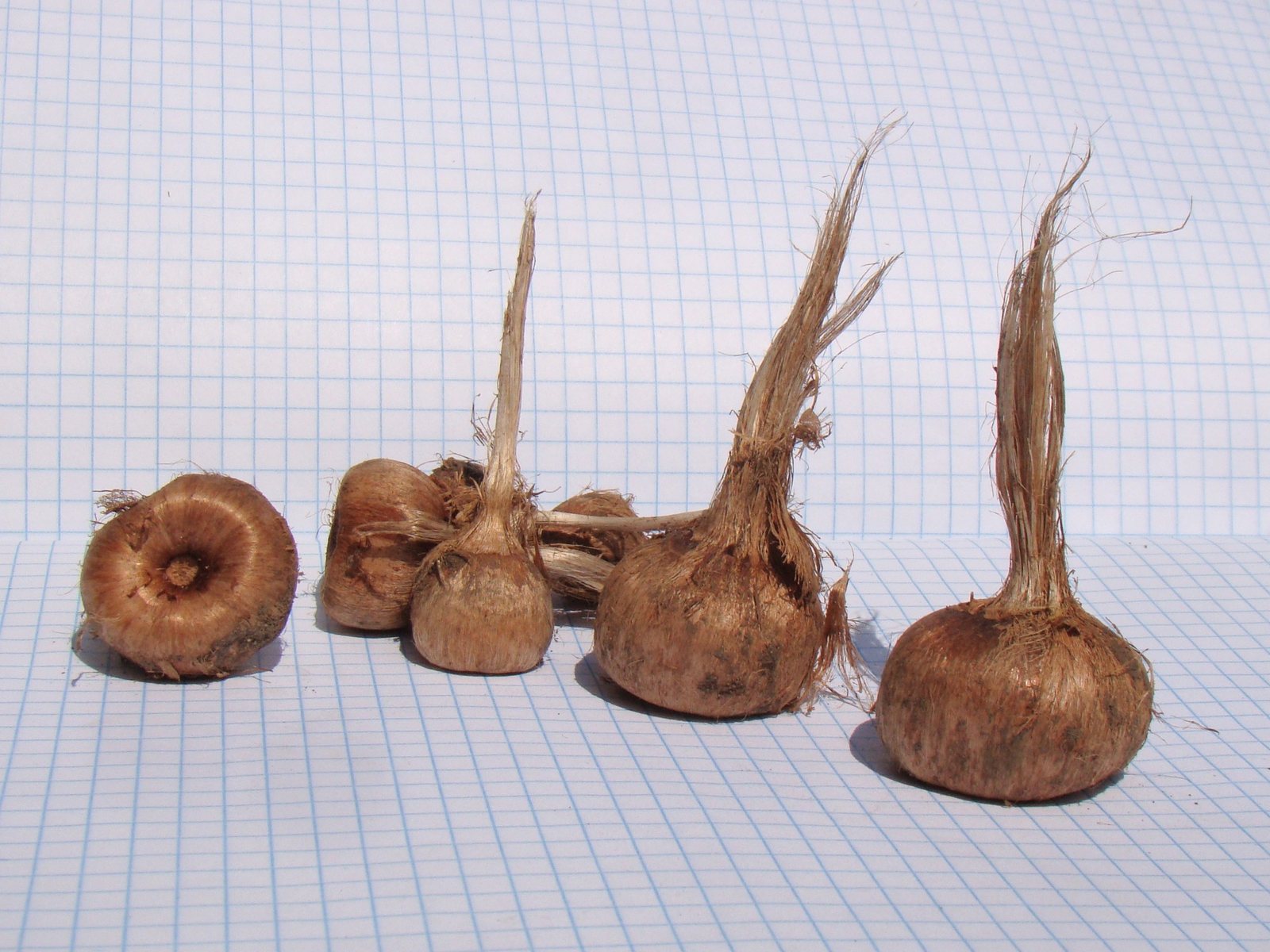
Crocus sativus. Family Iridaceae. Bulb.
Also called Autumn crocus, Saffron.
Saffron crocus is an autumn-flowering perennial grown from corms for its lilac-purple flowers and edible red stigmas, the source of saffron. It needs a sunny site with excellent drainage and a relatively dry summer rest; cold, waterlogged soil is its main weakness.
At a glance
- Sun
- Full sun; choose a position that stays sunny in autumn.
- Water
- Water moderately during autumn and winter growth if rainfall is insufficient. Keep nearly dry during summer dormancy and never leave the soil waterlogged.
- Soil
- Well-drained sandy or gritty loam, preferably neutral to slightly alkaline. Use raised beds or containers where soil is heavy or winters are wet.
- Height
- 0.3-0.5 ft (0.1-0.15 m)
- Spread
- 0.2-0.3 ft (0.05-0.1 m) per corm, gradually forming wider clumps
- Flowers
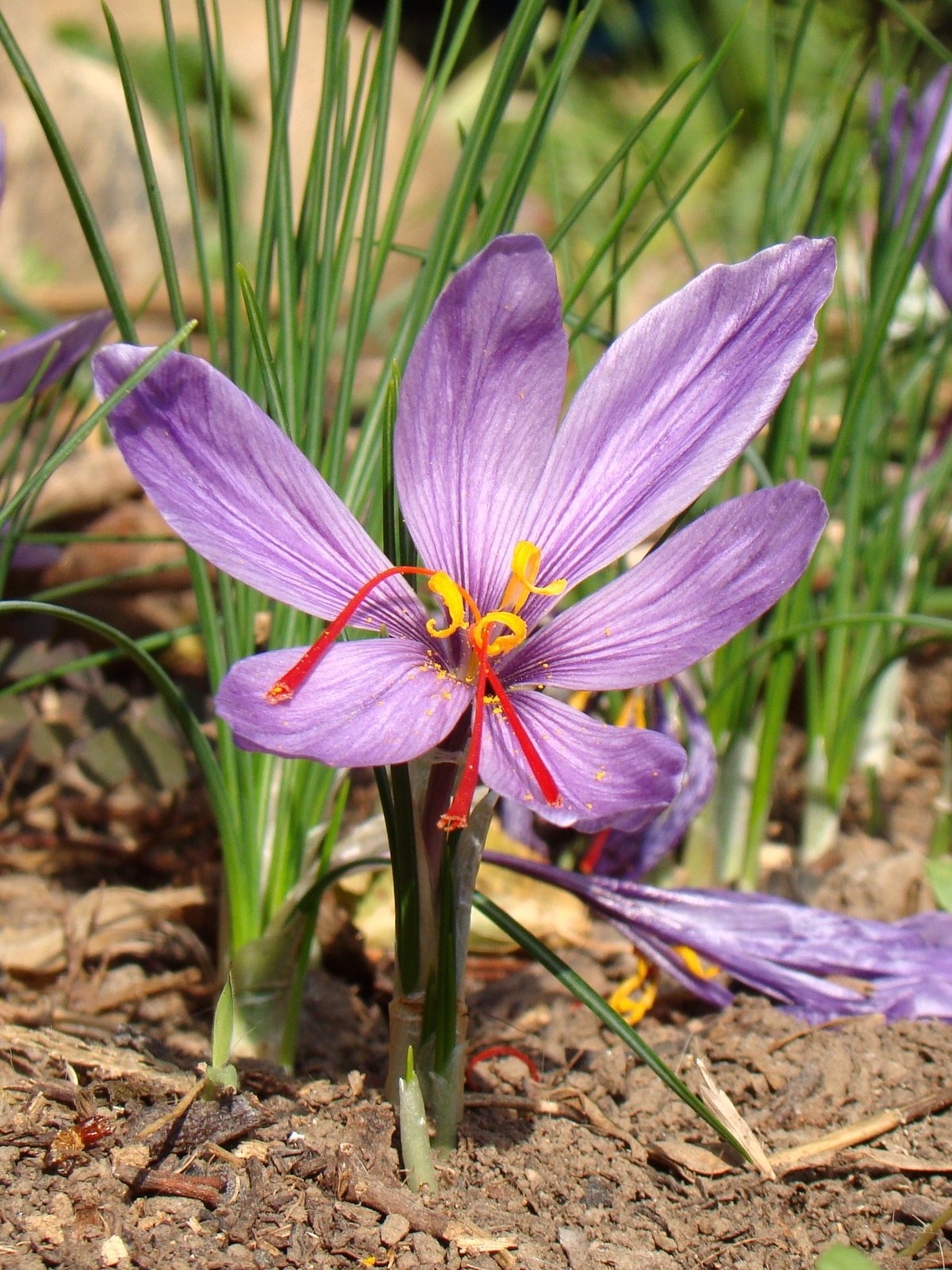
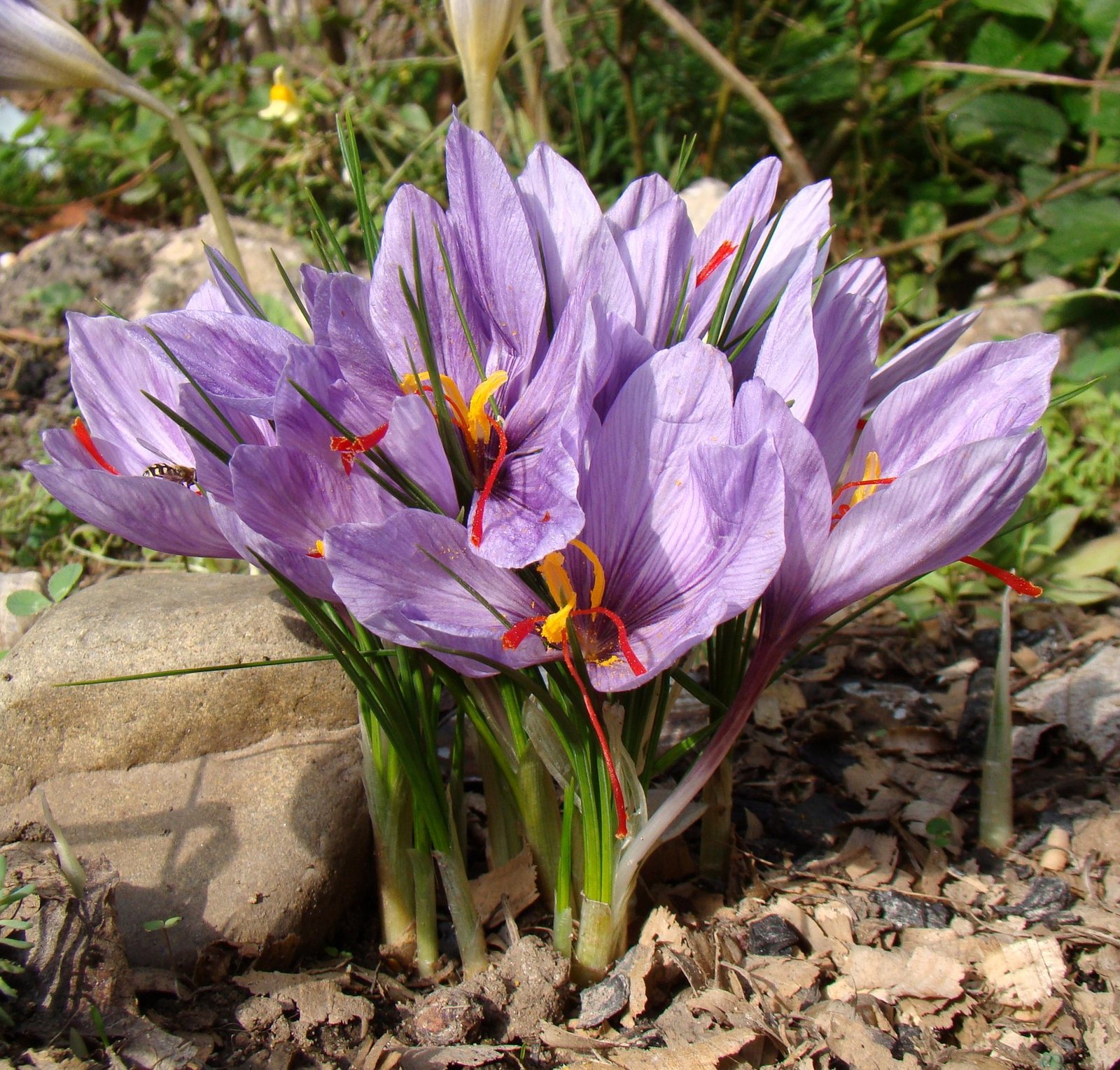
- Autumn: lilac-purple flowers with darker veins, yellow anthers and three long red stigmas.
- Foliage
- Narrow, grass-like green leaves with a pale central stripe appear around flowering time and remain through winter into spring before dying back.
- Growth
- Seasonal growth is quick; clumps increase slowly to moderately through daughter corms.
- Care needed
- Medium
The year at a glance
- Pollinators
- Heat tolerant
- Low allergen
- Edible
| J | F | M | A | M | J | J | A | S | O | N | D | |
|---|---|---|---|---|---|---|---|---|---|---|---|---|
| Flowers | ||||||||||||
| Fruit | ||||||||||||
| Plant |
Northern hemisphere months. In Australia, shift them by six.
- Difficulty
- Moderate
- Toughness
- Fairly tough
Will it suit your garden?
Pick your zone, country, light and whether you have pets.
Full sun is 6 or more hours of direct sun a day, part shade 3 to 6 hours, shade under 3.
How it grows
Planting day
0.4 ft (0.13 m)
full size
About 1 years to full size.
From a typical nursery size, at an average rate for this kind of plant. A rule of thumb, not a forecast.
Good to know
- Cats and dogs
- Mildly toxic: may upset a stomach
- Growth rate
- Slow
Care
Jobs through the year
- WaterSep–Nov, every 14 days
- Water established corms only if soil begins drying and rainfall is insufficient; water newly planted corms once.
- WaterJan–Feb, Dec, every 21 days
- Water only during dry, unfrozen conditions; winter rainfall usually suffices.
- WaterMar–May, every 14 days
- Water during prolonged dry spells while leaves remain green; stop as foliage dies.
- FeedSep
- Apply a light balanced fertiliser as growth begins only if soil is poor.
- DivideJul–Aug
- Every three to five years, lift crowded dormant clumps, separate corms and replant promptly.
- PruneMay–Jun
- Remove foliage only once completely yellow and dry.
- HarvestOct–Nov
- Pick only the three red stigmas from newly opened flowers on dry mornings and dry promptly.
- ProtectJun–Aug
- Keep dormant corms nearly dry and away from routinely irrigated beds.
- ProtectAug–Sep
- Where rodents are troublesome, fit wire mesh that permits shoots to emerge.
- Plant dormant corms in late summer, about 4-6 in (10-15 cm) deep and 3-4 in (8-10 cm) apart.
- Water after planting, then supply moisture during active growth only when the soil begins to dry.
- Keep dormant corms dry in summer; avoid beds receiving frequent lawn or vegetable irrigation.
- Apply a light dressing of balanced fertiliser as growth starts if the soil is poor.
- Lift and separate crowded clumps during summer dormancy, usually every three to five years.
Pruning. Do not cut green leaves: they replenish the corms for the next flowering season. Remove foliage only after it has yellowed and dried in late spring or early summer.
Harvest
Pick the three red stigmas from newly opened flowers on a dry autumn morning, using clean fingers or tweezers. Dry them promptly in gentle warmth until brittle, then store in an airtight container away from light; correctly identified saffron stigmas are the edible spice, not the corms.
Through the year
- Late summer
- Plant purchased corms or lift, divide and promptly replant dormant clumps.
- Early autumn
- Resume modest watering as growth begins if rainfall is lacking.
- Autumn
- Harvest red stigmas from newly opened flowers and dry them for storage.
- Winter
- Keep leaves intact and check that beds and containers drain freely.
- Spring
- Allow leaves to keep growing; water during prolonged dry spells.
- Summer
- Remove fully dead foliage and keep dormant corms relatively dry.
In the garden
- Plant in small drifts along sunny gravel paths where the low autumn flowers are easy to see.
- Use in a dedicated herb or spice bed where flowers can be identified and harvested safely.
- Grow in free-draining terracotta pots to control summer watering and bring flowers close to eye level.
- Place among widely spaced Mediterranean shrubs, leaving open sunny pockets for winter foliage.
Garden styles it suits: Mediterranean, Dry gravel garden, Potager (kitchen garden), Herb parterre, Edible landscape and Autumn colour.
Plant it with: Lavender, Creeping thyme, Rosemary and Bearded iris.
Wildlife: Bees may visit the autumn flowers for pollen. The plant is sterile and does not produce viable seed.
Problems to watch for
- Corm rot in wet soil: improve drainage, use raised beds and discard soft or mouldy corms.
- Mice, voles or squirrels eating corms: protect plantings with securely fitted wire mesh that allows shoots through.
- Slugs and snails damaging flowers: inspect during damp weather and use barriers or wildlife-conscious controls.
- Few flowers: provide more sun, avoid cutting green leaves and divide overcrowded clumps during dormancy; small daughter corms may need time to reach flowering size.
Safety
The red stigmas are edible in normal culinary quantities, but large doses of saffron can cause serious poisoning in people. Corms and other non-spice parts should not be eaten; ingestion may cause vomiting or diarrhoea in cats and dogs. Toxicity in horses is not well established, so prevent access. Do not confuse it with highly poisonous Colchicum species, also called autumn crocus.
Easily confused with
Autumn crocus or meadow saffron (Colchicum autumnale)
Highly poisonous Colchicum has six stamens rather than the three found in true crocuses. Its broad leaves usually appear in spring, unlike saffron's narrow, striped leaves;
Bieberstein's crocus (Crocus speciosus)
Another purple autumn crocus, but its style divides into many fine orange branches rather than saffron's three long, deep-red stigmas. Its leaves generally appear in spring.
Spring crocus (Crocus vernus)
Flowers in late winter or spring rather than autumn and lacks saffron's three long, conspicuous red stigmas.
The name
The Latin epithet sativus means cultivated or sown, reflecting its long history as a crop.
Propagation. Separate daughter corms during summer dormancy and replant promptly. This sterile species is propagated by corms, not seed; small offsets may take more than one growing season to flower.
Checked against open data
- Accepted botanical name
- Crocus sativus
- Native range
- Greece.
Sources: GBIF (CC BY 4.0) and Trefle (CC BY 4.0). The care and design notes are LandscapeGPT's own.
See it in your own yard.
Upload a photo of your yard and see it redesigned with plants that suit your climate, each checked against your zone.