Sago palm
Cycas revoluta. Family Cycadaceae. Shrub.
Also called Japanese sago palm, King sago.
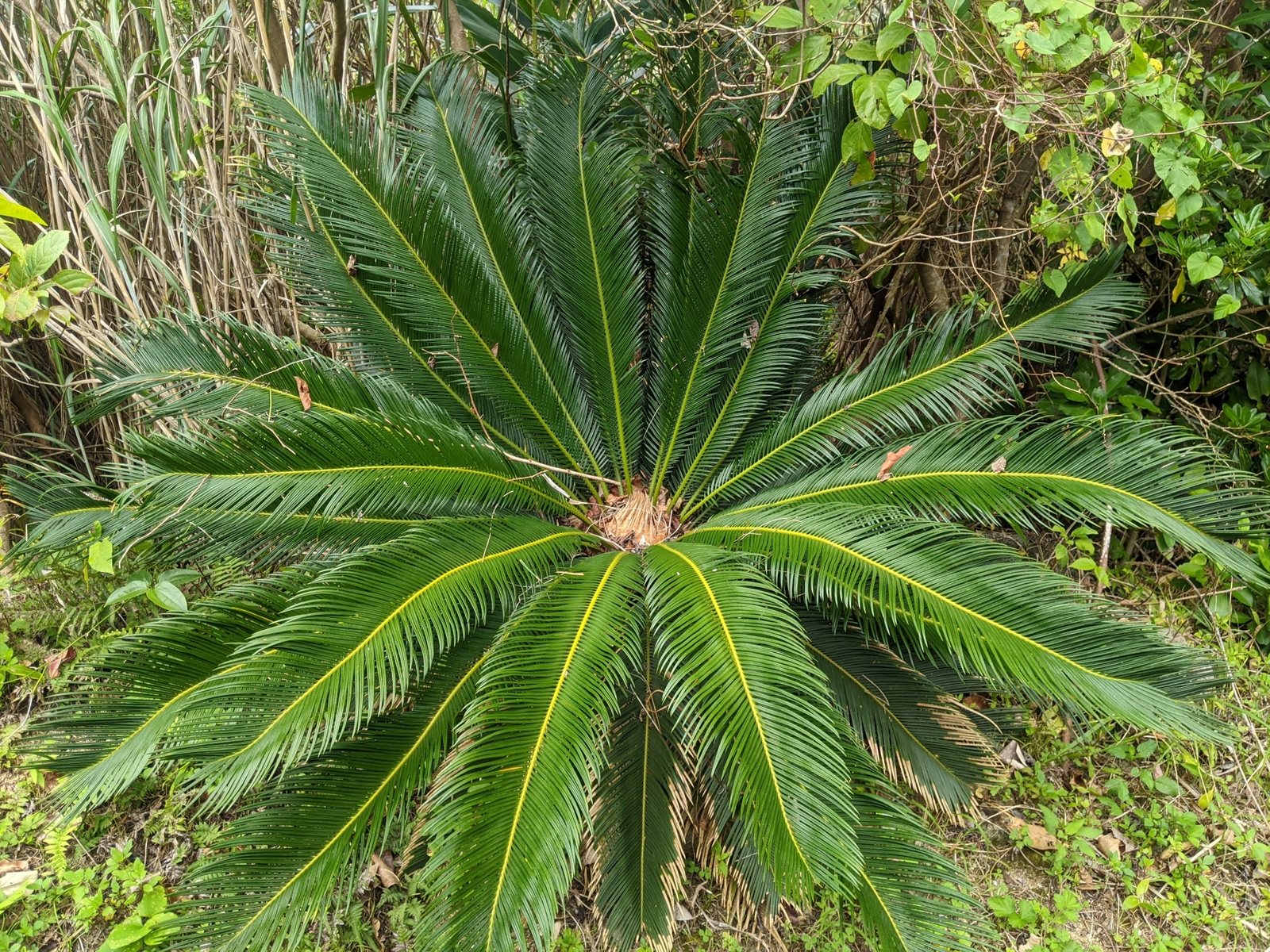
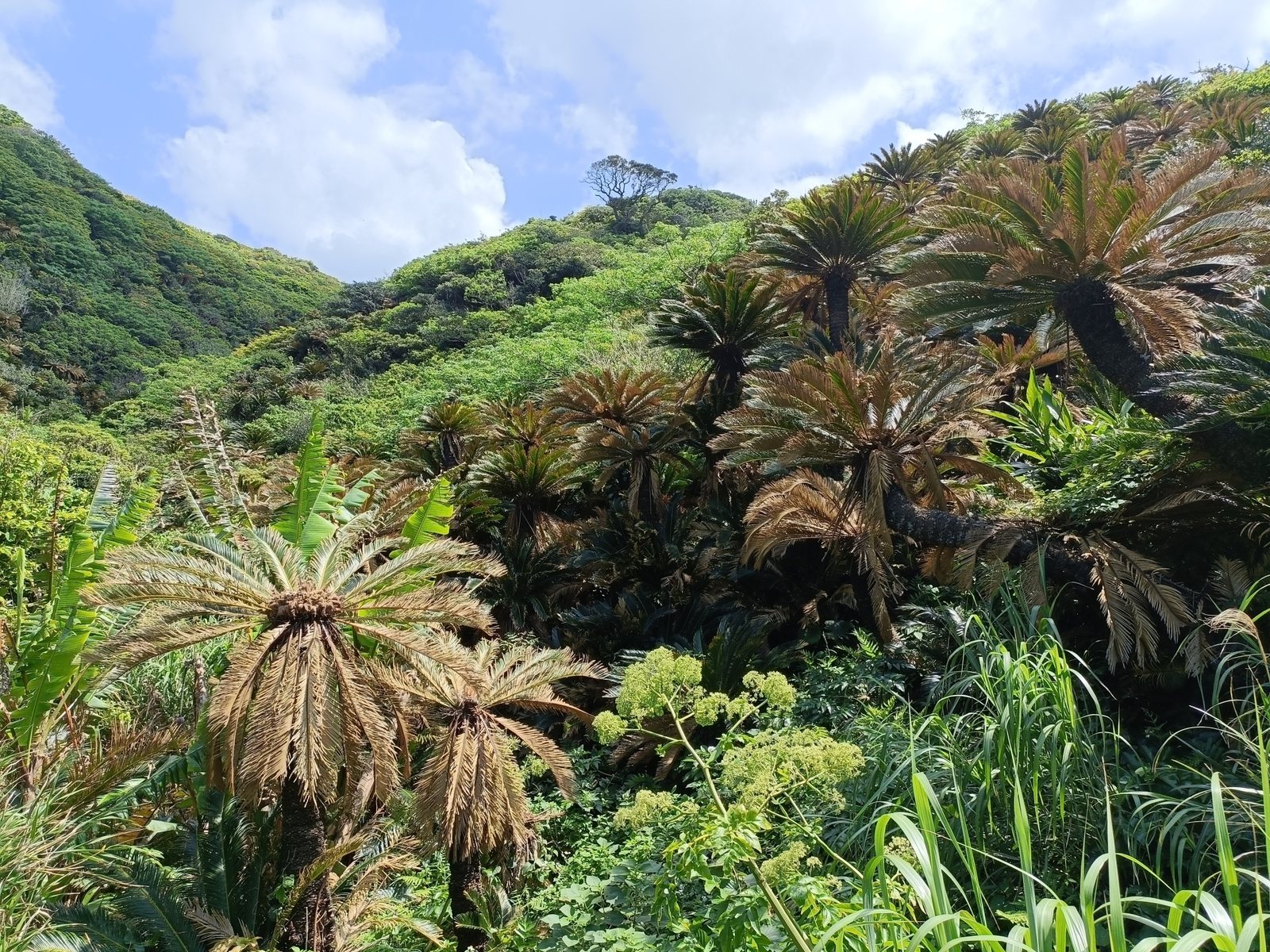
Sago palm is a slow-growing cycad, not a true palm, with stiff, feather-shaped leaves arranged around a stout trunk. Grow it for its evergreen, architectural shape in warm gardens or in a container that can spend winter under cover. All parts are highly poisonous, making it unsuitable where children or animals might chew the plant or collect its seeds.
At a glance
- Sun
- Full sun to partial shade; light afternoon shade helps in very hot, dry climates. Acclimatise indoor-grown plants gradually before placing them in direct sun.
- Water
- Water deeply, then let the upper soil dry before watering again. Established plants tolerate some drought; keep substantially drier during cool winter weather.
- Soil
- Well-drained sandy or loamy soil, preferably slightly acidic to neutral. For containers, use a free-draining potting mix and a pot with drainage holes.
- Height
- 6-10 ft (1.8-3 m), occasionally taller after many decades
- Spread
- 6-8 ft (1.8-2.4 m)
- Foliage
- Evergreen. Glossy, dark green, feather-shaped leaves with narrow, rigid leaflets and sharp tips. New leaves emerge soft and pale before hardening.
- Growth
- Very slow; usually produces one flush of leaves a year, sometimes none in cool conditions.
- Care needed
- Medium
The year at a glance
- Drought tolerant
- Heat tolerant
| J | F | M | A | M | J | J | A | S | O | N | D | |
|---|---|---|---|---|---|---|---|---|---|---|---|---|
| Plant |
Northern hemisphere months. In Australia, shift them by six.
- Difficulty
- Moderate
- Toughness
- Fairly tough
Will it suit your garden?
Pick your zone, country, light and whether you have pets.
Full sun is 6 or more hours of direct sun a day, part shade 3 to 6 hours, shade under 3.
How it grows
Planting day
1.6 ft (0.5 m)
After 1 year
2.4 ft (0.74 m)
After 2 years
3 ft (0.98 m)
After 3 years
4 ft (1.2 m)
After 5 years
6 ft (1.7 m)
About 8 years to full size.
From a typical nursery size, at an average rate for this kind of plant. A rule of thumb, not a forecast.
Good to know
- Cats and dogs
- Toxic
- Growth rate
- Slow
Care
Jobs through the year
- WaterApr–May, Sep–Oct, every 21 days
- For established plants in suitable outdoor ground, water only when the upper soil has dried; young plants need more.
- WaterJun–Aug, every 14 days
- Deep-water established outdoor plants only if the upper soil is dry; check containers more frequently.
- WaterJan–Mar, Nov–Dec, every 28 days
- Check frost-free overwintering pots and water sparingly only if nearly dry.
- FeedApr–May
- Apply slow-release palm-and-cycad fertiliser at the label rate as growth resumes.
- PruneMay–Jun
- Wear gloves and remove fully brown or badly damaged leaves without injuring the crown.
- ProtectJan–Apr, Sep–Dec
- Keep in a container in zones 6–7 and move into bright frost-free shelter before frost.
- ProtectJan–Dec
- Keep all parts, especially seeds, away from children and pets; this plant is highly poisonous.
- Water at soil level and never leave a container standing in water.
- Apply a slow-release fertiliser formulated for palms and cycads in spring, following the label; avoid feeding during winter dormancy.
- Keep mulch clear of the trunk and crown.
- Move container plants into bright, frost-free shelter before autumn frosts; avoid cold, wet roots.
- Wear gloves when handling the sharp foliage, and promptly collect fallen seeds where children or animals could reach them.
Pruning. Remove fully brown, dead or badly damaged leaves close to their bases in late spring, without cutting into the trunk or crown. Retain healthy green leaves and avoid stripping the plant to a bare trunk.
Through the year
- Spring
- Check drainage, resume watering as growth starts and apply a labelled palm-and-cycad fertiliser.
- Late spring
- Remove dead leaves and gradually acclimatise overwintered container plants to outdoor light.
- Summer
- Water containers when the upper mix dries, and inspect leaf undersides for scale insects.
- Late summer
- Collect any loose or fallen seeds promptly and dispose of them where children and animals cannot reach them.
- Autumn
- Move pots into bright, frost-free shelter before frost arrives.
- Winter
- Water sheltered plants sparingly, keeping the mix from becoming completely dry but never saturated.
In the garden
- Use a single specimen in a large courtyard container to emphasise its symmetrical crown.
- Plant among gravel and low groundcovers for a strong evergreen focal point.
- Combine with broad-leaved shade plants in a sheltered subtropical border for contrasting leaf shapes.
- Use matching containers to frame an entrance, leaving enough room for the sharp leaves to remain clear of people.
Garden styles it suits: Architectural minimal, Modern tropical, Modern courtyard, Japanese, Mediterranean and Luxury resort.
Plant it with: Mondo grass, Cast-iron plant, Agapanthus and Dwarf pittosporum.
Wildlife: Offers some shelter for small animals, but has little value for typical garden pollinators because it does not produce flowers. Do not allow pets or livestock access to the plant or its seeds.
Problems to watch for
- Scale insects, including cycad aulacaspis scale in affected warm regions: inspect leaf undersides and stems, isolate infested pots and use a labelled horticultural oil with thorough coverage and repeat treatments as directed. Heavy infestations may need specialist treatment.
- Mealybugs: check leaf bases and offsets, remove small colonies by hand and treat persistent infestations with a labelled insecticidal soap or horticultural oil.
- Root or crown rot: prevent waterlogging, keep the crown uncovered and reduce winter watering. Repot container plants into fresh, free-draining mix if roots are deteriorating.
- Yellow, distorted new leaves from manganese deficiency: have soil or growing mix assessed and correct the deficiency with a labelled manganese treatment; ordinary general-purpose feeding may not solve it.
Safety
Highly toxic to cats, dogs, horses and people. All parts are poisonous, especially the seeds; ingestion can cause vomiting, severe liver damage and death. Suspected ingestion is an emergency: contact a veterinarian or poison service immediately and do not wait for symptoms.
Easily confused with
Queen sago (Cycas circinalis)
Usually has much longer, softer-looking leaves with flatter, broader leaflets; sago palm has shorter, stiffer leaves with leaflet margins rolled under.
Cardboard palm (Zamia furfuracea)
Has broad, leathery, paddle-shaped leaflets rather than the narrow, sharply pointed leaflets of sago palm.
Virgin's palm (Dioon edule)
Has generally flatter, blue-green to grey-green leaves; sago palm is typically glossy dark green with strongly rolled-under leaflet margins.
The name
The species name revoluta refers to the rolled-under leaflet margins, while the common name reflects its palm-like appearance and historical association with starch called sago.
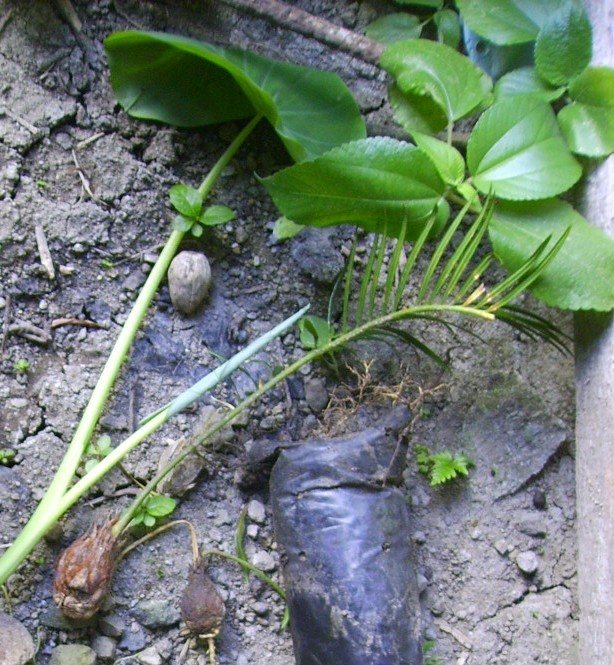
Propagation. Usually propagated from basal offsets or fresh seed. Separate offsets in warm weather with clean tools, allow cut surfaces to dry and pot into a barely moist, free-draining mix; rooting is slow. Seed production requires separate male and female plants and successful pollination;
Checked against open data
- Accepted botanical name
- Cycas revoluta
- In the US and Canada
- Introduced in the lower 48 states, Pacific Basin and Puerto Rico.
- Native range
- China Southeast, Japan, Nansei-shoto and Taiwan.
- Measured
- Average height 150 cm.
Sources: GBIF (CC BY 4.0), USDA PLANTS and Trefle (CC BY 4.0). The care and design notes are LandscapeGPT's own.
See it in your own yard.
Upload a photo of your yard and see it redesigned with plants that suit your climate, each checked against your zone.