Salmon correa
Correa pulchella. Family Rutaceae. Shrub.
Also called Australian fuchsia, Salmon-flowered correa.
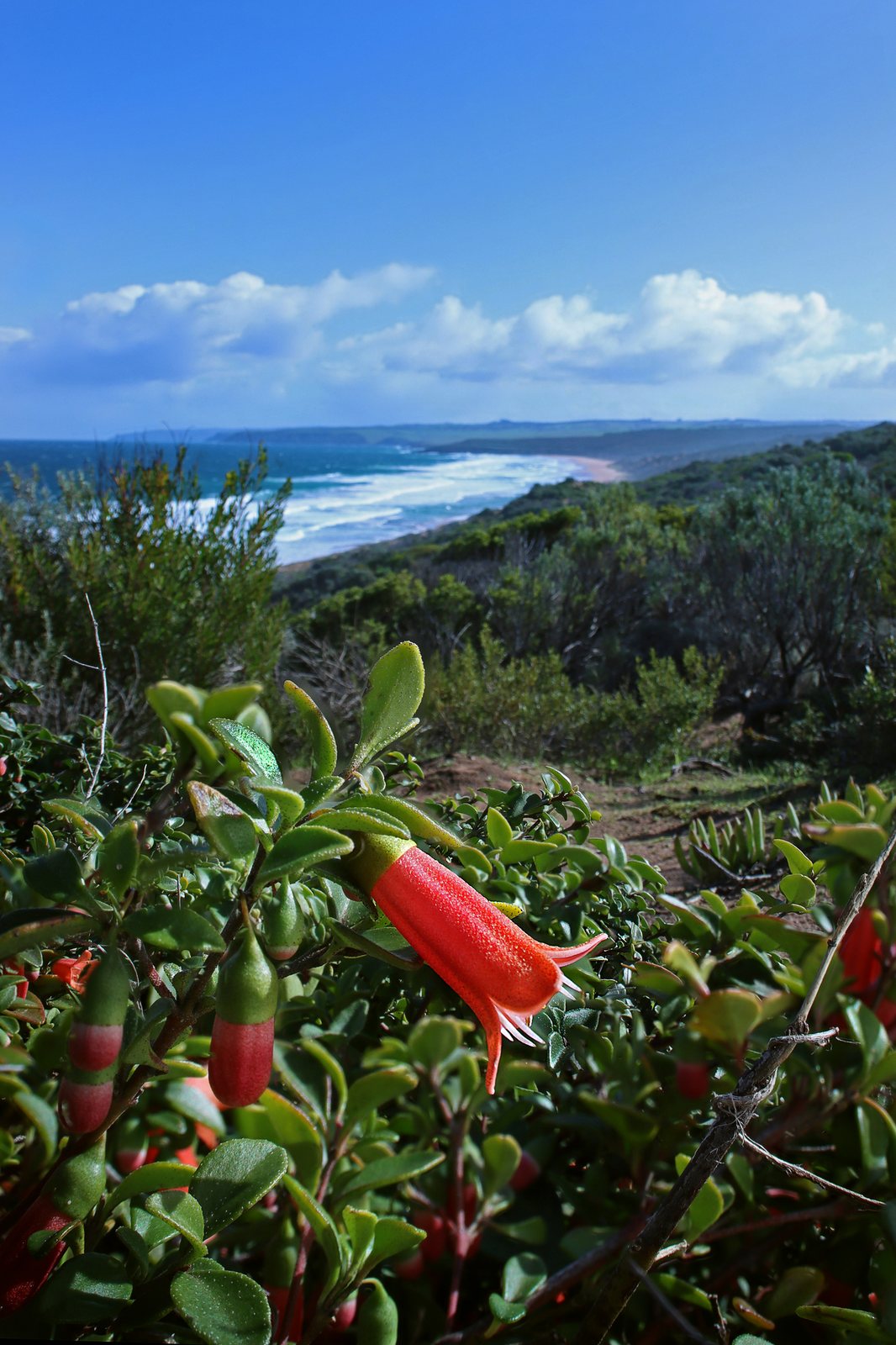
A small evergreen shrub native to southern Australia, salmon correa bears hanging tubular flowers through the cooler months. Gardeners grow it for its long flowering season, compact habit and tolerance of coastal conditions. It needs winter protection in most of Canada, colder parts of the United States and all but the mildest, sheltered parts of the United Kingdom.
At a glance
- Sun
- Full sun to partial shade; afternoon shade is helpful in hot inland gardens.
- Water
- Water regularly during establishment, then deeply during prolonged dry spells. Allow the soil surface to dry between waterings; avoid constantly wet roots.
- Soil
- Well-drained sandy, gravelly or loamy soil, preferably slightly acidic to neutral. Improve drainage or use a raised bed where soil is heavy.
- Height
- 1-3 ft (0.3-0.9 m)
- Spread
- 3-5 ft (0.9-1.5 m)
- Flowers
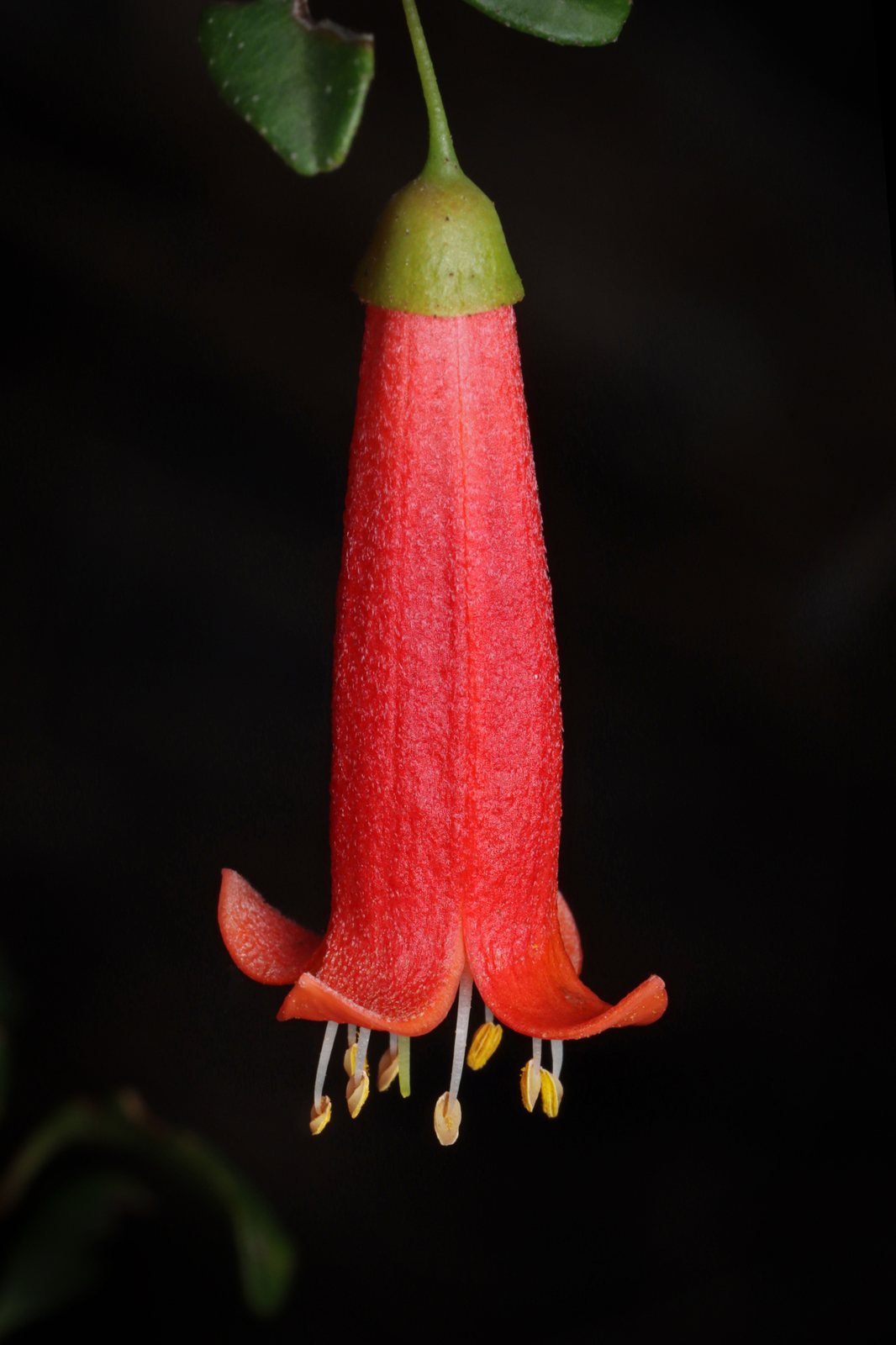
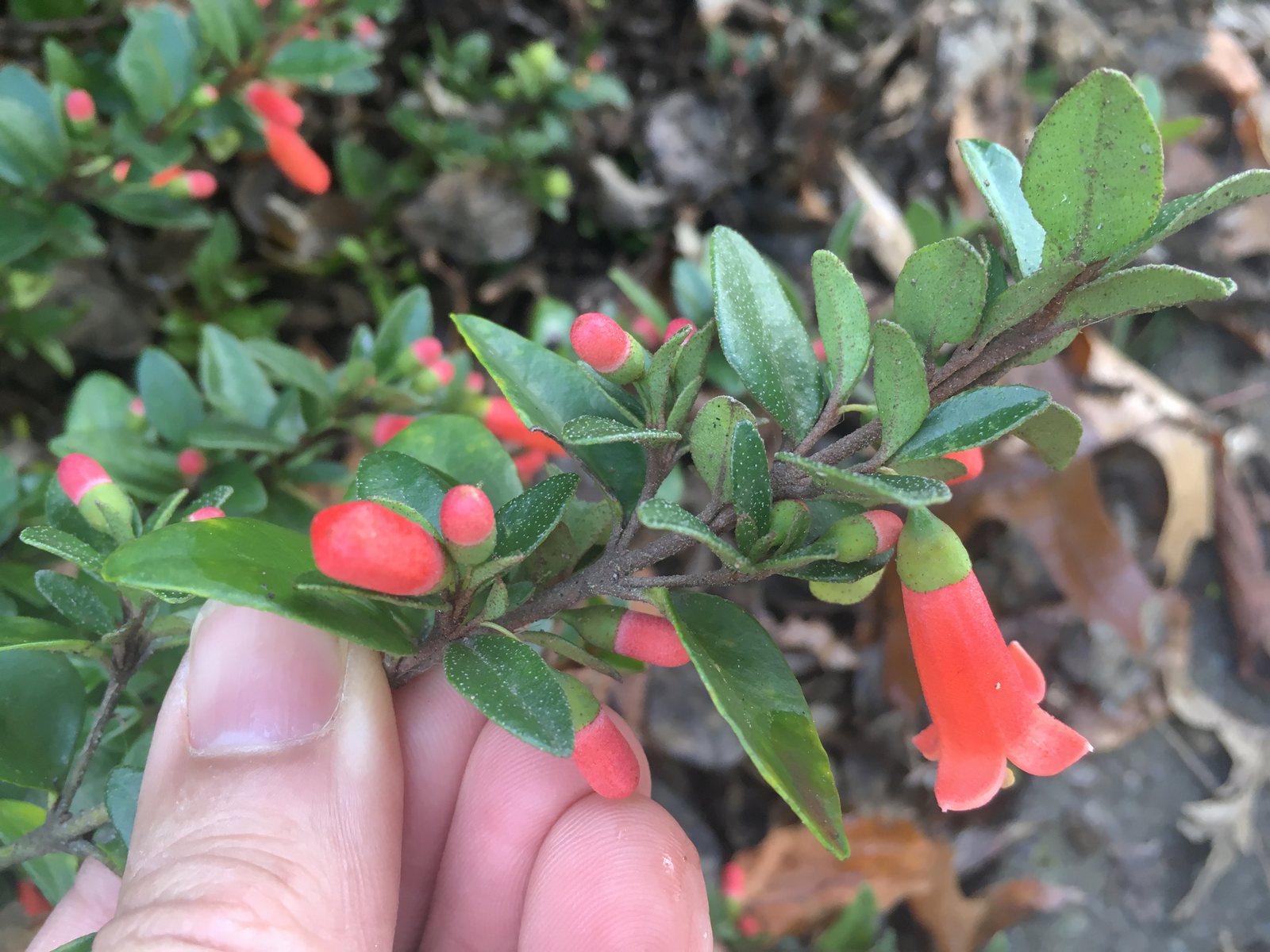
- Mainly autumn through spring, with timing varying by climate and selection; hanging tubular flowers are salmon-pink to coral, sometimes paler pink.
- Foliage
- Evergreen. Small, opposite, oval green leaves with paler, softly hairy undersides.
- Growth
- Moderate
- Care needed
- Low
The year at a glance
- Pollinators
- Drought tolerant
- Heat tolerant
- Wildlife
- Low allergen
| J | F | M | A | M | J | J | A | S | O | N | D | |
|---|---|---|---|---|---|---|---|---|---|---|---|---|
| Flowers | ||||||||||||
| Plant |
Northern hemisphere months. In Australia, shift them by six.
- Difficulty
- Hard
- Toughness
- Needs looking after
Will it suit your garden?
Pick your zone, country, light and whether you have pets.
Full sun is 6 or more hours of direct sun a day, part shade 3 to 6 hours, shade under 3.
How it grows
Planting day
1.6 ft (0.5 m)
After 1 year
1.7 ft (0.52 m)
After 2 years
1.8 ft (0.54 m)
After 3 years
1.8 ft (0.56 m)
After 5 years
2 ft (0.6 m)
full size
About 5 years to full size.
From a typical nursery size, at an average rate for this kind of plant. A rule of thumb, not a forecast.
Good to know
- Cats and dogs
- Safe
- Native to
- Australia
- Growth rate
- Moderate
Care
Jobs through the year
- WaterApr–May, Sep–Oct, every 14 days
- For established outdoor plants, water only when dry; young plants and pots need more checks.
- WaterJun–Aug, every 14 days
- Water established plants deeply during drought; containers may need much more frequent watering.
- WaterJan–Mar, Nov–Dec, every 14 days
- Check overwintering pots and water sparingly only when the surface has dried.
- PruneApr–May
- Lightly trim leafy shoots after flowering; avoid cutting into bare old wood.
- MulchMay
- Apply a thin organic mulch clear of the stems.
- FeedApr–May
- If growth is weak, apply a light low-phosphorus feed for Australian natives.
- ProtectJan–Apr, Oct–Dec
- Grow in a movable pot in zones 6–7 and overwinter somewhere bright, cool and frost-free.
- Plant with the root collar at soil level and keep the surrounding soil well drained.
- Water through the first growing season; once established, supplement rainfall during extended drought.
- Apply a thin organic mulch, keeping it clear of the stems.
- Feed lightly in spring only if needed, using a low-phosphorus fertiliser suitable for Australian native plants.
- In colder climates, grow in a pot and move it to a bright, cool, frost-free place for winter.
Pruning. Lightly trim after the main flowering period, usually in spring, to keep the shrub dense. Shorten leafy shoots rather than cutting hard into old, bare wood.
Through the year
- Spring
- After the main flowering flush, lightly prune straggly shoots and remove dead or damaged growth.
- Spring
- Plant after hard frosts have passed in cooler districts; refresh mulch and feed lightly if growth is weak.
- Summer
- Check soil moisture during dry weather, especially in pots, but let the surface dry between waterings.
- Early autumn
- Plant in mild-winter districts so roots can establish before summer heat.
- Late autumn
- Move container plants under cover before damaging frosts and reduce watering as growth slows.
- Winter
- Enjoy the flowers and check that outdoor plants are not sitting in saturated soil.
In the garden
- Plant along a sheltered path where the hanging flowers can be seen close up.
- Use beneath an open tree canopy with other shrubs that tolerate light shade and dry spells.
- Combine with grey-leaved shrubs and fine-textured grasses in a well-drained coastal or gravel garden.
- Grow in a container on a sheltered patio, allowing winter protection where needed.
- Repeat plants as a low, informal edging rather than a tightly clipped hedge.
Garden styles it suits: Australian native, Coastal, Mediterranean, Dry gravel garden, Wildlife garden and Winter interest.
Plant it with: Coastal rosemary, Lomandra, Kangaroo paw, Lavender, Rock rose and Blue fescue.
Wildlife: The nectar-rich flowers attract honeyeaters in Australia and may attract hummingbirds where grown in North America. The evergreen branches provide low shelter for small garden animals.
Problems to watch for
- Root rot in wet soil: improve drainage, keep mulch away from the crown and avoid frequent watering of established plants.
- Frost damage: choose a sheltered position, cover during occasional cold snaps or overwinter pots frost-free.
- Scale insects: inspect stems and leaf undersides; treat small infestations with a labelled horticultural oil, avoiding hot weather.
- Sparse, leggy growth: provide more light if heavily shaded and trim lightly after flowering.
Safety
Not known to be toxic to people, cats, dogs or horses, although species-specific safety information is limited. No part is regarded as food; discourage pets and children from eating it.
Easily confused with
Common correa (Correa reflexa)
Often has red tubular flowers with conspicuous green tips and more pointed leaves; salmon correa usually has rounder leaves and more uniformly salmon-pink flowers.
White correa (Correa alba)
Has open, star-shaped white flowers rather than long salmon-pink tubes, and usually greyer foliage.
The name
Correa honours Portuguese botanist José Correia da Serra, while pulchella means 'pretty' or 'little and beautiful', and salmon refers to the flower colour.
Propagation. Take semi-ripe cuttings from healthy, non-flowering shoots in late summer or early autumn and root them in a free-draining medium under cover. Seed germination can be slow and unreliable, and seedlings may differ from the parent.
Checked against open data
- Accepted botanical name
- Correa pulchella
- Native range
- South Australia.
Sources: GBIF (CC BY 4.0) and Trefle (CC BY 4.0). The care and design notes are LandscapeGPT's own.
See it in your own yard.
Upload a photo of your yard and see it redesigned with plants that suit your climate, each checked against your zone.