Santa Rosa plum
Prunus salicina 'Santa Rosa'. Family Rosaceae. Tree.
Also called Santa Rosa Japanese plum.
Santa Rosa is a deciduous Japanese-type plum grown for juicy, red-purple fruit with amber flesh, used fresh or in preserves. It crops best where summers are warm and winters provide enough chilling; its early blossom is vulnerable to spring frost. It is partly self-fertile, but another compatible Japanese-type plum flowering at the same time usually improves cropping.
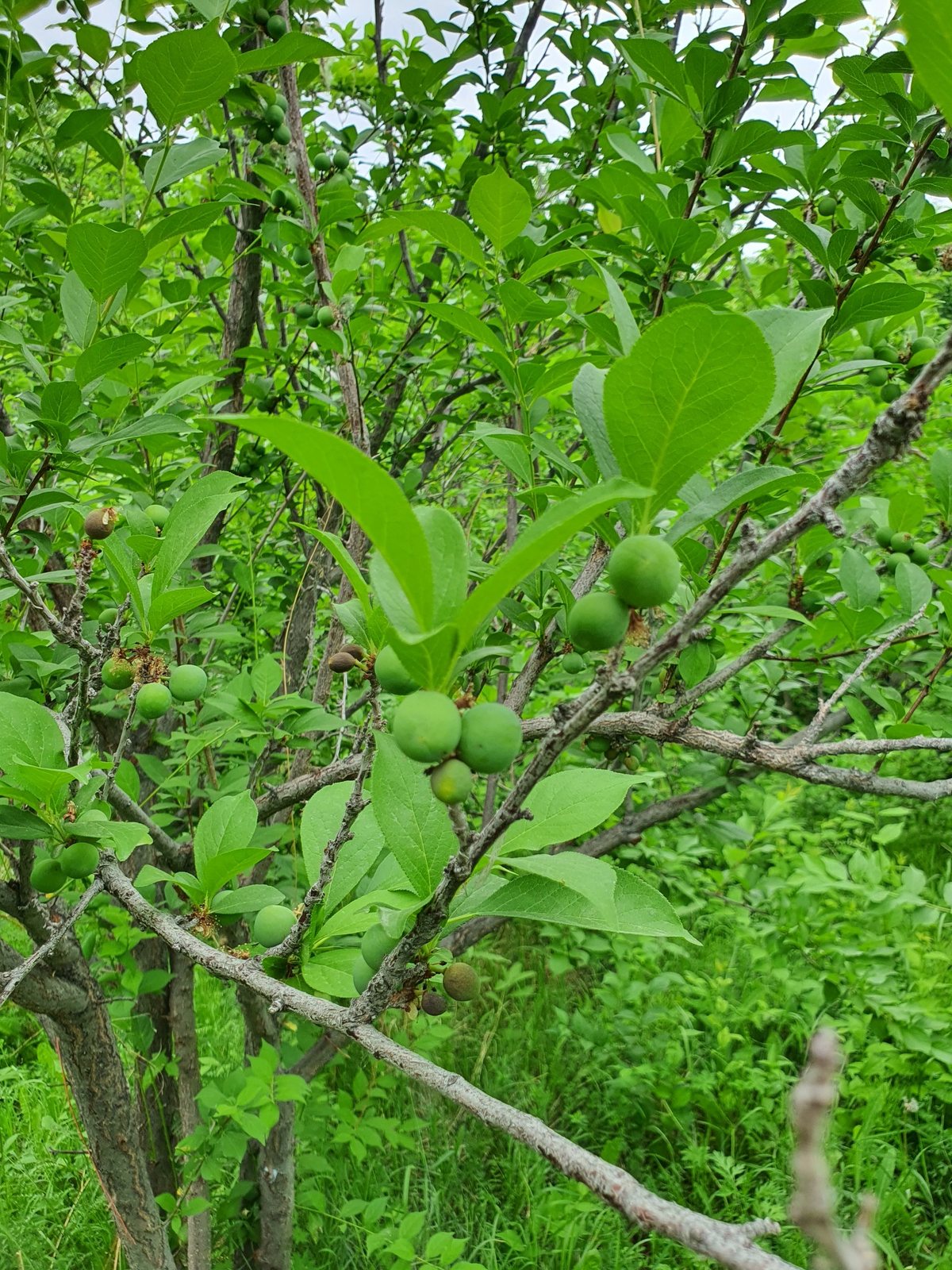
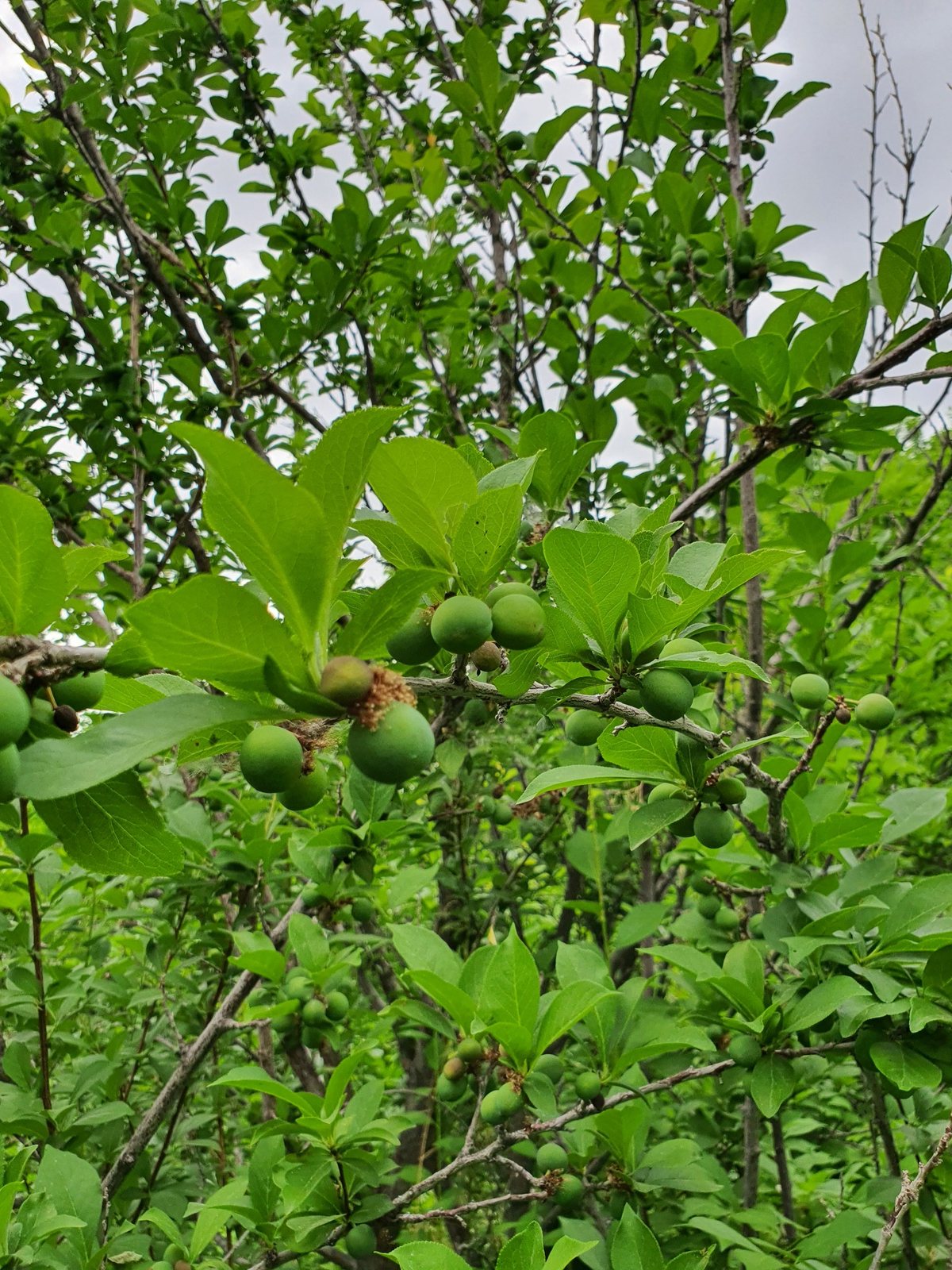
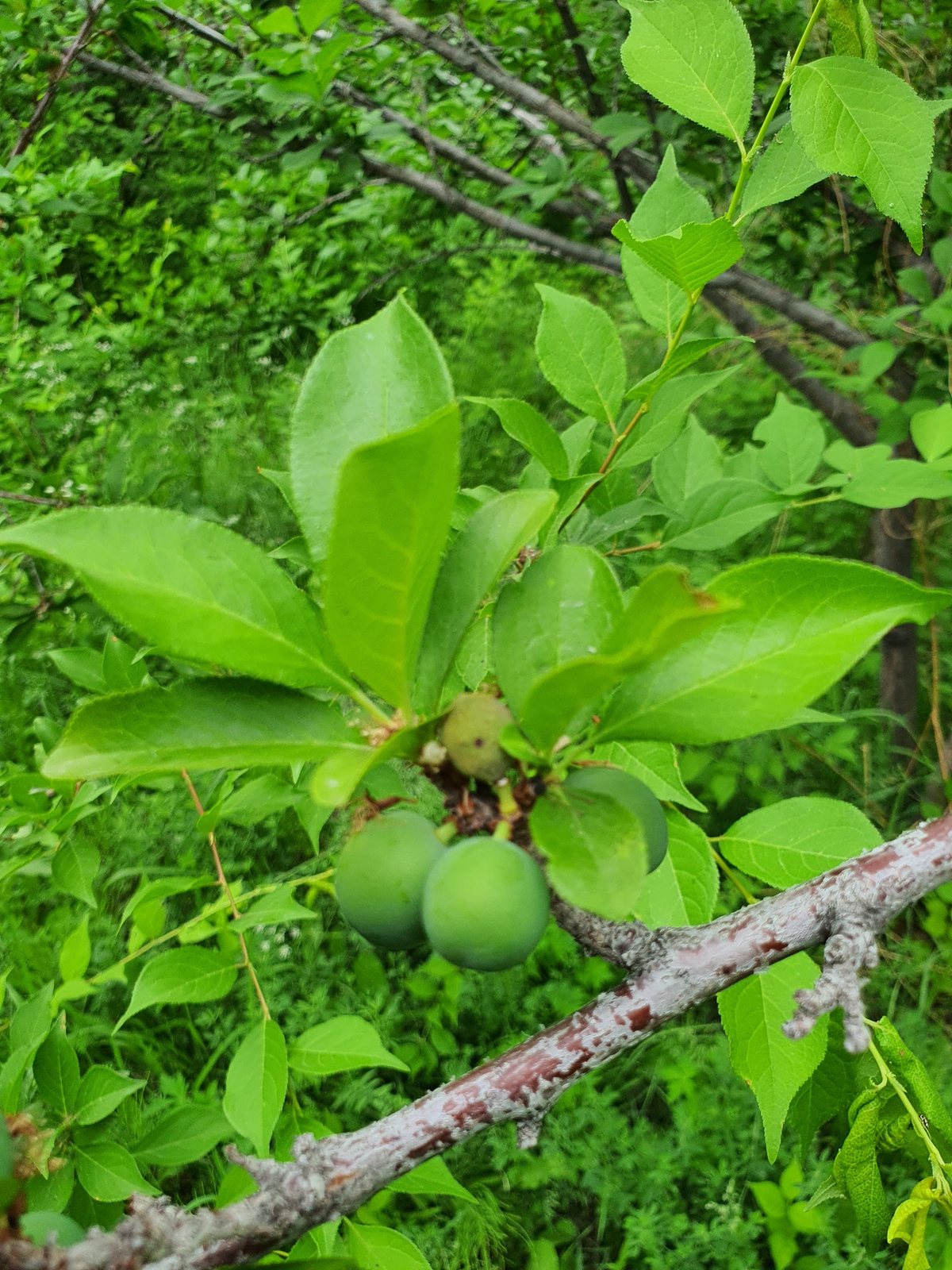
At a glance
- Sun
- Full sun, ideally at least 6-8 hours daily; choose a warm, sheltered position away from frost pockets.
- Water
- Water deeply during establishment and dry spells, especially while fruit is swelling. Keep soil evenly moist rather than saturated.
- Soil
- Fertile, well-drained loam is ideal; tolerates other soil textures if drainage is good. Avoid waterlogged ground.
- Height
- 15-25 ft (4.6-7.6 m) on a vigorous rootstock; dwarfing rootstocks and pruning keep it smaller.
- Spread
- 15-20 ft (4.6-6.1 m) on a vigorous rootstock; less on dwarfing rootstocks.
- Flowers
- White flowers in late winter or early spring, before the leaves; timing depends on climate.
- Foliage
- Green, oval to lance-shaped leaves with finely toothed edges; deciduous, sometimes turning yellow in autumn.
- Growth
- Moderate to fast when young, slowing as regular cropping begins.
- Care needed
- Medium
The year at a glance
- Pollinators
- Heat tolerant
- Wildlife
- Low allergen
- Edible
| J | F | M | A | M | J | J | A | S | O | N | D | |
|---|---|---|---|---|---|---|---|---|---|---|---|---|
| Flowers | ||||||||||||
| Fruit | ||||||||||||
| Plant |
Northern hemisphere months. In Australia, shift them by six.
- Difficulty
- Moderate
- Toughness
- Fairly tough
Will it suit your garden?
Pick your zone, country, light and whether you have pets.
Full sun is 6 or more hours of direct sun a day, part shade 3 to 6 hours, shade under 3.
How it grows
Planting day
7 ft (2 m)
After 1 year
7 ft (2.2 m)
After 2 years
8 ft (2.4 m)
After 3 years
9 ft (2.6 m)
After 5 years
10 ft (3 m)
About 20 years to full size.
From a typical nursery size, at an average rate for this kind of plant. A rule of thumb, not a forecast.
Good to know
- Cats and dogs
- Toxic
- Growth rate
- Moderate
Care
Jobs through the year
- WaterApr–May, Sep–Oct, every 14 days
- Water established trees deeply if soil is dry; young trees need more frequent watering.
- WaterJun–Aug, every 7 days
- Water during dry spells as fruit swells, keeping soil moist but not saturated.
- FeedMar
- Feed lightly only if growth is weak; avoid excessive nitrogen.
- MulchMar–Apr
- Apply 5-8 cm of organic mulch, keeping it clear of the trunk.
- PruneMay–Aug
- Prune lightly once in dry weather to maintain an open framework and remove crowded growth.
- PruneMay–Jun
- Thin crowded developing fruit to 10-15 cm apart.
- ProtectMar–Apr
- Cover blossom on frosty nights where practical, uncovering it for daytime pollination.
- HarvestJul–Aug
- Pick slightly yielding, flavourful red-purple plums with a gentle lift and twist.
- ProtectSep–Nov
- Clear diseased debris and fallen or mummified fruit, and check tree ties.
- Water young trees deeply whenever the root zone begins to dry; do not leave roots standing in water.
- Apply a 2-3 in (5-8 cm) layer of organic mulch, keeping it clear of the trunk.
- Feed lightly in early spring if growth is weak; avoid heavy nitrogen feeding that encourages shoots rather than fruit.
- Thin young fruit to roughly 4-6 in (10-15 cm) apart to improve size and reduce branch breakage.
- Keep the graft union above soil level and remove shoots arising below it.
- If crops are poor, check for blossom frost, inadequate winter chilling and the absence of a compatible pollinating plum.
Pruning. Train young trees to an open-centred framework with well-spaced main branches. Prune established trees lightly in dry weather in late spring or summer, removing dead, crossing and crowded growth; avoid autumn and winter pruning where silver leaf and bacterial canker are concerns.
Harvest
Pick in early to midsummer, depending on climate, when the fruit is red-purple, fragrant and yields slightly to gentle pressure; taste a sample because colour alone is not a reliable guide. Lift and twist ripe fruit gently, harvesting in several passes. Grafted trees commonly give their first worthwhile crop about 3-5 years after planting, depending on rootstock and growing conditions.
Through the year
- Late winter
- Plant dormant bare-root trees while soil is workable and not waterlogged; keep the graft above ground.
- Early spring
- Refresh mulch, feed only if needed, and protect blossom from forecast frost where practical.
- Late spring
- Thin developing fruit and inspect new shoots for aphids.
- Summer
- Water during dry spells and pick fruit as individual plums ripen.
- Summer
- Prune lightly in dry weather, opening crowded growth without stripping out productive branches.
- Autumn
- Remove fallen and mummified fruit, clear diseased debris and check ties for rubbing.
In the garden
- Use as a small orchard tree with compatible Japanese-type plums for more reliable pollination.
- Place in a sunny edible garden where spring blossom and summer fruit provide seasonal interest.
- Underplant outside the immediate trunk area with low herbs and flowers, keeping access clear for picking.
- Choose a suitable dwarfing rootstock for a smaller garden, allowing enough room for the mature canopy.
Garden styles it suits: Backyard orchard, Edible landscape, Potager (kitchen garden), Cottage garden, Homestead and Food forest.
Plant it with: Shiro plum, Chives, Sweet alyssum, Yarrow and Creeping thyme.
Wildlife: Flowers provide early pollen and nectar for bees. Birds and some mammals eat ripe fruit; use wildlife-safe, tightly secured netting if protection is needed.
Problems to watch for
- Brown rot: remove rotting and mummified fruit promptly, thin crowded fruit and prune for airflow; use locally approved treatments if disease is persistent.
- Bacterial canker and silver leaf: prune only in dry spring or summer weather, remove affected branches and avoid unnecessary wounds.
- Aphids: inspect soft shoots, wash off small colonies and encourage ladybirds and other predators; avoid unnecessary broad-spectrum insecticides.
- Little or no fruit: protect blossom from frost, provide a compatible Japanese-type pollinator and check that local winters supply sufficient chilling.
Safety
Ripe flesh is edible for people. Leaves, stems and the kernels inside the stones contain cyanogenic compounds and can cause serious poisoning in people, cats, dogs and horses if eaten; wilted foliage is a particular livestock hazard. Stones also pose choking and intestinal blockage risks, so keep fallen fruit and pruning waste away from pets and livestock.
Easily confused with
European plum (Prunus domestica)
Many European plums have more elongated fruit and flower later than Japanese-type plums, but these features overlap; a reliable label is needed for certainty.
Cherry plum (Prunus cerasifera)
Usually bears much smaller, round fruit and flowers very early; purple-leaved ornamental forms are common.
Other Japanese plum cultivars (Prunus salicina cultivars and hybrids)
Several have similar red-purple fruit and white blossom. Fruit flavour, ripening season and flesh colour help, but appearance alone cannot reliably confirm Santa Rosa.
The name
The cultivar name refers to Santa Rosa, California, where plant breeder Luther Burbank developed it.
Propagation. Propagate by budding or grafting onto a compatible plum rootstock. Seedlings will not reliably reproduce Santa Rosa fruit or growth, and rootstock suckers are not the named cultivar.
Checked against open data
- Accepted botanical name
- Prunus salicina
- Native range
- China North-Central, China South-Central, China Southeast, Khabarovsk, Manchuria, Primorye, Taiwan and Vietnam.
- Measured
- Average height 800 cm.
Sources: GBIF (CC BY 4.0) and Trefle (CC BY 4.0). The care and design notes are LandscapeGPT's own.
See it in your own yard.
Upload a photo of your yard and see it redesigned with plants that suit your climate, each checked against your zone.