Saskatoon berry
Amelanchier alnifolia. Family Rosaceae. Shrub.
Also called Saskatoon, Saskatoon serviceberry, Western serviceberry, Juneberry.
A deciduous, often suckering North American shrub grown for white spring flowers, edible purple berries and yellow to orange-red autumn foliage. It suits cool-climate gardens, edible hedges and informal borders; hot, humid summers and warm winters are less suitable.
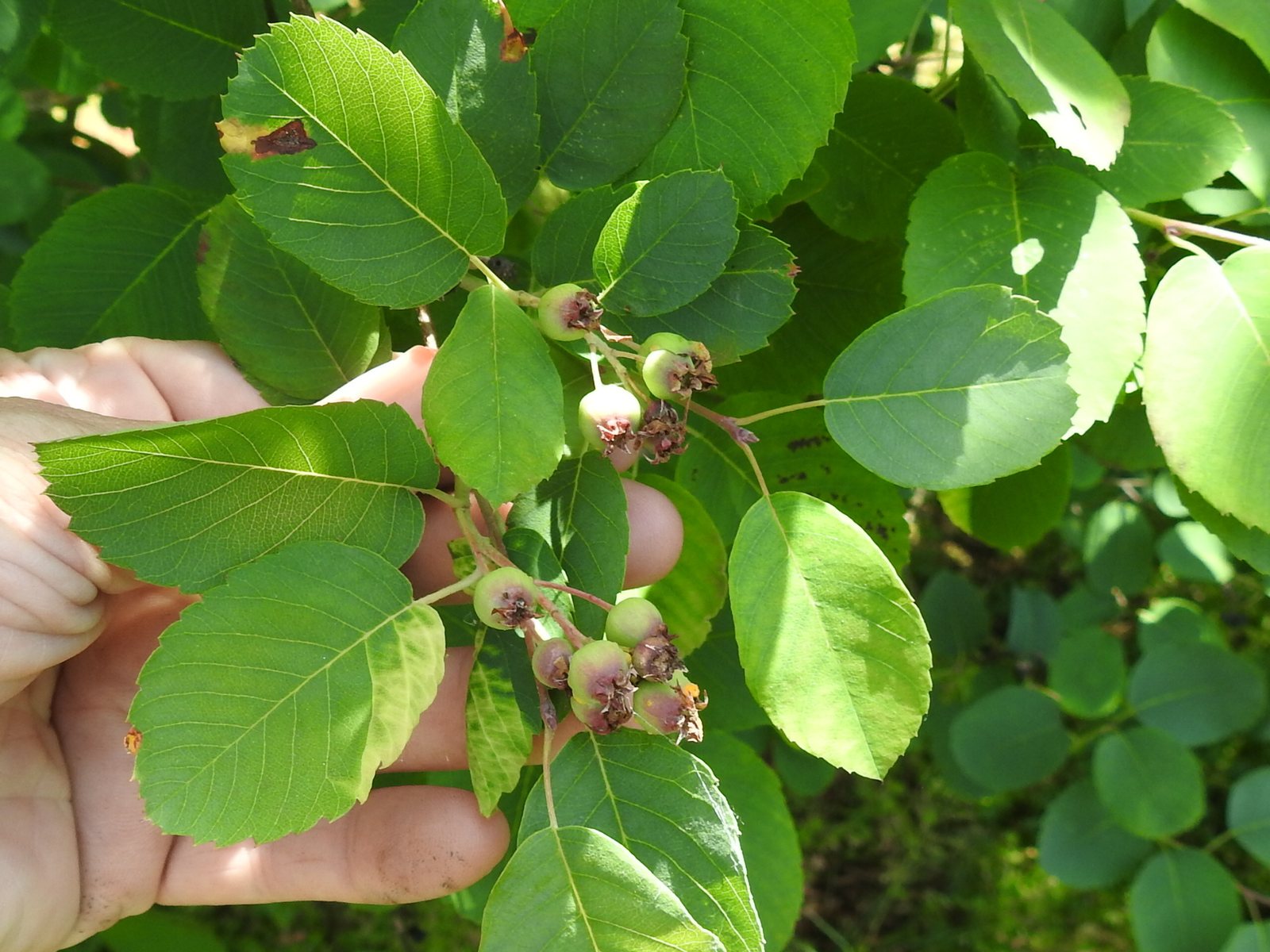
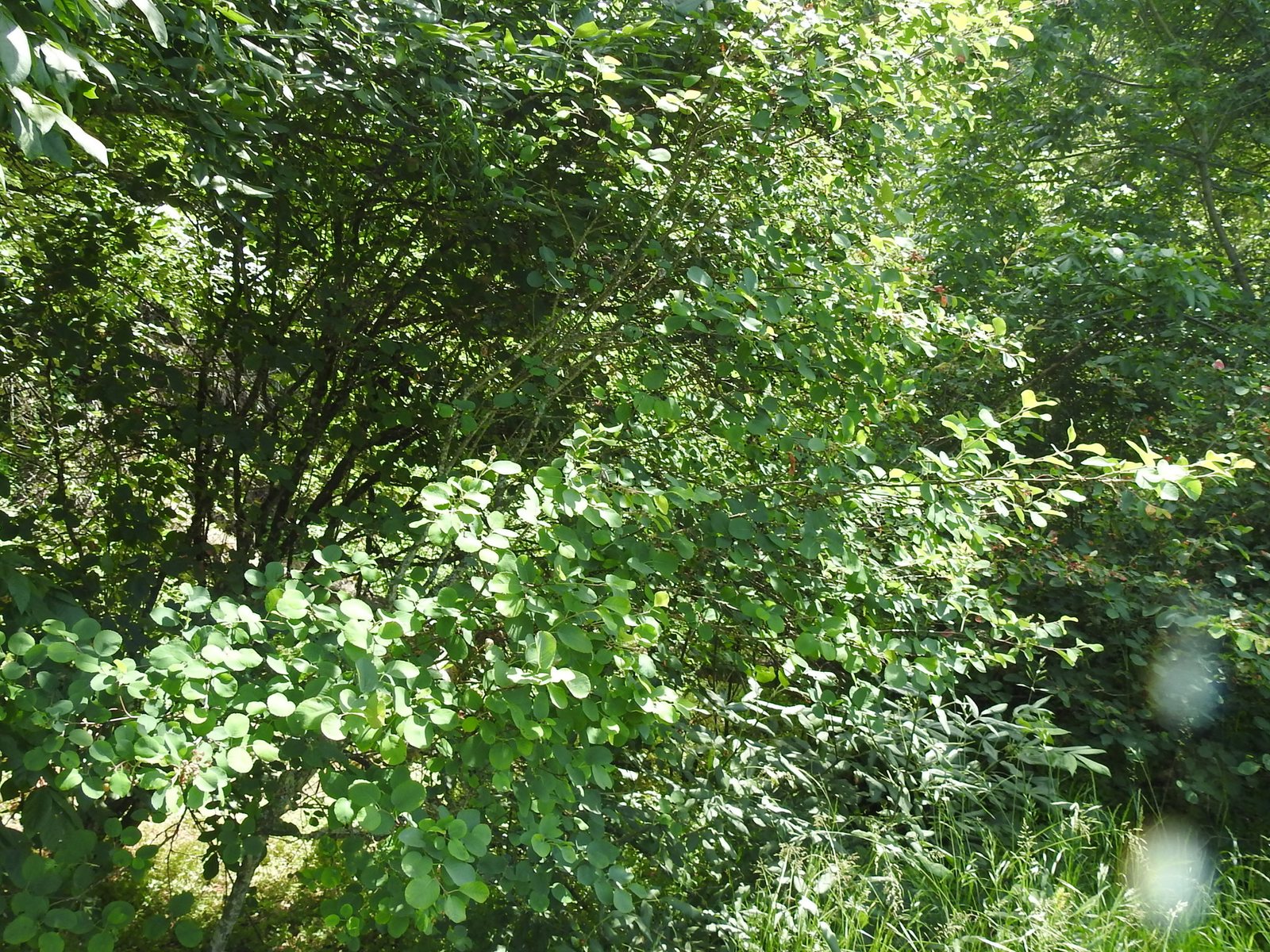
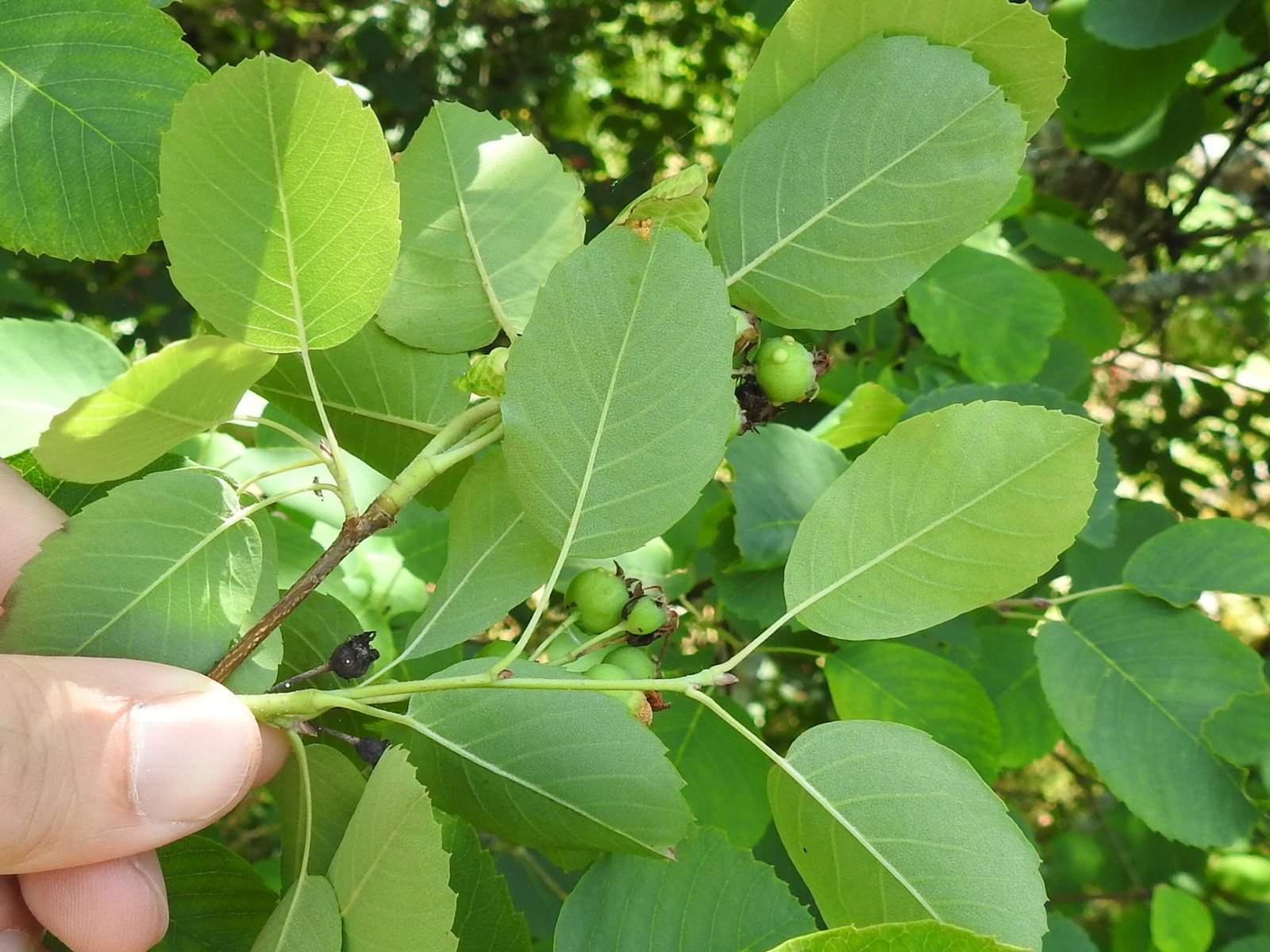
At a glance
- Sun
- Full sun to partial shade; full sun gives the best flowering and fruit crops.
- Water
- Water regularly while establishing and during dry spells as fruit develops. Established plants tolerate some drought, but crops suffer in dry soil.
- Soil
- Well-drained loam is ideal; tolerates clay, sandy soil and mildly acidic to alkaline conditions. Avoid waterlogged ground.
- Height
- 6-15 ft (1.8-4.6 m), occasionally taller
- Spread
- 5-12 ft (1.5-3.7 m), widening further through suckers if unmanaged
- Flowers
- Clusters of white flowers in early to mid-spring, usually as the leaves emerge.
- Foliage
- Rounded to oval green leaves with coarse teeth mainly on the upper half; yellow, orange or red autumn colour.
- Growth
- Moderate
- Care needed
- Medium
The year at a glance
- Pollinators
- Drought tolerant
- Cold hardy
- Wildlife
- Low allergen
- Edible
| J | F | M | A | M | J | J | A | S | O | N | D | |
|---|---|---|---|---|---|---|---|---|---|---|---|---|
| Flowers | ||||||||||||
| Fruit | ||||||||||||
| Plant |
Northern hemisphere months. In Australia, shift them by six.
- Difficulty
- Moderate
- Toughness
- Fairly tough
Will it suit your garden?
Pick your zone, country, light and whether you have pets.
Full sun is 6 or more hours of direct sun a day, part shade 3 to 6 hours, shade under 3.
How it grows
Planting day
1.6 ft (0.5 m)
After 1 year
3 ft (1 m)
After 2 years
5 ft (1.6 m)
After 3 years
7 ft (2.1 m)
After 5 years
10 ft (3.2 m)
full size
About 5 years to full size.
From a typical nursery size, at an average rate for this kind of plant. A rule of thumb, not a forecast.
Good to know
- Cats and dogs
- Toxic
- Native to
- Canada
- In the garden
- Spreads vigorously: plan to contain it.
- Growth rate
- Moderate
Care
Jobs through the year
- WaterMar, Aug–Oct, every 14 days
- Water established shrubs in prolonged dry spells; water more regularly through the first two growing seasons.
- WaterApr–Jul, every 7 days
- During dry weather, keep soil evenly moist through flowering and fruit swelling, allowing for rainfall.
- PruneFeb–Mar
- Remove dead and crossing stems and thin a few oldest stems at ground level; retain healthy younger wood.
- FeedMar–Apr
- Top-dress with compost; avoid heavy nitrogen feeding.
- MulchMar–Apr
- Maintain 5–8 cm of organic mulch, keeping it clear of stems.
- ProtectJun–Jul
- Before berries colour, fit taut, wildlife-safe netting on a frame and check it daily.
- HarvestJun–Jul
- Pick fully blue-purple, slightly soft, sweet berries in several passes and refrigerate promptly.
- PruneOct
- Remove unwanted suckers at ground level to contain the clump.
- Water deeply through the first two growing seasons, allowing the surface soil to dry slightly between waterings.
- Keep soil evenly moist during flowering and fruit swelling, without leaving roots waterlogged.
- Apply 2-3 in (5-8 cm) of organic mulch, keeping it clear of the stems.
- Top-dress with compost in spring; avoid heavy nitrogen feeding, which encourages leafy growth rather than fruit.
- Remove unwanted suckers at ground level to keep the clump within its space.
- If protecting fruit from birds, use wildlife-safe, taut netting on a frame and check it daily.
Pruning. In late winter, remove dead, damaged and crossing stems, then thin a few of the oldest stems at ground level on established bushes. Retain healthy younger wood and avoid shearing, which removes flowering and fruiting shoots.
Harvest
Pick berries in early to midsummer when they are fully blue-purple, slightly soft and sweet; fruit within a cluster may ripen unevenly. Lift ripe berries gently from their stalks and refrigerate promptly, or freeze them for later use. Nursery-grown plants usually give their first worthwhile crop about 3-5 years after planting, depending on plant size and growing conditions.
Through the year
- Late winter
- Thin established bushes and remove dead or damaged stems before growth begins.
- Early spring
- Plant while dormant where soil is workable; add compost and renew mulch.
- Spring
- Watch flowers and new shoots for frost damage or fire blight; maintain moisture during dry weather.
- Early summer
- Fit wildlife-safe fruit protection before berries colour, if needed.
- Early to midsummer
- Harvest fully ripe berries in several passes.
- Autumn
- Plant in mild regions, remove unwanted suckers and clear diseased fallen leaves.
In the garden
- Use as an informal edible hedge, allowing enough width for its branching and suckering habit.
- Place at a sunny woodland edge with shade-tolerant groundcovers beneath it.
- Combine with native grasses and flowering perennials in a loose, wildlife-friendly border within its native range.
- Grow near a patio or path where spring blossom and autumn colour can be seen, but keep ripe fruit away from paving that must stay clean.
Garden styles it suits: Edible landscape, Food forest, Native hedgerow, Woodland, Wildlife garden and Cottage garden.
Plant it with: Chokeberry, Red-twig dogwood, Wild strawberry, Yarrow, Purple coneflower and Little bluestem.
Wildlife: Spring flowers provide pollen and nectar for insects, including native bees. Birds and small mammals eat the fruit, and dense stems provide shelter.
Problems to watch for
- Birds take ripening berries: protect selected bushes with taut, wildlife-safe netting on a frame, or leave part of the crop for wildlife.
- Serviceberry rust causes orange spots or distorted fruit: remove affected material, clear fallen leaves and choose locally resistant selections where available; nearby junipers can host part of the disease cycle.
- Fire blight causes blackened, hooked shoot tips: prune affected shoots well below visible damage in dry weather, disinfect tools between cuts and avoid excessive nitrogen.
- Powdery mildew coats leaves with white growth: improve airflow by thinning crowded stems, avoid drought stress and choose a sunnier position for new plants.
Safety
Ripe berries are edible for people. Leaves, young shoots and seeds contain cyanogenic compounds; wilted foliage is a particular concern for grazing animals, including horses, and substantial ingestion can cause serious poisoning. Do not let cats or dogs chew foliage or eat large quantities of fruit, and do not deliberately crush or eat the seeds.
Easily confused with
Canadian serviceberry (Amelanchier canadensis)
Usually has more elongated leaves with fine teeth extending farther down the margins; Saskatoon leaves are generally rounder with coarse teeth concentrated toward the tip.
Allegheny serviceberry (Amelanchier laevis)
Often forms a taller, more tree-like plant and has smooth, bronze-purple emerging leaves; Saskatoon usually has rounder leaves and a more shrubby, suckering habit.
Chokecherry (Prunus virginiana)
Has long, narrow flower and fruit clusters, finely toothed pointed leaves and fruit containing one hard stone. Saskatoon has shorter clusters and berries with several small seeds and a persistent star-shaped calyx.
The name
Saskatoon comes from a Cree name for the fruit, while alnifolia means 'alder-leaved', referring to the leaf shape.
Propagation. Separate rooted suckers while dormant to preserve the parent plant's characteristics. Seed needs cold stratification, may have complex dormancy and will not reliably reproduce named fruit cultivars; softwood cuttings are possible but can be difficult to root.
Checked against open data
- Accepted botanical name
- Amelanchier alnifolia
- Native range
- Alaska, Alberta, Arizona, British Columbia, California, Colorado, Idaho, Iowa, Kansas, Manitoba, Minnesota and Montana.
- Measured
- Soil pH 4.8 to 8.4. Average height 429 cm.
Sources: GBIF (CC BY 4.0) and Trefle (CC BY 4.0). The care and design notes are LandscapeGPT's own.
See it in your own yard.
Upload a photo of your yard and see it redesigned with plants that suit your climate, each checked against your zone.