Scallion (spring onion)
Allium fistulosum. Family Amaryllidaceae. Perennial.
Also called Welsh onion, Japanese bunching onion, Bunching onion.
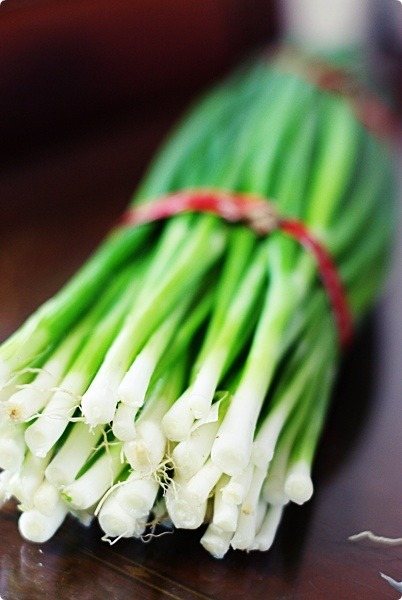
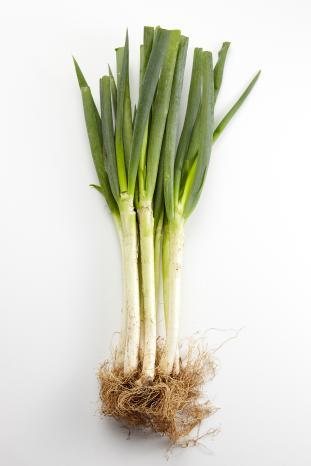
A clump-forming perennial onion grown for its hollow green leaves and slender white stems rather than a large bulb. You can keep it as a permanent kitchen-garden clump or grow it as an annual for whole young onions; it may die back in cold winters.
At a glance
- Sun
- Full sun; tolerates light shade, with slower growth.
- Water
- Keep evenly moist during active growth, especially in containers; avoid saturated soil.
- Soil
- Fertile, well-drained soil, ideally near neutral pH; raised beds help on heavy clay.
- Height
- 1-2 ft (0.3-0.6 m), with flower stems sometimes reaching 3 ft (0.9 m)
- Spread
- 0.5-1 ft (0.15-0.3 m) per established clump
- Flowers
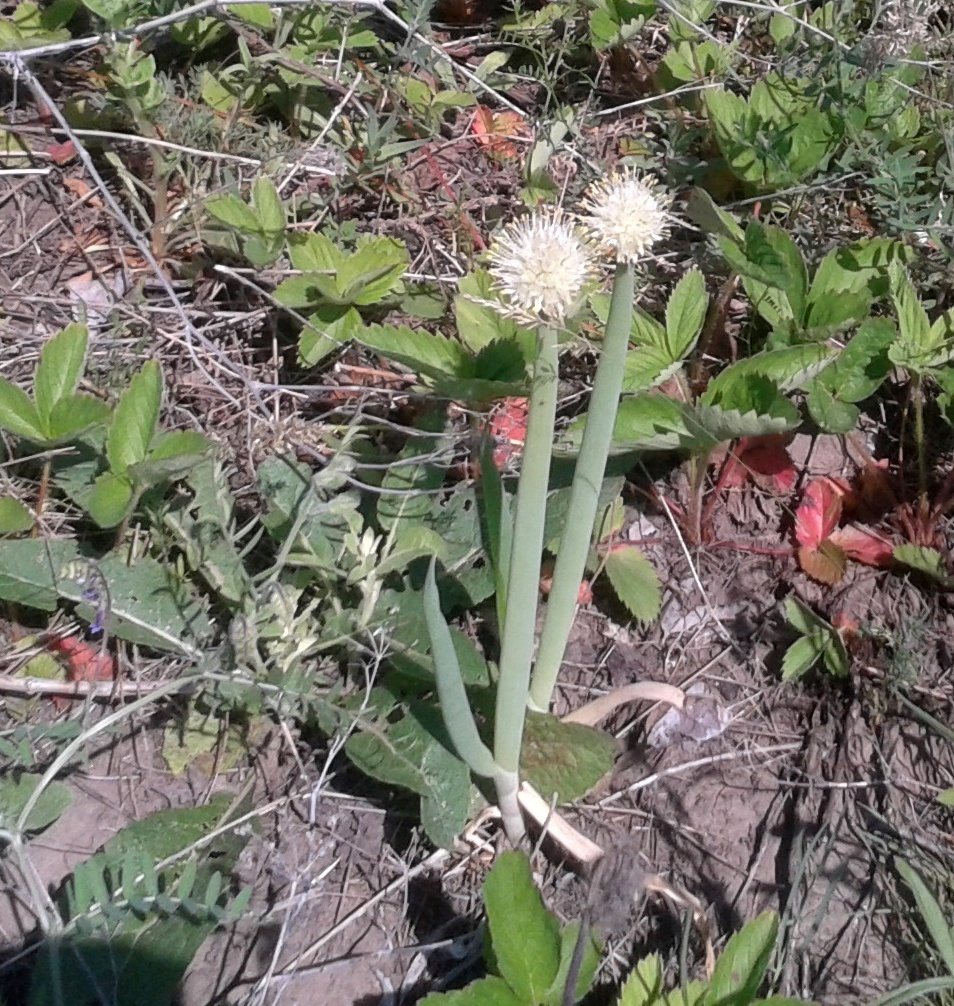
- Late spring to summer; rounded heads of small creamy-white flowers.
- Foliage
- Upright, hollow, tubular green to blue-green leaves; leaf bases form slender white stems without a large rounded bulb.
- Growth
- Fast in mild weather with adequate moisture.
- Care needed
- Low
The year at a glance
- Pollinators
- Deer resistant
- Low allergen
- Edible
| J | F | M | A | M | J | J | A | S | O | N | D | |
|---|---|---|---|---|---|---|---|---|---|---|---|---|
| Flowers | ||||||||||||
| Fruit | ||||||||||||
| Plant |
Northern hemisphere months. In Australia, shift them by six.
- Difficulty
- Easy
- Toughness
- Fairly tough
Will it suit your garden?
Pick your zone, country, light and whether you have pets.
Full sun is 6 or more hours of direct sun a day, part shade 3 to 6 hours, shade under 3.
How it grows
Planting day
1 ft (0.3 m)
After 1 year
1.2 ft (0.38 m)
After 2 years
1.5 ft (0.45 m)
full size
About 2 years to full size.
From a typical nursery size, at an average rate for this kind of plant. A rule of thumb, not a forecast.
Good to know
- Cats and dogs
- Toxic
- Native to
- Canada
- Growth rate
- Fast
Care
Jobs through the year
- WaterMar–May, Sep–Oct, every 7 days
- Water established clumps if soil begins drying; keep seedlings consistently moist.
- WaterJun–Aug, every 4 days
- Keep established clumps evenly moist during dry weather, allowing for rainfall.
- FeedMar
- Top-dress with mature compost; rich garden soil needs little additional feeding.
- DivideMar–Apr
- Divide crowded clumps every two or three years and replant healthy sections.
- MulchApr
- Apply a thin organic mulch without covering leaf bases.
- PruneMay–Jul
- Remove emerging flower stalks for leaf production, or retain some for pollinators.
- PruneOct–Nov
- Remove yellow and dead foliage without disturbing dormant clumps.
- HarvestApr–Nov, every 7 days
- Cut outer leaves above the base or lift pencil-thick stems; leave some plants to regrow.
- ProtectMar–May
- Cover young crops with fine insect mesh where onion fly is a recurring problem.
- Water when the soil surface begins to dry; do not let young plants dry out.
- Mix mature compost into the bed before planting; feed container plants lightly during active growth.
- Keep seedlings free of weeds, hoeing shallowly to avoid their roots.
- Apply a thin mulch around established clumps, keeping it away from the leaf bases.
- Divide crowded clumps every two or three years in spring.
Pruning. Remove yellow or damaged leaves at the base as needed. Cut off flower stems as they develop if you want leafy growth rather than flowers or seed.
Harvest
Pick outer leaves once plants are well established, cutting above the base and leaving the centre to regrow. For whole scallions, lift plants when the white stems are roughly pencil-thick, often 8-12 weeks after sowing in favourable conditions; leave some plants to form perennial clumps.
Through the year
- Late winter
- Sow indoors in bright light if you want an early crop in a cold climate.
- Spring
- Direct-sow when soil is workable, or transplant hardened-off seedlings; divide established clumps.
- Late spring
- Begin picking established plants and remove emerging flower stems unless you want flowers or seed.
- Summer
- Water through dry spells and make small repeat sowings where summers are not excessively hot.
- Autumn
- Sow for cool-season harvests in mild climates; remove dead foliage from established clumps.
- Winter
- Harvest lightly where plants remain green; leave dormant outdoor clumps undisturbed and avoid waterlogging.
In the garden
- Plant in repeated rows along vegetable-bed edges for an upright, orderly outline.
- Grow in kitchen-door containers with parsley and lettuce for convenient picking.
- Use small clumps among leafy vegetables to contrast narrow blue-green leaves with broad foliage.
- Allow a few clumps to flower in an edible border for pale rounded flower heads and visiting insects.
Garden styles it suits: Potager (kitchen garden), Edible landscape, Herb parterre, Cottage garden, Small-space and Homestead.
Plant it with: Lettuce, Carrots, Beetroot, Parsley, Swiss chard and Calendula.
Wildlife: Open flowers provide nectar and pollen for bees and other insects. Plants harvested before flowering offer little floral food.
Problems to watch for
- Onion fly maggots: use fine insect mesh over young crops where this pest occurs, rotate planting sites and remove infested plants.
- Thrips: look for silvery streaks and distorted leaves; keep plants adequately watered and remove badly affected foliage.
- Allium rust: remove heavily spotted leaves, thin crowded clumps and avoid wetting foliage when watering.
- White rot: yellowing plants with white fungal growth at the base should be lifted and discarded; avoid planting any alliums in affected soil, where the fungus can persist for many years.
Safety
All parts are toxic to cats, dogs and horses and can cause serious red blood cell damage if eaten, including when cooked or dried. It is not known to be toxic to people in normal culinary amounts, although onion allergy or digestive intolerance can occur.
Easily confused with
Bulb onion (Allium cepa)
Young plants can be almost indistinguishable and are also sold as spring onions. Most bulb-onion varieties develop a rounded bulb as they mature; Allium fistulosum remains slender-based and forms clumps.
Chives (Allium schoenoprasum)
Chives have much finer hollow leaves and usually pink-purple flower heads, rather than the thicker leaves and creamy-white flowers of scallions.
Garlic chives (Allium tuberosum)
Garlic chives have flat, solid leaves and starry white flowers in looser heads; scallion leaves are hollow and tubular.
The name
The species name fistulosum means hollow or tubular, referring to the leaves, while 'Welsh' in Welsh onion comes from an old word meaning foreign rather than indicating an origin in Wales.
Propagation. Sow seed shallowly in spring, or in autumn in mild climates. Divide established clumps in spring, replanting rooted shoots at their previous depth; plants left to flower may also self-seed.
Checked against open data
- Accepted botanical name
- Allium fistulosum
- In the US and Canada
- Native in Canada. Introduced in Alaska and the lower 48 states.
- Native range
- China North-Central and China South-Central.
- Measured
- Soil pH 7 to 7.5. Average height 55 cm.
Sources: GBIF (CC BY 4.0), USDA PLANTS and Trefle (CC BY 4.0). The care and design notes are LandscapeGPT's own.
See it in your own yard.
Upload a photo of your yard and see it redesigned with plants that suit your climate, each checked against your zone.