Sea Green juniper
Juniperus chinensis 'Sea Green'. Family Cupressaceae. Shrub.
Also called Sea Green Chinese juniper, Juniperus × pfitzeriana 'Sea Green'.
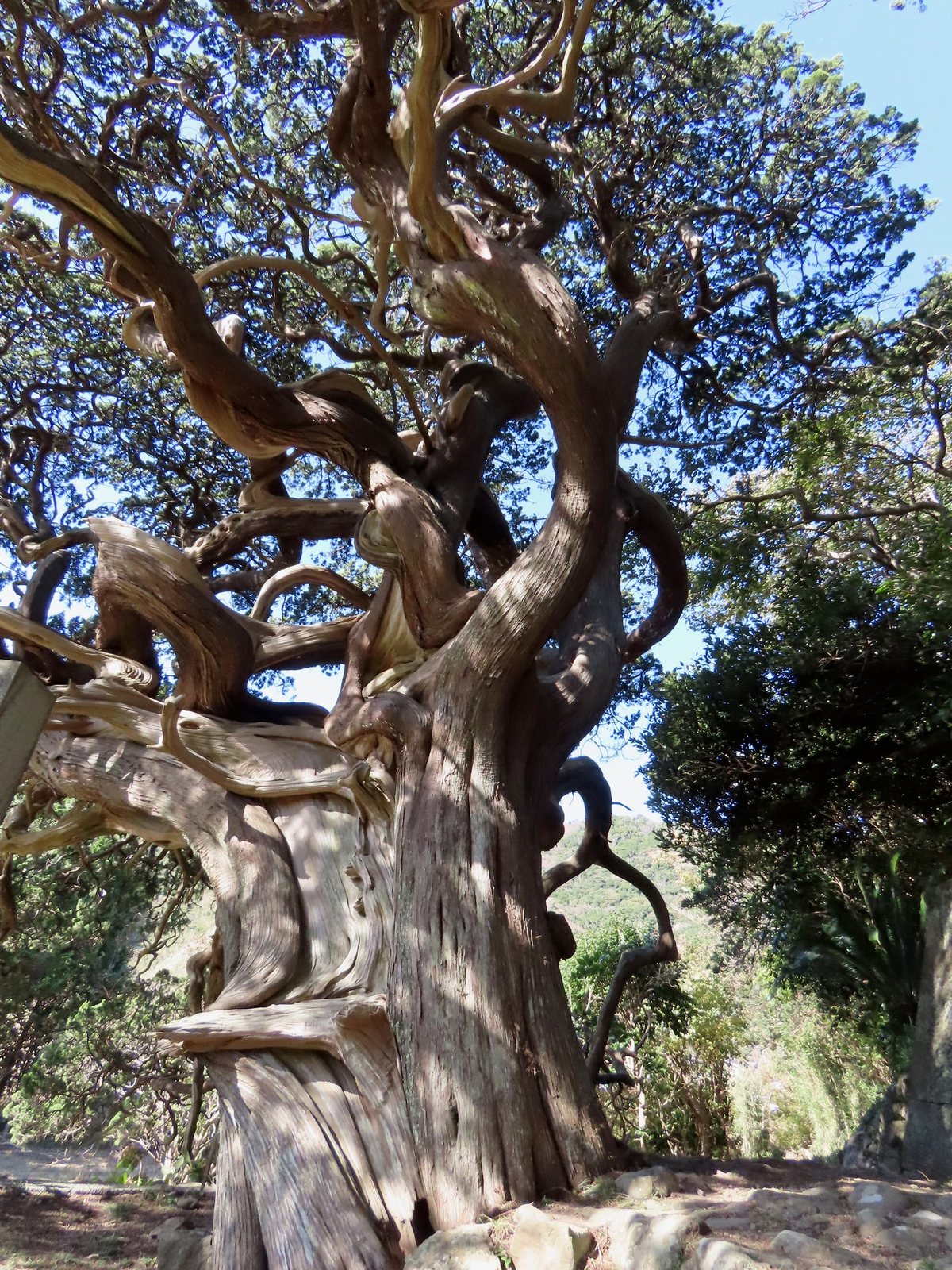
Sea Green juniper is a broad, evergreen shrub with arching branches and dense green foliage that gives it a fountain-like shape. Gardeners grow it for year-round structure, informal screening and cover on sunny banks; allow enough room for its spreading branches.
At a glance
- Sun
- Full sun; light shade is tolerated, but growth becomes looser.
- Water
- Water regularly while establishing; drought-tolerant once rooted. Avoid persistently wet soil.
- Soil
- Well-drained sandy, loamy or gravelly soil; tolerates clay if drainage is good and a broad range of soil pH.
- Height
- 4-6 ft (1.2-1.8 m)
- Spread
- 6-8 ft (1.8-2.4 m), sometimes wider with age
- Foliage
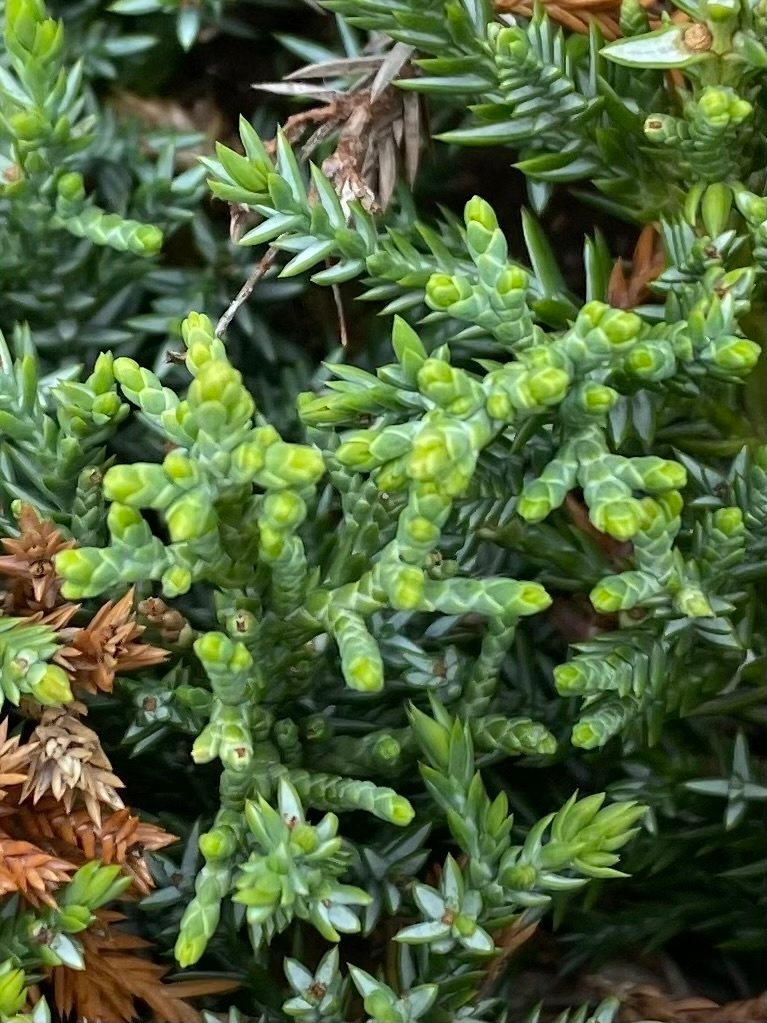
- Evergreen. Fine-textured, mainly scale-like foliage in rich green, carried on upward-arching branches with drooping tips; some prickly juvenile foliage may occur.
- Growth
- Moderate
- Care needed
- Low
The year at a glance
- Deer resistant
- Drought tolerant
- Cold hardy
- Heat tolerant
- Wildlife
| J | F | M | A | M | J | J | A | S | O | N | D | |
|---|---|---|---|---|---|---|---|---|---|---|---|---|
| Fruit | ||||||||||||
| Plant |
Northern hemisphere months. In Australia, shift them by six.
- Difficulty
- Easy
- Toughness
- Very tough
Will it suit your garden?
Pick your zone, country, light and whether you have pets.
Full sun is 6 or more hours of direct sun a day, part shade 3 to 6 hours, shade under 3.
How it grows
Planting day
1.6 ft (0.5 m)
After 1 year
2.3 ft (0.7 m)
After 2 years
3 ft (0.9 m)
After 3 years
4 ft (1.1 m)
After 5 years
5 ft (1.5 m)
full size
About 5 years to full size.
From a typical nursery size, at an average rate for this kind of plant. A rule of thumb, not a forecast.
Good to know
- Cats and dogs
- Mildly toxic: may upset a stomach
- Growth rate
- Moderate
Care
Jobs through the year
- WaterApr–May, Sep–Nov, every 28 days
- Water established plants only if soil is dry; newly planted shrubs need more frequent watering.
- WaterJun–Aug, every 21 days
- Deep-water established plants during prolonged drought only; avoid constantly wet roots.
- PruneFeb–Mar
- Remove damaged branches and shorten strays into leafy growth; avoid shearing or bare wood.
- PruneMay–Jun
- Remove blighted or rust-affected shoots in dry weather and disinfect tools.
- MulchMar, Oct
- Maintain 5-8 cm of mulch without covering stems or the crown.
- FeedApr
- Use a modest balanced feed only if growth is weak and soil is poor.
- ProtectJan–Feb, Dec
- Avoid piled snow and gently brush off heavy loose snow without bending frozen branches.
- Plant with the root flare at soil level, leaving room for the full mature spread.
- Water deeply during dry spells in the first growing season; let the soil begin to dry between waterings.
- Apply 2-3 in (5-8 cm) of mulch, keeping it away from the stems.
- Do not feed routinely; use a modest application of balanced fertiliser in spring only if growth is weak and soil fertility is poor.
- Keep lawn sprinklers from repeatedly wetting the foliage and avoid planting in waterlogged ground.
Pruning. In late winter or early spring, remove dead or damaged branches and shorten stray shoots back to a leafy side branch. Avoid shearing or cutting into bare old wood, which usually does not regrow.
Through the year
- Spring
- Plant when the ground is workable, water thoroughly and mulch around the root zone.
- Early spring
- Remove winter damage and lightly shorten branches only where necessary.
- Late spring
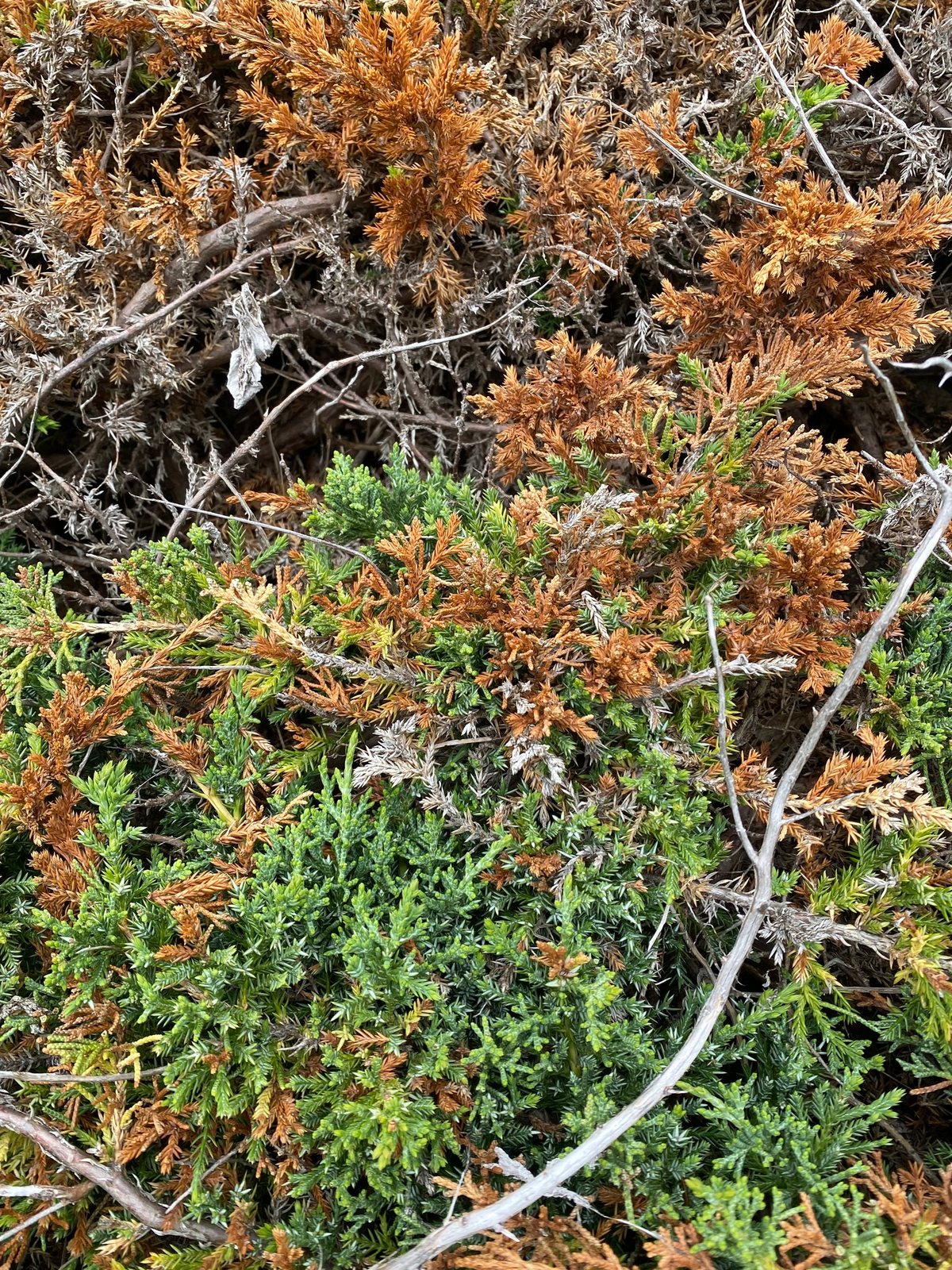
- Check for dying shoot tips and orange rust growths after wet weather; remove affected shoots in dry conditions.
- Summer
- Water young plants during prolonged dry weather and inspect stippled or browning foliage for spider mites.
- Autumn
- Plant in mild climates while soil is warm; water established plants if autumn is unusually dry.
- Winter
- Avoid piling cleared snow on the shrub; gently brush off heavy, loose snow without striking frozen branches.
In the garden
- Use as a broad foundation shrub where its mature width will not obstruct windows or paths.
- Plant in staggered groups on sunny slopes for evergreen cover and reduced mowing.
- Combine with ornamental grasses and upright perennials for contrasting forms and year-round structure.
- Use as a low, informal screen or boundary rather than a tightly clipped hedge.
Garden styles it suits: Low-maintenance, Winter interest, Japanese, Dry gravel garden, Modern and Traditional.
Plant it with: Feather reed grass, Catmint, Russian sage, Purple coneflower, Stonecrop and Dwarf mugo pine.
Wildlife: Dense branches provide shelter and nesting cover for small birds. Female plants may produce berry-like cones that birds eat, though cone production varies.
Problems to watch for
- Root rot in wet soil: improve drainage or move the plant to a better-drained site; badly affected plants may need replacing.
- Juniper tip blight: prune out dead tips in dry weather, disinfect tools between cuts and avoid overhead watering.
- Spider mites in hot, dry conditions: check for fine webbing and stippling, rinse foliage with water and use a labelled treatment if an infestation persists.
- Juniper rusts: prune out affected twigs where practical; nearby susceptible apples, crab apples or hawthorns can support the alternate stage of these diseases.
Safety
Foliage and berry-like cones contain irritating oils and can cause digestive upset if eaten by people, cats or dogs; do not use this ornamental juniper as a culinary substitute for common juniper. Sap may irritate sensitive skin. Toxicity to horses is not well established for this cultivar, so keep it out of grazing areas.
Easily confused with
Mint Julep juniper (Juniperus chinensis 'Mint Julep')
Usually has brighter mint-green foliage and a more strongly vase-shaped outline; young plants can be difficult to distinguish without a label.
Grey Owl juniper (Juniperus virginiana 'Grey Owl')
Has distinctly silvery grey-green foliage and a lower, more broadly spreading habit.
Blue Star juniper (Juniperus squamata 'Blue Star')
Forms a much smaller, compact mound with conspicuously blue, prickly needle-like foliage rather than long, green arching sprays.
The name
Juniperus is the Latin name for juniper, chinensis means 'Chinese', and 'Sea Green' describes the cultivar's foliage colour.
Propagation. Take semi-ripe cuttings with a small heel of older wood in late summer or early autumn and root in a freely draining medium. Rooting can be slow; seed does not reproduce the cultivar reliably.
Checked against open data
- Accepted botanical name
- Juniperus chinensis
- Native range
- China North-Central, China South-Central, China Southeast, Inner Mongolia, Japan, Khabarovsk, Korea, Kuril Is., Manchuria, Myanmar, Primorye and Sakhalin.
- Measured
- Soil pH 4.5 to 7.5. Average height 2000 cm.
Sources: GBIF (CC BY 4.0) and Trefle (CC BY 4.0). The care and design notes are LandscapeGPT's own.
See it in your own yard.
Upload a photo of your yard and see it redesigned with plants that suit your climate, each checked against your zone.