Sea kale
Crambe maritima. Family Brassicaceae. Perennial.
Also called Seakale.
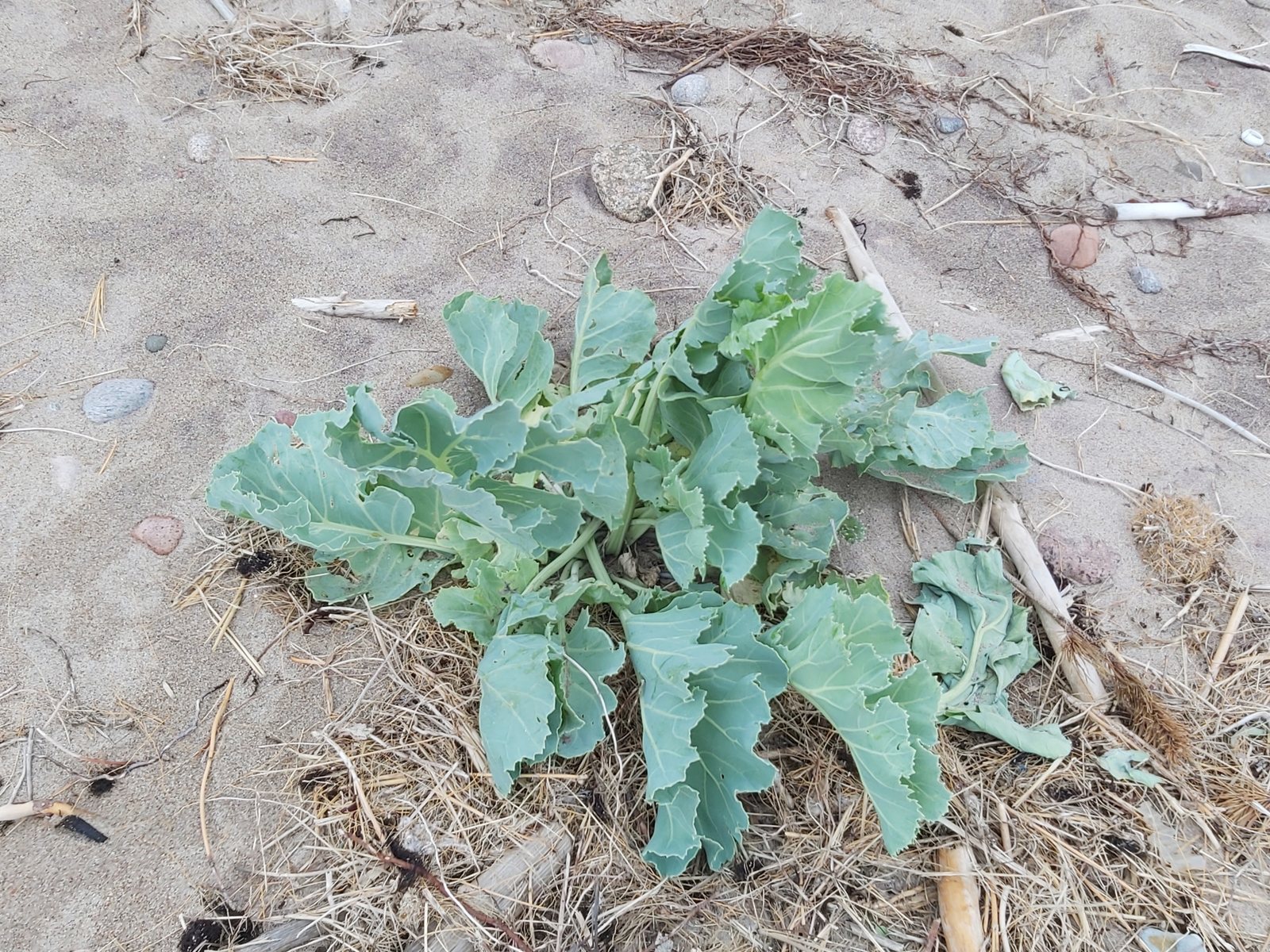
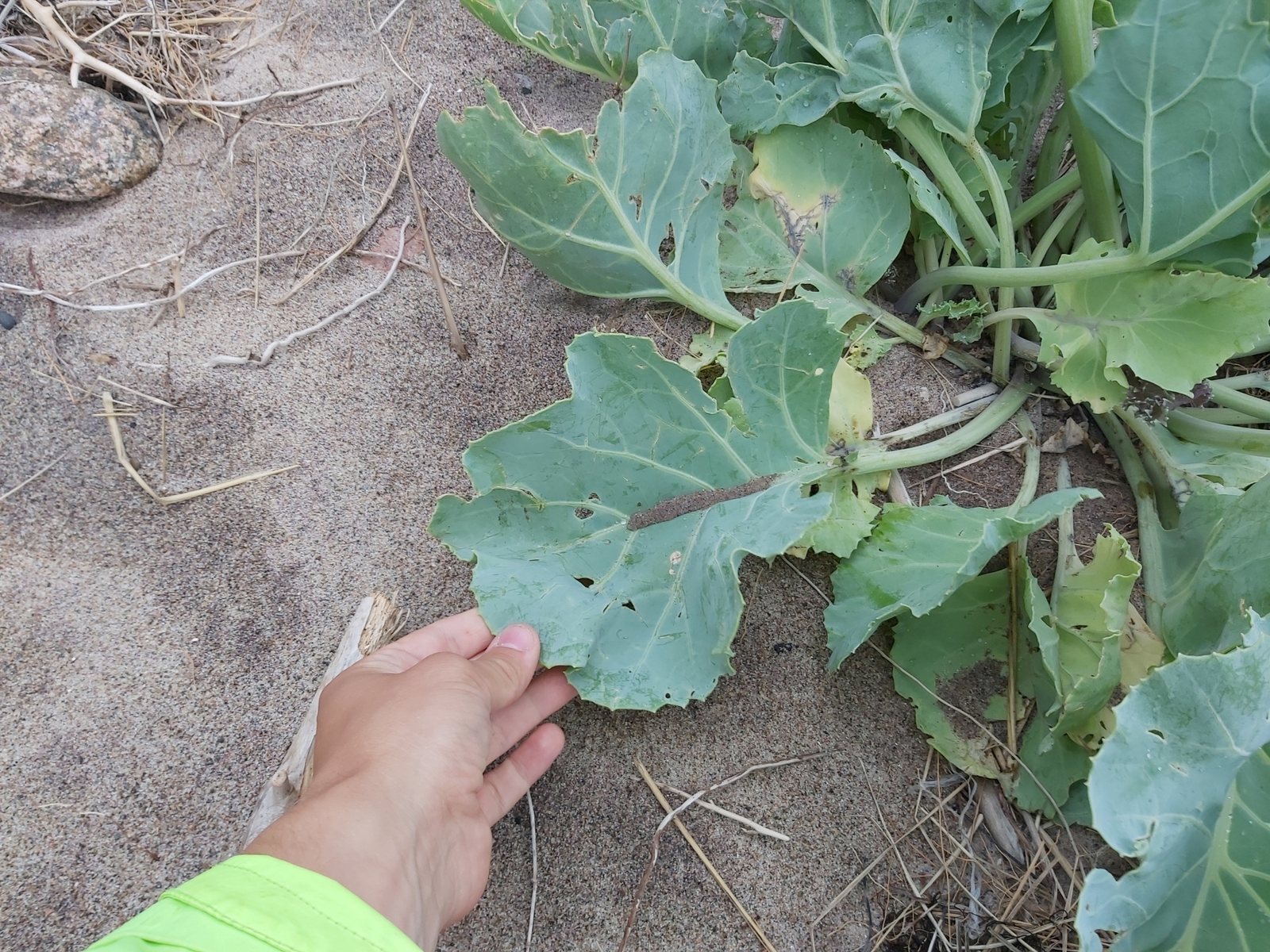
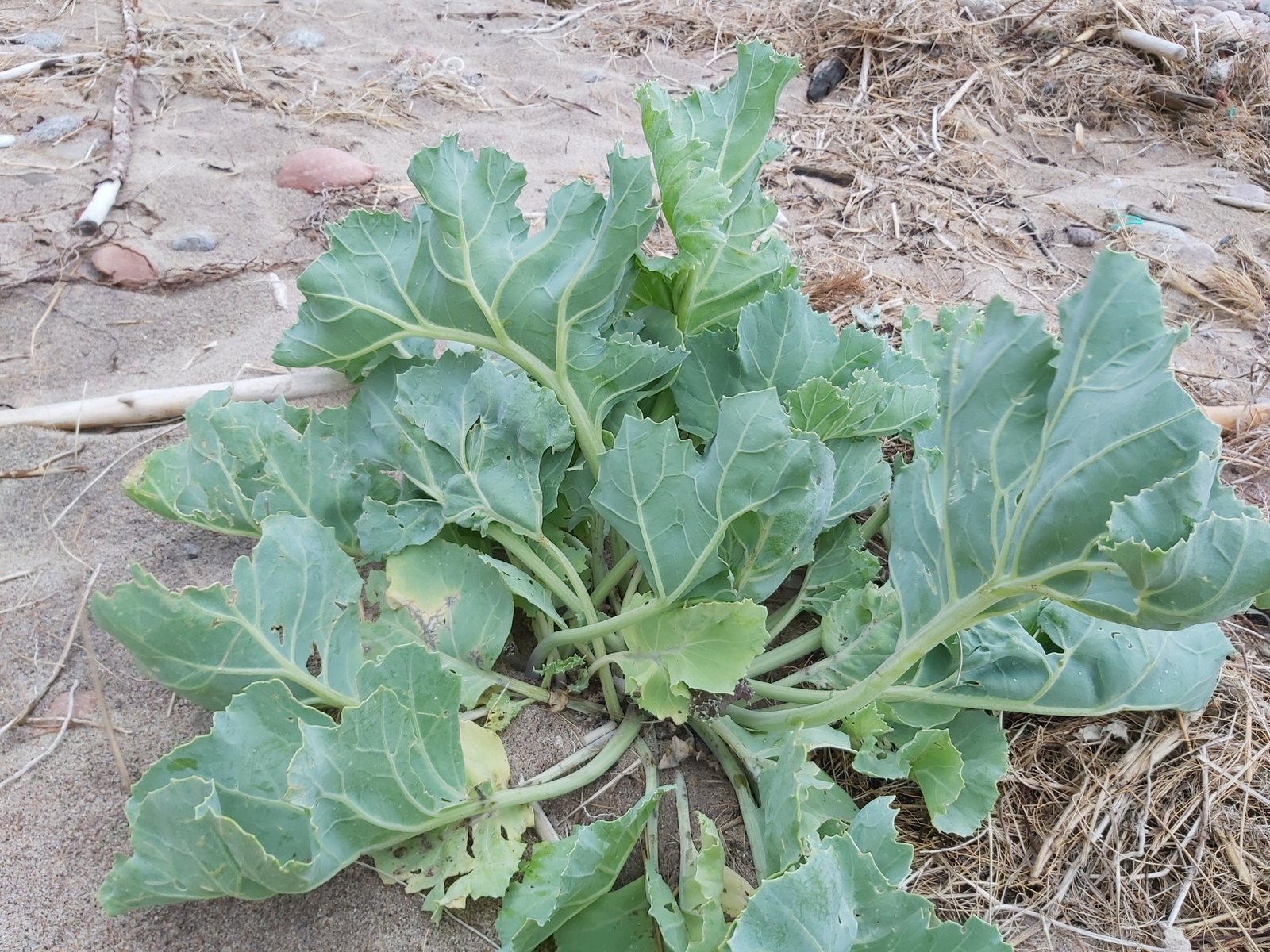
Sea kale is a long-lived coastal perennial grown for its broad, blue-grey leaves, clouds of white flowers and edible spring shoots. It suits sunny gravel gardens and permanent vegetable beds, provided the soil drains freely, especially in winter.
At a glance
- Sun
- Full sun; tolerates light shade but flowers and crops best in an open position.
- Water
- Water regularly during establishment and dry spring weather. Established plants tolerate drought, but dislike persistently wet roots.
- Soil
- Deep, freely draining sandy, gravelly or loamy soil; neutral to alkaline is ideal. Avoid waterlogged clay.
- Height
- 2-3 ft (0.6-0.9 m)
- Spread
- 2-3 ft (0.6-0.9 m)
- Flowers
- Late spring to early summer; branched clusters of small, fragrant white flowers.
- Foliage
- Large, rounded, fleshy blue-grey leaves with strongly waved edges; dies back for winter.
- Growth
- Moderate; allow two to three years to establish a strong crown.
- Care needed
- Low
The year at a glance
- Pollinators
- Drought tolerant
- Cold hardy
- Low allergen
- Fragrant
- Edible
| J | F | M | A | M | J | J | A | S | O | N | D | |
|---|---|---|---|---|---|---|---|---|---|---|---|---|
| Flowers | ||||||||||||
| Fruit | ||||||||||||
| Plant |
Northern hemisphere months. In Australia, shift them by six.
- Difficulty
- Easy
- Toughness
- Very tough
Will it suit your garden?
Pick your zone, country, light and whether you have pets.
Full sun is 6 or more hours of direct sun a day, part shade 3 to 6 hours, shade under 3.
How it grows
Planting day
1 ft (0.3 m)
After 1 year
1.5 ft (0.45 m)
After 2 years
2 ft (0.6 m)
After 3 years
2.5 ft (0.75 m)
full size
About 3 years to full size.
From a typical nursery size, at an average rate for this kind of plant. A rule of thumb, not a forecast.
Good to know
- Cats and dogs
- Safe
- Native to
- the UK
- Growth rate
- Moderate
Care
Jobs through the year
- WaterMar–May, every 14 days
- Water established plants only in dry spring weather; water new plants regularly through their first season.
- WaterJun–Sep, every 21 days
- Water established plants deeply only during prolonged drought; avoid wet roots.
- MulchMar
- Apply a light dressing of compost around, not over, the crown.
- ProtectFeb–Mar
- For blanching, cover a dormant crown at least three years old with an opaque forcing pot.
- HarvestMar–May, every 7 days
- From the third spring, cut a few blanched shoots at 15–23 cm; uncover after a short harvest.
- DeadheadJun–Jul
- Cut spent flower stems to the base unless saving seed.
- PruneNov
- Remove collapsed foliage without cutting into the crown.
- ProtectJan–Feb, Nov–Dec
- Keep the crown free of wet leaves and soggy mulch, and ensure winter rain drains freely.
- Choose a permanent position; mature plants have deep roots and resent moving.
- Water new plants through their first growing season, then during prolonged dry spells.
- Apply a light dressing of compost around the plant in spring, keeping it clear of the crown.
- Avoid heavy feeding, which encourages soft growth.
- Keep the crown free of wet leaves and soggy mulch over winter.
- Leave young plants unharvested for their first two growing seasons.
Pruning. Remove dead leaves in late autumn or winter without cutting into the crown. Cut spent flower stems to the base unless you want seed.
Harvest
From the third spring, cover a dormant crown with an opaque forcing pot or bucket before shoots emerge to produce pale, tender stems. Cut shoots when about 6-9 in (15-23 cm) long, before the leaves unfold, taking only a few from each crown. Remove the cover after a short harvest period and let the plant grow freely for the rest of the season.
Through the year
- Late winter
- Clear dead foliage and cover established crowns if you want blanched shoots.
- Early spring
- Plant nursery-grown plants in a permanent, freely draining position.
- Spring
- Harvest a few tender shoots from mature plants, then uncover them and allow full leaf growth.
- Late spring
- Enjoy the flowers and check young leaves for caterpillars and flea beetle damage.
- Summer
- Water during prolonged drought and remove spent flower stems unless saving seed.
- Late autumn
- Remove collapsed foliage and check that winter rain drains away from the crown.
In the garden
- Use as a bold blue-grey foliage plant among low-growing plants in a sunny gravel garden.
- Combine with sea thrift and sea holly in coastal borders for contrasting leaf shapes and flower forms.
- Give it a permanent place at the edge of a vegetable garden, where harvesting will not disturb neighbouring crops.
- Repeat small groups through a white-flowered border for broad foliage beneath airy flower clusters.
Garden styles it suits: Coastal, Dry gravel garden, Potager (kitchen garden), Edible landscape, White garden and Low-maintenance.
Plant it with: Sea thrift, Sea holly, Lavender, Thyme, Santolina and Yarrow.
Wildlife: The fragrant flowers attract bees, hoverflies and other pollinating insects. Leaves can feed caterpillars of cabbage butterflies.
Problems to watch for
- Crown or root rot in wet soil: improve drainage before planting, use a raised bed if needed, and keep wet mulch away from the crown.
- Slugs and snails on emerging shoots: check at dusk, hand-pick, and remove nearby hiding places.
- Cabbage caterpillars stripping leaves: inspect leaf undersides and remove eggs and caterpillars; use insect mesh on plants grown mainly for food.
- Flea beetles making small holes in young leaves: protect young plants with fine insect mesh and keep them growing steadily with adequate water.
Safety
Not known to be toxic to people, cats, dogs or horses. Young shoots, leaves and flower buds are edible, although specific safety data for pets and horses are limited; do not use it as routine animal feed.
Easily confused with
Greater sea kale (Crambe cordifolia)
Much taller in flower, often reaching 6-8 ft (1.8-2.4 m), with large, rough, green, heart-shaped leaves rather than fleshy blue-grey leaves.
Sea beet (Beta vulgaris subsp. maritima)
Has glossy green leaves and inconspicuous greenish flowers along upright stems, rather than waxy blue-grey leaves and branched clusters of white flowers.
The name
Crambe comes from an ancient Greek name for cabbage, while maritima means 'of the sea', referring to its coastal habitat.
Propagation. Sow fresh seed in deep pots, removing the corky outer fruit casing carefully if practical; germination can be slow and uneven, and winter chilling may help. Root cuttings taken during dormancy are another reliable method. Use cultivated stock rather than collecting from wild coastal populations.
Checked against open data
- Accepted botanical name
- Crambe maritima
- In the US and Canada
- Introduced in the lower 48 states.
- Native range
- Baltic States, Belgium, Bulgaria, Denmark, Finland, France, Germany, Great Britain, Ireland, Krym, Netherlands and North Caucasus.
- Measured
- Soil pH 7 to 7.5. Average height 50 cm.
Sources: GBIF (CC BY 4.0), USDA PLANTS and Trefle (CC BY 4.0). The care and design notes are LandscapeGPT's own.
See it in your own yard.
Upload a photo of your yard and see it redesigned with plants that suit your climate, each checked against your zone.