Sedge 'Ice Dance'
Carex morrowii 'Ice Dance'. Family Cyperaceae. Ornamental grass.
Also called Japanese sedge 'Ice Dance', Variegated Japanese sedge, Carex morrowii 'Ice Dance'.
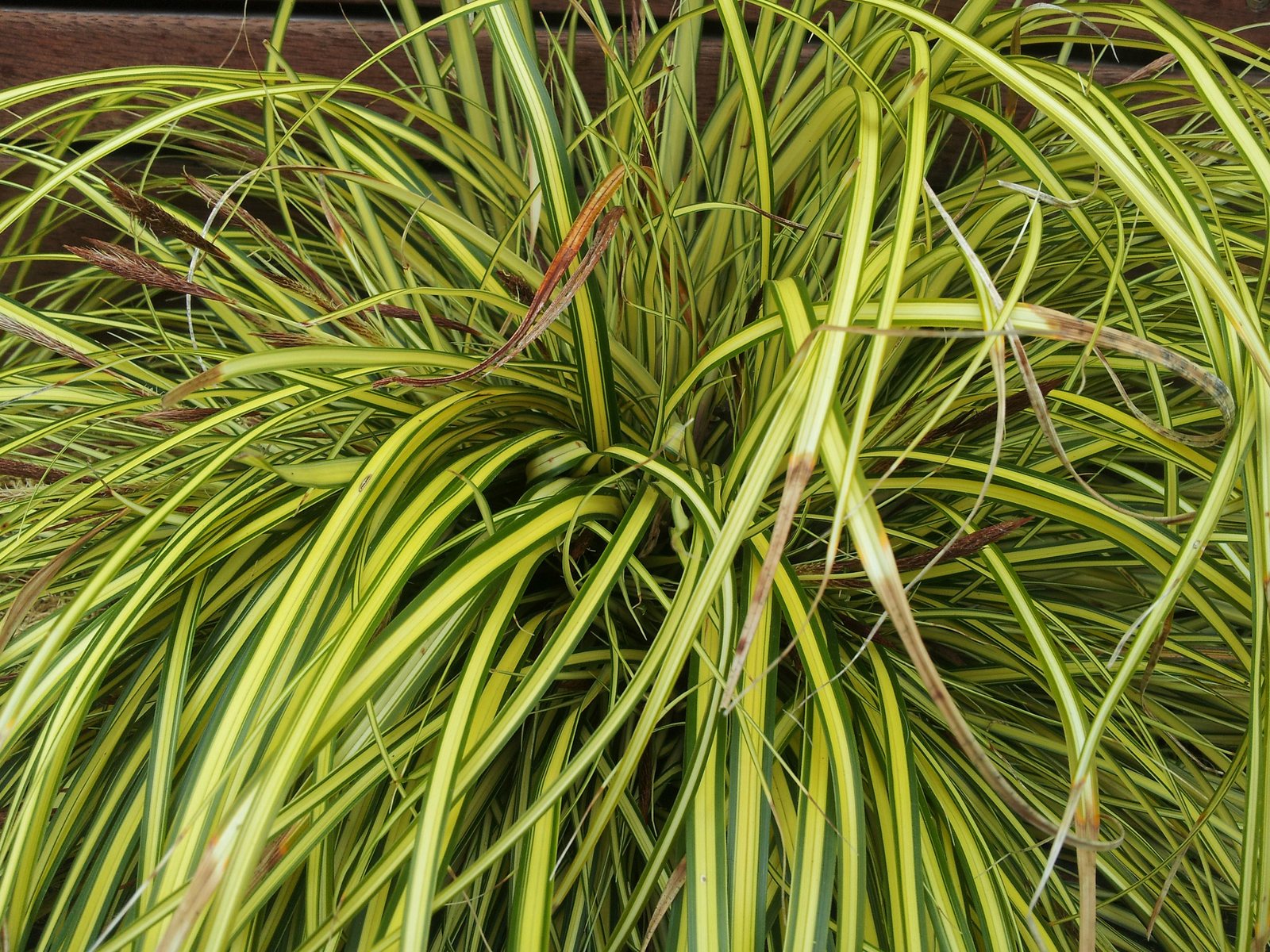
'Ice Dance' is a grass-like perennial sedge with arching green leaves edged in creamy white. It brightens shady borders and makes a spreading groundcover, retaining its foliage through most winters but sometimes looking battered in cold or exposed sites.
At a glance
- Sun
- Partial shade to full shade; tolerates some sun in cool climates if the soil stays moist. Avoid strong afternoon sun in hot regions.
- Water
- Keep evenly moist while establishing. Established plants tolerate brief dry spells, but prolonged drought causes brown tips and poor growth.
- Soil
- Humus-rich, moisture-retentive soil with good drainage; tolerates clay that does not remain waterlogged. Suitable for acidic to moderately alkaline soil.
- Height
- 1-1.5 ft (0.3-0.45 m)
- Spread
- 1-2 ft (0.3-0.6 m) initially; spreads farther over time through underground rhizomes
- Foliage
- Narrow, arching, leathery green leaves with creamy-white margins. Usually evergreen, though foliage may suffer winter damage near the colder end of its range.
- Growth
- Moderate; faster in moist, fertile soil
- Care needed
- Low
The year at a glance
- Deer resistant
- Heat tolerant
- Wildlife
| J | F | M | A | M | J | J | A | S | O | N | D | |
|---|---|---|---|---|---|---|---|---|---|---|---|---|
| Plant |
Northern hemisphere months. In Australia, shift them by six.
- Difficulty
- Easy
- Toughness
- Very tough
Will it suit your garden?
Pick your zone, country, light and whether you have pets.
Full sun is 6 or more hours of direct sun a day, part shade 3 to 6 hours, shade under 3.
How it grows
Planting day
1.1 ft (0.35 m)
After 1 year
1.2 ft (0.36 m)
After 2 years
1.2 ft (0.38 m)
full size
About 2 years to full size.
From a typical nursery size, at an average rate for this kind of plant. A rule of thumb, not a forecast.
Good to know
- Cats and dogs
- Safe
- In the garden
- Spreads vigorously: plan to contain it.
- Growth rate
- Fast
Care
Jobs through the year
- WaterApr–May, Sep–Oct, every 14 days
- Water established patches if soil is drying out; keep new plants evenly moist.
- WaterJun–Aug, every 7 days
- Water during dry spells, especially beneath trees; avoid waterlogged soil.
- PruneFeb–Mar
- Remove damaged leaves individually; cut to 8–10 cm only if most foliage is badly browned.
- DivideMar–Apr
- Divide crowded patches and replant healthy rooted sections.
- PruneApr–Jun
- Lift and remove wandering rhizomes before they enter neighbouring plants.
- MulchMar, Oct
- Apply a thin compost or organic mulch around plants, keeping crowns clear.
- ProtectOct–Nov
- Clear heavy accumulations of fallen leaves from crowns.
- Water regularly through the first growing season, then during extended dry weather.
- Apply a thin layer of compost in spring; routine heavy feeding is unnecessary.
- Mulch around plants to conserve moisture, keeping mulch clear of the crowns.
- Divide crowded patches in spring and remove wandering rhizomes before they enter neighbouring plants.
- Water container plants before the compost dries out completely, and provide drainage holes.
Pruning. In late winter or early spring, remove dead or browned leaves individually. If most foliage is badly damaged, cut it back to about 3-4 in (8-10 cm) before new growth begins; do not routinely shear healthy evergreen foliage.
Through the year
- Late winter
- Remove damaged leaves before fresh shoots emerge.
- Spring
- Plant or divide clumps, water thoroughly, and top-dress with compost.
- Late spring
- Check the edges of patches and remove rhizomes spreading into nearby plants.
- Summer
- Water during prolonged dry spells, especially beneath trees and in containers.
- Autumn
- Refresh a light mulch and clear heavy accumulations of fallen leaves from the crowns.
In the garden
- Plant in drifts beneath deciduous shrubs to brighten shaded ground with pale leaf margins.
- Edge a shady path with repeated groups for a low, arching ribbon of foliage.
- Combine with broad-leaved hostas and ferns for contrasting leaf shapes.
- Use in shaded containers with dark-leaved heucheras, allowing the foliage to arch over the rim.
Garden styles it suits: Woodland, Japanese, Modern, Low-maintenance, White garden and Winter interest.
Plant it with: Hostas, Hellebores, Japanese painted fern, Heucheras, Siberian bugloss and Epimediums.
Wildlife: Dense foliage provides shelter for small invertebrates. The inconspicuous, wind-pollinated flowers offer little nectar value to bees and butterflies.
Problems to watch for
- Brown tips or scorched patches: improve watering during dry weather and shelter plants from hot afternoon sun or drying winds.
- Winter-browned foliage: remove damaged leaves in late winter; retain healthy leaves rather than cutting the whole plant down.
- Rotting crowns in saturated soil: improve drainage or move plants out of persistently waterlogged ground.
- Unwanted spreading: lift out surplus rhizomes in spring, or grow in a container where boundaries must remain fixed.
Safety
Not known to be toxic to people, cats, dogs or horses; no poisonous parts are recognized. Cultivar-specific toxicity information is limited, and the fibrous leaves are not intended for eating.
Where it spreads. Can spread vigorously by rhizomes in moist, shaded gardens, including those in the UK and the Pacific Northwest of North America. This garden-spreading habit is not the same as a formal invasive listing; keep patches away from delicate neighbours and natural areas.
Easily confused with
Japanese sedge 'Evergold' (Carex oshimensis 'Evergold')
'Evergold' has a broad creamy-yellow stripe down the centre of each leaf with green edges; 'Ice Dance' has green centres and pale margins.
Variegated Japanese sedge (Carex morrowii 'Variegata')
Both have pale-edged green leaves, but 'Variegata' usually forms a more compact, slowly expanding clump; 'Ice Dance' spreads more readily by rhizomes.
The name
Carex is the Latin name for sedge, and morrowii honours the American physician and plant collector James Morrow.
Propagation. Divide in spring as growth begins. Lift a section with roots and several shoots, replant promptly, and keep moist until established; seed will not reliably reproduce the cultivar.
Checked against open data
- Accepted botanical name
- Carex morrowii
- Native range
- Japan.
Sources: GBIF (CC BY 4.0) and Trefle (CC BY 4.0). The care and design notes are LandscapeGPT's own.
See it in your own yard.
Upload a photo of your yard and see it redesigned with plants that suit your climate, each checked against your zone.