Sensitive fern
Onoclea sensibilis. Family Onocleaceae. Fern.
Also called Bead fern.
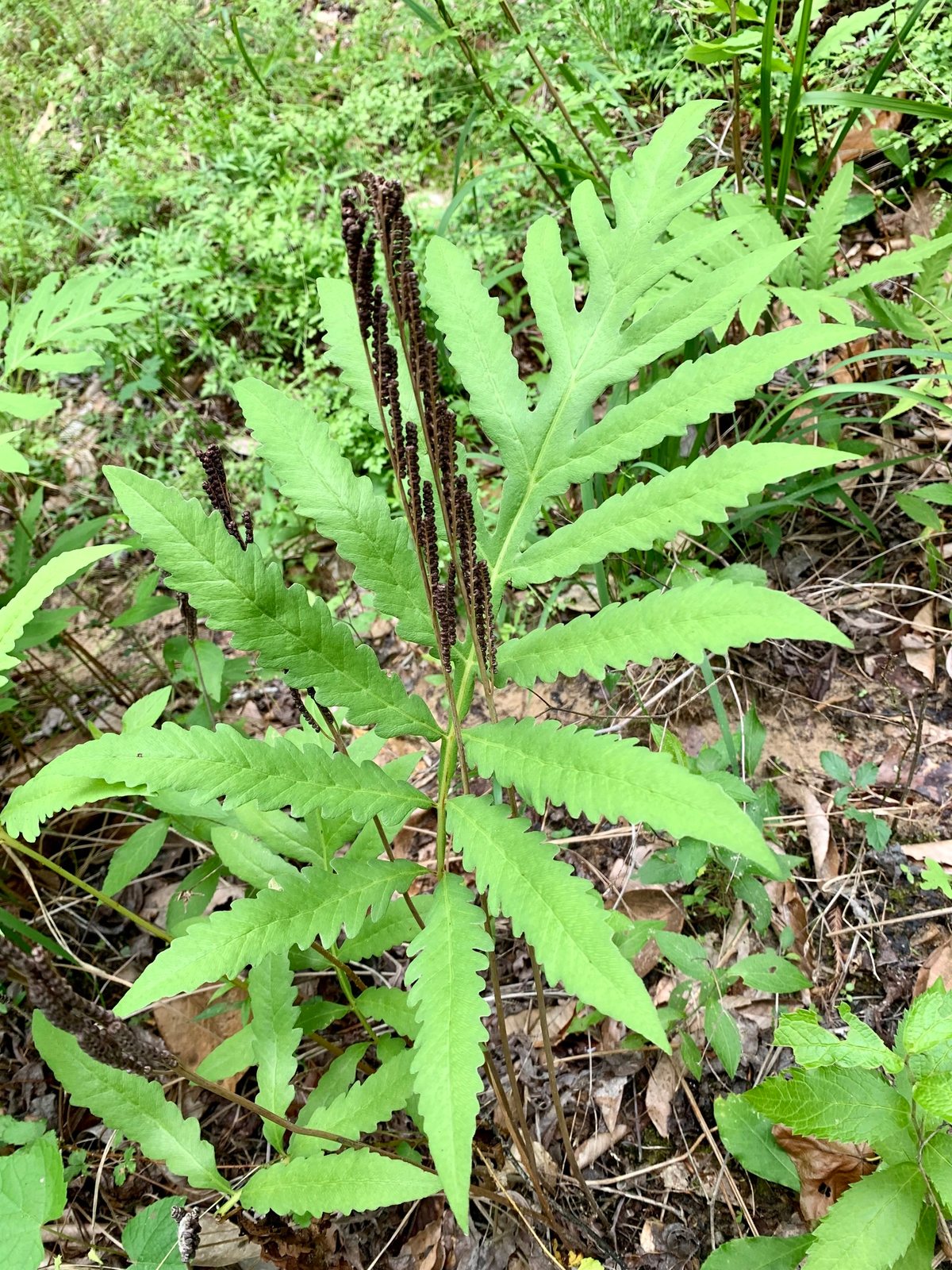
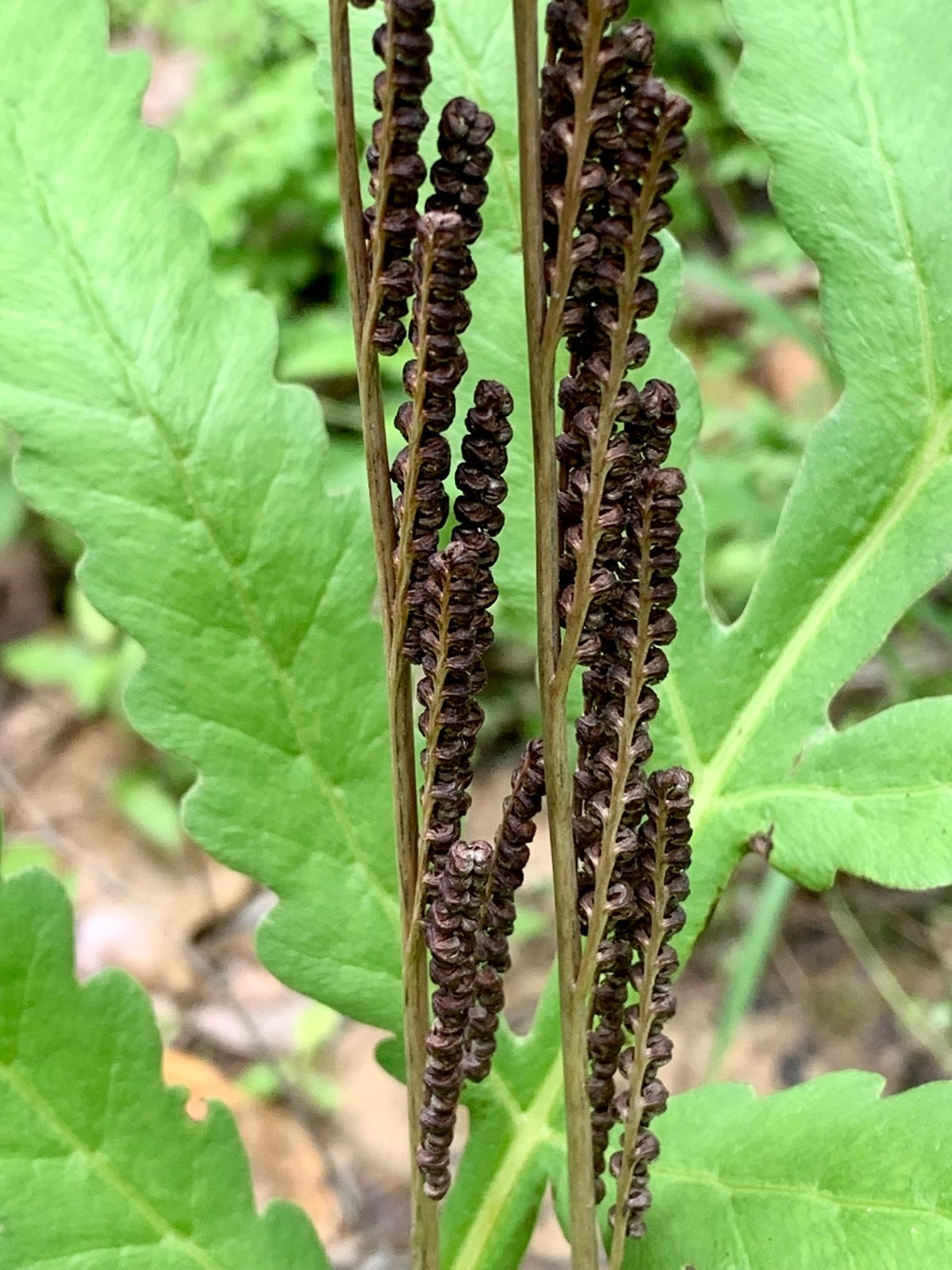
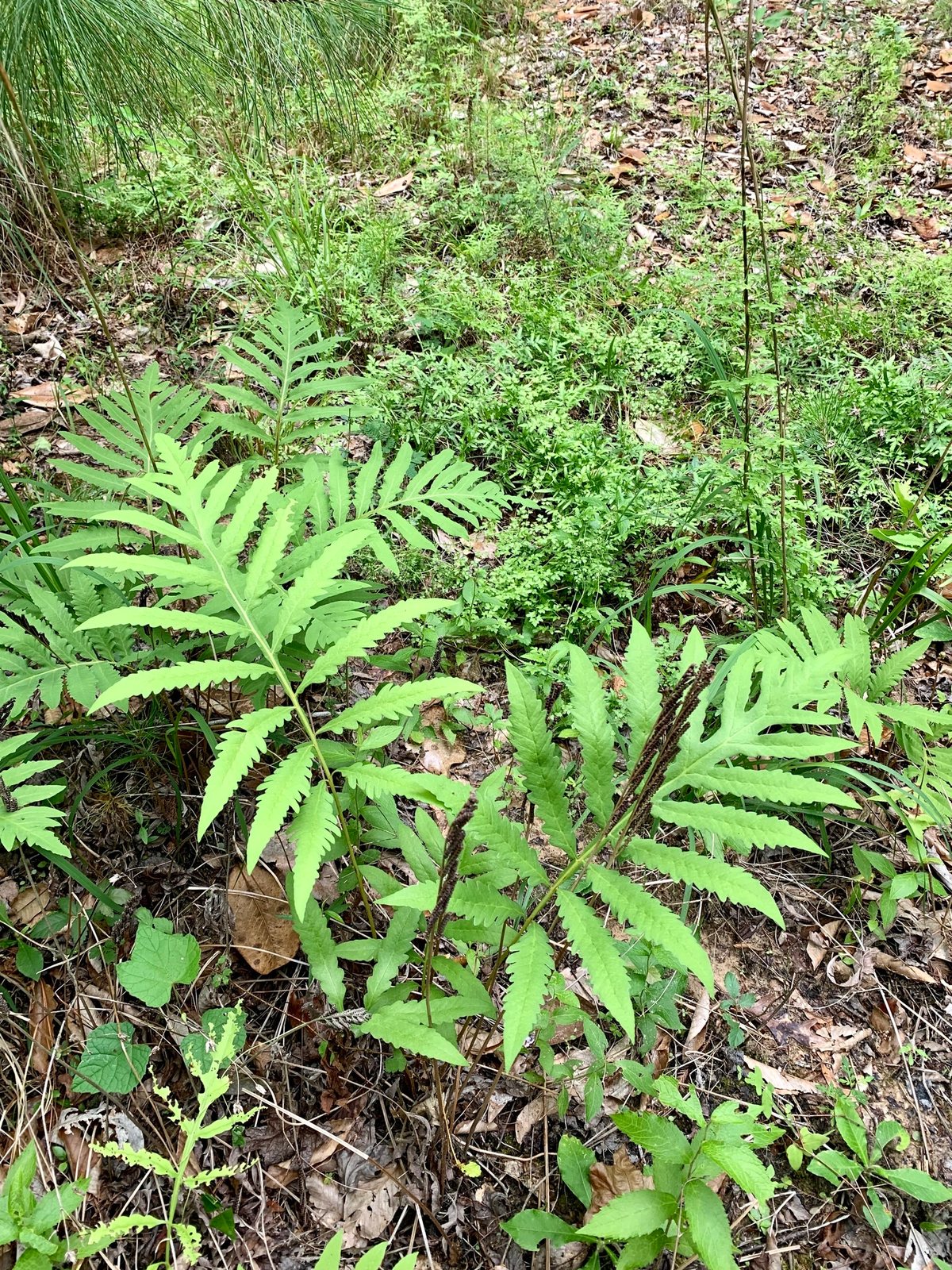
Sensitive fern is a deciduous, spreading fern grown for its broad, pale-green fronds and upright, bead-like fertile stems that persist into winter. It makes effective groundcover in damp shade, but its creeping rhizomes need room and can overwhelm smaller plants.
At a glance
- Sun
- Partial to full shade; tolerates more sun where the soil stays consistently wet.
- Water
- Keep consistently moist to wet. Established plants tolerate waterlogged soil but not prolonged drought.
- Soil
- Humus-rich, moist or wet soil, preferably acidic to neutral; tolerates clay.
- Height
- 2-3 ft (0.6-0.9 m)
- Spread
- 3-5 ft (0.9-1.5 m), eventually wider through creeping rhizomes
- Foliage
- Broad, triangular, light-green sterile fronds with deeply divided, rounded lobes. Separate, narrow fertile fronds carry bead-like spore-bearing structures that turn brown and remain after the leafy fronds die.
- Growth
- Fast in moist, fertile soil
- Care needed
- Low
The year at a glance
- Deer resistant
- Cold hardy
- Heat tolerant
- Wildlife
| J | F | M | A | M | J | J | A | S | O | N | D | |
|---|---|---|---|---|---|---|---|---|---|---|---|---|
| Plant |
Northern hemisphere months. In Australia, shift them by six.
- Difficulty
- Easy
- Toughness
- Fairly tough
Will it suit your garden?
Pick your zone, country, light and whether you have pets.
Full sun is 6 or more hours of direct sun a day, part shade 3 to 6 hours, shade under 3.
How it grows
Planting day
1 ft (0.3 m)
After 1 year
1.7 ft (0.53 m)
After 2 years
2.5 ft (0.75 m)
full size
About 2 years to full size.
From a typical nursery size, at an average rate for this kind of plant. A rule of thumb, not a forecast.
Good to know
- Cats and dogs
- Toxic
- Native to
- the US and Canada
- In the garden
- Spreads vigorously: plan to contain it.
- Growth rate
- Fast
Care
Jobs through the year
- WaterApr–May, Sep–Oct, every 7 days
- Water established patches if rain is insufficient to keep soil consistently moist; check new plants more often.
- WaterJun–Aug, every 3 days
- Water established patches during dry weather before roots dry out; omit in naturally wet soil.
- MulchApr–May
- Apply leaf mould or compost around plants without covering emerging shoots.
- PruneFeb–Mar
- Cut away dead leafy fronds before new growth; remove old fertile stems only if desired.
- DivideMar–Apr
- Divide oversized patches as growth starts and lift unwanted spreading rhizomes.
- ProtectApr–May
- Check emerging fronds for slugs and snails; hand-pick pests if damage occurs.
- Water during dry spells before the soil dries out around the roots.
- Apply leaf mould or compost as a surface mulch in spring.
- Avoid routine fertiliser; an annual organic mulch is usually sufficient.
- Lift unwanted rhizomes in spring to keep the patch within bounds.
- Divide crowded or oversized patches in spring as new growth begins.
Pruning. Cut collapsed leafy fronds to ground level after autumn frost or before new growth in spring. Leave the brown fertile stems through winter for structure, then remove them if desired.
Through the year
- Early spring
- Remove old fronds before the new shoots expand.
- Spring
- Plant or divide into moist soil and water thoroughly.
- Late spring
- Mulch with leaf mould or compost, keeping emerging shoots uncovered.
- Summer
- Water during dry weather and remove rhizomes spreading into neighbouring plants.
- Autumn
- Allow frost-blackened foliage to collapse; retain fertile stems for winter interest.
In the garden
- Use in broad drifts beneath deciduous trees where the soil remains damp.
- Plant along pond margins above the permanent waterline for bold, soft-green foliage.
- Combine with sedges and moisture-loving perennials in a rain garden's damp lower areas.
- Use as a spreading groundcover in a large woodland garden, away from delicate plants.
Garden styles it suits: Woodland, Bog garden, Wildlife garden, Green on green, Rewilded and Japanese.
Plant it with: Hostas, Astilbes, Rodgersias, Turtlehead, Japanese primroses and Sedges.
Wildlife: Dense patches provide cover for small animals and invertebrates. It produces neither flowers nor nectar, so it is not a direct food source for pollinating insects.
Problems to watch for
- Unwanted spread: lift creeping rhizomes regularly or choose a bed with firm boundaries; avoid planting beside small, slow-growing perennials.
- Brown, scorched fronds in summer: restore consistent moisture and provide more shade, especially in hot climates.
- Slug or snail damage to emerging fronds: check young growth and remove pests by hand or use an appropriate labelled control.
- Blackened foliage after frost: this is normal seasonal dieback, not usually disease; remove collapsed fronds when convenient.
Safety
Reported poisonous to horses and other grazing livestock; keep them away from the fronds and prevent fern material entering hay. Poisoning can be serious. Toxicity to cats and dogs is not well established, so do not assume it is safe to chew. It is not an edible fern for people; do not eat the young shoots or other parts.
Where it spreads. Can spread aggressively by rhizomes in damp gardens in eastern North America, the United Kingdom and other suitable cool-temperate regions. Its vigorous garden spread does not necessarily mean it is officially listed as invasive locally.
Easily confused with
Netted chain fern (Woodwardia areolata)
Its leafy fronds have more pointed, finely toothed lobes. Its fertile fronds carry elongated, chain-like spore cases rather than the rounded beads of sensitive fern.
Ostrich fern (Matteuccia struthiopteris)
Forms upright, vase-shaped crowns of finely divided, feather-like fronds rather than broad, triangular fronds on a spreading patch.
Cinnamon fern (Osmundastrum cinnamomeum)
Has finely divided leafy fronds and conspicuous cinnamon-brown fertile fronds, without sensitive fern's bead-like segments.
The name
The common name and the Latin epithet sensibilis refer to the leafy fronds' sensitivity to frost.
Propagation. Divide rhizomes in spring, keeping roots and at least one growing point on each piece; replant promptly and keep moist. It can also be raised from spores, but this is slower.
Checked against open data
- Accepted botanical name
- Onoclea sensibilis
- In the US and Canada
- Native in Canada, the lower 48 states and St. Pierre and Miquelon.
- Native range
- Alabama, Amur, Arkansas, China North-Central, China Southeast, Chita, Colorado, Connecticut, Delaware, District of Columbia, Florida and Georgia.
- Measured
- Average height 50 cm.
Sources: GBIF (CC BY 4.0), USDA PLANTS and Trefle (CC BY 4.0). The care and design notes are LandscapeGPT's own.
See it in your own yard.
Upload a photo of your yard and see it redesigned with plants that suit your climate, each checked against your zone.