Shenandoah switchgrass
Panicum virgatum 'Shenandoah'. Family Poaceae. Ornamental grass.
Also called Red switchgrass, Panicum virgatum 'Shenandoah'.
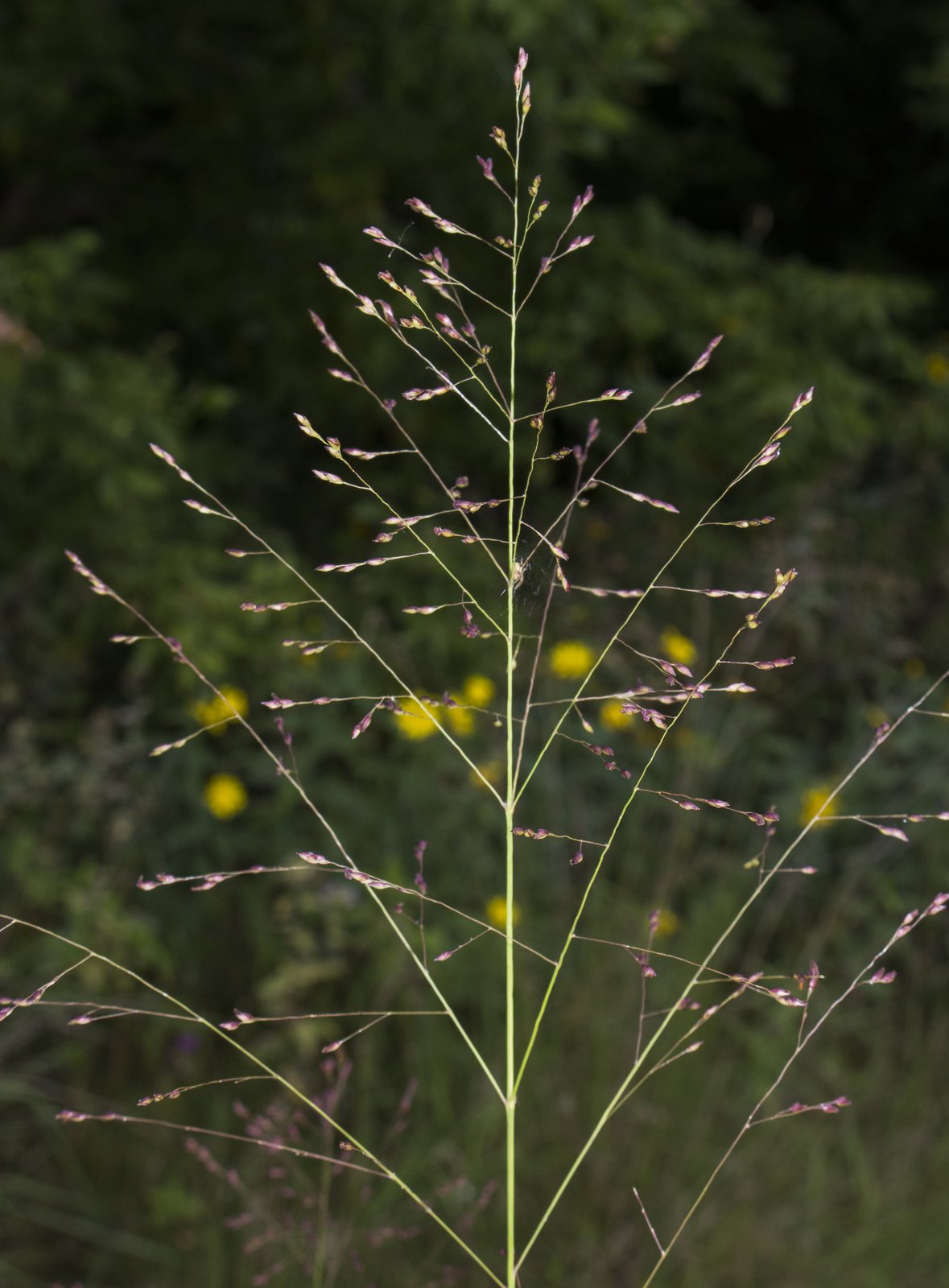
Shenandoah switchgrass is an upright, clump-forming perennial grass grown for its red-tipped foliage, burgundy autumn colour and airy flower heads. It brings height and movement to sunny borders, while its dry stems provide structure through winter. New shoots emerge relatively late in spring.
At a glance
- Sun
- Full sun gives the strongest colour and most upright growth; light shade is tolerated but can cause flopping.
- Water
- Water regularly during the first growing season. Once established, it tolerates dry spells, though prolonged drought may brown the foliage early.
- Soil
- Adaptable to clay, loam and sandy soils, including seasonally moist ground. Best in moderately fertile soil; avoid permanently waterlogged conditions.
- Height
- 3-4 ft (0.9-1.2 m), including flower heads
- Spread
- 2-3 ft (0.6-0.9 m)
- Flowers
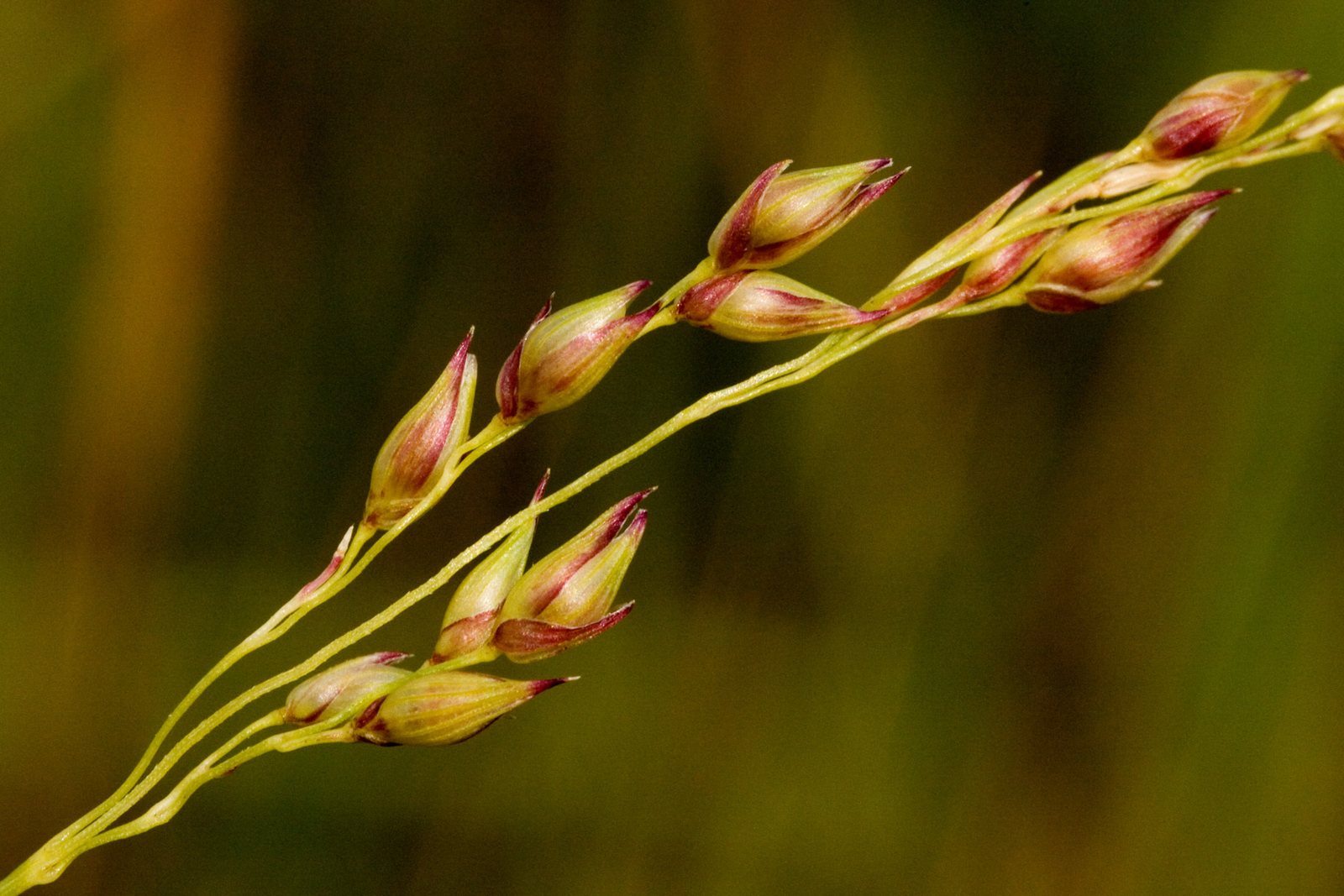
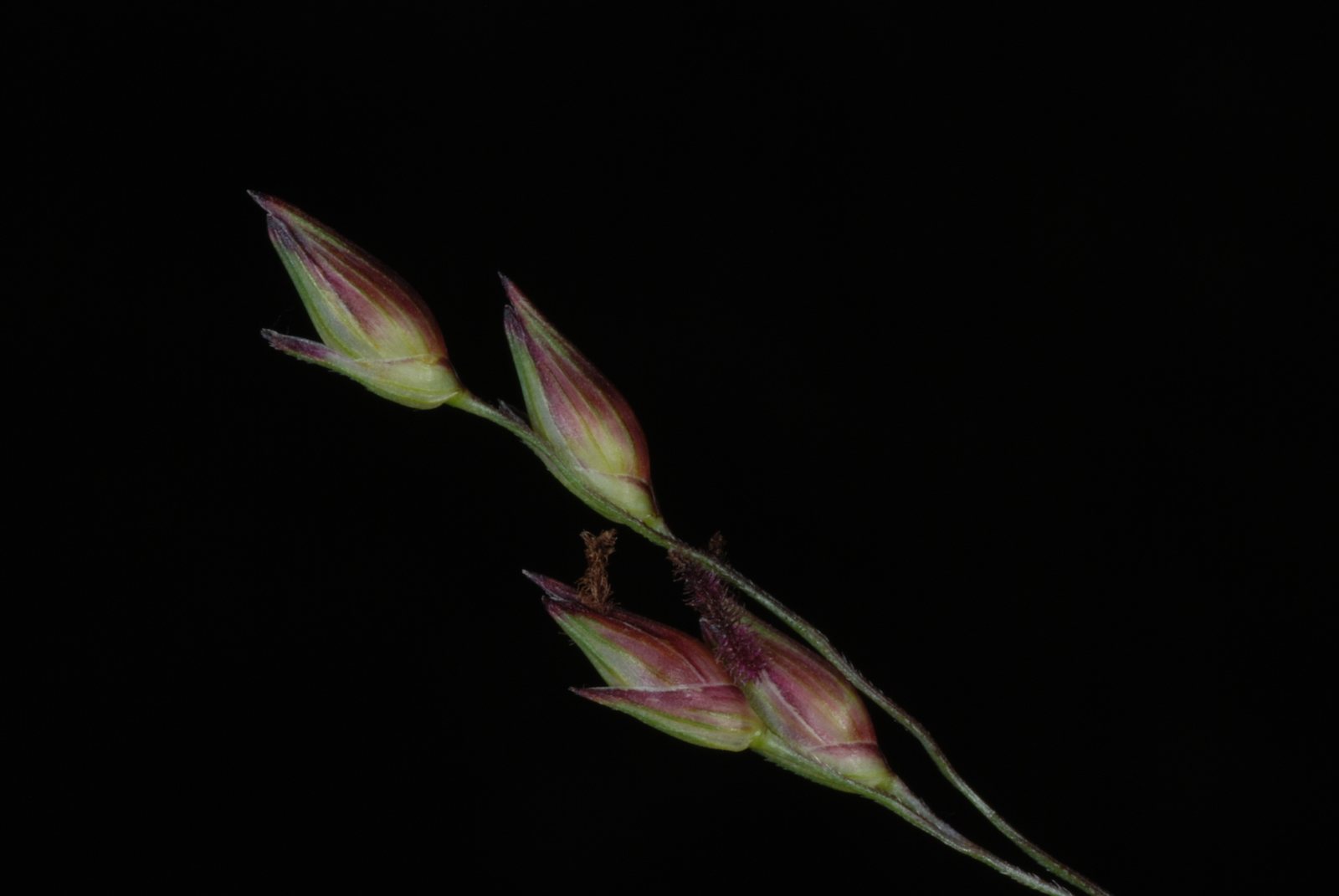
- Summer to early autumn; fine, airy sprays of pinkish-red flowers fade to tan seed heads.
- Foliage
- Narrow green leaves develop red tips in early summer, becoming increasingly burgundy as the season progresses. Leaves turn tan as the plant becomes dormant.
- Growth
- Moderate; usually forms a substantial clump within two to three growing seasons.
- Care needed
- Low
The year at a glance
- Deer resistant
- Drought tolerant
- Heat tolerant
- Wildlife
| J | F | M | A | M | J | J | A | S | O | N | D | |
|---|---|---|---|---|---|---|---|---|---|---|---|---|
| Flowers | ||||||||||||
| Fruit | ||||||||||||
| Plant |
Northern hemisphere months. In Australia, shift them by six.
- Difficulty
- Easy
- Toughness
- Very tough
Will it suit your garden?
Pick your zone, country, light and whether you have pets.
Full sun is 6 or more hours of direct sun a day, part shade 3 to 6 hours, shade under 3.
How it grows
Planting day
1.1 ft (0.35 m)
After 1 year
2.1 ft (0.63 m)
After 2 years
3 ft (0.91 m)
After 3 years
3 ft (1.1 m)
full size
About 3 years to full size.
From a typical nursery size, at an average rate for this kind of plant. A rule of thumb, not a forecast.
Good to know
- Cats and dogs
- Safe
- Native to
- the US and Canada
- Growth rate
- Moderate
Care
Jobs through the year
- WaterApr–May, Sep, every 21 days
- Water established clumps only during prolonged dry spells; water new plants more often.
- WaterJun–Aug, every 14 days
- Deep-water during prolonged drought to limit early browning; skip after sufficient rain.
- PruneFeb–Mar
- Cut standing stems to 10–15 cm before new shoots lengthen.
- DivideApr–May
- Divide congested clumps as growth begins, usually every three to five years.
- MulchApr
- Apply a light mulch, keeping the centre of the clump uncovered.
- Water deeply during dry spells in the first growing season; established plants need less frequent watering.
- Avoid rich feeding and heavy manure applications, which encourage soft growth and flopping.
- Apply a light mulch in spring, keeping it away from the centre of the clump.
- Divide congested clumps in spring when new shoots begin to grow, usually every three to five years.
- Grow in an open, sunny position rather than relying on staking to hold up shaded plants.
Pruning. Leave the dry foliage standing through winter, then cut the whole clump to 4-6 in (10-15 cm) above ground in late winter or early spring. Finish before new shoots lengthen so you do not cut their tips.
Through the year
- Late winter
- Cut back old stems before new growth starts; remove loose debris from the crown.
- Spring
- Plant or divide as growth begins, and water thoroughly after planting.
- Late spring
- Check newly planted clumps for moisture; do not assume slow emergence means the plant has died.
- Summer
- Water young plants during dry weather and check that neighbouring plants are not shading the foliage.
- Early autumn
- Leave the flower heads for their colour and seed, or remove them if unwanted seedlings become a problem.
- Late autumn
- Leave sound stems standing for winter structure and wildlife shelter.
In the garden
- Plant in repeated groups through a sunny perennial border to create upright rhythm and late-season red colour.
- Combine with coneflowers, black-eyed Susans and asters for a prairie-style planting with contrasting flower shapes.
- Use beside paths or terraces where light can catch the fine flower heads without the clumps blocking views.
- Mix with low evergreen shrubs to contrast summer movement and winter straw-coloured stems with a permanent framework.
Garden styles it suits: New perennial (prairie), Native meadow, Midwest prairie, Modern, Low-maintenance and Winter interest.
Plant it with: Purple coneflower, Black-eyed Susan, New England aster, Blazing star, Stonecrop and Russian sage.
Wildlife: Seed heads can feed seed-eating birds, while standing clumps provide shelter for insects. In its native North American range, switchgrass also supports several moth and butterfly larvae. Its flowers are wind-pollinated rather than a nectar source for bees.
Problems to watch for
- Flopping: usually caused by shade, excessive fertility or overly lush growth; provide more sun and stop feeding.
- Rust or leaf spots: improve airflow, avoid wetting the foliage repeatedly and remove affected dead foliage at the seasonal cutback.
- Crown rot in persistently waterlogged soil: improve drainage or move the plant to a better-drained position.
- Unwanted seedlings: remove flower heads before seed ripens and pull seedlings while small; they will not reliably match 'Shenandoah'.
Safety
Not known to be toxic to cats, dogs or people, although coarse leaves can cause irritation if chewed. Switchgrass can poison horses and other grazing livestock when eaten in quantity; compounds in the foliage can cause liver injury and severe sunlight sensitivity. Keep it out of grazing areas.
Easily confused with
Little bluestem (Schizachyrium scoparium)
Usually has finer, blue-green foliage and narrow flowering stems with small fluffy seed clusters, rather than switchgrass's broad, airy flower sprays.
Japanese blood grass (Imperata cylindrica 'Rubra')
Has flatter, broader blades with vivid red upper portions and spreads by running rhizomes. It seldom flowers in many gardens and lacks the tall, open flower cloud of switchgrass.
Heavy Metal switchgrass (Panicum virgatum 'Heavy Metal')
Has distinctly steel-blue foliage and a very upright habit, rather than the green leaves and developing burgundy colour of 'Shenandoah'.
The name
The species name virgatum means twiggy or wand-like, referring to the plant's slender, upright growth.
Propagation. Divide in spring as new growth begins, using sections with healthy roots and shoots. Division preserves the cultivar; seed-grown plants will not reliably retain its colour or habit.
Checked against open data
- Accepted botanical name
- Panicum virgatum
- In the US and Canada
- Native in Canada and the lower 48 states. Introduced in Hawaii.
- Native range
- Alabama, Arizona, Arkansas, Belize, Bermuda, Colorado, Connecticut, Cuba, Delaware, District of Columbia, Florida and Georgia.
- Measured
- Average height 100 cm.
Sources: GBIF (CC BY 4.0), USDA PLANTS and Trefle (CC BY 4.0). The care and design notes are LandscapeGPT's own.
See it in your own yard.
Upload a photo of your yard and see it redesigned with plants that suit your climate, each checked against your zone.