Shiso (perilla)
Perilla frutescens. Family Lamiaceae. Annual.
Also called Perilla, Beefsteak plant, Japanese basil.
Shiso is an aromatic herb grown as an annual for its green or purple leaves, used in Japanese and other East Asian cooking. It makes a leafy, upright accent in herb beds and containers, but can self-seed freely if allowed to flower and ripen seed.
At a glance
- Sun
- Full sun to partial shade; afternoon shade helps in hot, dry gardens.
- Water
- Keep evenly moist but not waterlogged; container plants may need daily watering in hot weather.
- Soil
- Fertile, well-drained soil enriched with compost; tolerates slightly acidic to neutral conditions.
- Height
- 2-3 ft (0.6-0.9 m)
- Spread
- 1-2 ft (0.3-0.6 m)
- Flowers
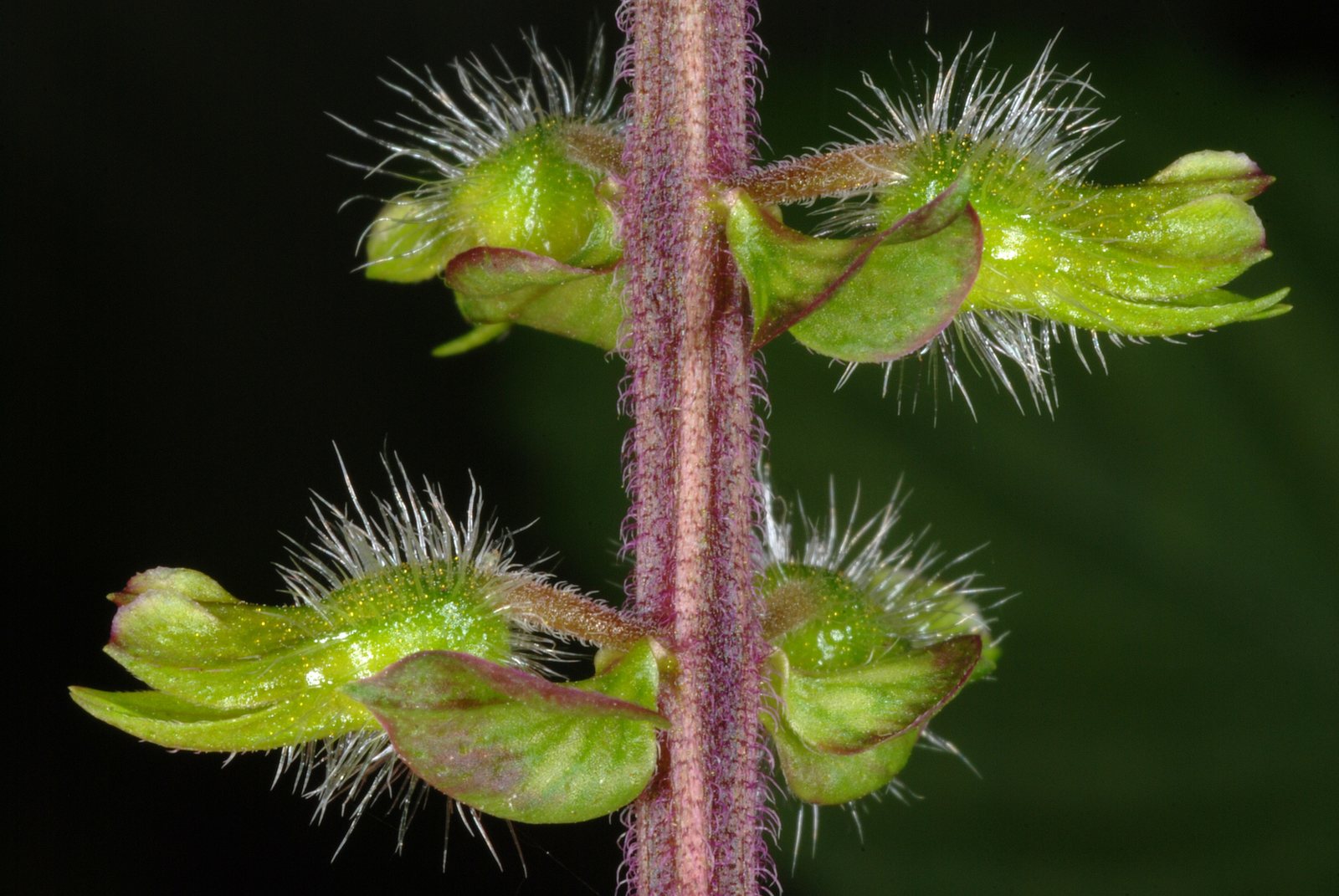
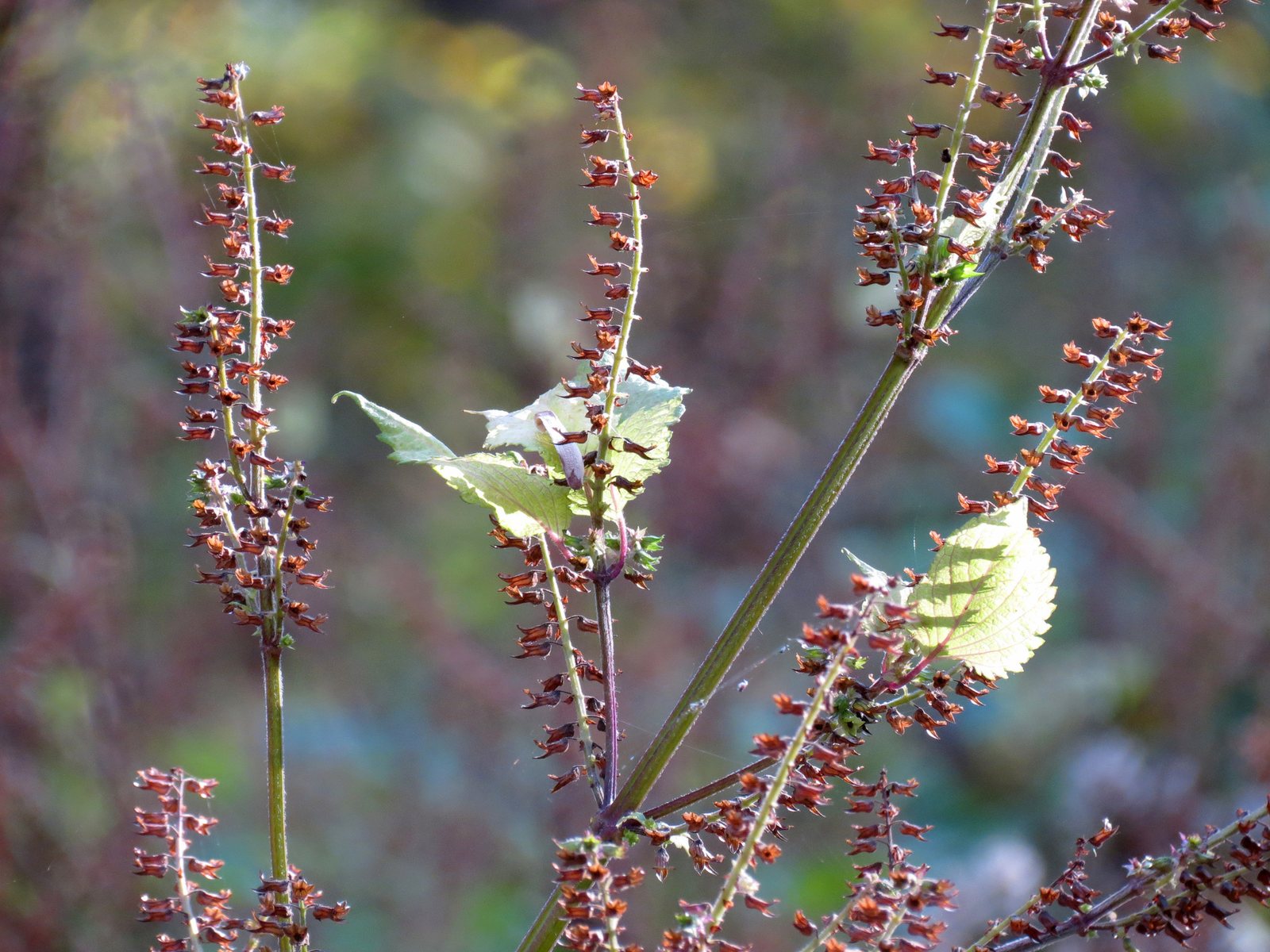
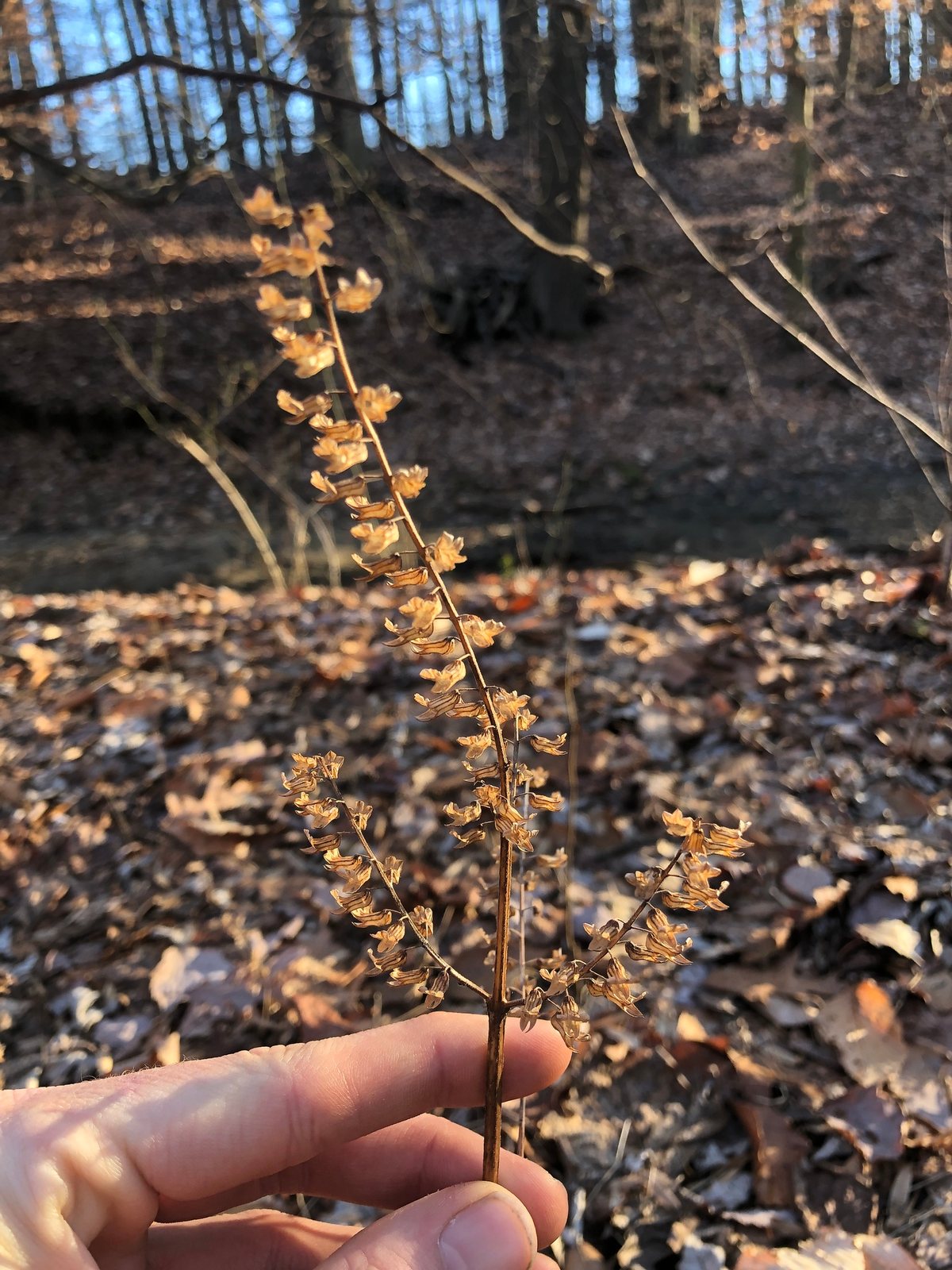
- Small white to pale pink flowers in upright spikes in late summer and autumn.
- Foliage
- Broad, pointed, toothed leaves, often crinkled; green, purple or green above and purple beneath, depending on the form.
- Growth
- Fast in warm weather.
- Care needed
- Low
The year at a glance
- Pollinators
- Heat tolerant
- Low allergen
- Fragrant
- Edible
| J | F | M | A | M | J | J | A | S | O | N | D | |
|---|---|---|---|---|---|---|---|---|---|---|---|---|
| Flowers | ||||||||||||
| Fruit | ||||||||||||
| Plant |
Northern hemisphere months. In Australia, shift them by six.
- Difficulty
- Easy
- Toughness
- Fairly tough
Will it suit your garden?
Pick your zone, country, light and whether you have pets.
Full sun is 6 or more hours of direct sun a day, part shade 3 to 6 hours, shade under 3.
How it grows
Planting day
0.5 ft (0.15 m)
After 1 year
2.5 ft (0.75 m)
full size
Full size in one season.
From a typical nursery size, at an average rate for this kind of plant. A rule of thumb, not a forecast.
Good to know
- Cats and dogs
- Safe
- Invasive in
- the US
- In the garden
- Spreads vigorously: plan to contain it.
- Growth rate
- Fast
Care
Jobs through the year
- WaterMay, Sep–Oct, every 7 days
- Water established plants as surface soil starts drying; seedlings need closer attention.
- WaterJun–Aug, every 3 days
- Keep established garden plants evenly moist, adjusting for rain; pots may need daily watering.
- FeedMay
- Mix compost into soil before planting; feed only if growth is weak.
- MulchJun
- Mulch once soil is warm, keeping mulch away from stems.
- PruneJun
- Pinch growing tips when plants reach 15–20 cm tall to encourage branching.
- DeadheadAug–Oct, every 7 days
- Remove flower spikes before seeds ripen to maintain leafy growth and prevent unwanted spread.
- HarvestJun–Oct, every 7 days
- Pick tender leaves or short shoot tips, leaving ample foliage; finish before the first frost.
- ProtectMay–Jun
- Plant only after frost risk passes and protect young plants from slugs and snails.
- Plant out after the last frost, once the soil has warmed and nights are reliably mild.
- Space plants 12-18 in (30-45 cm) apart for good airflow and easy picking.
- Water at soil level when the surface starts to dry; do not let pots dry out completely.
- Add compost before planting; feed container plants lightly with a balanced liquid fertiliser if growth slows.
- Mulch once the soil is warm to conserve moisture.
- Remove flower spikes before seeds ripen unless you intend to collect seed.
Pruning. Pinch out growing tips when plants are about 6-8 in (15-20 cm) tall to encourage branching. Continue picking shoot tips and removing flower spikes through summer to keep plants leafy.
Harvest
Pick individual leaves once plants are well established and the leaves are large enough to use; young, tender leaves generally have the best texture. Snip leaves or short shoot tips regularly, leaving enough foliage for continued growth, and harvest before frost kills the plants.
Through the year
- Early spring
- Sow fresh seed indoors in a warm, bright place; press onto moist seed compost and cover only very lightly.
- Late spring
- Harden off seedlings and plant outside after frost risk has passed and the soil has warmed.
- Early summer
- Pinch out growing tips and begin picking leaves from established plants.
- Summer
- Keep soil evenly moist and check tender shoots and leaf undersides for pests.
- Late summer
- Remove flower spikes to prolong leaf production and prevent unwanted seedlings.
- Autumn
- Harvest remaining usable leaves before frost and remove dead plants; avoid scattering ripe seed.
In the garden
- Plant purple-leaved forms among green vegetables for strong foliage contrast in a kitchen garden.
- Grow in containers beside an outdoor cooking area for convenient picking.
- Repeat small groups along a sunny herb-bed edge for an informal, leafy rhythm.
- Combine with parsley, basil and chives in an edible display with contrasting leaf shapes.
Garden styles it suits: Potager (kitchen garden), Edible landscape, Japanese, Sensory garden, Small-space and Cottage garden.
Plant it with: Basil, Parsley, Chives, Lettuce, Tomatoes and French marigolds.
Wildlife: Flowers attract bees and other small pollinating insects. Removing flower spikes to prevent self-seeding also removes this nectar source.
Problems to watch for
- Slugs and snails can strip young seedlings; protect new plants with barriers, hand-picking or a locally approved iron-phosphate bait.
- Aphids cluster on soft shoot tips; wash them off with water and repeat as needed.
- Spider mites can cause pale stippling in hot, dry conditions; keep plants adequately watered and rinse leaf undersides regularly.
- Poor or uneven germination is common with old or dormant seed; use fresh seed, keep it warm and evenly moist, and allow several weeks for emergence.
Safety
Leaves of culinary shiso are not known to be toxic to people in normal food quantities, though allergies can occur. Perilla can cause severe, sometimes fatal lung injury in grazing livestock, including horses; keep all plant material, especially flowering and seed-bearing plants, away from pasture and hay. Toxicity to cats and dogs is not well established, so do not encourage them to eat it. Concentrated oils should not be treated as equivalent to culinary leaves.
Where it spreads. Self-seeds readily and is invasive in parts of the eastern and central United States, particularly the Southeast and Mid-Atlantic; it appears on invasive-plant lists in states including Virginia, Tennessee and Pennsylvania. It can escape into disturbed ground, stream margins and woodland edges. Check local guidance before planting and prevent seed production where escape is a concern.
Easily confused with
Coleus (Coleus scutellarioides)
Coleus often has strongly patterned or multicoloured leaves and lacks shiso's characteristic culinary aroma; do not identify an edible plant by purple foliage alone.
Purple basil (Ocimum basilicum)
Basil usually has smoother, less sharply toothed leaves and a recognisable basil scent; shiso leaves have more pronounced teeth and often a crinkled surface.
The name
The species name frutescens means 'becoming shrubby', referring to its bushy growth.
Propagation. Grow from seed sown indoors in spring or directly outdoors after frost in warm soil. Germination can be erratic, especially with older seed; surface-sow or cover very lightly and keep at about 65-75°F (18-24°C). Seedlings may differ in leaf colour and flavour if different forms have crossed.
Checked against open data
- Accepted botanical name
- Perilla frutescens
- In the US and Canada
- Introduced in Canada and the lower 48 states.
- Native range
- Assam, Bangladesh, China South-Central, China Southeast, East Himalaya, India, Japan, Jawa, Khabarovsk, Korea, Laos and Myanmar.
Sources: GBIF (CC BY 4.0), USDA PLANTS and Trefle (CC BY 4.0). The care and design notes are LandscapeGPT's own.
See it in your own yard.
Upload a photo of your yard and see it redesigned with plants that suit your climate, each checked against your zone.