Showy honey myrtle
Melaleuca nesophila. Family Myrtaceae. Shrub.
Also called Showy honeymyrtle, Pink melaleuca, Mindiyed.
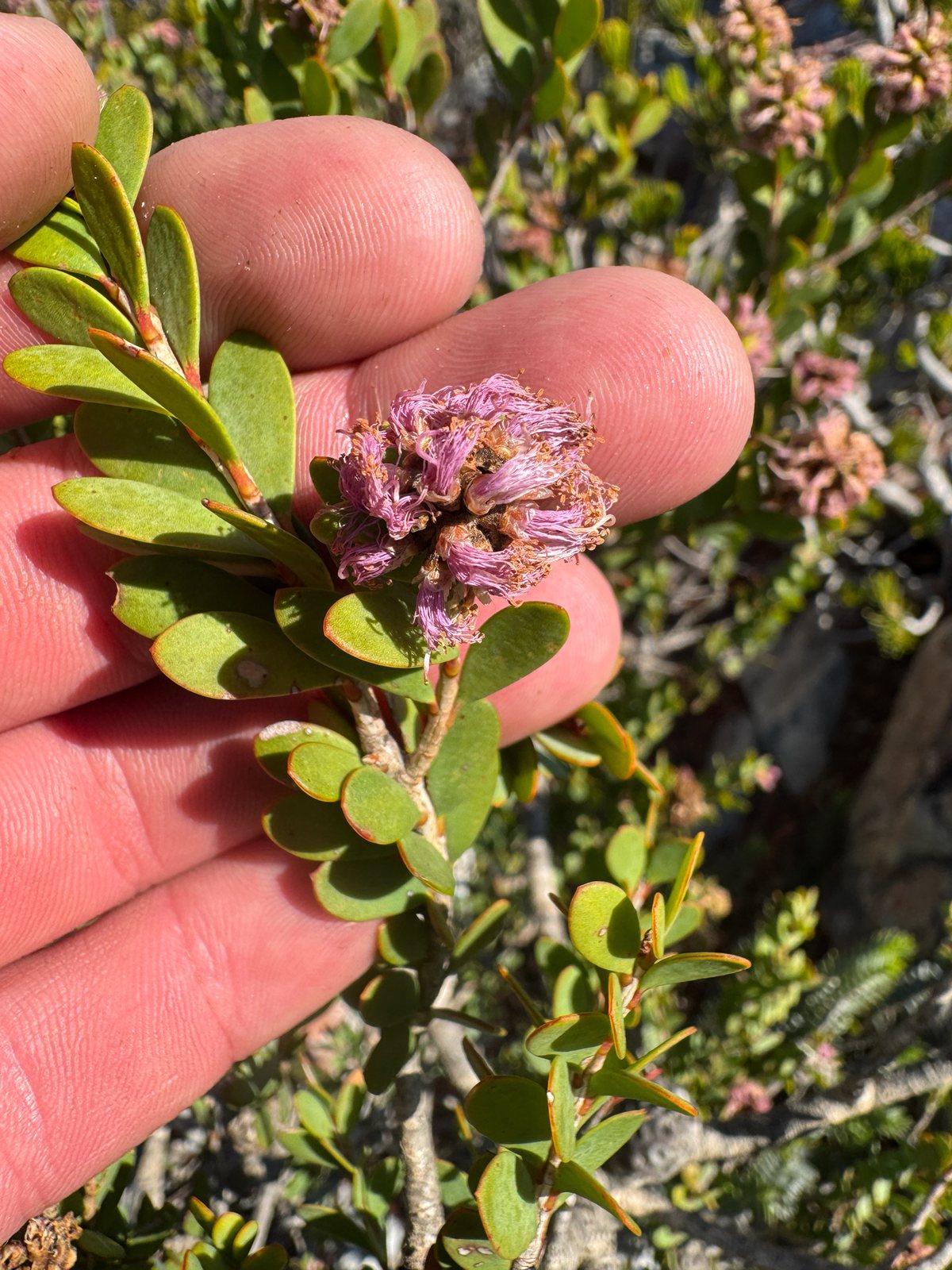
Showy honey myrtle is a large evergreen shrub or small, spreading tree from coastal Western Australia, grown for its rounded mauve-pink flower heads and pale, papery bark. It suits sunny coastal gardens with mild winters, tolerating salt-laden wind and dry spells once established. It is not reliably hardy outdoors in most of the United Kingdom or Canada.
At a glance
- Sun
- Full sun; tolerates light shade but flowers less freely.
- Water
- Water regularly during establishment, then deeply during prolonged dry spells. Avoid persistently wet soil.
- Soil
- Well-drained sandy, gravelly or loamy soil; tolerates coastal soils and some alkalinity. Improve drainage on heavy clay.
- Height
- 10-20 ft (3-6 m)
- Spread
- 10-20 ft (3-6 m)
- Flowers
- Rounded mauve-pink to purple flower heads, fading paler with age, mainly from late spring through summer; scattered flowers may continue into autumn in mild climates.
- Foliage
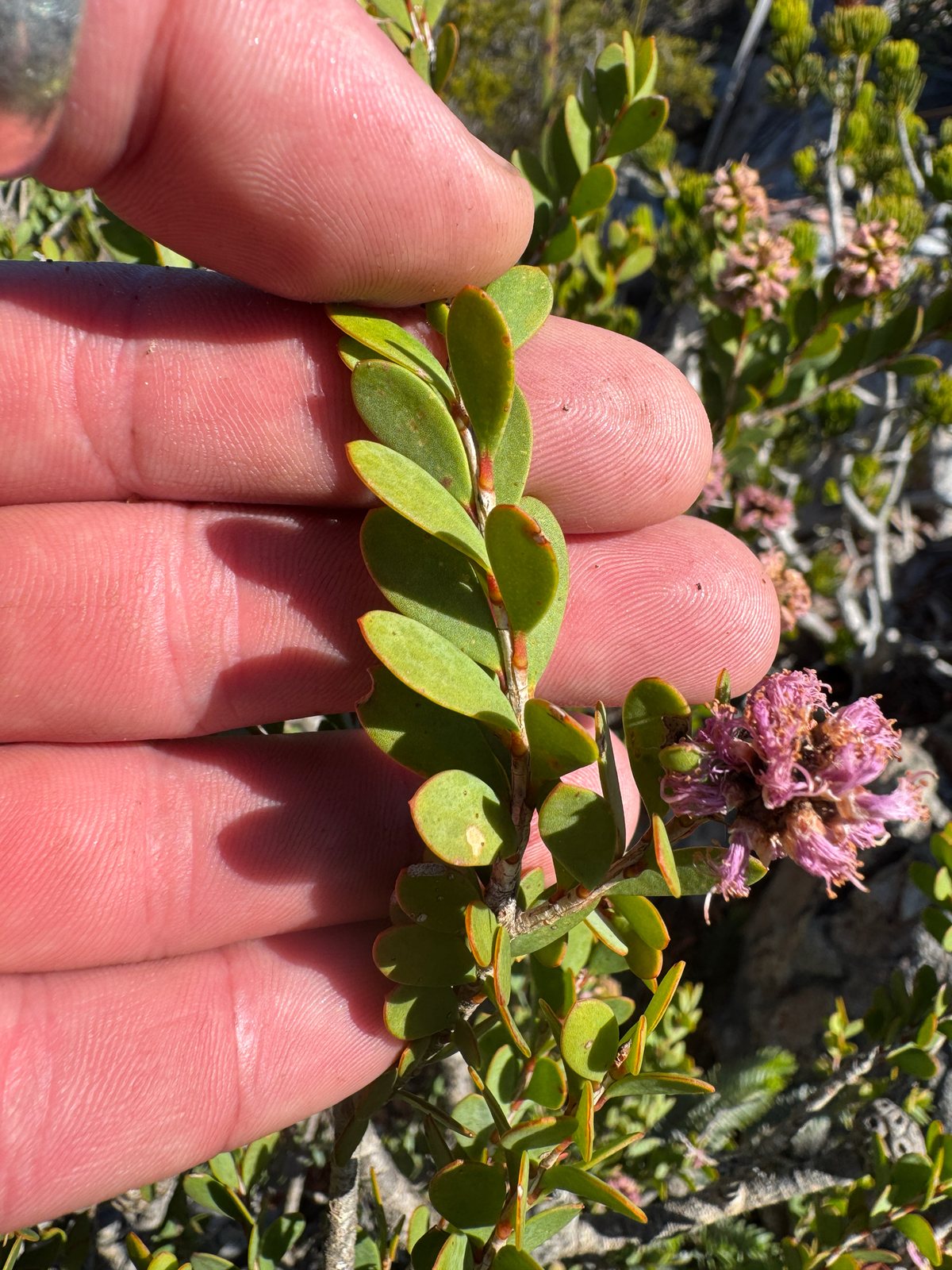
- Evergreen. Small, leathery, oval to oblong green leaves on densely branching stems; older trunks develop pale, peeling, papery bark.
- Growth
- Moderate to fast in warm conditions.
- Care needed
- Low
The year at a glance
- Pollinators
- Drought tolerant
- Heat tolerant
- Wildlife
| J | F | M | A | M | J | J | A | S | O | N | D | |
|---|---|---|---|---|---|---|---|---|---|---|---|---|
| Flowers | ||||||||||||
| Plant |
Northern hemisphere months. In Australia, shift them by six.
- Difficulty
- Moderate
- Toughness
- Fairly tough
Will it suit your garden?
Pick your zone, country, light and whether you have pets.
Full sun is 6 or more hours of direct sun a day, part shade 3 to 6 hours, shade under 3.
How it grows
Planting day
1.8 ft (0.54 m)
After 1 year
5 ft (1.5 m)
After 2 years
8 ft (2.5 m)
After 3 years
12 ft (3.5 m)
After 5 years
15 ft (4.5 m)
full size
About 4 years to full size.
From a typical nursery size, at an average rate for this kind of plant. A rule of thumb, not a forecast.
Good to know
- Cats and dogs
- Safe
- Native to
- Australia
- In the garden
- Spreads vigorously: plan to contain it.
- Growth rate
- Fast
Care
Jobs through the year
- WaterApr–May, Sep–Oct, every 21 days
- For established ground plants, water deeply only if dry; young plants and pots need more frequent checks.
- WaterJun–Aug, every 14 days
- Water established ground plants deeply during prolonged drought only; water new plants more often.
- MulchMay
- Apply 5–8 cm of mulch, keeping it clear of the trunk.
- FeedMay
- Apply a light low-phosphorus feed only if growth is poor.
- PruneAug–Sep
- Lightly trim after the main flowering flush; avoid repeated clipping of developing flowers.
- PruneMay
- Remove dead or frost-damaged shoots once healthy new growth appears.
- ProtectJan–Apr, Oct–Dec
- Not reliably hardy in zones 6–7 or most UK gardens; overwinter a container plant somewhere bright and frost-free.
- Plant in spring after frost risk has passed, allowing room for the mature spread.
- Water deeply through the first growing season, letting the soil surface dry between waterings.
- Apply a 2-3 in (5-8 cm) layer of mulch, keeping it clear of the trunk.
- Feed only if growth is poor, using a light application of low-phosphorus fertiliser in spring.
- Choose a sheltered, freely drained position at the colder edge of its range; protect young plants from frost.
Pruning. Lightly trim after the main flowering flush to keep growth dense, and remove dead or crossing branches as needed. Begin shaping young plants early if you want a hedge or a small tree with an exposed trunk.
Through the year
- Spring
- Plant after frost risk has passed and water thoroughly.
- Spring
- Refresh mulch and check that it does not touch the trunk.
- Summer
- Water establishing plants deeply during dry weather; established plants usually need much less.
- After flowering
- Lightly trim long shoots if a compact outline is needed.
- Autumn
- Check nearby bare ground for unwanted seedlings, especially in Australian coastal gardens.
- Winter
- Protect young plants during forecast frosts and check that winter rain drains away freely.
In the garden
- Use as an informal coastal screen or wind-filtering hedge, allowing space for its broad habit.
- Train as a small multi-stemmed tree to show the papery bark above low planting.
- Combine with coastal rosemary and lomandra in a dry, Australian-native border.
- Use as a flowering background shrub in a sunny wildlife garden.
Garden styles it suits: Australian native, Coastal, Mediterranean, Wildlife garden, Pollinator garden and Low-maintenance.
Plant it with: Coastal rosemary, Lomandra, Kangaroo paw, Coastal banksia and Blue flax-lily.
Wildlife: Nectar-rich flowers attract bees and other insects, as well as nectar-feeding birds in Australia. Dense branches can provide shelter for small birds.
Problems to watch for
- Root rot in waterlogged soil: improve drainage before planting and avoid frequent watering once established.
- Frost damage to young growth: choose a warm, sheltered site and cover young plants during brief frosts; prune damaged shoots after new growth begins.
- Scale insects and associated sooty mould: check stems and leaf undersides, manage ants, and treat accessible infestations with horticultural oil according to the label.
- Sparse flowering or an open habit in shade: provide more sun and lightly trim after flowering rather than repeatedly clipping off developing flowers.
Safety
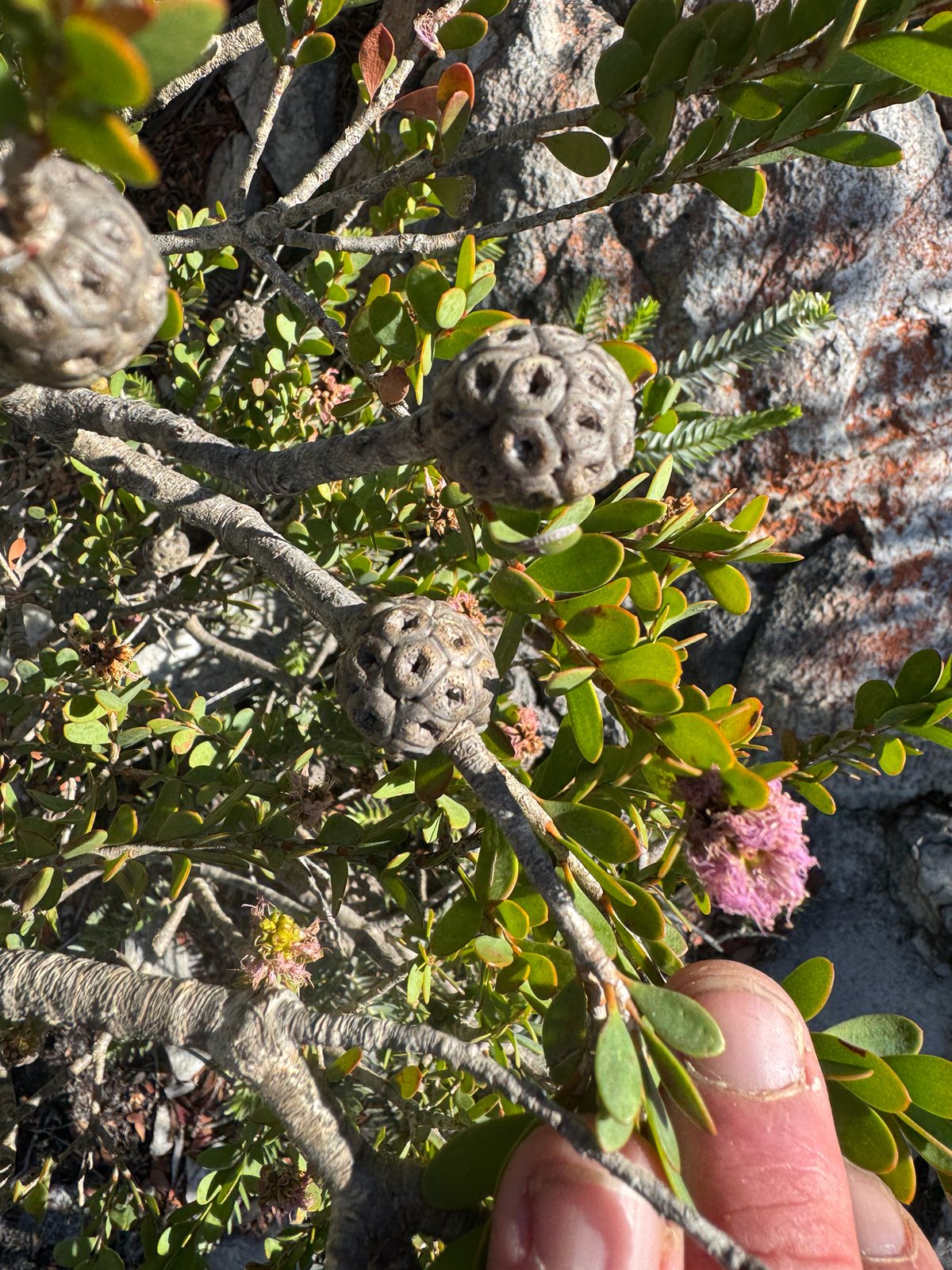
Not known to be toxic to people, cats, dogs or horses, although species-specific safety information is limited. It is an ornamental plant, not a food plant; discourage pets and children from eating the leaves, bark or woody seed capsules.
Where it spreads. Can self-seed and become an environmental weed in parts of southern Australia, including coastal south-western Western Australia outside its native range and parts of Victoria. Check local weed guidance before planting near bushland or coastal reserves.
Easily confused with
Thyme honey myrtle (Melaleuca thymifolia)
Usually a much smaller shrub with tiny, narrow leaves and loose, claw-like mauve flower clusters rather than dense rounded heads.
Swamp paperbark (Melaleuca ericifolia)
Has narrow, almost needle-like leaves and creamy-white cylindrical flower spikes, rather than broad little leaves and mauve-pink rounded heads.
The name
Melaleuca comes from Greek words meaning 'black' and 'white', referring to contrasting bark seen in the genus, while nesophila means 'island-loving', referring to its island habitat.
Propagation. Sow the fine seed on the surface of a moist, freely draining seed mix in warm conditions; do not bury it deeply. Semi-ripe cuttings taken in summer can also be used.
Checked against open data
- Accepted botanical name
- Melaleuca nesophila
- Native range
- Western Australia.
Sources: GBIF (CC BY 4.0) and Trefle (CC BY 4.0). The care and design notes are LandscapeGPT's own.
See it in your own yard.
Upload a photo of your yard and see it redesigned with plants that suit your climate, each checked against your zone.