Shrubby cinquefoil
Dasiphora fruticosa. Family Rosaceae. Shrub.
Also called Potentilla, Bush cinquefoil, Potentilla fruticosa.
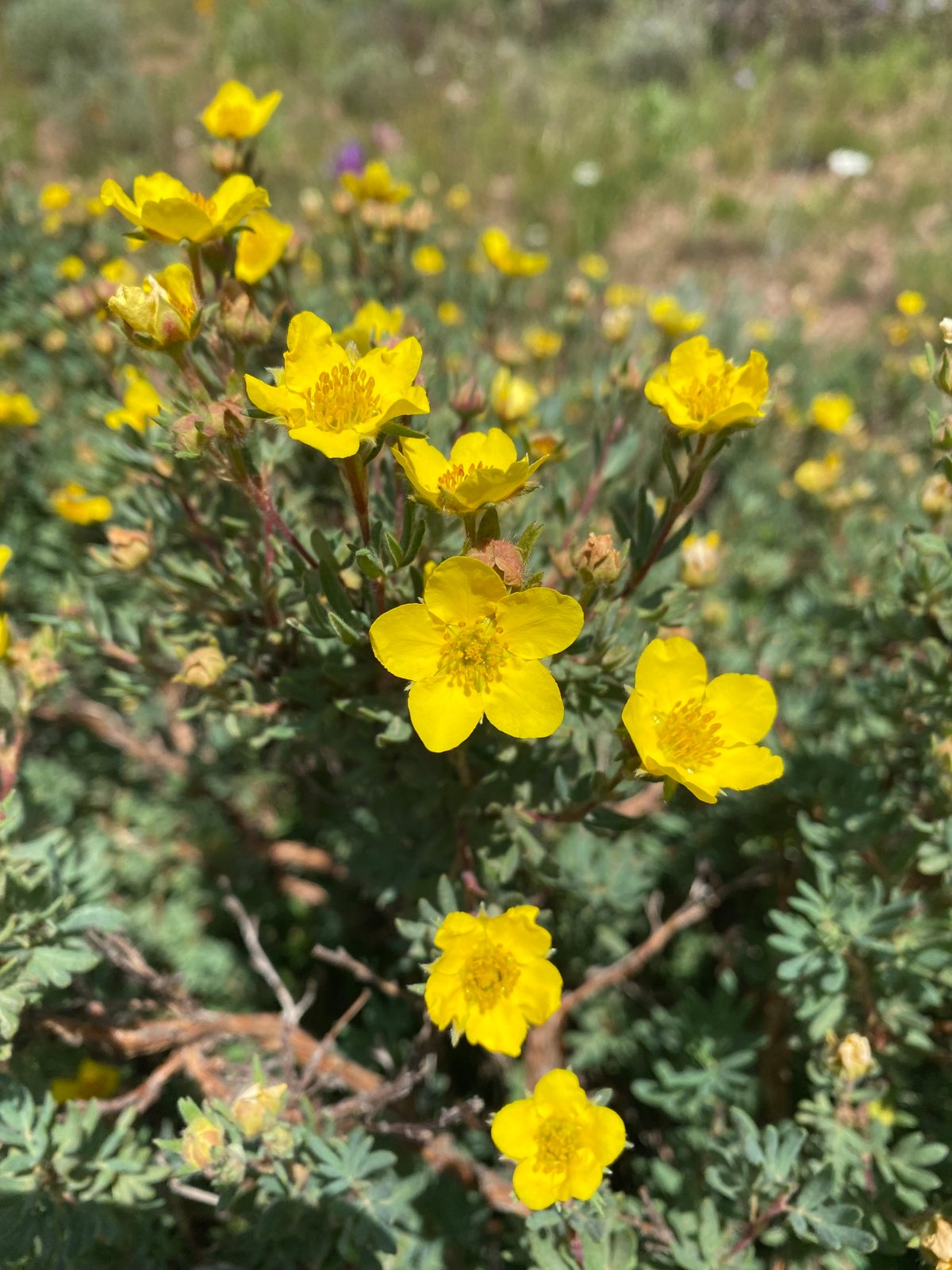
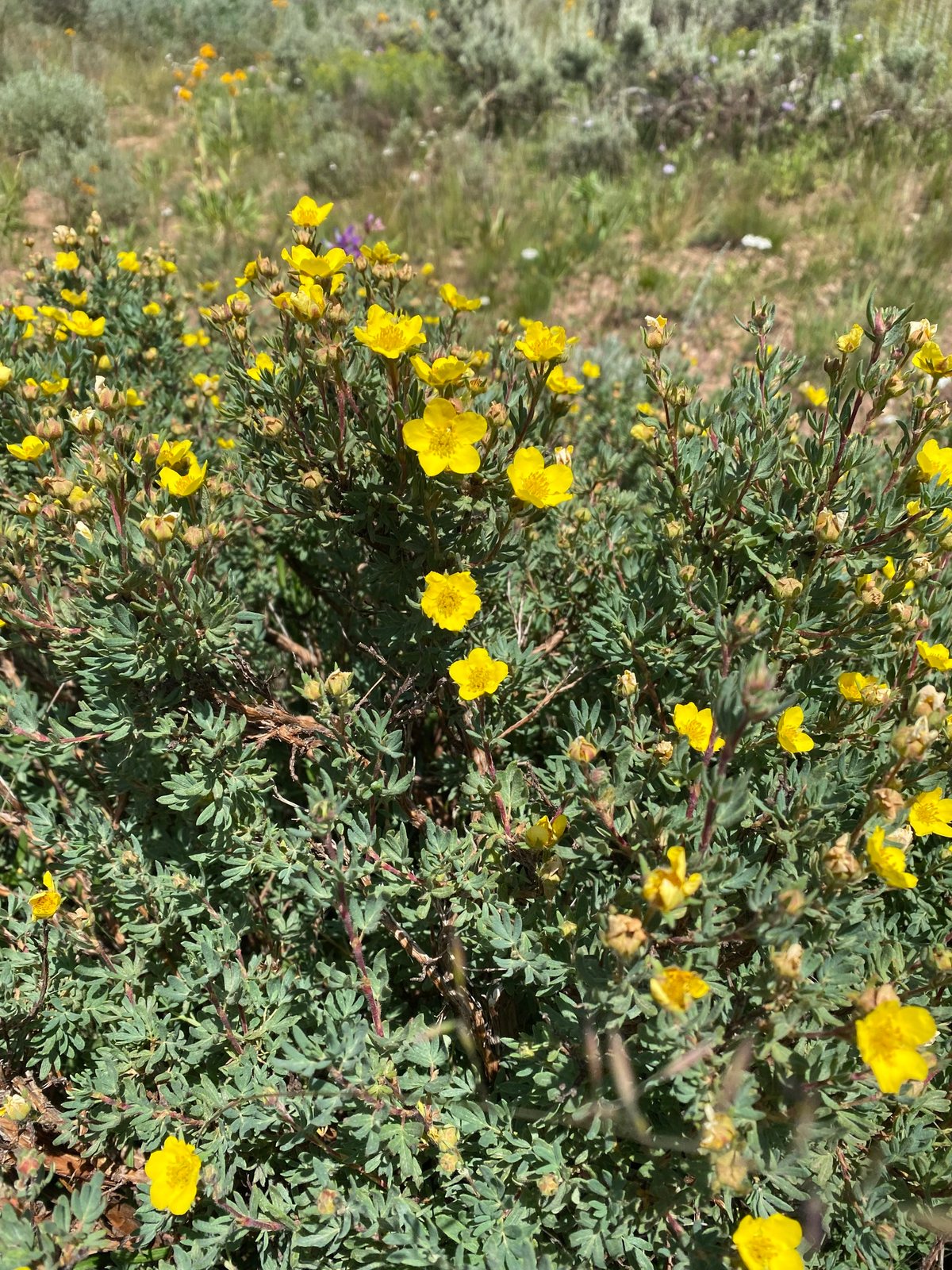
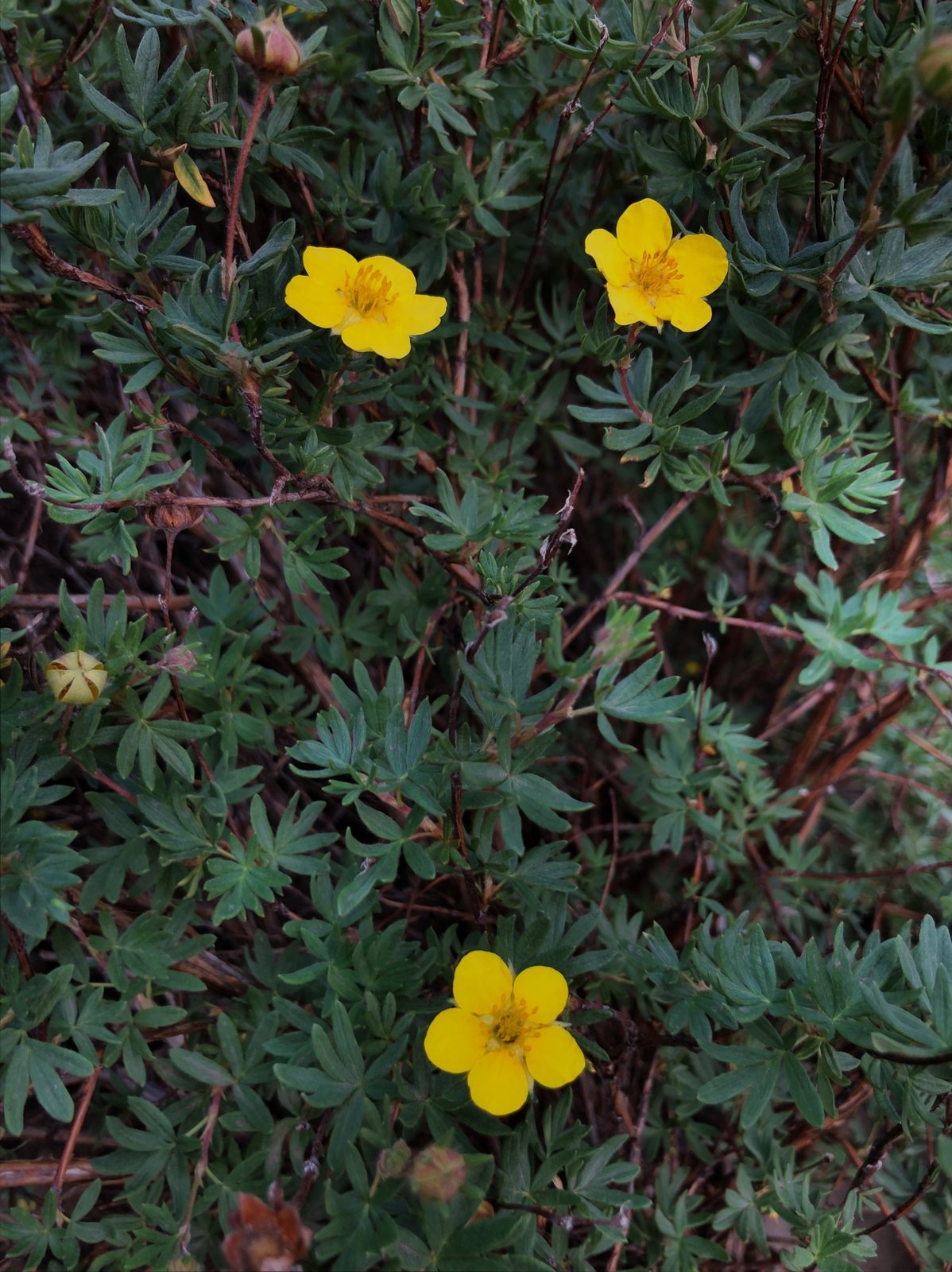
Shrubby cinquefoil is a small, deciduous shrub grown for its long display of simple, five-petalled flowers and its tolerance of cold, exposed gardens. The species has yellow flowers; garden cultivars also come in white, pink, orange and red. It performs best where summers are cool to moderately warm, rather than hot and humid.
At a glance
- Sun
- Full sun for the most flowers; tolerates light partial shade. Some afternoon shade helps pink and red cultivars retain their colour in warm weather.
- Water
- Water regularly while establishing, then during prolonged dry spells. Established plants tolerate some drought, but flower better with occasional deep watering.
- Soil
- Well-drained soil, including sandy, gravelly or chalky ground. Tolerates a broad pH range; avoid persistently waterlogged soil.
- Height
- 2-4 ft (0.6-1.2 m)
- Spread
- 3-5 ft (0.9-1.5 m)
- Flowers
- Late spring or early summer into autumn; yellow in the species, with white, pink, orange and red available in cultivars.
- Foliage
- Small, green to grey-green leaves divided into usually five narrow leaflets; finely hairy and carried on densely branching, woody stems.
- Growth
- Moderate; compact cultivars may grow more slowly.
- Care needed
- Low
The year at a glance
- Pollinators
- Deer resistant
- Drought tolerant
- Cold hardy
- Wildlife
- Low allergen
| J | F | M | A | M | J | J | A | S | O | N | D | |
|---|---|---|---|---|---|---|---|---|---|---|---|---|
| Flowers | ||||||||||||
| Plant |
Northern hemisphere months. In Australia, shift them by six.
- Difficulty
- Easy
- Toughness
- Very tough
Will it suit your garden?
Pick your zone, country, light and whether you have pets.
Full sun is 6 or more hours of direct sun a day, part shade 3 to 6 hours, shade under 3.
How it grows
Planting day
1.6 ft (0.5 m)
After 1 year
1.8 ft (0.56 m)
After 2 years
2 ft (0.62 m)
After 3 years
2.2 ft (0.68 m)
After 5 years
2.7 ft (0.81 m)
About 7 years to full size.
From a typical nursery size, at an average rate for this kind of plant. A rule of thumb, not a forecast.
Good to know
- Cats and dogs
- Safe
- Native to
- the US, Canada and the UK
- Growth rate
- Slow
Care
Jobs through the year
- WaterApr–May, Sep–Oct, every 14 days
- Water established shrubs only during prolonged dry spells; water new shrubs whenever the root zone starts drying.
- WaterJun–Aug, every 10 days
- Water deeply during extended dry weather to support flowering; newly planted shrubs need more frequent watering.
- PruneFeb–Mar
- Remove dead and crossing wood, cut a few oldest stems to the base and lightly shorten remaining shoots.
- MulchMar–Apr
- Top-dress with a little compost and mulch the root zone without covering stem bases.
- Water deeply during the first growing season whenever the root zone begins to dry.
- Once established, water during prolonged drought rather than giving frequent light sprinklings.
- Apply a thin layer of compost in spring; avoid heavy feeding, which encourages leafy growth at the expense of flowers.
- Mulch around the roots to conserve moisture, keeping mulch away from the stem bases.
- Keep lawn grass and vigorous weeds clear of young plants.
Pruning. In late winter or early spring, remove dead and crossing stems and cut a few of the oldest stems back to the base. Shorten remaining shoots lightly to keep a compact shape; routine deadheading is unnecessary.
Through the year
- Late winter
- Remove dead wood and thin out some of the oldest stems before new growth begins.
- Spring
- Plant when the ground is workable, water thoroughly and mulch around the root zone.
- Late spring
- Check newly planted shrubs for dry soil and keep surrounding weeds down.
- Summer
- Water deeply during extended dry weather, especially while plants are establishing.
- Early summer
- Take softwood cuttings from healthy, non-flowering shoots if you want more plants of the same cultivar.
- Autumn
- Plant in mild regions while the soil remains warm; in very cold regions, favour spring planting.
In the garden
- Plant in groups along a sunny border for a low mound of colour over several months.
- Use as a low, informal hedge beside paths, leaving enough room for its natural spread.
- Combine with ornamental grasses, catmint and hardy geraniums for contrasting foliage and a loose, informal effect.
- Use on sunny banks or in gravel gardens where drainage is good and a cold-hardy shrub is needed.
Garden styles it suits: Cottage garden, English country, Low-maintenance, Dry gravel garden, Pollinator garden and Mountain lodge.
Plant it with: Catmint, Hardy geranium, Yarrow, Salvia, Feather reed grass and Creeping thyme.
Wildlife: The open flowers provide pollen and nectar for bees and other visiting insects. Dense branching offers some shelter for small garden wildlife.
Problems to watch for
- Poor flowering or an open, straggly habit: move to a sunnier position if heavily shaded, avoid excessive fertiliser and thin old stems in early spring.
- Root rot in wet ground: improve drainage or move the plant to a raised position; do not keep the soil constantly saturated.
- Spider mites in hot, dry weather: look for fine stippling and webbing, rinse leaf undersides with water and prevent severe drought stress.
- Powdery mildew: improve air circulation and water at soil level; remove badly affected growth if necessary.
Safety
Not known to be toxic to cats, dogs, horses or people. No part is recognised as a significant poisoning hazard, but it is not a food plant and eating substantial amounts may cause digestive upset.
Easily confused with
Sulphur cinquefoil (Potentilla recta)
This is a herbaceous perennial rather than a woody shrub. Its leaves usually have five to seven toothed leaflets, and its pale yellow flowers sit on upright, leafy stems.
Japanese kerria (Kerria japonica)
Kerria has long, arching green stems and single, sharply toothed leaves rather than leaves divided into small leaflets. Its main yellow flower display is in spring.
The name
Cinquefoil comes from French words meaning 'five leaves', referring to the usually five leaflets, while fruticosa means shrubby.
Propagation. Take softwood cuttings in early summer or semi-ripe cuttings later in summer to preserve cultivar characteristics. The species can also be grown from seed, but seedlings from named cultivars may differ from their parent.
Checked against open data
- Accepted botanical name
- Dasiphora fruticosa
- In the US and Canada
- Native in Alaska, Canada, the lower 48 states and St. Pierre and Miquelon.
- Native range
- Alaska, Alberta, Altay, Amur, Arizona, Baltic States, British Columbia, Bulgaria, Buryatiya, California, China North-Central and China South-Central.
- Measured
- Soil pH 5 to 8. Average height 32 cm.
Sources: GBIF (CC BY 4.0), USDA PLANTS and Trefle (CC BY 4.0). The care and design notes are LandscapeGPT's own.
See it in your own yard.
Upload a photo of your yard and see it redesigned with plants that suit your climate, each checked against your zone.