Shumard oak
Quercus shumardii. Family Fagaceae. Tree.
Also called Shumard red oak, Swamp red oak.
Shumard oak is a large, deciduous oak native to the central and southeastern United States, grown for its broad shade canopy and red to bronze autumn foliage. It suits spacious gardens and parkland, tolerates summer heat and some drought once established, and provides valuable food and habitat for wildlife. Autumn colour varies with climate and individual trees.
At a glance
- Sun
- Full sun; young trees tolerate light shade, but develop a better crown in an open position.
- Water
- Water regularly while establishing. Established trees tolerate moderate drought and occasional brief flooding, but not permanently waterlogged soil.
- Soil
- Deep, moist, well-drained soil is ideal, including loam and clay. Tolerates a wider pH range than pin oak, though strongly alkaline soil can cause yellow leaves.
- Height
- 40-60 ft (12-18 m), occasionally 80 ft (24 m) or more
- Spread
- 40-60 ft (12-18 m)
- Flowers
- Spring: inconspicuous yellow-green male catkins and tiny female flowers as the leaves emerge.
- Foliage
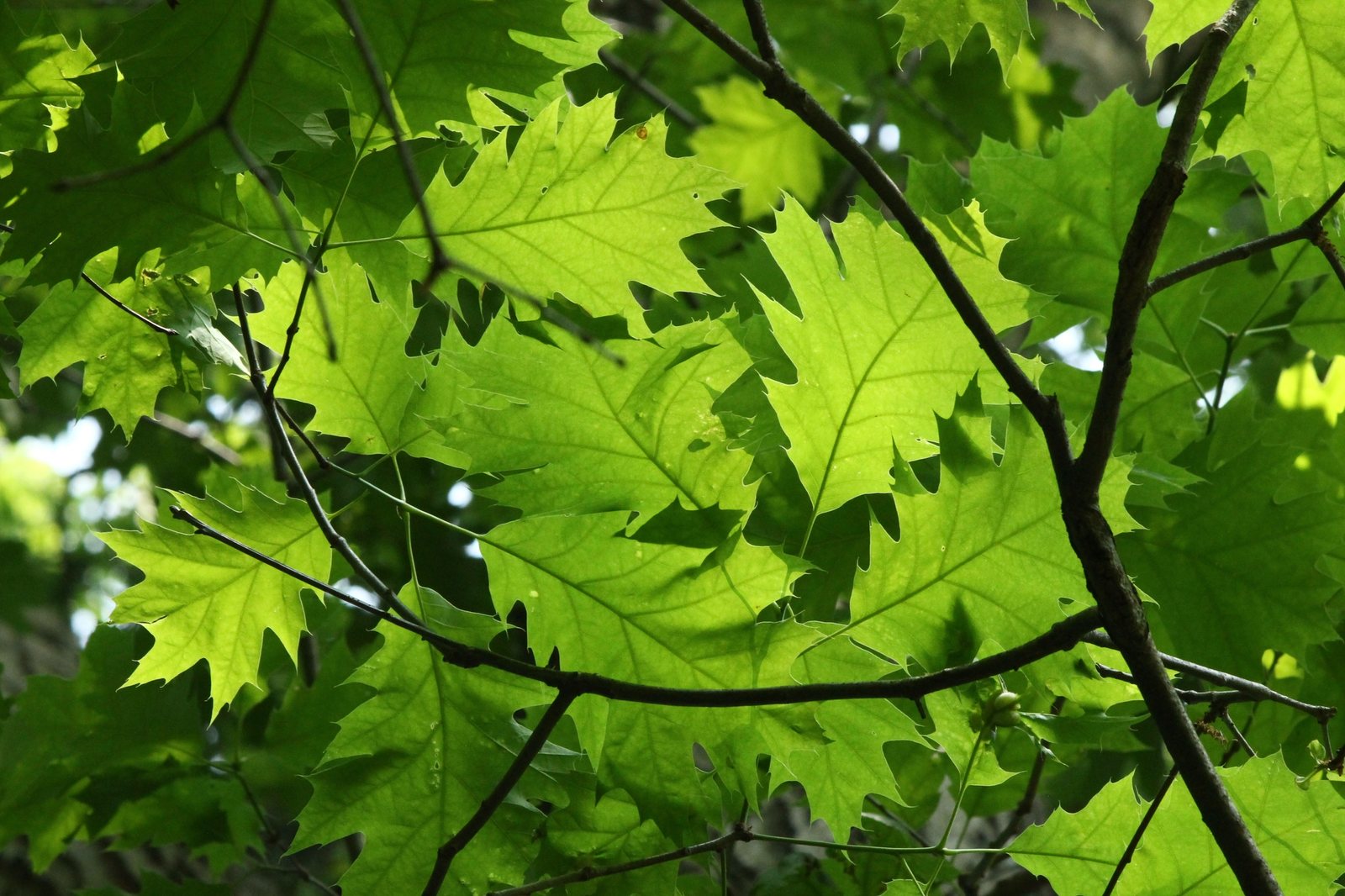
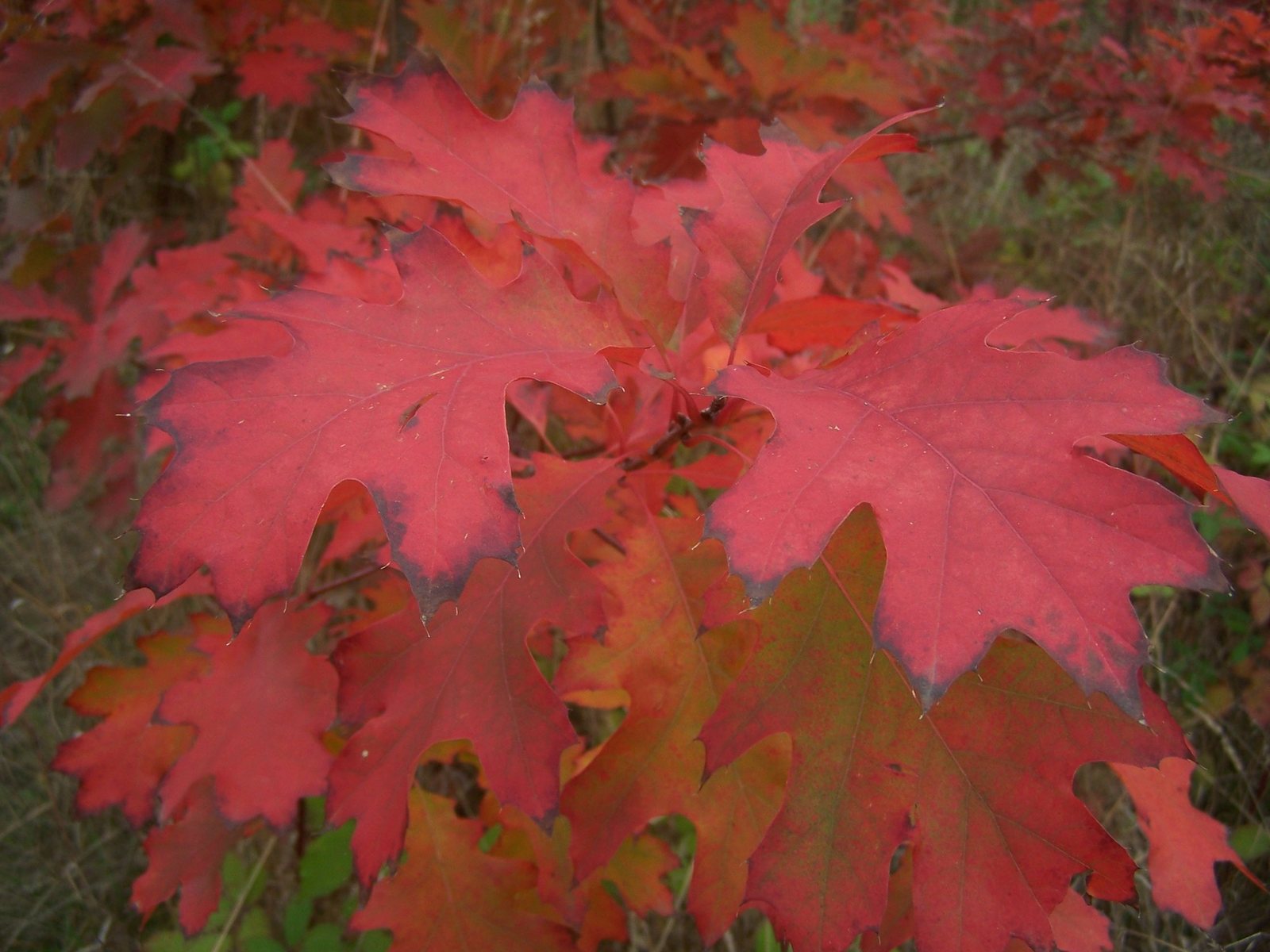
- Glossy, dark green leaves with 5-9 pointed, bristle-tipped lobes and deep sinuses; usually red, russet or bronze in autumn.
- Growth
- Moderate to fast with adequate moisture and room for roots.
- Care needed
- Low
The year at a glance
- Drought tolerant
- Heat tolerant
- Wildlife
| J | F | M | A | M | J | J | A | S | O | N | D | |
|---|---|---|---|---|---|---|---|---|---|---|---|---|
| Flowers | ||||||||||||
| Fruit | ||||||||||||
| Plant |
Northern hemisphere months. In Australia, shift them by six.
- Difficulty
- Easy
- Toughness
- Very tough
Will it suit your garden?
Pick your zone, country, light and whether you have pets.
Full sun is 6 or more hours of direct sun a day, part shade 3 to 6 hours, shade under 3.
How it grows
Planting day
7 ft (2 m)
After 1 year
9 ft (2.8 m)
After 2 years
12 ft (3.6 m)
After 3 years
15 ft (4.4 m)
After 5 years
20 ft (6.1 m)
About 16 years to full size.
From a typical nursery size, at an average rate for this kind of plant. A rule of thumb, not a forecast.
Good to know
- Cats and dogs
- Toxic
- Native to
- the US and Canada
- Growth rate
- Fast
Care
Jobs through the year
- WaterApr–May, Sep–Oct, every 21 days
- Water established trees only if dry; check young trees more frequently for three years.
- WaterJun–Aug, every 14 days
- Soak the root zone during prolonged dry spells; young trees need more frequent watering.
- MulchMar, Nov
- Maintain 5–8 cm of organic mulch without covering the trunk or root flare.
- PruneJan–Feb, Dec
- Prune young trees lightly while dormant, retaining one leader and following local oak-wilt restrictions.
- Plant where the mature crown and roots have ample room, well away from buildings and overhead wires.
- Water deeply during dry spells for the first two or three growing seasons; avoid keeping the root ball constantly wet.
- Spread mulch 2-3 in (5-8 cm) deep over the root zone, keeping it clear of the trunk.
- Keep the root flare visible at soil level and protect the trunk from mower and strimmer damage.
- Do not feed routinely; investigate poor growth or yellow foliage before adding fertilizer.
- Stake only if the tree is unstable, and remove supports after it becomes firmly rooted.
Pruning. Prune young trees during winter dormancy to develop one main leader and well-spaced branches; use a qualified arborist for large limbs. Where oak wilt occurs, follow local pruning restrictions and avoid warm-season pruning or trunk injury.
Through the year
- Autumn
- Plant while the soil is workable, or wait until spring in regions with severe winters.
- Winter
- Inspect branch structure and carry out necessary formative pruning during dormancy, following local oak-wilt guidance.
- Spring
- Check planting depth, refresh mulch and remove unnecessary stakes.
- Late spring
- Check new foliage for yellowing between green veins; test soil pH if symptoms persist.
- Summer
- Water young trees deeply during dry weather and keep equipment away from the trunk.
- Late autumn
- Use healthy fallen leaves as mulch or leaf mould; clear acorns from paths where they create a slipping hazard.
In the garden
- Use as a long-lived shade tree in a large lawn, leaving space for its broad mature crown.
- Plant in spacious parkland groups for a substantial canopy and seasonal colour.
- Place at the sunny edge of a woodland garden, with shade-tolerant planting beneath the developing canopy.
- Combine with native grasses and perennials beyond the trunk's mulched zone to create a wildlife-rich landscape.
Garden styles it suits: Traditional, Grand estate, Woodland, Wildlife garden, Autumn colour and Southern.
Plant it with: Eastern redbud, Flowering dogwood, American beautyberry, Oakleaf hydrangea, Christmas fern and Pennsylvania sedge.
Wildlife: Acorns feed squirrels, deer, wild turkeys and other birds and mammals. The foliage supports many moth and butterfly caterpillars, and mature trees provide nesting and shelter.
Problems to watch for
- Oak wilt can kill trees in affected parts of North America: avoid pruning during locally restricted periods, prevent wounds and seek prompt professional diagnosis of sudden wilting.
- Iron chlorosis causes yellow leaves with green veins on alkaline soil: test the soil and seek site-specific treatment rather than applying general fertilizer.
- Bacterial leaf scorch causes recurring brown leaf margins and gradual decline: confirm the diagnosis, reduce drought stress and consult an arborist; there is no reliable cure.
- Compacted soil, buried root flares and prolonged waterlogging cause poor growth or root decline: keep traffic off the root zone, correct planting depth where feasible and improve site drainage.
Safety
Acorns, buds and leaves contain tannins and can poison dogs, cats, horses and people if enough is eaten. Young leaves and large quantities of acorns are particularly concerning; horses can develop severe intestinal and kidney damage. Keep animals from grazing fallen acorns or oak foliage, and do not eat raw acorns.
Easily confused with
Pin oak (Quercus palustris)
Pin oak typically has distinctly downward-pointing lower branches and smaller acorns. Shumard oak generally has more spreading or ascending main branches and larger acorns.
Northern red oak (Quercus rubra)
Northern red oak usually has shallower leaf sinuses and broader lobes; Shumard oak leaves are generally more deeply cut.
Scarlet oak (Quercus coccinea)
Scarlet oak has a deeper acorn cup enclosing roughly one-third to one-half of the nut, often with rings around the nut's tip. Shumard oak has a shallow, saucer-like cup covering roughly one-quarter of the nut.
The name
The name honours Benjamin Franklin Shumard, a nineteenth-century American physician and geologist.
Propagation. Grow from fresh, sound acorns collected in autumn. Sow outdoors in protected containers or cold-stratify in moist medium in the refrigerator before spring sowing; protect from rodents and plant seedlings out while young, before their roots become crowded.
Checked against open data
- Accepted botanical name
- Quercus shumardii
- In the US and Canada
- Native in Canada and the lower 48 states.
- Native range
- Alabama, Arkansas, Florida, Georgia, Illinois, Indiana, Kansas, Kentucky, Louisiana, Maryland, Michigan and Mississippi.
- Measured
- Soil pH 5 to 7.6. Average height 2615 cm.
Sources: GBIF (CC BY 4.0), USDA PLANTS and Trefle (CC BY 4.0). The care and design notes are LandscapeGPT's own.
See it in your own yard.
Upload a photo of your yard and see it redesigned with plants that suit your climate, each checked against your zone.