Siberian squill
Scilla siberica. Family Asparagaceae. Bulb.
Also called Siberian bluebell, Wood squill.
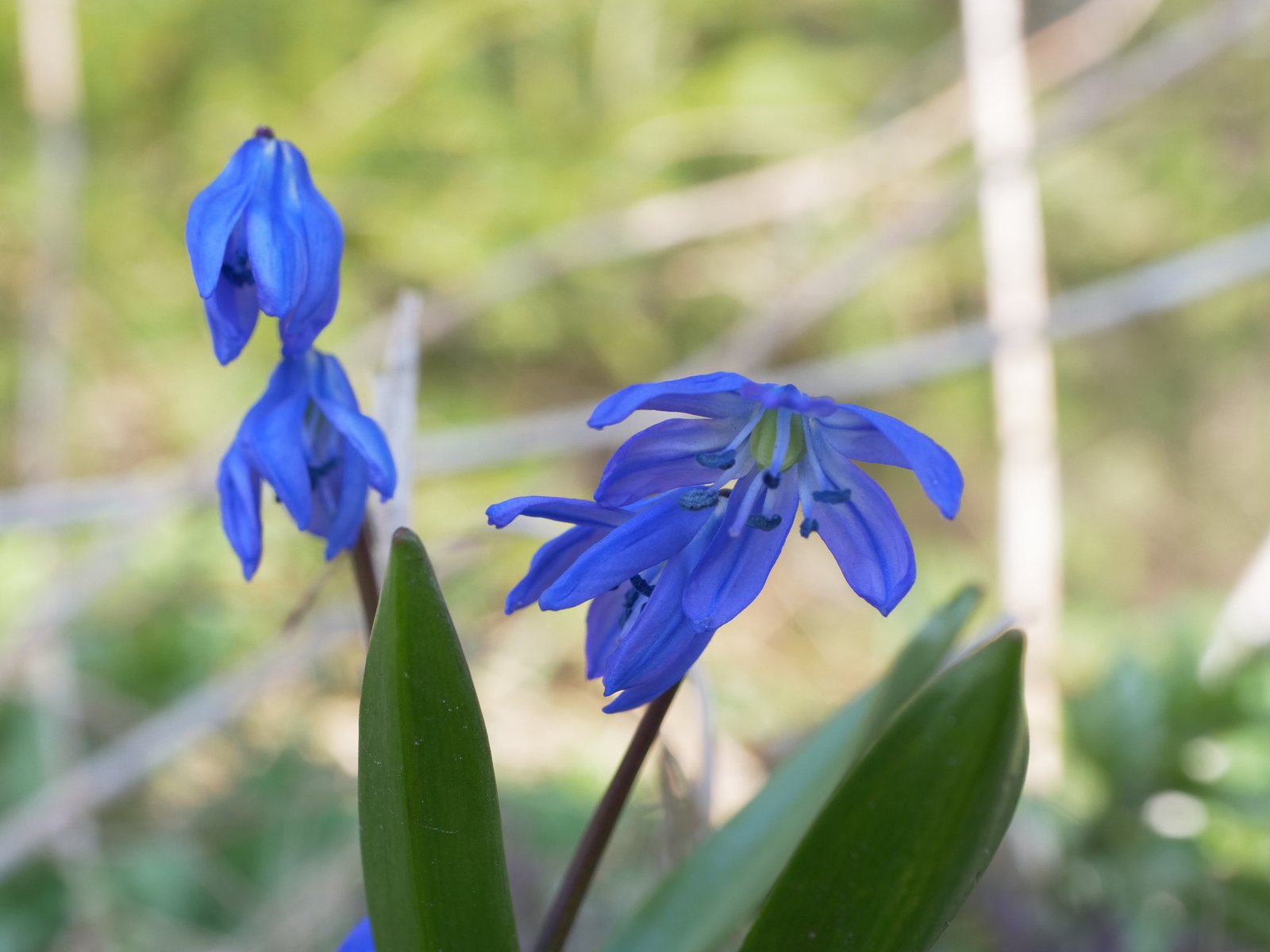
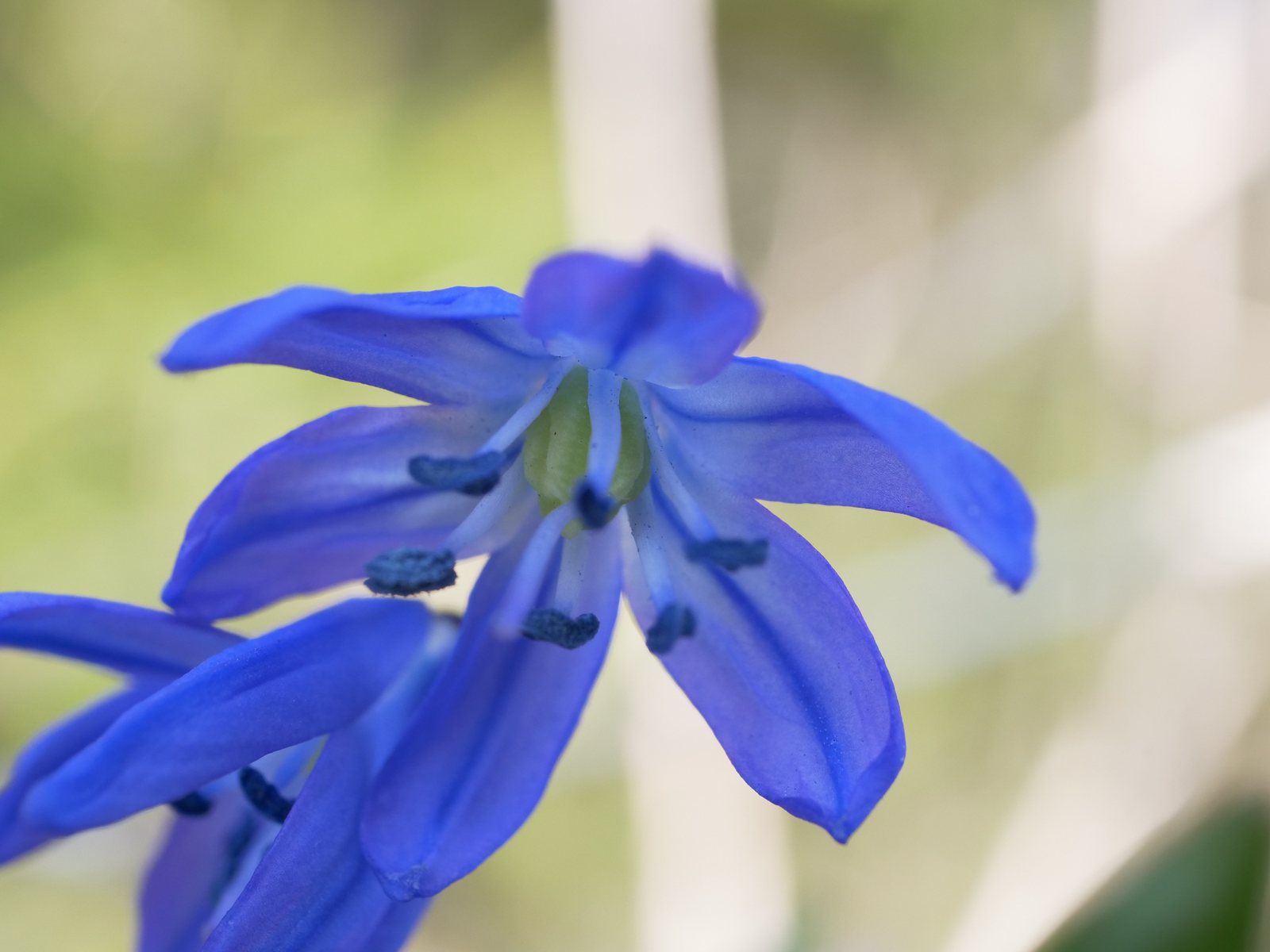
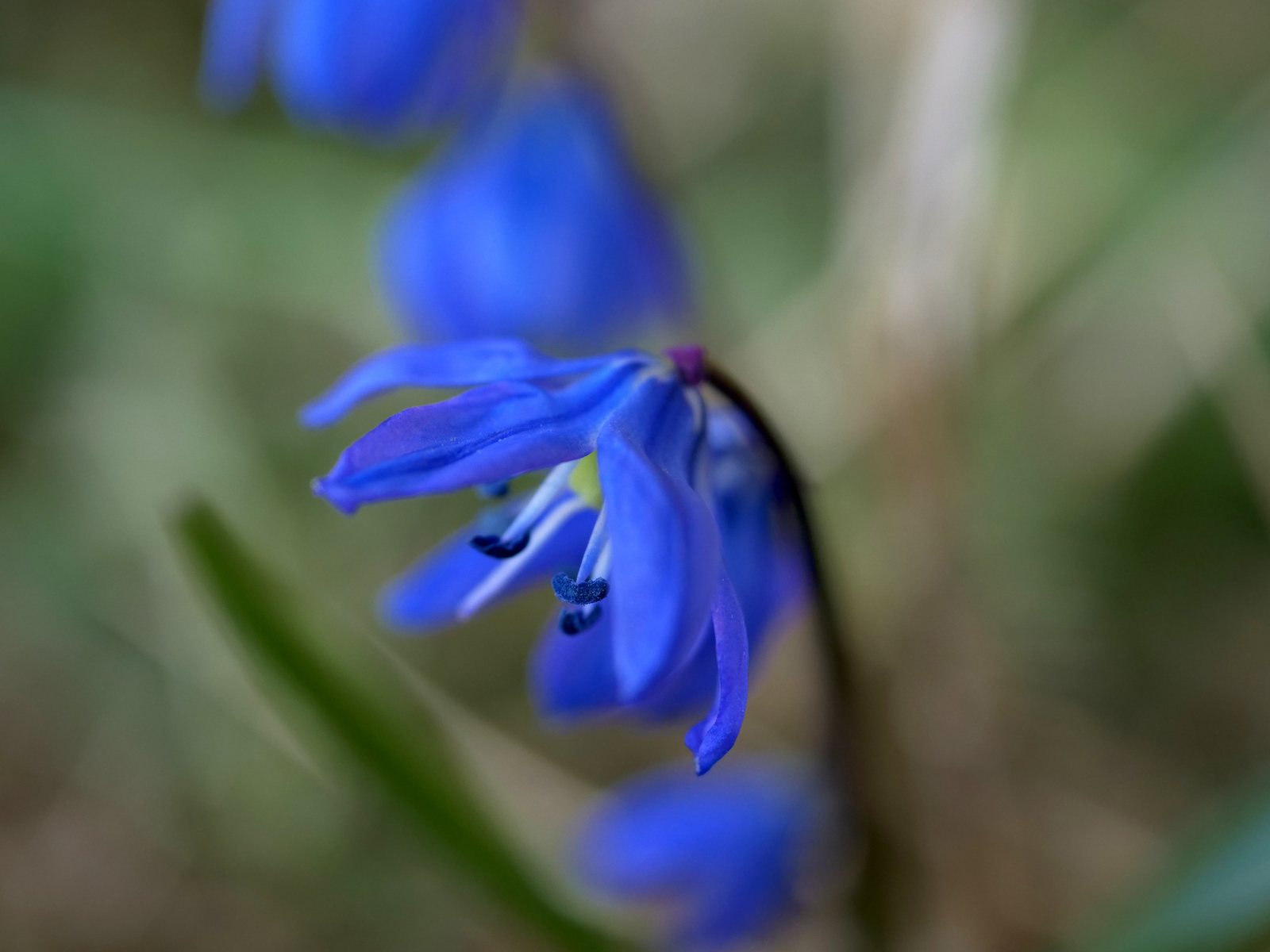
Siberian squill is a small, spring-flowering bulb grown for its nodding, intense blue flowers beneath deciduous trees and along borders. Its leaves disappear by early summer, leaving room for later-growing perennials. It spreads readily by seed and bulbs and can invade woodland in some cold-climate regions.
At a glance
- Sun
- Full sun to partial shade; well suited to the spring light beneath deciduous trees.
- Water
- Moderate moisture while growing in spring; usually needs little watering once dormant in summer.
- Soil
- Well-drained soil with some organic matter; tolerates clay if it does not remain waterlogged.
- Height
- 0.25-0.5 ft (0.08-0.15 m)
- Spread
- 0.25-0.5 ft (0.08-0.15 m) per clump; colonies can spread much farther
- Flowers
- Early to mid-spring; usually vivid blue, with white-flowered forms also available.
- Foliage
- A few narrow, glossy green, strap-shaped leaves emerge in spring and die back by early summer.
- Growth
- Quick spring growth; colonies expand steadily by offsets and self-seeding.
- Care needed
- Low
The year at a glance
- Pollinators
- Deer resistant
- Cold hardy
- Low allergen
| J | F | M | A | M | J | J | A | S | O | N | D | |
|---|---|---|---|---|---|---|---|---|---|---|---|---|
| Flowers | ||||||||||||
| Plant |
Northern hemisphere months. In Australia, shift them by six.
- Difficulty
- Easy
- Toughness
- Very tough
Will it suit your garden?
Pick your zone, country, light and whether you have pets.
Full sun is 6 or more hours of direct sun a day, part shade 3 to 6 hours, shade under 3.
How it grows
Planting day
0.4 ft (0.12 m)
full size
About 1 years to full size.
From a typical nursery size, at an average rate for this kind of plant. A rule of thumb, not a forecast.
Good to know
- Cats and dogs
- Toxic
- Invasive in
- the US and Canada
- In the garden
- Spreads vigorously: plan to contain it.
Care
Jobs through the year
- WaterFeb–Apr, every 14 days
- Water established bulbs only during prolonged dry spells while leaves are green.
- WaterMay, every 14 days
- Water only if soil is dry and leaves remain green; stop during dormancy.
- WaterSep–Nov, every 14 days
- Water newly planted bulbs once, then only if soil dries; established dormant colonies rarely need water.
- MulchOct
- Apply a thin layer of mature compost without burying the planting deeply.
- DeadheadApr–May
- Remove spent stems before seed capsules ripen if self-seeding is unwanted.
- DivideMay
- Divide crowded clumps as leaves begin to yellow and replant promptly.
- PruneMay–Jun
- Remove leaves only once fully yellow and dead.
- ProtectSep–Nov
- Check local invasive status before planting and keep bulbs out of natural woodland.
- Plant bulbs in autumn, about 3 in (8 cm) deep and 3 in (8 cm) apart.
- Water during prolonged dry spells while leaves are green; avoid soggy soil.
- Leave foliage intact until it yellows naturally so the bulbs can replenish their reserves.
- Apply a thin layer of compost in autumn; routine feeding is rarely necessary.
- Divide crowded clumps as the foliage yellows, and replant promptly.
- Remove developing seed capsules if you need to limit spread; avoid planting where it is locally invasive.
Pruning. No routine pruning is needed. Remove flower stems before seeds ripen to reduce self-seeding, and remove leaves only after they have yellowed completely.
Through the year
- Autumn
- Plant bulbs in well-drained soil, away from natural woodland where escape is a concern.
- Late winter
- Check emerging shoots and make sure pots or planting pockets are not waterlogged.
- Early spring
- Water during unusually dry weather while plants are flowering and producing leaves.
- Mid-spring
- Remove spent flower stems before seed capsules mature if spread is unwanted.
- Late spring
- Lift and divide crowded clumps as their leaves begin to yellow.
- Summer
- Remove fully dead foliage and avoid unnecessary watering of dormant bulbs.
In the garden
- Plant small groups beneath deciduous shrubs for blue flowers before the canopy fills out, where local invasive guidance permits.
- Edge a spring border with squill, snowdrops and early crocuses for a low sequence of flowers.
- Place among hostas or deciduous ferns, whose later foliage conceals the dying bulb leaves.
- Grow in outdoor containers for close-up spring colour, removing seed capsules before they open.
Garden styles it suits: Woodland, Cottage garden, English country, Traditional, Blues and silvers and Low-maintenance.
Plant it with: Snowdrops, Early crocuses, Hellebores, Hostas, Lungwort and Lady fern.
Wildlife: Flowers provide early pollen and nectar for visiting bees. In regions where it invades woodland, dense colonies can compete with native spring plants; choose locally native spring bulbs or wildflowers there.
Problems to watch for
- Bulb rot in wet soil: improve drainage or move bulbs to a raised planting area; discard soft, rotten bulbs.
- Unwanted seedlings and expanding colonies: remove seed capsules, dig out bulbs and repeat removal over several seasons; do not dump bulbs or seeded soil in natural areas.
- Poor flowering in heavy shade or warm climates: provide more spring sunlight; this bulb performs best with a cold winter and may be unreliable in warm-winter districts.
- Slugs and snails eating shoots or flowers: check plants in damp weather and hand-pick pests or use a locally approved iron-phosphate bait.
Safety
Treat all parts, especially the bulbs, as poisonous to people, cats, dogs and horses. Ingestion can cause vomiting, diarrhoea and potentially serious effects on heart function. Keep bulbs away from children and animals, and seek prompt medical or veterinary advice after ingestion.
Where it spreads. Spreads by seed and bulb offsets. It is considered invasive in parts of the northern United States, particularly Minnesota, Wisconsin and Michigan, and in parts of southern Ontario, Canada, where it can colonize woodland. Check local guidance before planting near natural areas.
Easily confused with
Glory-of-the-snow (Scilla luciliae)
Its flowers face upward or outward and have a conspicuous white centre; Siberian squill usually has nodding, bell-shaped blue flowers.
Striped squill (Puschkinia scilloides)
Its flowers are pale blue to almost white with a darker blue stripe down each segment, rather than the usually strong blue of Siberian squill.
Alpine squill (Scilla bifolia)
It usually has two leaves and clusters of open, upward-facing starry flowers; Siberian squill has more bell-shaped, downward-facing flowers.
The name
Scilla comes from an ancient Greek name for squill, while siberica means 'Siberian', although the species is native farther southwest rather than to Siberia.
Propagation. Separate bulb offsets as foliage yellows in late spring, or lift dormant bulbs in summer and replant promptly. Fresh seed can be sown outdoors, but seedlings take several years to flower and may spread beyond the intended area.
Checked against open data
- Accepted botanical name
- Scilla siberica
- In the US and Canada
- Introduced in Canada and the lower 48 states.
- Native range
- Central European Rus, East European Russia, Iran, Iraq, Krym, Lebanon-Syria, North Caucasus, South European Russi, Transcaucasus, Turkey and Ukraine.
- Measured
- Soil pH 5.5 to 6.5. Average height 15 cm.
Sources: GBIF (CC BY 4.0), USDA PLANTS and Trefle (CC BY 4.0). The care and design notes are LandscapeGPT's own.
See it in your own yard.
Upload a photo of your yard and see it redesigned with plants that suit your climate, each checked against your zone.