Sieber's crocus
Crocus sieberi. Family Iridaceae. Bulb.
Also called Snow crocus.
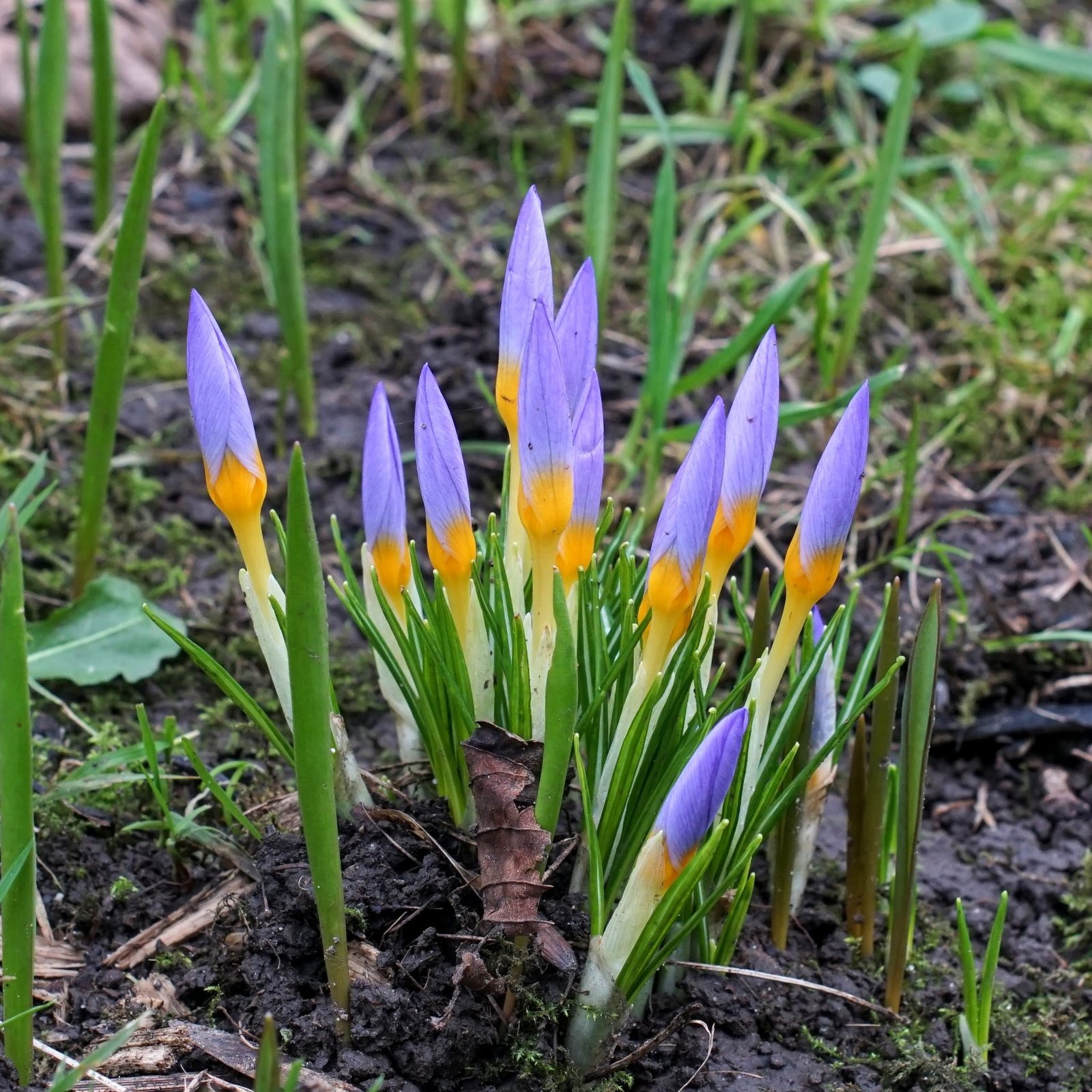
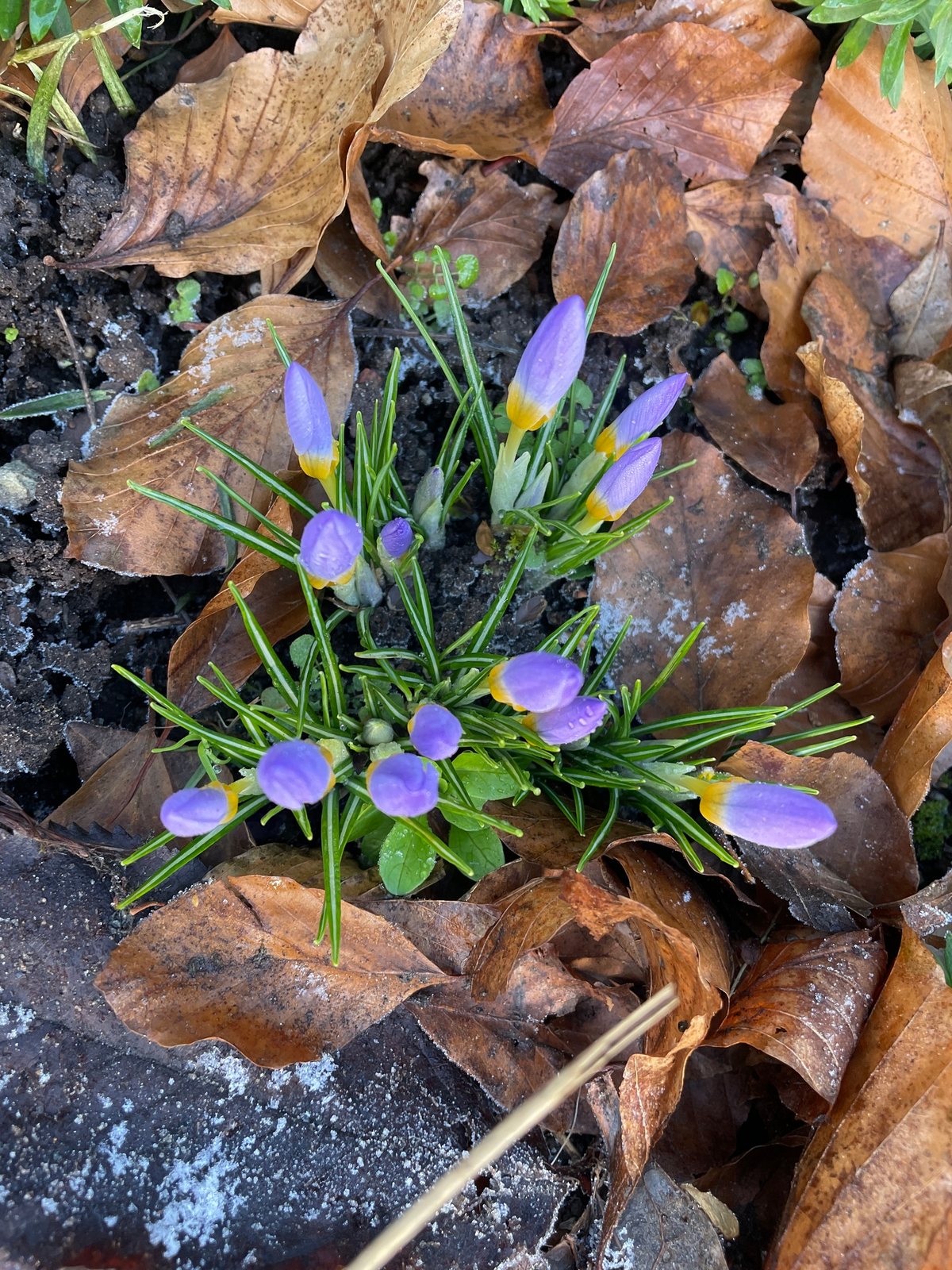
Sieber's crocus is a small, spring-flowering perennial that grows from corms and disappears underground for summer. Gardeners grow it for its early purple, lilac or white flowers, usually with yellow throats, in rock gardens, borders and short grass.
At a glance
- Sun
- Full sun to light shade; choose somewhere sunny during late winter and spring.
- Water
- Moderate moisture while growing in winter and spring; relatively dry conditions during summer dormancy.
- Soil
- Well-drained sandy, gritty or loamy soil. Avoid heavy soil that stays wet, especially in summer.
- Height
- 0.25-0.33 ft (0.08-0.10 m)
- Spread
- 0.25-0.5 ft (0.08-0.15 m) per small clump; colonies gradually spread farther.
- Flowers
- Late winter to early spring; lilac, purple or white flowers with yellow throats, sometimes with a distinct white band above the yellow.
- Foliage
- Narrow, grasslike green leaves with a pale central stripe; leaves die back in late spring or early summer.
- Growth
- Moderate; established corms produce offsets and gradually form clumps.
- Care needed
- Low
The year at a glance
- Pollinators
- Cold hardy
- Low allergen
| J | F | M | A | M | J | J | A | S | O | N | D | |
|---|---|---|---|---|---|---|---|---|---|---|---|---|
| Flowers | ||||||||||||
| Plant |
Northern hemisphere months. In Australia, shift them by six.
- Difficulty
- Easy
- Toughness
- Fairly tough
Will it suit your garden?
Pick your zone, country, light and whether you have pets.
Full sun is 6 or more hours of direct sun a day, part shade 3 to 6 hours, shade under 3.
How it grows
Planting day
0.3 ft (0.09 m)
full size
About 1 years to full size.
From a typical nursery size, at an average rate for this kind of plant. A rule of thumb, not a forecast.
Good to know
- Cats and dogs
- Mildly toxic: may upset a stomach
- Growth rate
- Moderate
Care
Jobs through the year
- WaterFeb–Mar, every 14 days
- Water established corms only if soil dries during growth; check new plantings more often.
- WaterApr–May, every 7 days
- Water only in dry spells while leaves are green; stop when they yellow.
- FeedFeb–Mar
- On poor soil, apply a light bulb fertilizer dressing as shoots emerge.
- PruneMay–Jun
- Clear foliage or mow surrounding grass only once leaves have fully yellowed.
- DivideJun–Jul
- Lift crowded dormant clumps and replant sound corms promptly.
- ProtectSep–Nov
- Water corms in and secure shoot-permeable wire mesh if rodents dig them up.
- ProtectFeb–Mar
- Check emerging flowers for slugs and remove them where needed.
- Plant corms in autumn, about 3-4 inches (8-10 cm) deep and 2-3 inches (5-8 cm) apart.
- Water after planting, then water only if the soil becomes dry while leaves are actively growing.
- Keep dormant corms out of persistently wet soil; use raised beds or containers where drainage is poor.
- On poor soil, apply a light dressing of bulb fertilizer as shoots emerge, following the label rate.
- Let leaves yellow naturally before mowing or clearing them away.
- Divide crowded clumps after the foliage has died back, replanting sound corms promptly.
Pruning. No routine pruning is needed. Remove dead foliage only once it has turned yellow or brown; leave green leaves to replenish the corms.
Through the year
- Autumn
- Plant corms in well-drained soil; use mesh protection if squirrels regularly dig up bulbs.
- Late winter
- Watch for emerging shoots and check that containers and planting sites drain freely.
- Early spring
- Enjoy the flowers and water during prolonged dry spells while foliage is growing.
- Late spring
- Leave foliage undisturbed until it yellows; delay mowing any grass containing crocuses.
- Summer
- Keep dormant plantings relatively dry and divide overcrowded clumps if necessary.
In the garden
- Plant in small drifts at the front of borders for colour before taller perennials emerge.
- Tuck between rocks or into gravel gardens where drainage is sharp and the small flowers remain visible.
- Naturalize in short, lightly shaded grass that can remain unmown until the leaves die back.
- Combine with other early bulbs in shallow containers with drainage holes.
- Plant beneath deciduous shrubs that provide winter light and later conceal the fading foliage.
Garden styles it suits: Alpine rock garden, Dry gravel garden, Cottage garden, Woodland, Pollinator garden and Winter interest.
Plant it with: Snowdrops, Winter aconites, Dwarf irises, Hellebores, Dwarf daffodils and Species tulips.
Wildlife: Open flowers supply early pollen and nectar to bees on mild days. Rodents may eat the corms.
Problems to watch for
- Corm rot in waterlogged soil: improve drainage or move plants to a raised bed; discard soft or mouldy corms.
- Squirrels and mice digging up or eating corms: protect new plantings with securely fixed wire mesh that allows shoots through.
- Slugs damaging emerging flowers and leaves: inspect during damp weather and use wildlife-conscious slug controls where needed.
- Few flowers after the first year: provide more spring sunlight, avoid cutting green leaves and divide congested clumps.
Safety
Not known to be seriously poisonous to people, cats or dogs, although eating corms or other parts may cause vomiting or diarrhoea. Information specific to horses is limited, so keep it out of grazing areas. Do not confuse it with highly poisonous autumn crocus (Colchicum), and do not use it as a source of culinary saffron.
Easily confused with
Early crocus (Crocus tommasinianus)
Usually has slender lilac flowers with a pale or white throat and a long, pale flower tube. Sieber's crocus usually has a conspicuous yellow throat, sometimes bordered by white.
Autumn crocus (Colchicum autumnale)
Flowers in autumn, usually without leaves, and has six stamens rather than the three found in true crocuses. Its spring leaves are much broader, and all parts are highly poisonous.
The name
The species name sieberi honours the botanist and plant collector Franz Wilhelm Sieber.
Propagation. Separate offset corms during summer dormancy and replant them at normal planting depth. Seed can be sown fresh in a gritty, well-drained mix, but seedlings take several years to flower and may differ from the parent.
Checked against open data
- Accepted botanical name
- Crocus sieberi
- In the US and Canada
- Introduced in the lower 48 states.
- Native range
- Kriti.
Sources: GBIF (CC BY 4.0), USDA PLANTS and Trefle (CC BY 4.0). The care and design notes are LandscapeGPT's own.
See it in your own yard.
Upload a photo of your yard and see it redesigned with plants that suit your climate, each checked against your zone.