Siebold's wood fern
Dryopteris sieboldii. Family Dryopteridaceae. Fern.
Also called Siebold's shield fern.
Siebold's wood fern is a slow-growing, clump-forming fern with unusually broad, leathery leaflets that give it a bold appearance in shade. Gardeners grow it for its blue-green foliage, which remains evergreen in mild winters but may be damaged or lost in colder conditions.
At a glance
- Sun
- Partial to full shade; protect from hot afternoon sun.
- Water
- Keep evenly moist while establishing. Established plants tolerate brief dry spells, but prolonged drought damages the foliage.
- Soil
- Humus-rich, moist but well-drained soil; slightly acidic to neutral is ideal. Avoid waterlogged ground.
- Height
- 1.5-2.5 ft (0.45-0.75 m)
- Spread
- 2-3 ft (0.6-0.9 m)
- Foliage
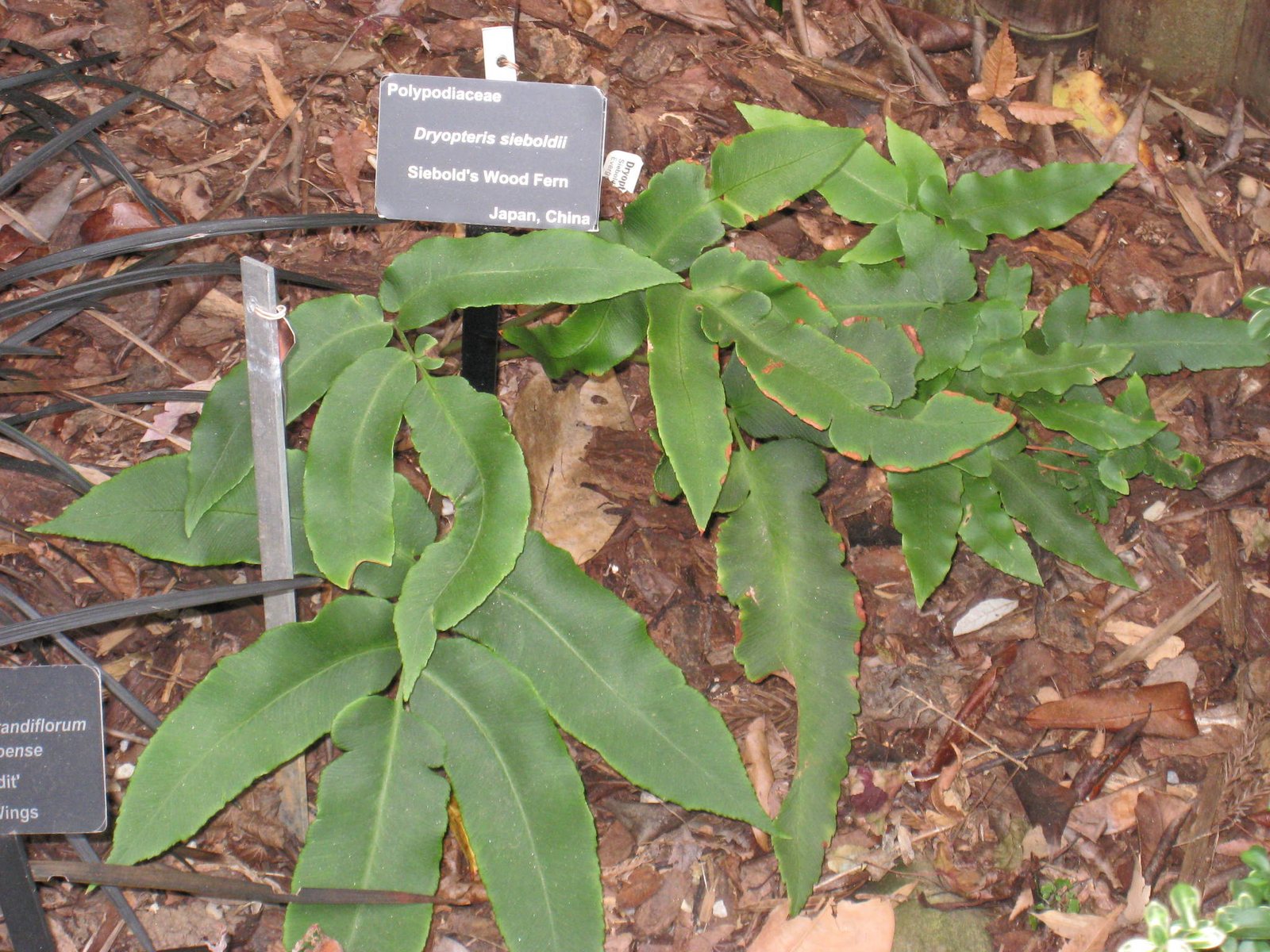
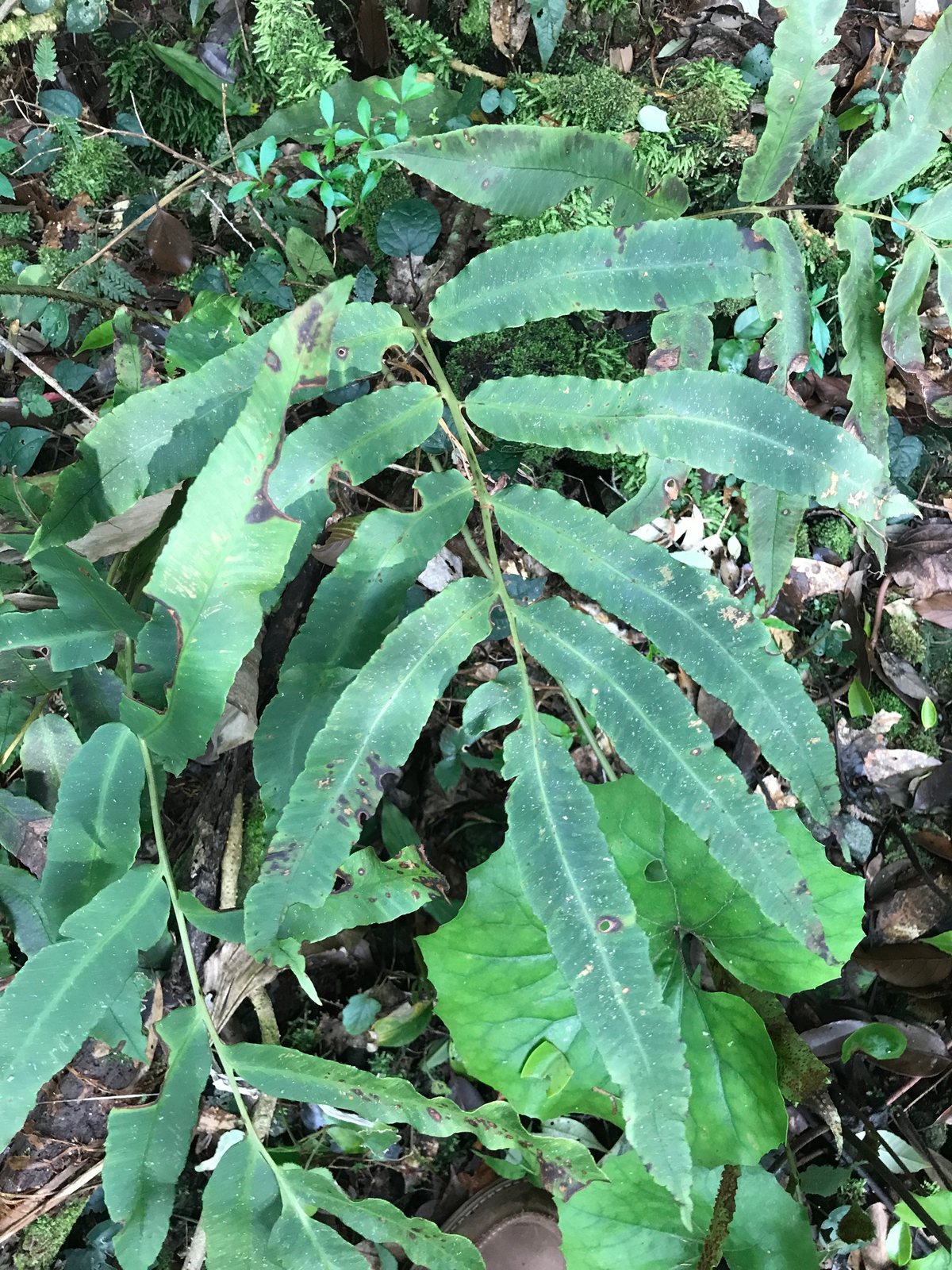
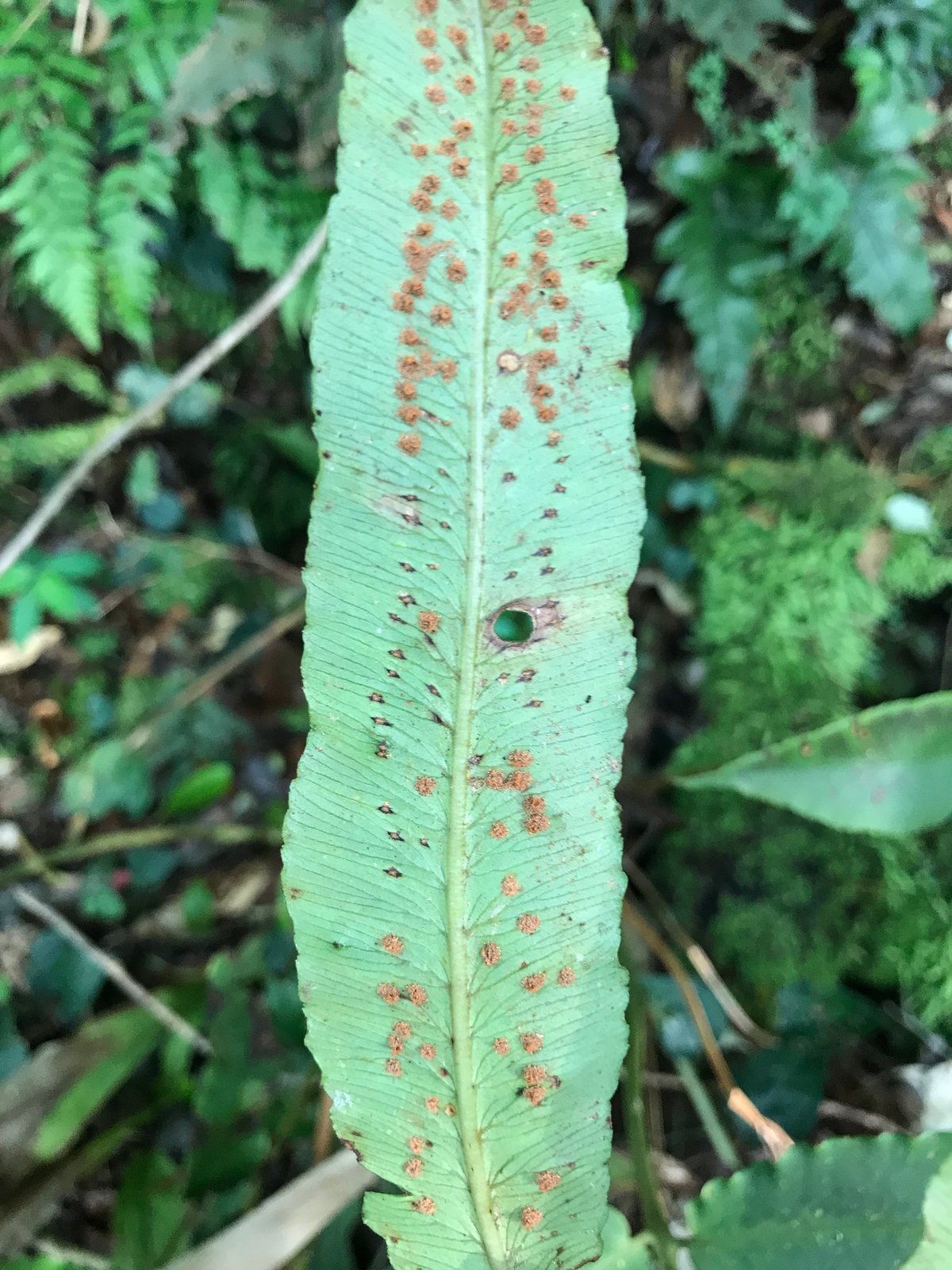
- Evergreen. Arching, leathery, dull blue-green fronds with a few pairs of broad, tapering leaflets and a prominent terminal leaflet. Spore-bearing patches develop beneath mature fronds.
- Growth
- Slow
- Care needed
- Low
The year at a glance
- Deer resistant
- Wildlife
| J | F | M | A | M | J | J | A | S | O | N | D | |
|---|---|---|---|---|---|---|---|---|---|---|---|---|
| Plant |
Northern hemisphere months. In Australia, shift them by six.
- Difficulty
- Moderate
- Toughness
- Fairly tough
Will it suit your garden?
Pick your zone, country, light and whether you have pets.
Full sun is 6 or more hours of direct sun a day, part shade 3 to 6 hours, shade under 3.
How it grows
Planting day
1 ft (0.3 m)
After 1 year
1.2 ft (0.36 m)
After 2 years
1.4 ft (0.42 m)
After 3 years
1.6 ft (0.49 m)
After 5 years
2 ft (0.6 m)
full size
About 5 years to full size.
From a typical nursery size, at an average rate for this kind of plant. A rule of thumb, not a forecast.
Good to know
- Cats and dogs
- Mildly toxic: may upset a stomach
- Growth rate
- Slow
Care
Jobs through the year
- WaterApr–May, Sep–Oct, every 10 days
- Water established plants when the upper soil dries; newly planted ferns need closer checks.
- WaterJun–Aug, every 7 days
- Water deeply during dry spells, especially where tree roots compete for moisture.
- PruneMar–Apr
- Remove dead or winter-damaged fronds before new growth, leaving healthy evergreen fronds.
- MulchApr
- Apply leaf mould or compost around the plant, keeping the crown clear.
- DivideApr–May
- Divide only if necessary; this slow-growing fern is best left undisturbed.
- ProtectJan–Feb, Nov–Dec
- Shelter from cold winds; in zone 6, overwinter in a frost-protected container rather than exposed ground.
- Water deeply when the upper soil begins to dry, especially during the first growing season.
- Apply leaf mould or compost as a mulch in spring, keeping it clear of the crown.
- Shelter from drying winds and strong afternoon sun.
- Avoid heavy feeding; a light annual compost dressing is usually sufficient.
- Leave established clumps undisturbed unless division is needed.
Pruning. In late winter or early spring, cut damaged or dead fronds back to the base before new growth unfolds. Retain healthy evergreen fronds and avoid cutting emerging shoots.
Through the year
- Late winter
- Check for frost-damaged fronds and remove them before new shoots emerge.
- Spring
- Plant or divide established clumps, keeping the crown at soil level.
- Mid-spring
- Mulch with leaf mould or compost without covering the crown.
- Summer
- Water during dry spells and check that nearby tree roots are not leaving the soil dry.
- Autumn
- Remove heavy accumulations of fallen leaves from the crown, but retain a light mulch around the plant.
- Winter
- Leave sound fronds in place and check that the planting area drains freely.
In the garden
- Plant beneath deciduous trees where its broad leaflets contrast with finer woodland foliage.
- Combine with hostas and barrenworts in a shaded border for contrasting leaf shapes.
- Use beside a shaded path or courtyard wall where its distinctive fronds can be seen close up.
- Grow in a large, well-drained container in a sheltered shady courtyard; protect the roots from severe winter freezing.
Garden styles it suits: Woodland, Japanese, Moss and fern garden, Green on green, Modern courtyard and Secret garden.
Plant it with: Hosta, Barrenwort, Japanese forest grass, Hellebore, Lungwort and Japanese painted fern.
Wildlife: The clump offers shelter for small invertebrates. It has no flowers or nectar and is not a significant food plant for pollinators.
Problems to watch for
- Brown, scorched fronds in strong sun or drying wind: provide more shade and shelter, and maintain soil moisture.
- Crown or root rot in saturated soil: improve drainage and keep mulch away from the crown.
- Slugs and snails damaging emerging fronds: inspect at dusk, remove them by hand, or use locally approved iron-phosphate bait as directed.
- Winter-browned foliage: shelter from cold winds and remove damaged fronds before spring growth; avoid exposed sites near the cold limit of its range.
Safety
Reliable species-specific toxicity information for people, cats, dogs and horses is limited. Treat the fronds and rhizomes as potentially harmful if eaten because some related wood ferns contain toxic compounds; the severity of poisoning from this species is not well established.
Easily confused with
Japanese holly fern (Cyrtomium falcatum)
Usually has more numerous, glossy dark-green, often sickle-shaped leaflets. Siebold's wood fern has fewer, broader, dull blue-green leaflets.
Shaggy shield fern (Dryopteris cycadina)
Has many more narrow, toothed leaflets and conspicuously dark-scaled stalks, rather than the few broad leaflets of Siebold's wood fern.
The name
The species name sieboldii and the common name honour Philipp Franz von Siebold, a physician and plant collector who studied Japanese plants.
Propagation. Divide a mature clump in spring, retaining healthy roots and growing points on each section. It can also be raised from spores, but this is slow and requires consistently moist, clean conditions.
Checked against open data
- Accepted botanical name
- Dryopteris sieboldii
- Native range
- China South-Central, China Southeast and Japan.
Sources: GBIF (CC BY 4.0) and Trefle (CC BY 4.0). The care and design notes are LandscapeGPT's own.
See it in your own yard.
Upload a photo of your yard and see it redesigned with plants that suit your climate, each checked against your zone.