Signet marigold
Tagetes tenuifolia. Family Asteraceae. Annual.
Also called Narrow-leaved marigold, Slender-leaved marigold.
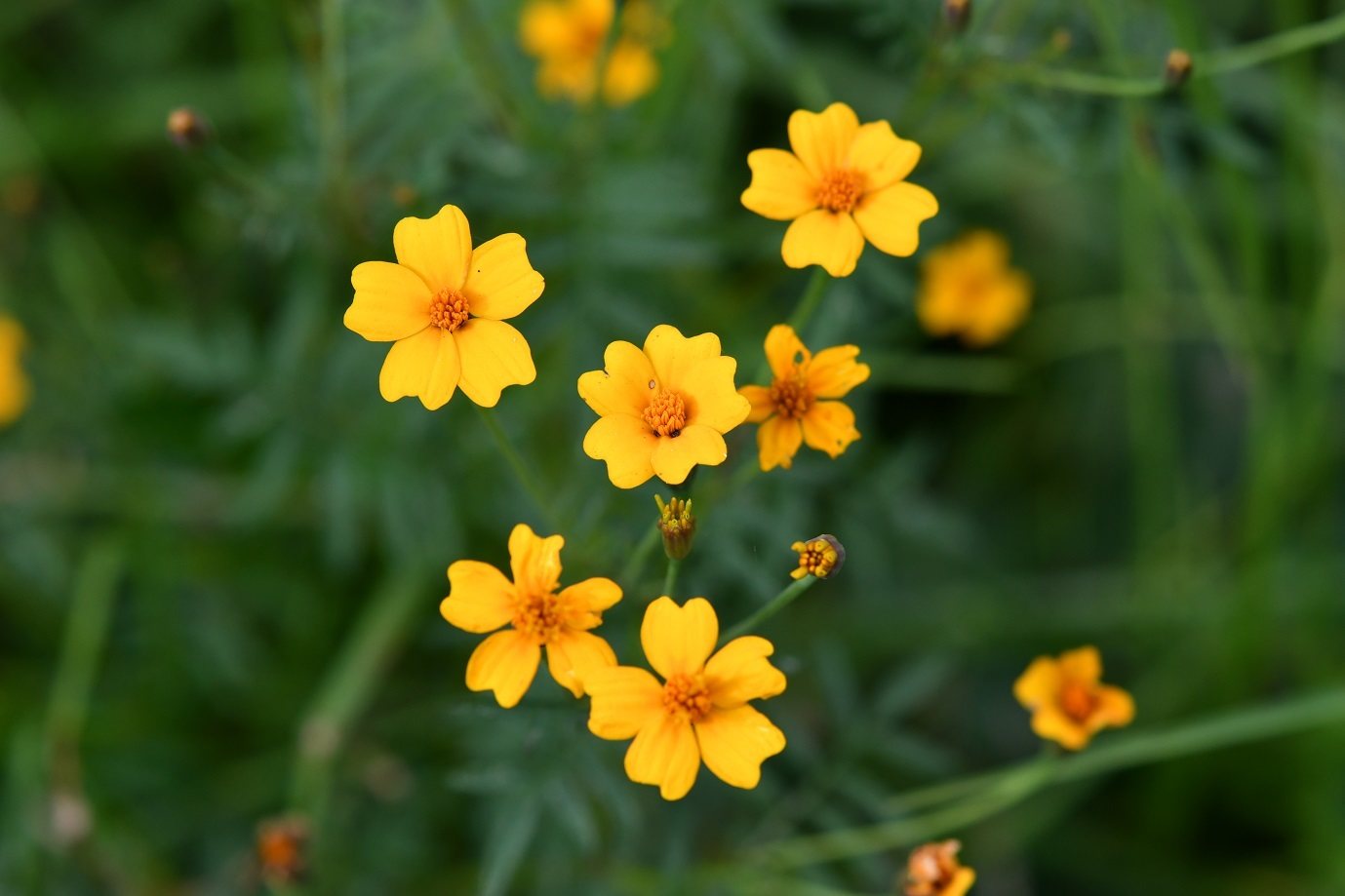
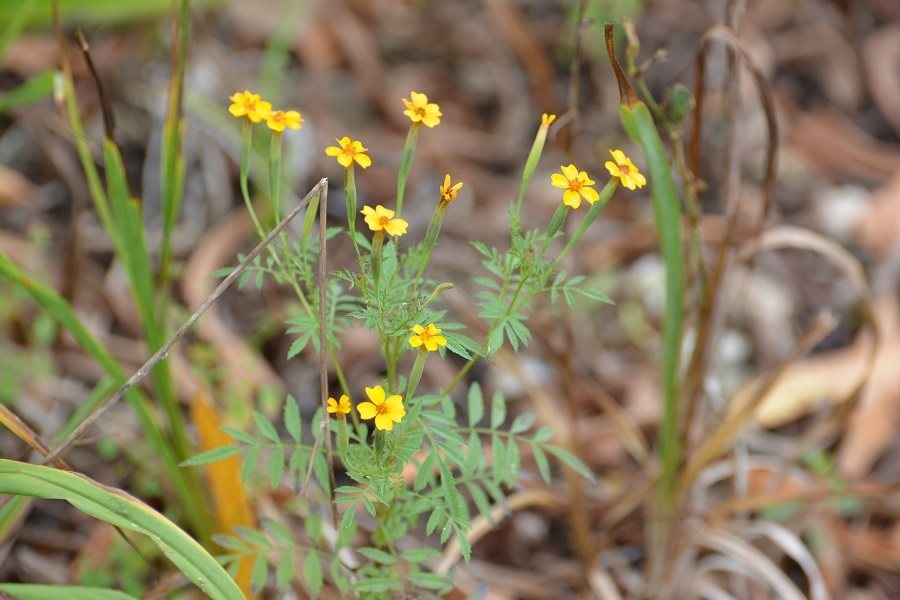
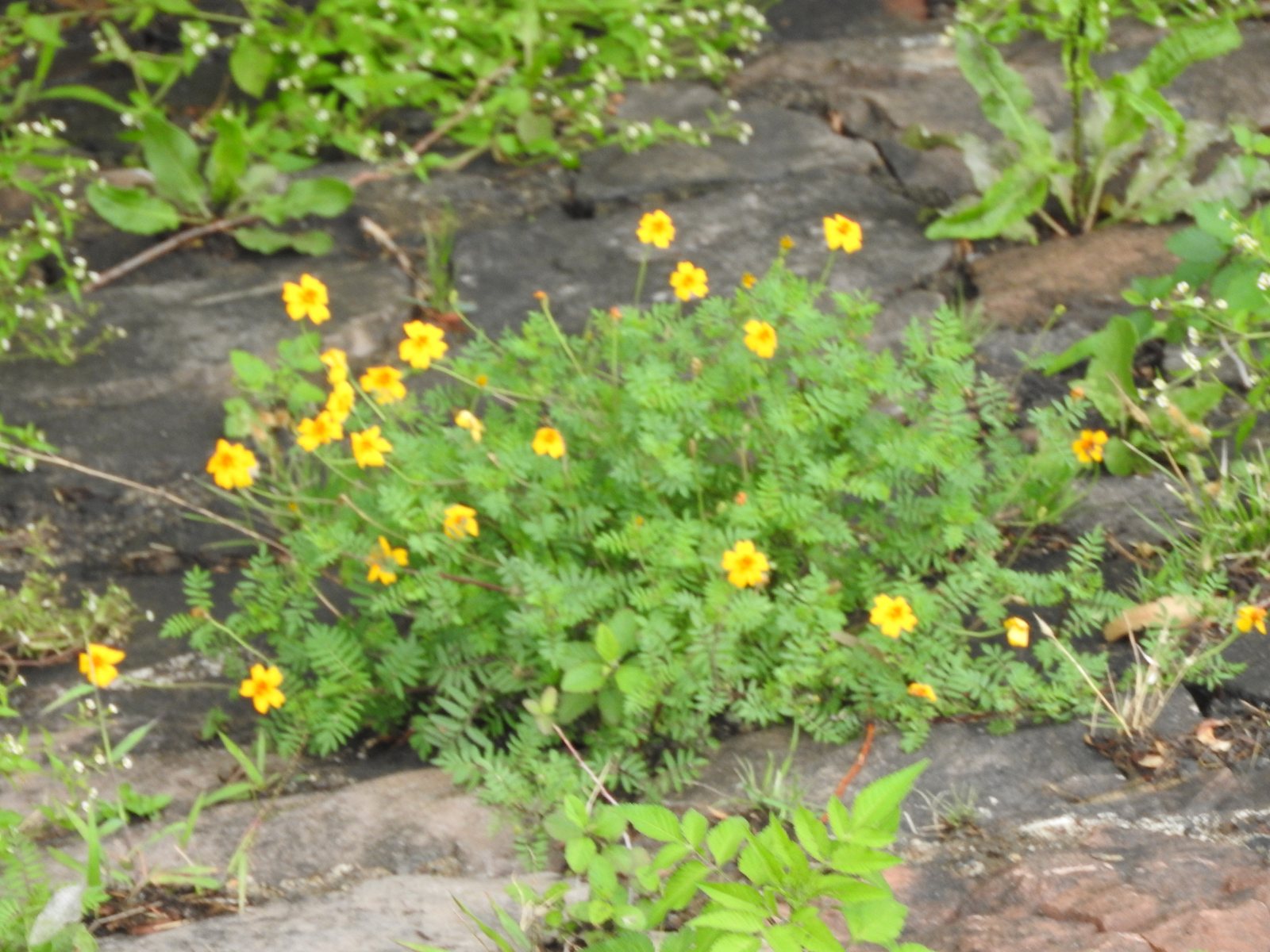
Signet marigold is grown as an annual for its finely divided, aromatic foliage and masses of small, single flowers in yellow, orange or rusty red. Its rounded habit suits border edges and containers, and the edible petals add colour and a citrus-like flavour to food.
At a glance
- Sun
- Full sun; flowering is reduced in shade.
- Water
- Water moderately while establishing, then when the top layer of soil dries. Established plants tolerate brief dry spells, but containers need more frequent watering.
- Soil
- Well-drained soil of average fertility; avoid waterlogged ground and heavy feeding.
- Height
- 1-1.5 ft (0.3-0.45 m)
- Spread
- 1-1.5 ft (0.3-0.45 m)
- Flowers
- Early summer to the first autumn frost; small, single yellow, orange or rusty-red flowers, sometimes with contrasting markings.
- Foliage
- Fine, fern-like green leaves with narrow, toothed leaflets and a citrus-like scent when rubbed.
- Growth
- Fast; flowers in its first growing season.
- Care needed
- Low
The year at a glance
- Pollinators
- Heat tolerant
- Low allergen
- Fragrant
| J | F | M | A | M | J | J | A | S | O | N | D | |
|---|---|---|---|---|---|---|---|---|---|---|---|---|
| Flowers | ||||||||||||
| Fruit | ||||||||||||
| Plant |
Northern hemisphere months. In Australia, shift them by six.
- Difficulty
- Easy
- Toughness
- Fairly tough
Will it suit your garden?
Pick your zone, country, light and whether you have pets.
Full sun is 6 or more hours of direct sun a day, part shade 3 to 6 hours, shade under 3.
How it grows
Planting day
0.5 ft (0.15 m)
After 1 year
1.2 ft (0.38 m)
full size
Full size in one season.
From a typical nursery size, at an average rate for this kind of plant. A rule of thumb, not a forecast.
Good to know
- Cats and dogs
- Mildly toxic: may upset a stomach
- Growth rate
- Fast
Care
Jobs through the year
- WaterMay, Sep–Oct, every 7 days
- Water established plants when the upper soil dries; seedlings and new transplants need more frequent checks.
- WaterJun–Aug, every 7 days
- Water established plants deeply if the upper soil is dry; shorten the interval during hot, dry spells.
- PruneMay–Jun
- Pinch young shoot tips only if plants are becoming leggy.
- DeadheadJun–Oct, every 7 days
- Remove faded flowers to prolong bloom; leave a few late heads if saving seed.
- ProtectMay–Jun, every 7 days
- Protect young plants from slugs and snails.
- PruneOct–Nov
- Remove frost-killed plants and compost healthy material.
- Plant outside after the last frost, spacing plants about 1 ft (0.3 m) apart.
- Water at soil level when the surface begins to dry; do not leave pots standing in water.
- Use little or no fertiliser in garden soil; feed containers lightly if growth or flowering slows.
- Keep mulch away from the stems to reduce rot.
- Remove weeds while plants are young; their spreading growth shades the soil later.
Pruning. Pinch out young shoot tips if plants are becoming leggy. Remove faded flowers regularly, or lightly trim straggly growth in midsummer to encourage fresh branching and flowers.
Harvest
For culinary use, pick freshly opened flowers once any dew has dried, choosing clean, undamaged blooms. Pull off the petals and discard the tougher green base; use only flowers from plants grown without pesticides unsuitable for edible crops.
Through the year
- Early spring
- Sow indoors about four to six weeks before your expected last frost; keep seedlings warm and in bright light.
- Late spring
- Harden off seedlings and plant outside after frost risk has passed, or sow directly into warm soil.
- Early summer
- Water new plants during dry spells and pinch out leggy shoot tips.
- Summer
- Pick edible flowers, remove faded blooms and check container moisture regularly.
- Late summer
- Leave a few healthy flower heads to dry if you want to collect seed.
- Autumn
- Remove plants once frost kills them; compost healthy material.
In the garden
- Edge sunny paths with low mounds of fine foliage and bright flowers.
- Plant around vegetable beds for colour and flowers that attract visiting insects.
- Combine with blue salvia or purple verbena for a warm-and-cool colour contrast.
- Use in sunny pots and window boxes, where the rounded growth softens container edges.
Garden styles it suits: Cottage garden, Potager (kitchen garden), Pollinator garden, Sensory garden, Edible landscape and Small-space.
Plant it with: Blue salvia, Verbena, Zinnias, Sweet alyssum, Basil and Tomatoes.
Wildlife: The open flowers provide pollen and nectar for bees, hoverflies and other small insects. They do not reliably repel garden pests or protect neighbouring vegetables.
Problems to watch for
- Slugs and snails can destroy seedlings: inspect after dark, remove pests and protect young plants with suitable barriers or locally approved baits.
- Spider mites can cause pale, stippled foliage in hot, dry conditions: rinse leaf undersides and prevent severe drought stress.
- Root and stem rot develop in wet soil: improve drainage, avoid standing water and remove collapsing plants.
- Lush foliage with few flowers usually means too much shade or nitrogen: move future plantings into full sun and reduce feeding.
Safety
The flowers are edible for people. Sap and foliage may irritate sensitive skin. Marigolds can cause mild mouth, stomach or skin irritation in cats and dogs, so discourage chewing. Signet marigold is not known to be toxic to horses, although species-specific safety information is limited.
Easily confused with
French marigold (Tagetes patula)
Usually has larger flower heads, often double, and broader leaflets; signet marigold has finer foliage and numerous small, single flowers.
Pot marigold (Calendula officinalis)
Has broad, simple leaves rather than finely divided foliage, and larger daisy-like flower heads.
Mexican marigold (Tagetes minuta)
Grows much taller and bears clusters of tiny, inconspicuous yellowish flowers rather than showy, open flowers on low mounds.
The name
The species name tenuifolia means narrow-leaved, referring to its slender leaflets.
Propagation. Grow from seed sown indoors before the last frost or directly outdoors once the soil warms. Cover seed lightly and keep evenly moist until germination. Saved seed from named selections may not produce plants identical to the parent.
Checked against open data
- Accepted botanical name
- Tagetes tenuifolia
- In the US and Canada
- Introduced in the lower 48 states and Puerto Rico.
- Native range
- Colombia, Costa Rica, Ecuador, El Salvador, Guatemala, Honduras, Mexico Central, Mexico Gulf, Mexico Northeast, Mexico Northwest, Mexico Southeast and Mexico Southwest.
Sources: GBIF (CC BY 4.0), USDA PLANTS and Trefle (CC BY 4.0). The care and design notes are LandscapeGPT's own.
See it in your own yard.
Upload a photo of your yard and see it redesigned with plants that suit your climate, each checked against your zone.