Silky oak
Grevillea robusta. Family Proteaceae. Tree.
Also called Southern silky oak, Australian silver oak.
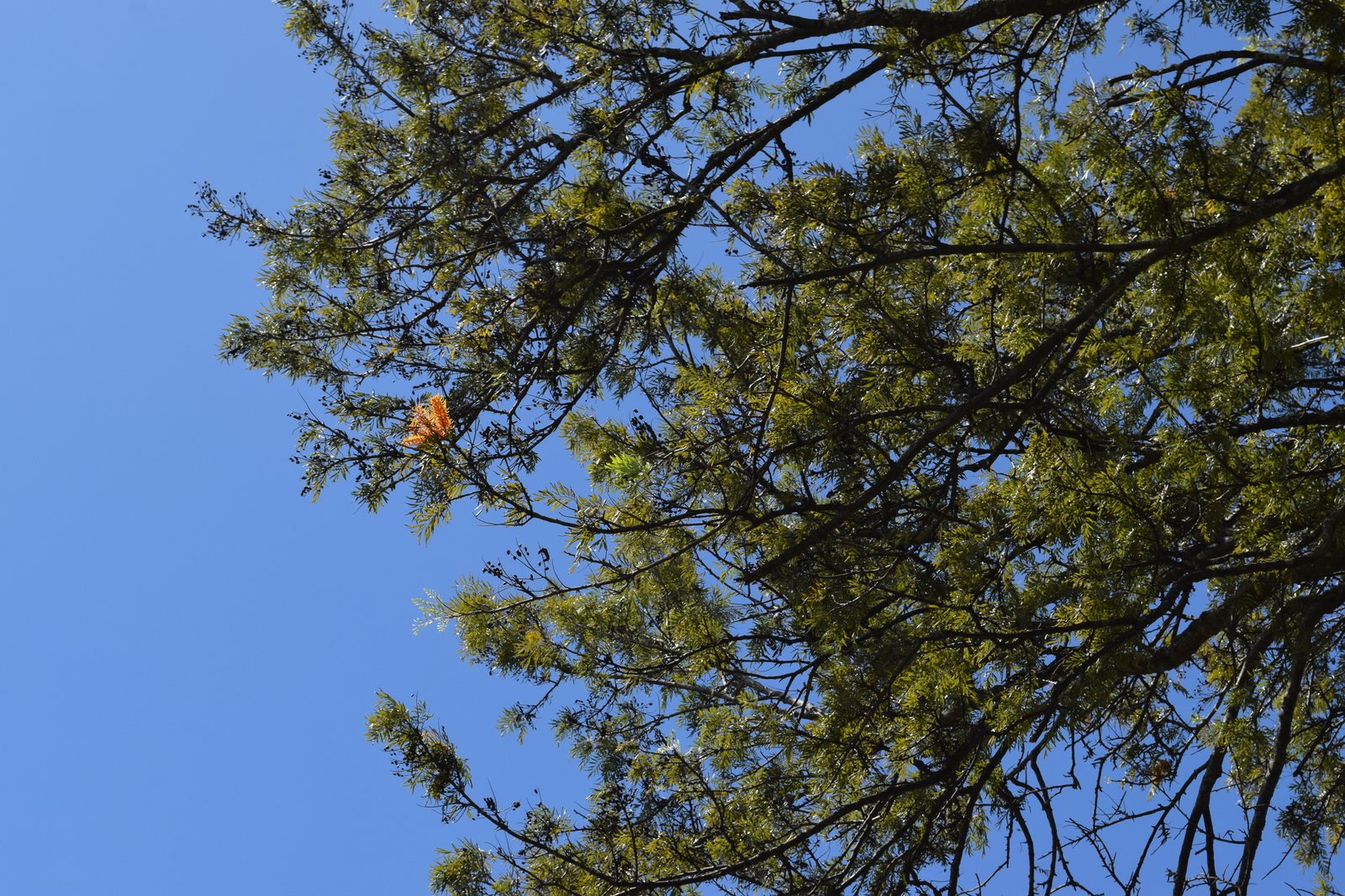
A fast-growing Australian tree with fern-like leaves, silvery undersides and golden-orange flowers. Gardeners grow it for shade, height and nectar-feeding birds, but its eventual size makes it suitable for large gardens rather than small plots. It is not a true oak and needs a warm climate with little frost.
At a glance
- Sun
- Full sun; young plants tolerate light shade.
- Water
- Water regularly while establishing; established trees tolerate seasonal drought but benefit from deep watering during prolonged dry spells.
- Soil
- Well-drained, acidic to neutral soil; tolerates sandy and loamy soils but dislikes waterlogging and strongly alkaline ground.
- Height
- 50-75 ft (15-23 m), sometimes taller in favourable conditions
- Spread
- 25-40 ft (7.5-12 m)
- Flowers
- Golden-orange, toothbrush-like flower clusters in spring to early summer; young trees may take several years to flower.
- Foliage
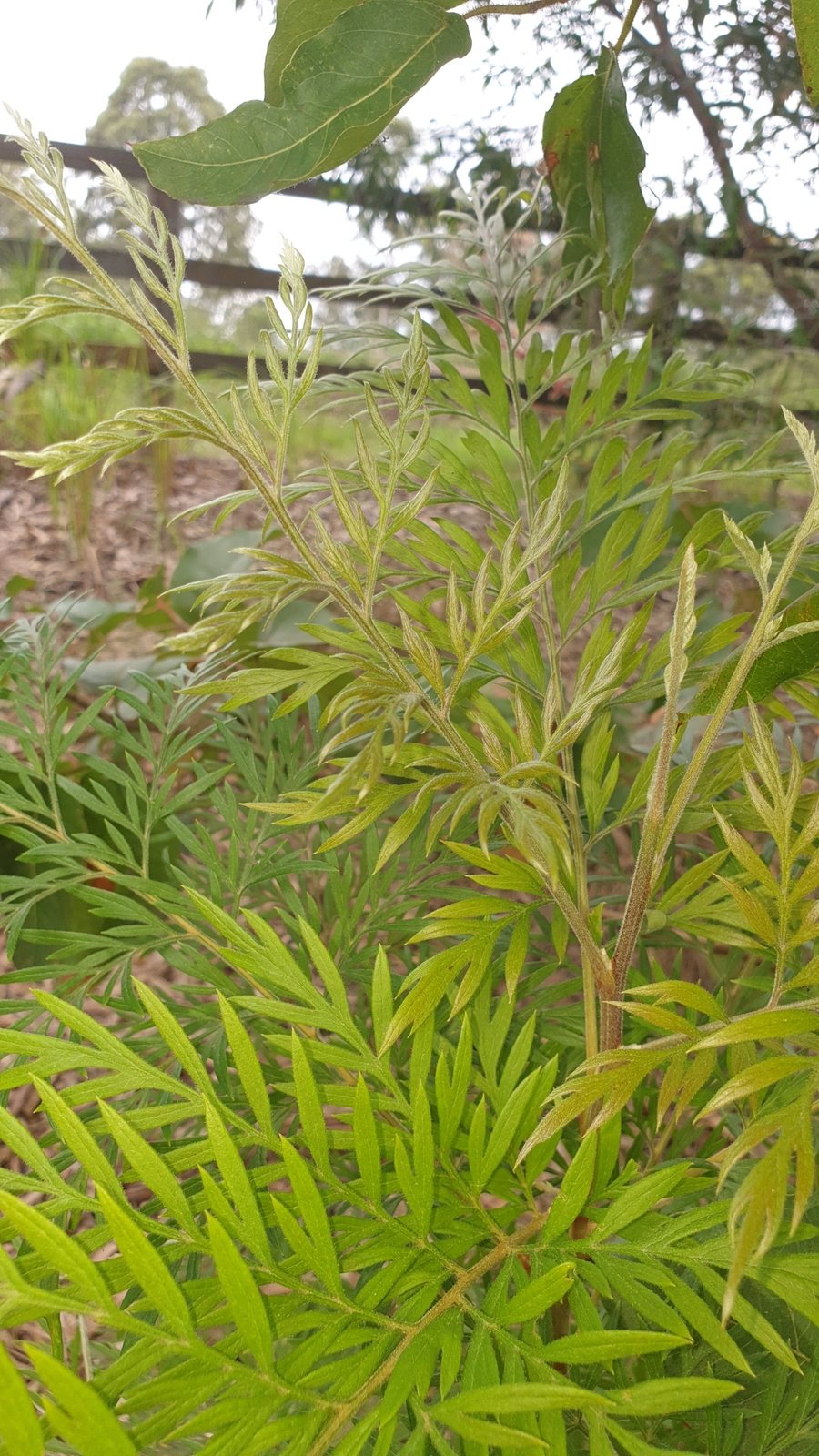
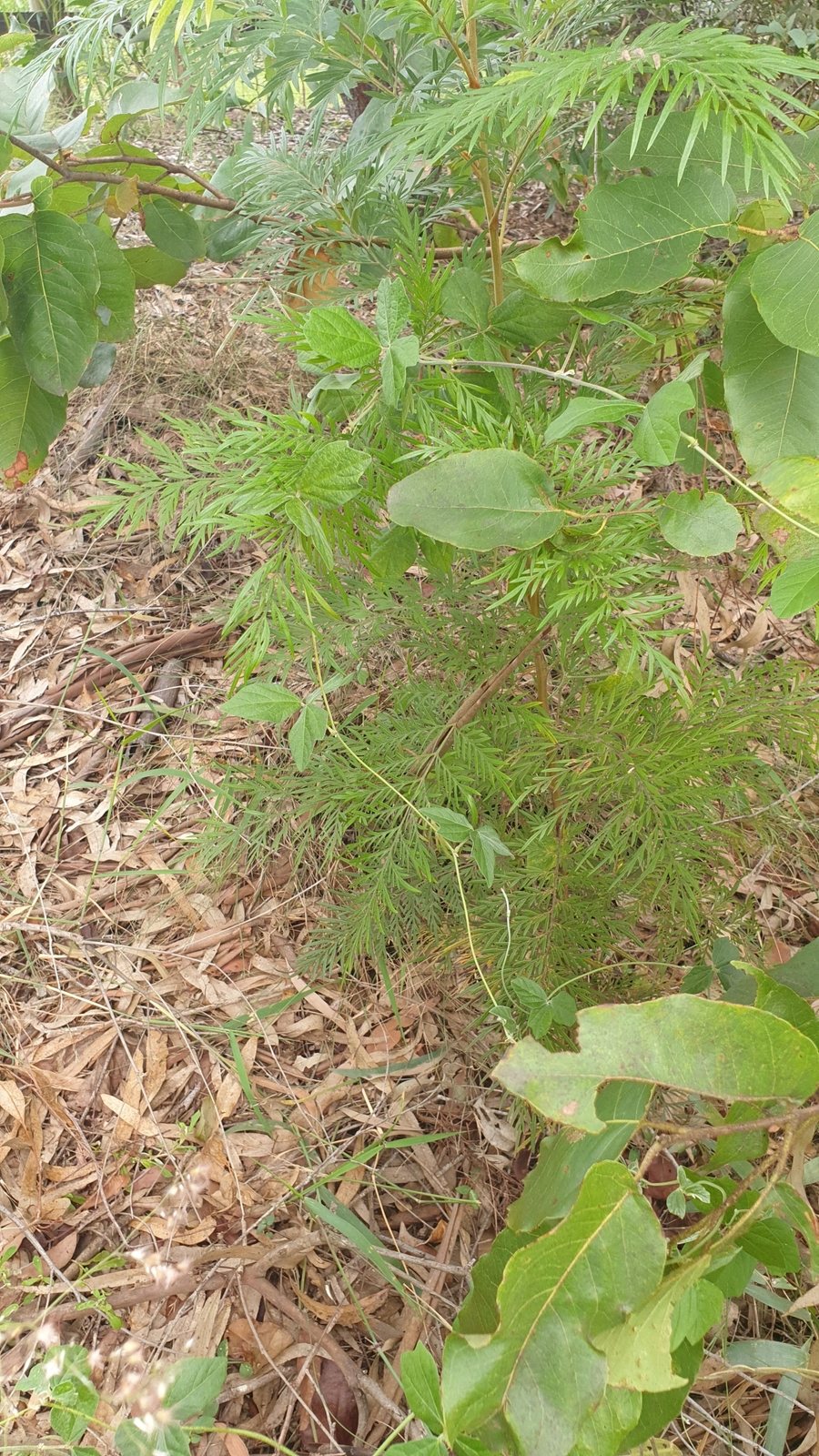
- Evergreen. Deeply divided, fern-like green leaves with silky, silvery undersides; some leaves may fall before flowering or during drought.
- Growth
- Fast
- Care needed
- Medium
The year at a glance
- Pollinators
- Drought tolerant
- Heat tolerant
- Wildlife
| J | F | M | A | M | J | J | A | S | O | N | D | |
|---|---|---|---|---|---|---|---|---|---|---|---|---|
| Flowers | ||||||||||||
| Plant |
Northern hemisphere months. In Australia, shift them by six.
- Difficulty
- Hard
- Toughness
- Needs looking after
Will it suit your garden?
Pick your zone, country, light and whether you have pets.
Full sun is 6 or more hours of direct sun a day, part shade 3 to 6 hours, shade under 3.
How it grows
Planting day
7 ft (2.3 m)
After 1 year
12 ft (3.6 m)
After 2 years
16 ft (4.9 m)
After 3 years
20 ft (6.1 m)
After 5 years
29 ft (8.7 m)
About 13 years to full size.
From a typical nursery size, at an average rate for this kind of plant. A rule of thumb, not a forecast.
Good to know
- Cats and dogs
- Toxic
- Native to
- Australia
- Invasive in
- the US
- In the garden
- Spreads vigorously: plan to contain it.
- Growth rate
- Fast
Care
Jobs through the year
- WaterMay, Sep, every 14 days
- For established ground-grown trees in frost-free sites, water only in dry spells; young trees need more.
- WaterJun–Aug, every 14 days
- Deep-water established ground-grown trees during prolonged drought; check container plants much more often.
- WaterJan–Apr, Oct–Dec, every 10 days
- Check sheltered container plants and water when the surface dries, without waterlogging.
- MulchMay
- Mulch the root area of outdoor trees, keeping material clear of the trunk.
- FeedMay
- Only if growth is weak, apply a light low-phosphorus native-plant fertilizer.
- PruneMay
- Remove competing leaders on young plants after frost risk; never top mature trees.
- ProtectSep–Oct
- Move container plants into bright frost-free shelter; this tree cannot overwinter outdoors in zones 6–7.
- ProtectJan–Apr, Nov–Dec
- Maintain bright frost-free shelter; container foliage plants may never flower.
- Plant well away from buildings, drains, paving and overhead wires, allowing room for a large mature tree.
- Water deeply through the first two growing seasons, letting the surface soil begin to dry between waterings.
- Spread organic mulch over the root area, keeping it clear of the trunk.
- Avoid high-phosphorus fertilisers; if growth is weak, use a light application of low-phosphorus native-plant fertiliser.
- Stake only if the root ball moves in wind, and remove supports once the tree is firmly rooted.
- Protect young trees from frost; in most of the UK and Canada, grow only as a container foliage plant brought into frost-free shelter.
Pruning. Form a single main trunk and remove competing leaders while the tree is young, in late winter or early spring after frost risk has passed. Avoid topping or heavy crown reduction; have a qualified arborist assess large, damaged or poorly attached limbs.
Through the year
- Spring
- Plant after frost risk has passed and water the root ball thoroughly.
- Late spring
- Check young trees for competing leaders and make only small formative cuts.
- Summer
- Water establishing trees deeply during dry weather and check that mulch stays clear of the trunk.
- Autumn
- Remove unwanted seedlings, especially near natural areas where the tree can escape cultivation.
- Late autumn
- Move container plants into bright, frost-free shelter before cold nights arrive.
- Winter
- Check exposed trees after storms and arrange professional inspection of cracked or hanging branches.
In the garden
- Use as a tall specimen in a large lawn where its divided foliage and flowers can be seen.
- Provide high shade above drought-tolerant planting in a spacious, warm-climate garden.
- Combine with Australian shrubs and grasses for a layered native planting within its native range.
- Use its upright young form as a temporary container foliage feature, with a plan for its rapid growth.
Garden styles it suits: Australian native, Architectural minimal, Tropical, Wildlife garden, Grand estate and Mediterranean.
Plant it with: Bottlebrush, Coastal rosemary, Mat rush, Kangaroo paw and Flax lily.
Wildlife: Nectar-rich flowers attract birds, including honeyeaters in Australia, as well as bees and other insects. Its value to wildlife does not outweigh its escape risk where it is invasive.
Problems to watch for
- Root rot in waterlogged soil: improve drainage before planting and avoid frequent watering of established trees.
- Yellow leaves on alkaline soil: check soil pH and drainage; choose a better-suited tree if the soil is strongly alkaline.
- Phosphorus injury from unsuitable fertiliser: stop high-phosphorus feeding and use only a suitable low-phosphorus product if needed.
- Storm damage or weak branch attachments: train the tree while young, avoid topping and have mature trees inspected by an arborist.
Safety
Leaves and flowers contain cyanogenic compounds and should not be eaten. Sap, foliage and especially wood dust can cause contact dermatitis in people, sometimes severe; wear gloves and avoid inhaling sawdust. Reliable species-specific poisoning information for cats, dogs and horses is limited, so prevent chewing or browsing and seek veterinary advice after ingestion.
Where it spreads. Invasive in Hawaii, South Africa and parts of East Africa, including Kenya, Tanzania and Uganda. It can seed into disturbed ground and natural vegetation; check local restrictions before planting.
Easily confused with
Fern tree (Filicium decipiens)
Has pinnate leaves made of separate, glossy leaflets and small, inconspicuous flowers, rather than deeply divided leaves and large orange flower clusters.
Bull oak (Allocasuarina luehmannii)
Despite the shared 'oak' name, it has fine, jointed, needle-like branchlets and woody cone-like fruits, not fern-like leaves.
The name
Grevillea honours Charles Francis Greville, robusta means robust or strong, and silky oak refers to the silky-looking grain of its timber.
Propagation. Sow fresh seed in a free-draining seed mix and keep warm and lightly moist. Semi-ripe cuttings are possible but generally less straightforward than seed.
Checked against open data
- Accepted botanical name
- Grevillea robusta
- Native range
- New South Wales and Queensland.
- Measured
- Soil pH 5.3 to 7. Average height 1480 cm.
Sources: GBIF (CC BY 4.0) and Trefle (CC BY 4.0). The care and design notes are LandscapeGPT's own.
See it in your own yard.
Upload a photo of your yard and see it redesigned with plants that suit your climate, each checked against your zone.