Silver buffaloberry
Shepherdia argentea. Family Elaeagnaceae. Shrub.
Also called Silver buffalo berry, Bullberry, Thorny buffaloberry.
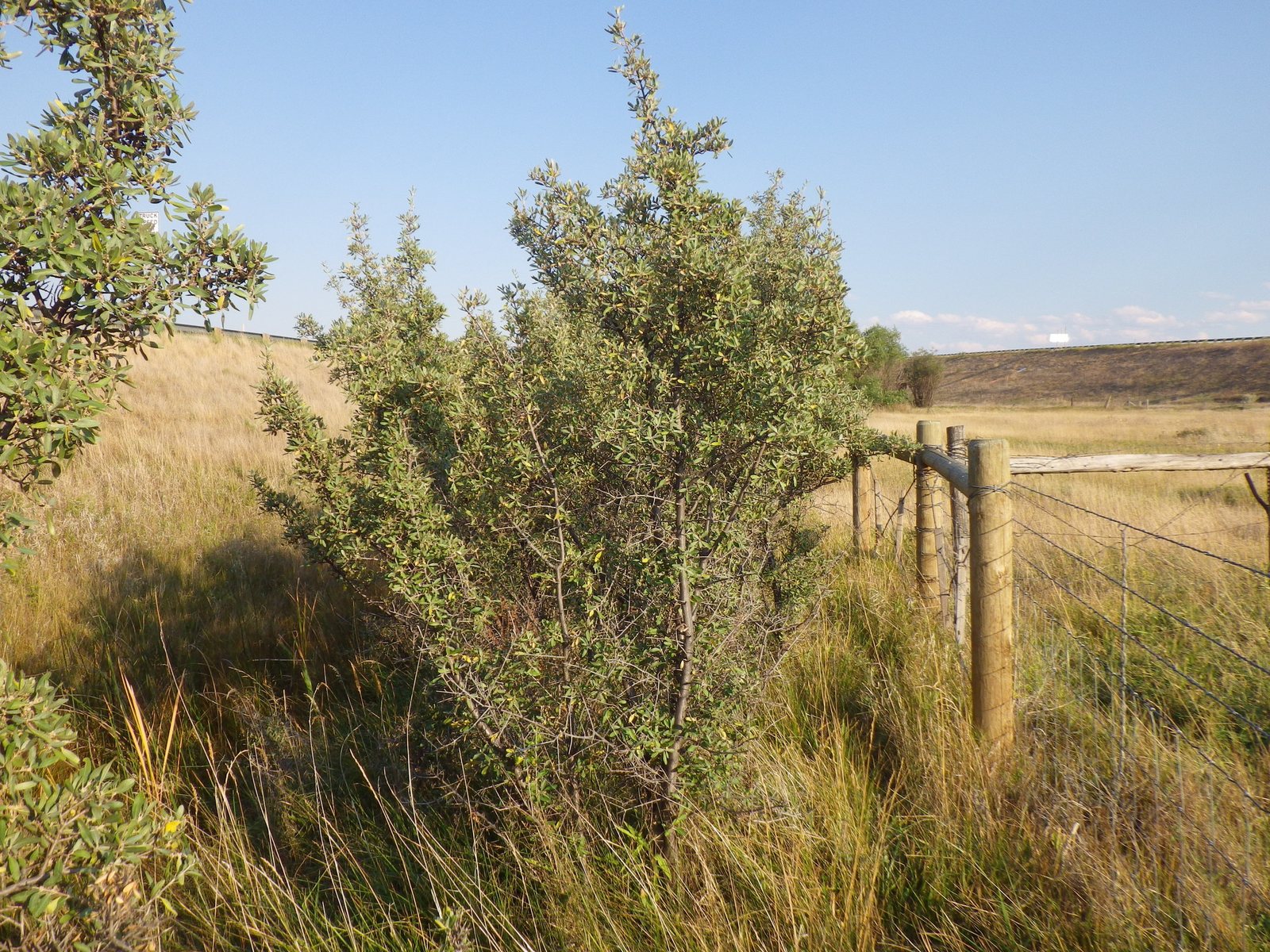
Silver buffaloberry (Shepherdia argentea) is a thorny, deciduous shrub native to western and central North America, grown for its silver foliage, wildlife cover and tart red fruit. It tolerates cold, drought and alkaline soil, but needs room for its suckering growth; fruit production requires both male and female plants.
At a glance
- Sun
- Full sun; tolerates light shade, but flowers and fruits less freely.
- Water
- Low once established; water regularly during the first growing season and during prolonged drought while establishing.
- Soil
- Well-drained sandy, gravelly or loamy soil; tolerates poor, alkaline and moderately saline ground. Avoid persistently wet soil.
- Height
- 8-15 ft (2.4-4.6 m), occasionally taller
- Spread
- 8-15 ft (2.4-4.6 m), spreading farther by suckers if unchecked
- Flowers
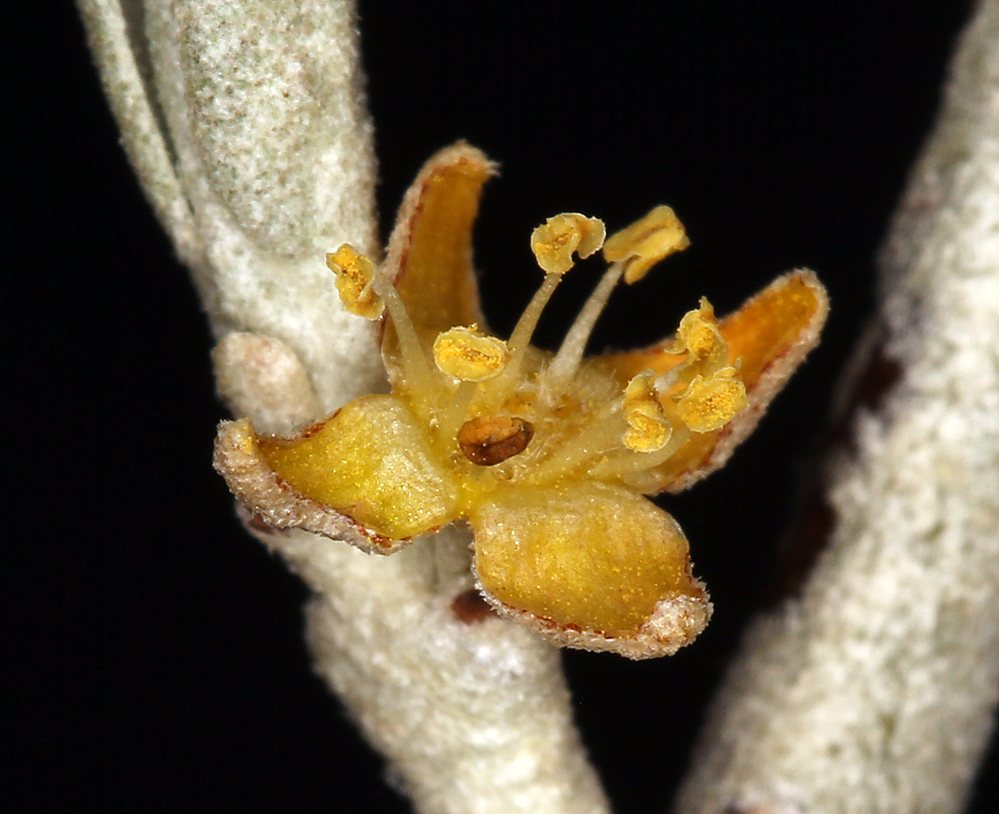
- Small yellowish flowers in early spring, before the leaves; male and female flowers occur on separate plants.
- Foliage
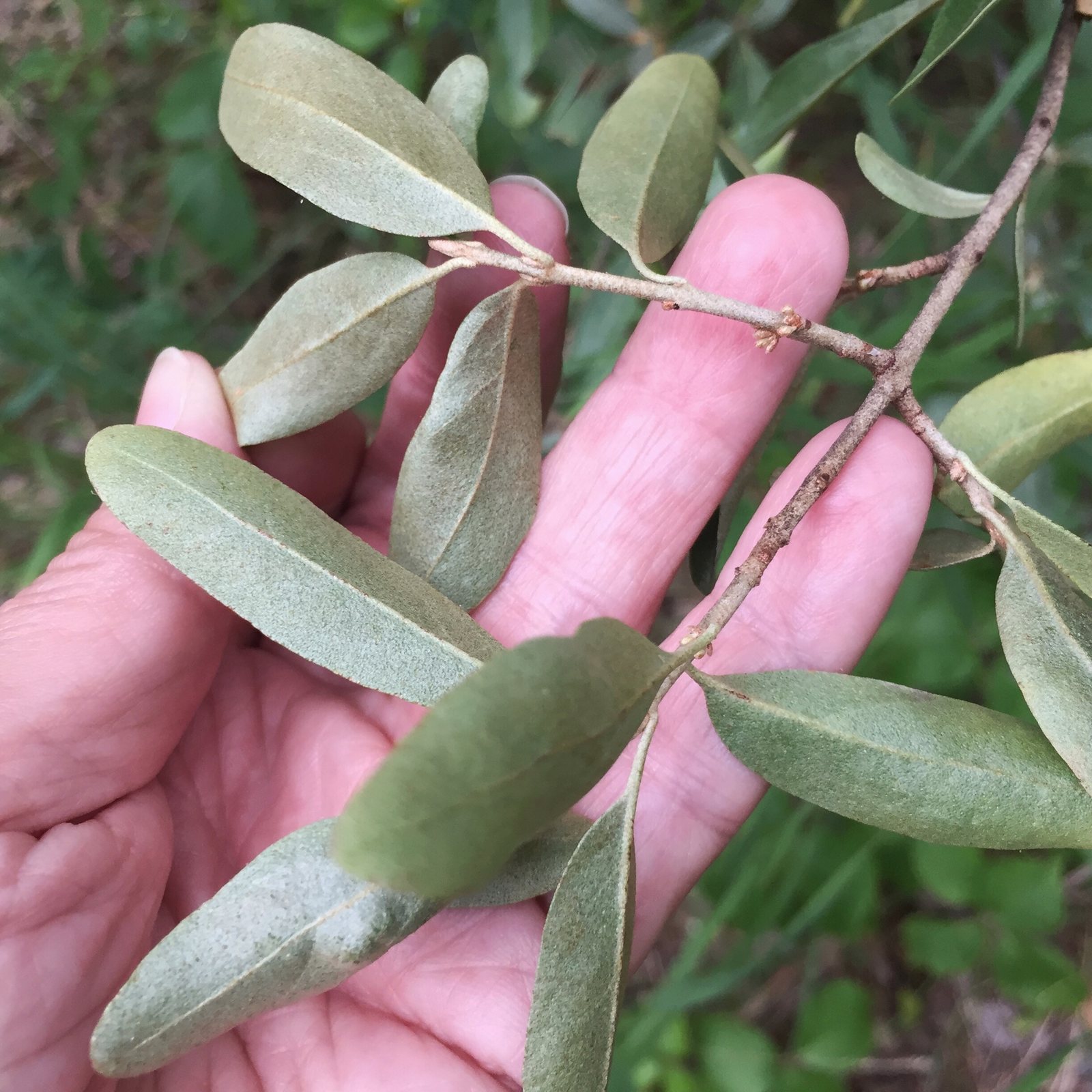
- Narrow, opposite leaves covered in silvery scales on both surfaces; deciduous.
- Growth
- Moderate to fast once established
- Care needed
- Low
The year at a glance
- Pollinators
- Drought tolerant
- Cold hardy
- Wildlife
| J | F | M | A | M | J | J | A | S | O | N | D | |
|---|---|---|---|---|---|---|---|---|---|---|---|---|
| Flowers | ||||||||||||
| Fruit | ||||||||||||
| Plant |
Northern hemisphere months. In Australia, shift them by six.
- Difficulty
- Easy
- Toughness
- Very tough
Will it suit your garden?
Pick your zone, country, light and whether you have pets.
Full sun is 6 or more hours of direct sun a day, part shade 3 to 6 hours, shade under 3.
How it grows
Planting day
1.6 ft (0.5 m)
After 1 year
4 ft (1.3 m)
After 2 years
7 ft (2 m)
After 3 years
9 ft (2.8 m)
After 5 years
11 ft (3.5 m)
full size
About 4 years to full size.
From a typical nursery size, at an average rate for this kind of plant. A rule of thumb, not a forecast.
Good to know
- Cats and dogs
- Mildly toxic: may upset a stomach
- Native to
- the US and Canada
- In the garden
- Spreads vigorously: plan to contain it.
- Growth rate
- Fast
Care
Jobs through the year
- WaterApr–May, Sep–Oct, every 28 days
- Water established shrubs only during prolonged drought; young shrubs need regular deep watering.
- WaterJun–Aug, every 21 days
- Deep-water established shrubs during prolonged dry spells; let the soil surface dry between soakings.
- MulchApr
- Apply a light organic mulch over the root zone, keeping stems clear.
- PruneFeb
- Wear thick gloves; remove damaged branches and a few oldest stems if crowded, avoiding shearing.
- PruneMay–Sep, every 30 days
- Remove unwanted suckers promptly to contain the clump.
- ProtectMar–Apr
- Check that a male plant grows near females for reliable berry production.
- Water deeply during the first growing season, allowing the soil surface to dry between waterings.
- Skip routine nitrogen feeding; this shrub supports nitrogen-fixing bacteria in its roots.
- Mulch lightly over the root zone, keeping mulch away from the stems.
- Remove unwanted suckers promptly if you need to contain the clump.
- For berries, plant a confirmed male near female plants; seedlings may take several years to reveal their sex.
Pruning. Prune in late winter while dormant, removing dead, damaged or crossing branches and a few of the oldest stems at ground level when renewal is needed. Avoid routine shearing, which removes flowering wood, and wear thick gloves around the thorns.
Harvest
Pick fully coloured red berries in late summer or autumn; they should detach readily, and their sharp flavour often mellows after frost. Use gloves and collect by hand or gently shake ripe fruit onto a sheet; the fruit is usually cooked into jelly or sauce. Expect a first substantial crop roughly 3-5 years after planting young nursery plants, sometimes longer from seed, provided a male pollinator is nearby.
Through the year
- Late winter
- Remove damaged branches and thin crowded older stems while the shrub is dormant.
- Early spring
- Plant while dormant where soil is workable; water thoroughly and apply a light mulch.
- Spring
- Check flowering plants for male and female flowers if you are planning a fruiting group.
- Summer
- Water young plants during dry spells and remove unwanted suckers.
- Late summer
- Begin checking berries for full colour and easy release; leave some for birds.
- Autumn
- Finish harvesting ripe berries and plant dormant nursery stock where winters and soil conditions allow.
In the garden
- Plant as an informal boundary or shelterbelt where thorny, suckering growth has room to develop.
- Combine with prairie grasses and flowering perennials for silver foliage against fine-textured planting.
- Use on sunny, dry banks to form a dense colony and help hold soil.
- Include male and female plants in an edible hedgerow, away from narrow paths and play areas.
Garden styles it suits: Wildlife garden, Native hedgerow, Desert / xeriscape, Midwest prairie, Edible landscape and Homestead.
Plant it with: Little bluestem, Prairie dropseed, Purple coneflower, Yarrow, Rubber rabbitbrush and Saskatoon serviceberry.
Wildlife: Flowers provide early pollen and nectar for insects. Birds and mammals eat the berries, and the thorny branches provide nesting sites and shelter.
Problems to watch for
- Poor fruit set: provide both male and female plants, grow them in full sun and avoid heavy pruning of flowering wood.
- Unwanted suckering: cut out new shoots regularly or reserve the shrub for a broad, informal planting.
- Root decline in waterlogged ground: improve drainage or move the plant to a better-drained site.
- Leaf spots or rust: remove badly affected fallen leaves and thin crowded growth to improve airflow; minor spotting rarely needs treatment.
Safety
Ripe fruit is edible to people, usually cooked, but contains saponins and may cause stomach upset if eaten raw in large quantities. It is not generally known as a poisonous plant for cats, dogs or horses, though species-specific safety information is limited; do not encourage pets or livestock to eat large amounts. The thorns can cause puncture injuries.
Where it spreads. Spreads by root suckers and can form broad thickets within its native range in western and central North America. This can be aggressive in a small garden, but suckering alone does not make it a listed invasive species.
Easily confused with
Canada buffaloberry (Shepherdia canadensis)
Usually smaller and thornless, with greener upper leaf surfaces and rusty-brown scales beneath; silver buffaloberry has conspicuously silver leaves on both sides and thorny branches.
Russian olive (Elaeagnus angustifolia)
Has alternate rather than opposite leaves, fragrant flowers later in spring or early summer, and yellowish, olive-shaped fruit rather than red berries.
Sea buckthorn (Hippophae rhamnoides)
Has alternate, very narrow leaves and orange berries clustered tightly along the stems; silver buffaloberry has opposite leaves and usually red fruit.
The name
Shepherdia honours the British botanist John Shepherd, while argentea means silvery, referring to the foliage.
Propagation. Sow cleaned seed outdoors in autumn for natural winter chilling, or use a suitable cold-stratification treatment before spring sowing. Rooted suckers can be separated during dormancy; take them from a plant of known sex if fruit production matters.
Checked against open data
- Accepted botanical name
- Shepherdia argentea
- In the US and Canada
- Native in Canada and the lower 48 states.
- Native range
- Alberta, Arizona, British Columbia, California, Colorado, Idaho, Iowa, Kansas, Manitoba, Michigan, Minnesota and Montana.
- Measured
- Average height 469 cm.
Sources: GBIF (CC BY 4.0), USDA PLANTS and Trefle (CC BY 4.0). The care and design notes are LandscapeGPT's own.
See it in your own yard.
Upload a photo of your yard and see it redesigned with plants that suit your climate, each checked against your zone.