Silver Princess gum
Eucalyptus caesia 'Silver Princess'. Family Myrtaceae. Tree.
Also called Silver Princess eucalyptus, Gungurru.
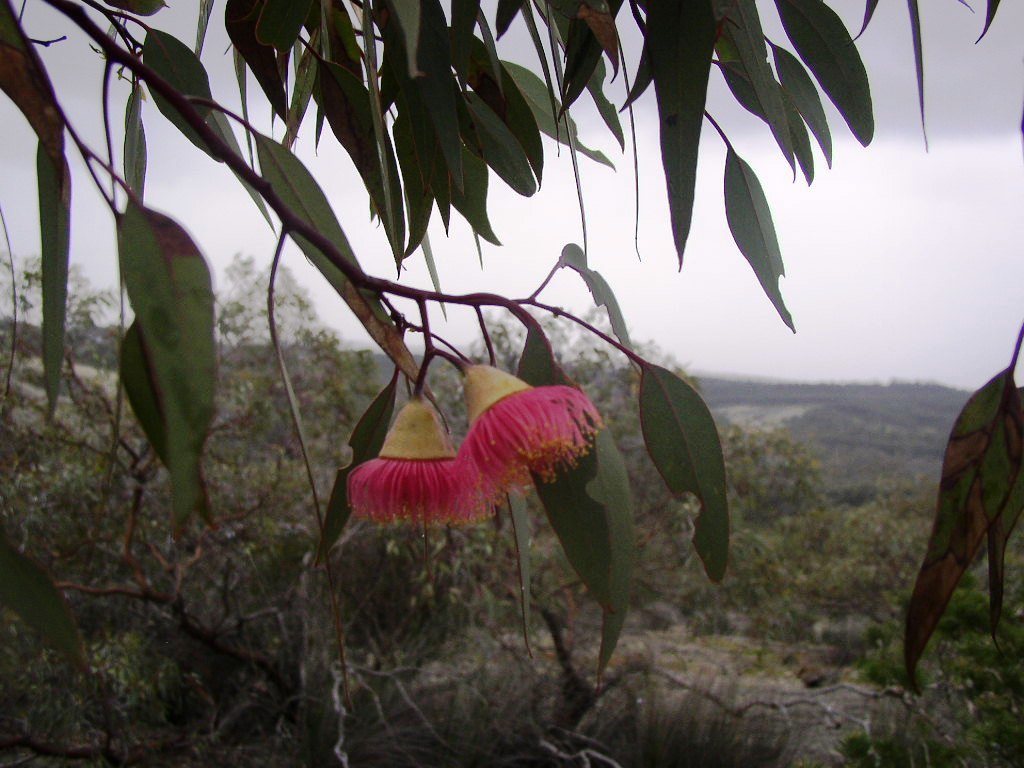
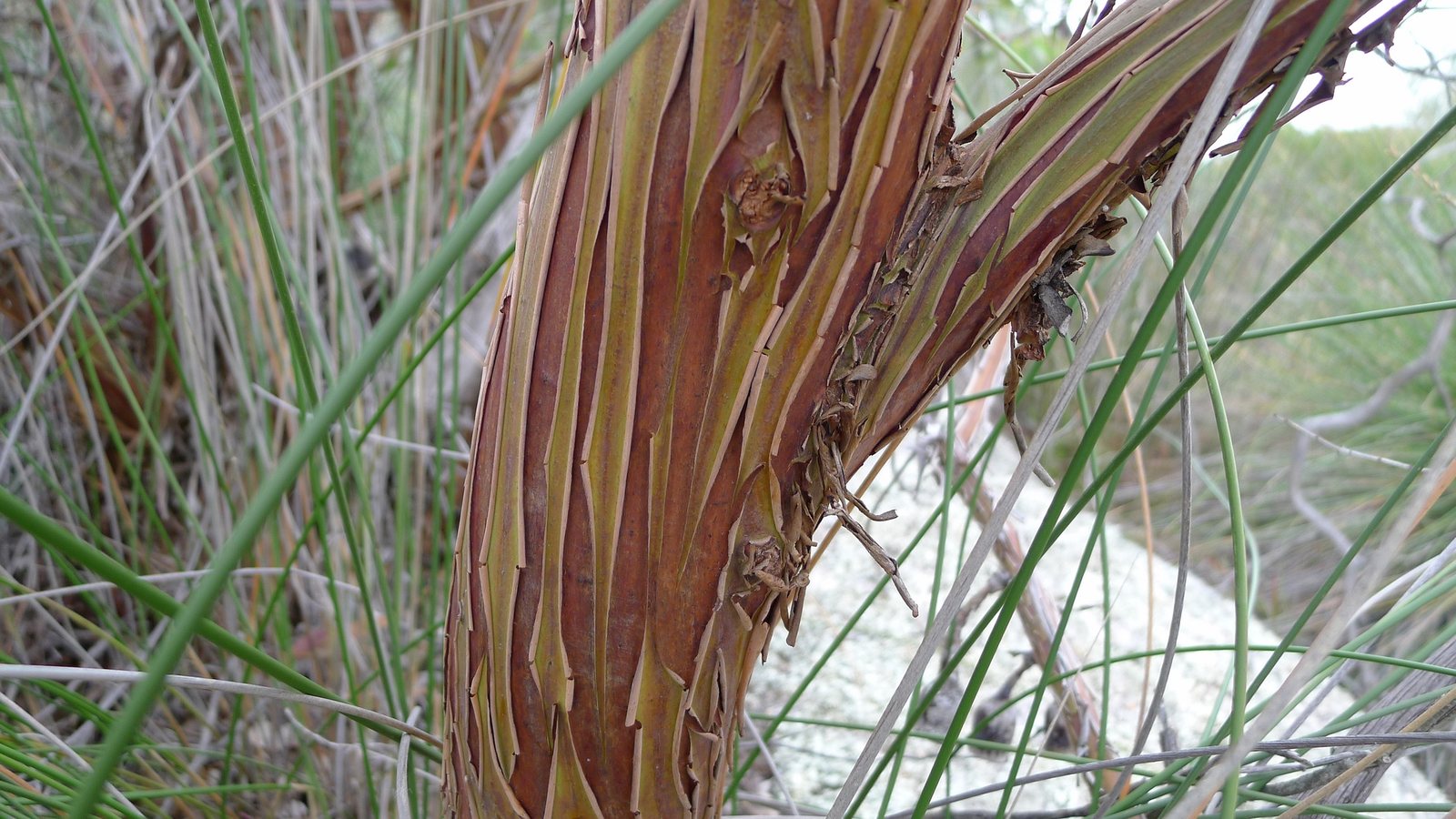
A small evergreen eucalyptus from Western Australia, grown for its weeping branches, silvery-white stems and buds, and large pink-red flowers with yellow-tipped stamens. Its peeling reddish-brown bark adds interest throughout the year. It suits warm, dry gardens with excellent drainage but is unreliable in prolonged frost or cold, wet ground.
At a glance
- Sun
- Full sun; choose a warm position sheltered from strong winds.
- Water
- Water regularly while establishing; once established, water deeply during extended drought rather than little and often.
- Soil
- Very well-drained sandy, gravelly or loamy soil; tolerates low fertility but struggles in heavy, waterlogged ground.
- Height
- 20-30 ft (6-9 m)
- Spread
- 10-20 ft (3-6 m)
- Flowers
- Large pink to red flowers with yellow-tipped stamens, mainly in winter and spring; timing varies with climate.
- Foliage
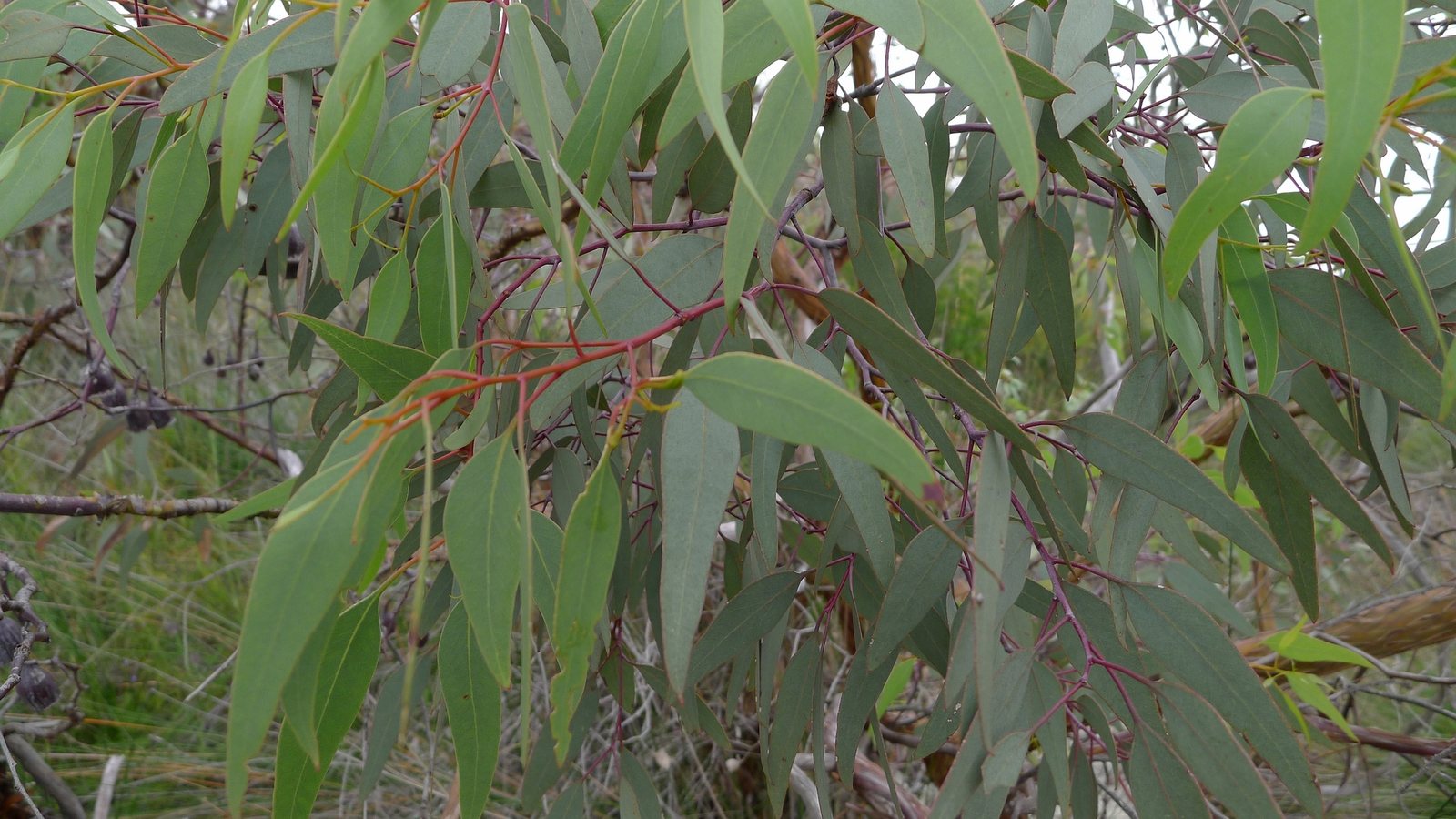
- Evergreen, blue-green to grey-green leaves; young leaves are broader than the long, narrow adult leaves. Young stems, buds and woody seed capsules develop a conspicuous white, waxy coating.
- Growth
- Moderate to fast in warm, well-drained conditions.
- Care needed
- Medium
The year at a glance
- Pollinators
- Drought tolerant
- Heat tolerant
- Wildlife
| J | F | M | A | M | J | J | A | S | O | N | D | |
|---|---|---|---|---|---|---|---|---|---|---|---|---|
| Flowers | ||||||||||||
| Fruit | ||||||||||||
| Plant |
Northern hemisphere months. In Australia, shift them by six.
- Difficulty
- Hard
- Toughness
- Needs looking after
Will it suit your garden?
Pick your zone, country, light and whether you have pets.
Full sun is 6 or more hours of direct sun a day, part shade 3 to 6 hours, shade under 3.
How it grows
Planting day
7 ft (2 m)
After 1 year
8 ft (2.3 m)
After 2 years
9 ft (2.7 m)
After 3 years
10 ft (3 m)
After 5 years
12 ft (3.7 m)
About 16 years to full size.
From a typical nursery size, at an average rate for this kind of plant. A rule of thumb, not a forecast.
Good to know
- Cats and dogs
- Toxic
- Native to
- Australia
- Growth rate
- Fast
Care
Jobs through the year
- WaterApr–May, Sep–Oct, every 28 days
- Deep-water established ground-grown trees only in extended drought; young trees and containers need more frequent checks.
- WaterJun–Aug, every 21 days
- Deep-water established ground-grown trees during extended drought, letting the soil drain between applications.
- MulchMay, Nov
- Maintain a broad mulch ring without packing damp material against the trunk.
- PruneMay–Jun
- Prune lightly after flowering, retaining the weeping outline; avoid hard cuts into old wood.
- ProtectJan–Apr, Oct–Dec
- Zones 6–7 require bright frost-free winter shelter, not fleece alone; shelter containers from strong wind.
- Plant while young in its permanent position; avoid moving established trees or disturbing their roots.
- Water deeply through the first one or two growing seasons, allowing the soil to drain between waterings.
- Keep a broad mulch ring around the root zone, leaving the trunk base clear.
- Avoid rich feeding; if growth indicates a need, use a low-phosphorus fertiliser suitable for Australian native plants.
- Use a short, flexible stake only if needed for establishment, and remove it once the roots hold the tree securely.
Pruning. Prune lightly after flowering to remove dead, damaged or crossing branches and develop a sound framework while the tree is young. Avoid topping or hard cutting into old wood: this species does not reliably regenerate after severe pruning.
Through the year
- Spring
- Plant after damaging frosts have passed in marginal climates, and water the root ball thoroughly.
- After flowering
- Lightly prune damaged or crossing growth; retain the natural weeping outline.
- Summer
- Check newly planted trees regularly and water deeply when the root zone begins to dry.
- Autumn
- Plant in mild, dry-winter climates while the soil is warm; check that winter rain can drain away freely.
- Late autumn
- Refresh mulch without piling it against the trunk, and check young trees' ties.
- Winter
- Protect young trees from forecast frost with horticultural fleece, and avoid pruning before freezing weather.
In the garden
- Use as a specimen in a sunny gravel garden where the silver branches and hanging flowers can be seen clearly.
- Plant above low-growing Australian native shrubs, leaving room for the branches to arch naturally.
- Pair with drought-tolerant grasses and silver foliage for a loose, dry-climate planting.
- Position beside, rather than directly over, a terrace so flowers, bark and seed capsules do not fall onto seating.
Garden styles it suits: Australian native, Mediterranean, Dry gravel garden, Desert / xeriscape, Architectural minimal and Wildlife garden.
Plant it with: Kangaroo paw, Coastal rosemary, Emu bush, Lomandra, Native wallflower and Lavender.
Wildlife: Nectar-rich flowers attract bees and nectar-feeding birds, including honeyeaters in Australia. Birds may also use the canopy for shelter.
Problems to watch for
- Root rot and decline in wet soil: plant in freely draining ground, divert runoff and avoid frequent irrigation.
- Frost damage to young stems and leaves: choose a sheltered microclimate and protect young trees; wait until spring growth reveals the extent of damage before pruning.
- Wind damage or splitting of heavily laden branches: provide shelter and establish a balanced framework with light formative pruning.
- Scale insects or psyllids: inspect affected shoots, encourage natural predators and avoid excessive feeding; seek a locally approved treatment if infestation is severe.
Safety
Eucalyptus leaves and their essential oils are toxic if eaten by cats, dogs and horses, and can poison people, especially children. Concentrated eucalyptus oil is particularly dangerous if swallowed; keep foliage and oil away from pets and children.
Easily confused with
Standard-form gungurru (Eucalyptus caesia subsp. caesia)
Generally smaller and less strongly weeping than the large, pendulous form associated with 'Silver Princess'; flowers and fruit are also smaller.
Coral gum (Eucalyptus torquata)
Has conspicuously ribbed, corrugated bud bases and usually a more upright crown rather than long, silver-coated, weeping branches.
Rose mallee (Eucalyptus rhodantha)
Usually forms a low, spreading mallee with broad, opposite, silvery leaves retained into maturity, rather than narrow adult leaves on a weeping small tree.
The name
The species name caesia means bluish-grey, referring to its waxy coating, while 'Silver Princess' describes the silvery, gracefully drooping growth.
Propagation. Usually raised from seed. Plants sold as 'Silver Princess' are commonly associated with Eucalyptus caesia subsp. magna, and seed-grown plants can vary in habit and flower colour; seedlings are not guaranteed to match a named parent.
Checked against open data
- Accepted botanical name
- Eucalyptus caesia
- Native range
- Western Australia.
- Measured
- Average height 415 cm.
Sources: GBIF (CC BY 4.0) and Trefle (CC BY 4.0). The care and design notes are LandscapeGPT's own.
See it in your own yard.
Upload a photo of your yard and see it redesigned with plants that suit your climate, each checked against your zone.