Slender Silhouette sweetgum
Liquidambar styraciflua 'Slender Silhouette'. Family Altingiaceae. Tree.
Also called Slender Silhouette American sweetgum, Columnar sweetgum.
Liquidambar styraciflua 'Slender Silhouette' is a deciduous sweetgum with a very narrow, upright crown, grown for its strong vertical shape and colourful autumn leaves. It fits spaces too narrow for an ordinary sweetgum crown, but still becomes a tall tree with a substantial root system. It can produce prickly seed balls, although usually fewer than typical sweetgum trees.
At a glance
- Sun
- Full sun gives the best shape and autumn colour; tolerates light partial shade.
- Water
- Keep the root zone evenly moist while establishing. Once established, water deeply during prolonged dry spells, particularly in hot climates.
- Soil
- Moist, well-drained, acidic to neutral soil; tolerates clay if drainage is adequate. Avoid chalky or strongly alkaline soil, where leaves may turn yellow.
- Height
- 40-60 ft (12-18 m)
- Spread
- 5-8 ft (1.5-2.4 m), potentially wider with age
- Foliage
- Glossy green, star-shaped leaves with five to seven pointed lobes. Autumn colour can combine yellow, orange, red and purple; the display varies with climate and growing conditions.
- Growth
- Moderate to fast once established, depending on moisture, soil and summer warmth.
- Care needed
- Medium
The year at a glance
- Heat tolerant
- Wildlife
| J | F | M | A | M | J | J | A | S | O | N | D | |
|---|---|---|---|---|---|---|---|---|---|---|---|---|
| Fruit | ||||||||||||
| Plant |
Northern hemisphere months. In Australia, shift them by six.
- Difficulty
- Moderate
- Toughness
- Fairly tough
Will it suit your garden?
Pick your zone, country, light and whether you have pets.
Full sun is 6 or more hours of direct sun a day, part shade 3 to 6 hours, shade under 3.
How it grows
Planting day
7 ft (2 m)
After 1 year
9 ft (2.8 m)
After 2 years
12 ft (3.6 m)
After 3 years
15 ft (4.4 m)
After 5 years
20 ft (6.1 m)
About 16 years to full size.
From a typical nursery size, at an average rate for this kind of plant. A rule of thumb, not a forecast.
Good to know
- Cats and dogs
- Safe
- Native to
- the US
- Growth rate
- Fast
Care
Jobs through the year
- WaterApr–May, Sep–Oct, every 21 days
- Water established trees deeply only during prolonged dry weather; young trees need weekly soil checks.
- WaterJun–Aug, every 14 days
- Soak the root zone during drought; trees in their first three years need more frequent watering.
- MulchMar–Apr
- Maintain 5–8 cm of organic mulch over the root zone, clear of the trunk.
- PruneFeb–Mar
- Remove damaged, crossing or competing shoots; preserve the central leader and never top.
- ProtectMar, Sep
- Check young-tree ties and remove stakes once roots hold the tree securely.
- Plant while dormant, using a young container-grown tree where possible; established sweetgums resent root disturbance.
- Water deeply through the first two or three growing seasons, checking the soil before watering again.
- Maintain a 2-3 in (5-8 cm) layer of organic mulch over the root zone, keeping it clear of the trunk.
- Feed only if growth is poor and a soil test indicates a deficiency; avoid routine heavy nitrogen feeding.
- Stake only if the root ball moves in wind, and remove ties once the tree is secure.
- Allow space away from paving and drains; a narrow crown does not mean a narrow root system.
Pruning. Prune lightly in late winter while dormant, removing dead, damaged or crossing branches and any competing leader. Preserve the central leader and natural columnar outline; do not top the tree or routinely shear its sides.
Through the year
- Autumn
- Plant after leaf fall where winters are mild and the soil is workable; water thoroughly.
- Late winter
- Check the central leader and remove damaged or competing shoots with minimal pruning.
- Spring
- Plant in colder regions once the soil is workable; renew mulch and check staking ties.
- Late spring
- Check new leaves for yellowing between green veins, which may indicate alkaline soil or root stress.
- Summer
- Water young trees deeply during dry weather and keep grass away from the trunk.
- Late autumn
- Collect fallen seed balls from paths and lawns, and compost healthy fallen leaves.
In the garden
- Use as a tall vertical accent at the back of a mixed border, with lower shrubs concealing the trunk base.
- Plant a spaced row to frame a long view or mark a boundary without the broad canopy of ordinary sweetgum.
- Repeat beside a large lawn or formal garden to create a consistent upright rhythm.
- Combine with ornamental grasses and autumn-flowering perennials for contrasting shapes and seasonal colour.
Garden styles it suits: Architectural minimal, Formal, Modern, Urban city garden, Autumn colour and Grand estate.
Plant it with: Oakleaf hydrangea, Virginia sweetspire, Japanese forest grass, Switchgrass, Christmas fern and New England aster.
Wildlife: The seeds are eaten by small birds and mammals, and the crown provides shelter and nesting sites. In its native eastern North American range, sweetgum also supports caterpillars and other leaf-feeding insects; its wind-pollinated flowers are not a significant nectar source.
Problems to watch for
- Yellow leaves with green veins: alkaline soil can prevent iron uptake. Test the soil, correct drainage problems and use chelated iron suitable for the soil pH if needed; persistently chalky sites are unsuitable.
- Leaf scorch or early leaf drop: drought, heat or disturbed roots can cause browning. Water deeply, mulch and avoid digging within the root zone.
- Scale insects: inspect twigs for attached bumps and sticky honeydew. Encourage natural predators and treat significant infestations with an appropriate horticultural oil according to the label.
- Surface roots and prickly seed-ball litter: keep the tree away from paving and busy seating areas, collect fallen fruits and do not cut major roots to accommodate paths.
Safety
Sweetgum is not known to be toxic to people, cats, dogs or horses. The hard, prickly seed balls can injure bare feet or paws and can pose a choking or intestinal-obstruction risk if swallowed.
Easily confused with
American sweetgum (Liquidambar styraciflua)
The ordinary species has the same star-shaped leaves and prickly seed balls but develops a much broader crown rather than this cultivar's tightly upright outline.
Columnar Norway maple (Acer platanoides 'Columnare')
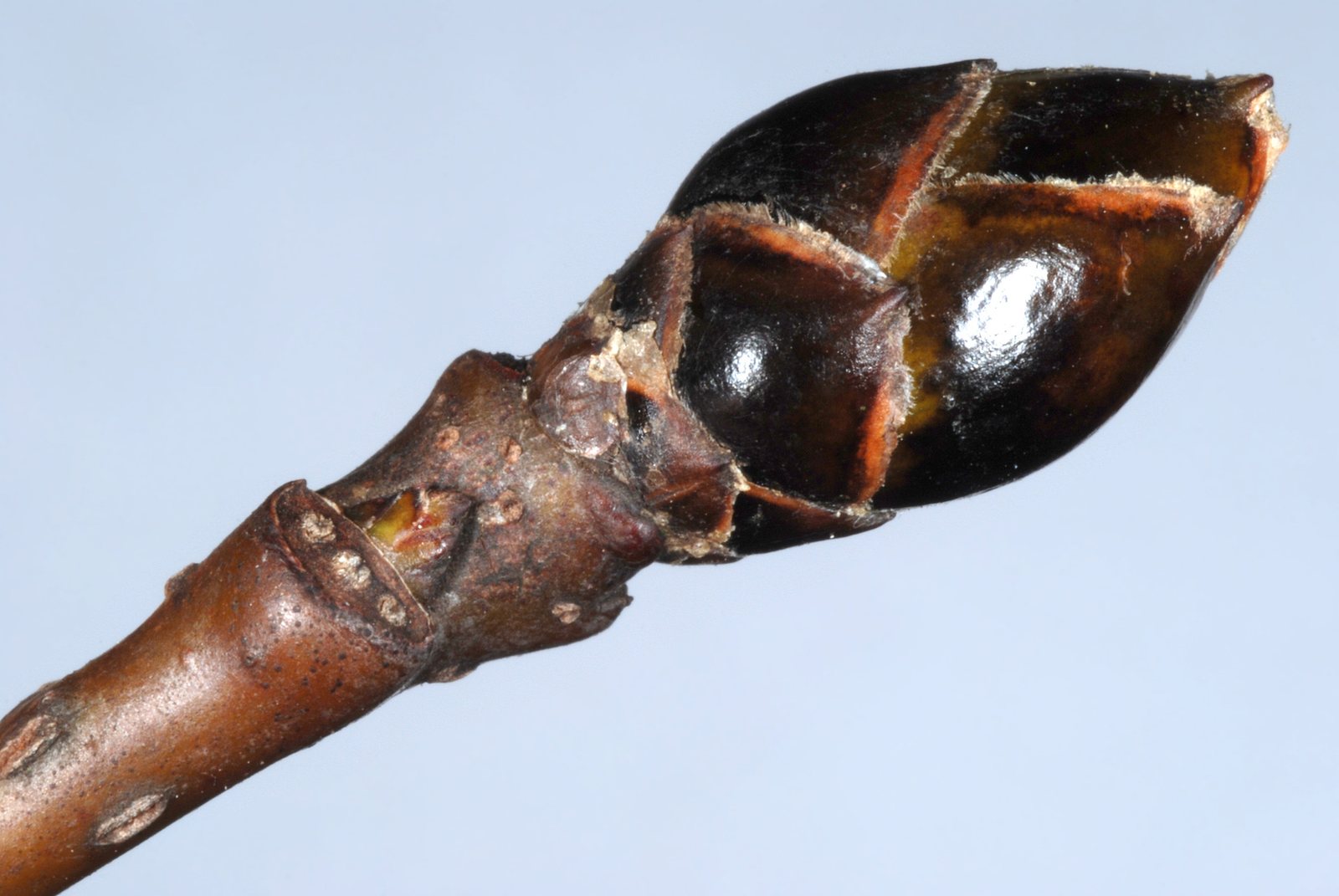
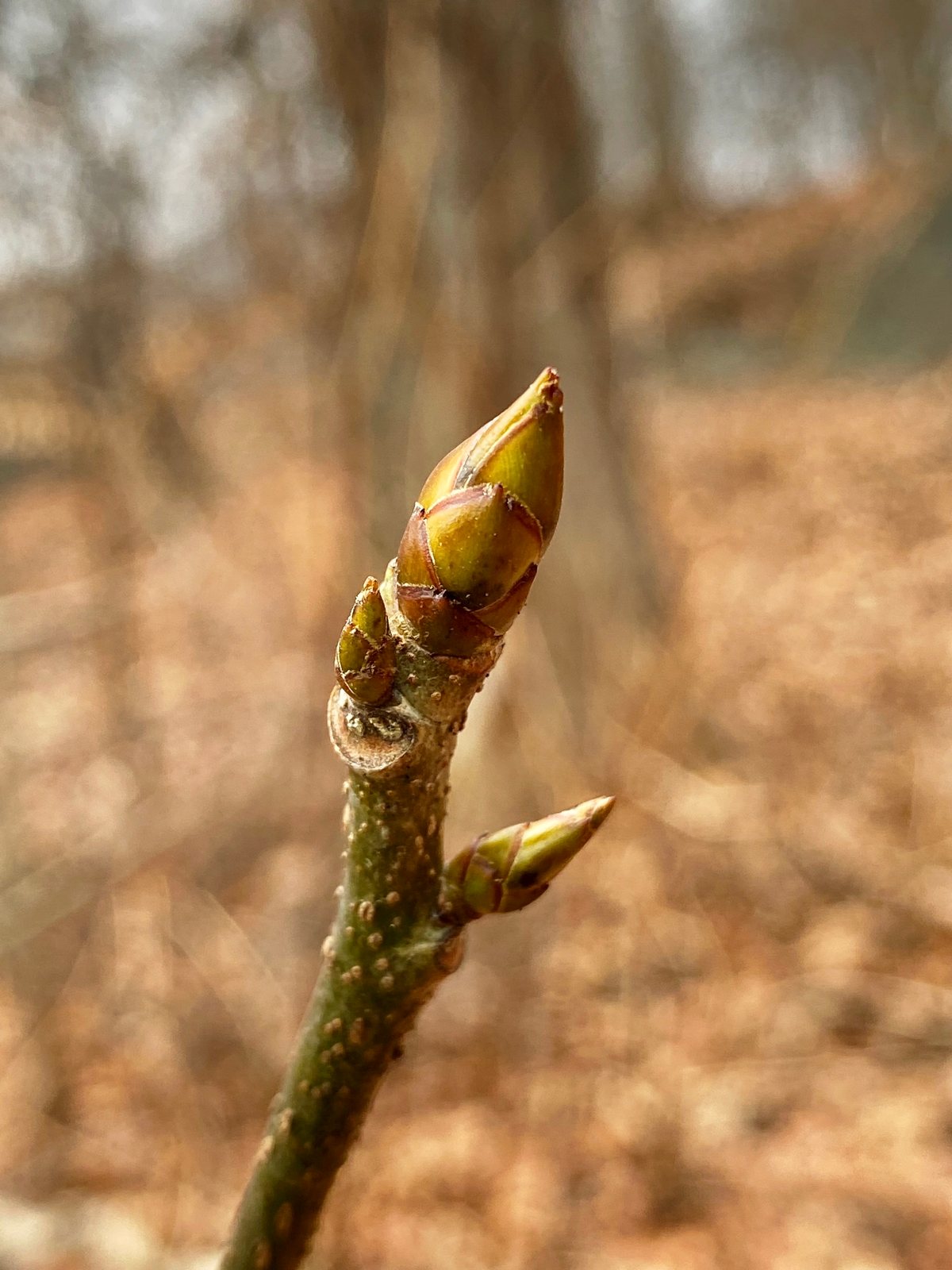
Maple leaves and buds occur in opposite pairs, while sweetgum leaves and buds alternate along the twig. Norway maple produces paired winged seeds rather than spiky balls.
Lombardy poplar (Populus nigra 'Italica')
It has a similarly narrow silhouette but triangular to diamond-shaped leaves rather than star-shaped leaves, and it does not produce woody, prickly seed balls.
The name
Liquidambar combines Latin liquidus, meaning liquid, with Arabic ambar, referring to the fragrant resin, while 'Slender Silhouette' describes the cultivar's narrow outline.
Propagation. Propagate by grafting onto Liquidambar styraciflua rootstock, usually by a specialist nursery. Seedlings do not reliably retain the cultivar's narrow shape.
Checked against open data
- Accepted botanical name
- Liquidambar styraciflua
- In the US and Canada
- Native in the lower 48 states.
- Native range
- Alabama, Arkansas, Belize, Connecticut, El Salvador, Florida, Georgia, Guatemala, Honduras, Illinois, Indiana and Kentucky.
- Measured
- Soil pH 4.5 to 7. Average height 1840 cm.
Sources: GBIF (CC BY 4.0), USDA PLANTS and Trefle (CC BY 4.0). The care and design notes are LandscapeGPT's own.
See it in your own yard.
Upload a photo of your yard and see it redesigned with plants that suit your climate, each checked against your zone.