Smoke bush 'Grace'
Cotinus 'Grace'. Family Anacardiaceae. Shrub.
Also called Cotinus 'Grace', Smoke tree 'Grace', Smokebush 'Grace'.
A large deciduous shrub or small tree grown for its broad purple-flushed leaves, airy pink flower plumes and bright autumn colour. A hybrid of European smoke bush and American smoke tree, 'Grace' needs room to develop its spreading outline unless regularly cut back for foliage.
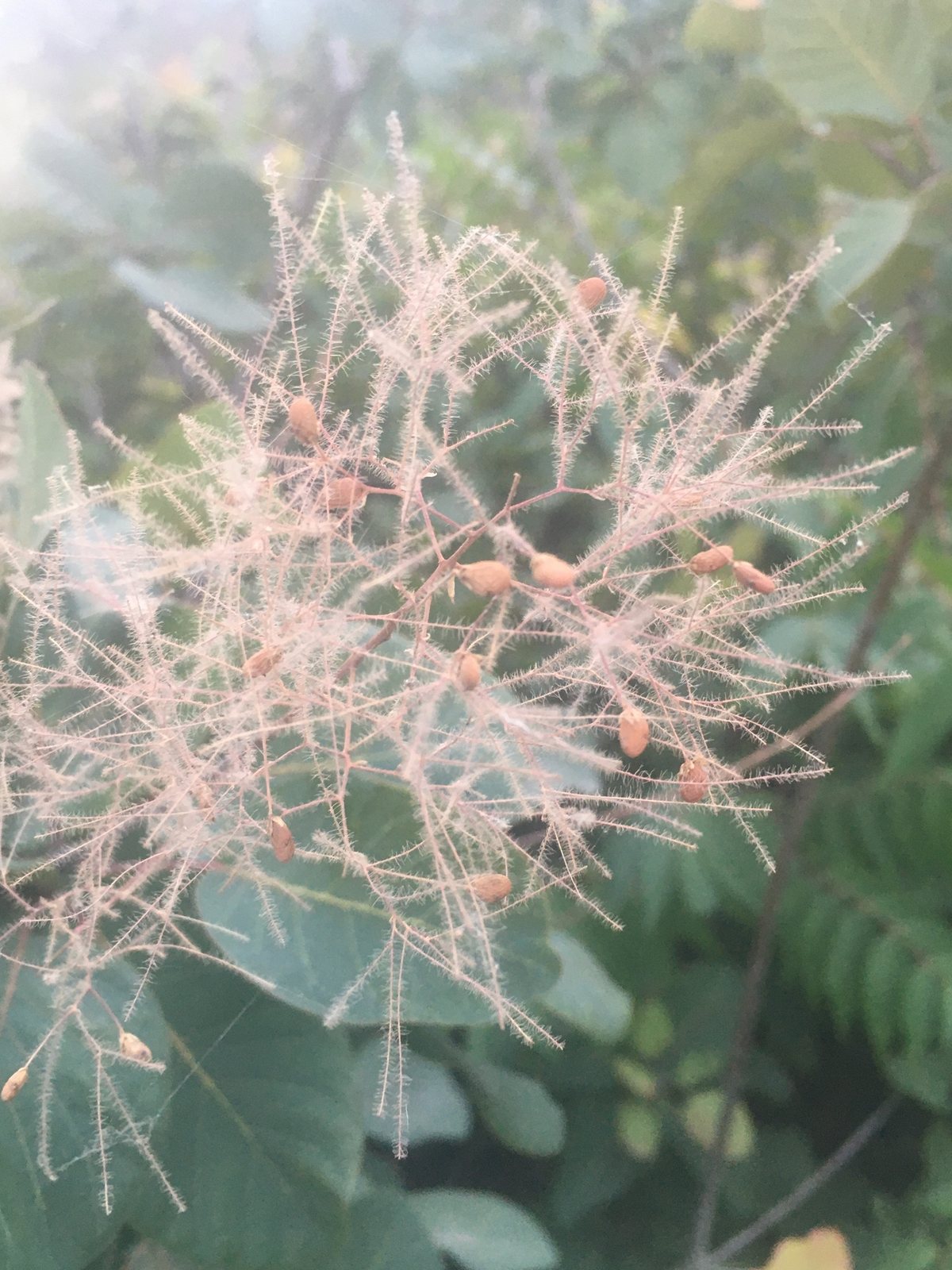
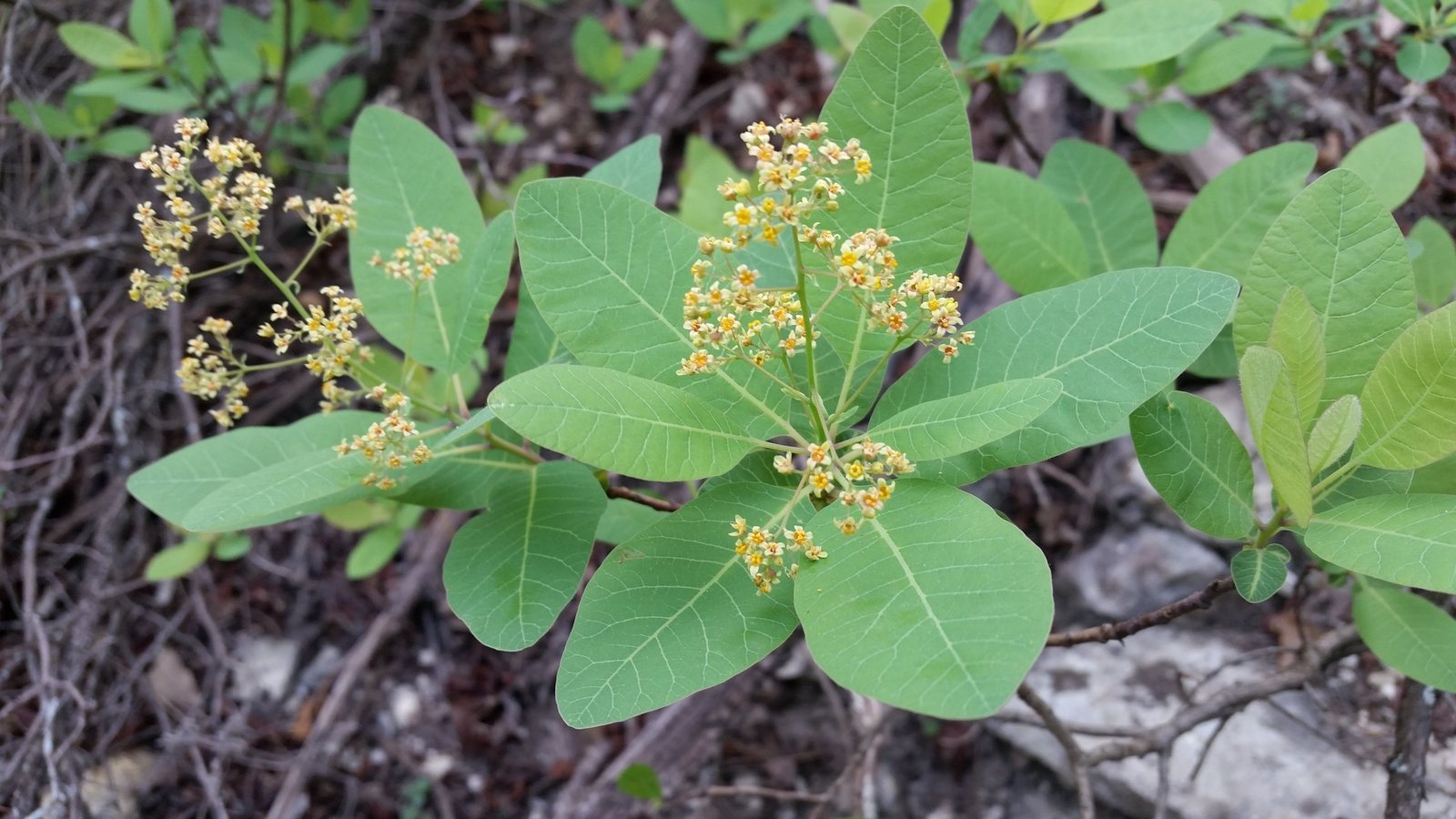
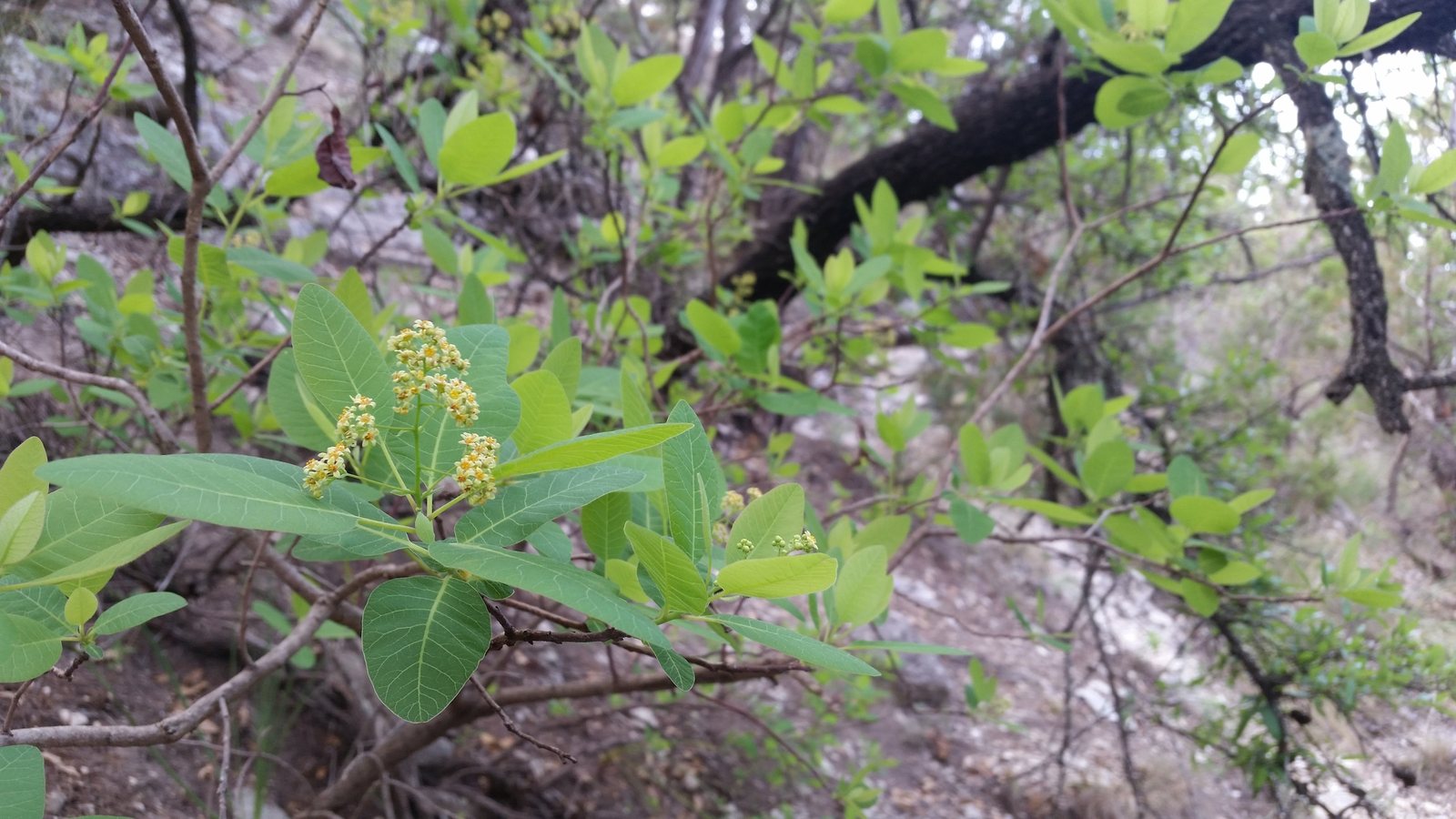
At a glance
- Sun
- Full sun for the strongest leaf colour and best flowering; tolerates light partial shade.
- Water
- Water regularly during establishment. Once established, it tolerates dry spells; water deeply during prolonged drought.
- Soil
- Well-drained soil, including chalky, sandy or loamy ground; tolerates a wide pH range. Avoid persistently wet soil.
- Height
- 12-15 ft (3.7-4.6 m)
- Spread
- 10-15 ft (3-4.6 m)
- Flowers
- Early to midsummer: tiny flowers in loose clusters develop into large, smoky pink plumes, mostly formed by fine hairs on the flower stalks.
- Foliage
- Large, rounded leaves emerge wine-red to purple, often becoming greener with age, then turn orange, scarlet and red in autumn.
- Growth
- Moderate to fast, especially after hard pruning.
- Care needed
- Low
The year at a glance
- Deer resistant
- Drought tolerant
- Wildlife
- Low allergen
| J | F | M | A | M | J | J | A | S | O | N | D | |
|---|---|---|---|---|---|---|---|---|---|---|---|---|
| Flowers | ||||||||||||
| Fruit | ||||||||||||
| Plant |
Northern hemisphere months. In Australia, shift them by six.
- Difficulty
- Easy
- Toughness
- Very tough
Will it suit your garden?
Pick your zone, country, light and whether you have pets.
Full sun is 6 or more hours of direct sun a day, part shade 3 to 6 hours, shade under 3.
How it grows
Planting day
1.6 ft (0.5 m)
After 1 year
5 ft (1.4 m)
After 2 years
8 ft (2.3 m)
After 3 years
11 ft (3.2 m)
After 5 years
14 ft (4.2 m)
full size
About 4 years to full size.
From a typical nursery size, at an average rate for this kind of plant. A rule of thumb, not a forecast.
Good to know
- Cats and dogs
- Safe
- Growth rate
- Fast
Care
Jobs through the year
- WaterApr–May, Sep, every 21 days
- Water established shrubs only during prolonged drought; young plants need regular watering for two growing seasons.
- WaterJun–Aug, every 14 days
- Water deeply during prolonged drought; skip when rainfall has moistened the root zone.
- MulchMar–Apr
- Apply 5–8 cm of organic mulch, leaving the stem bases clear.
- FeedMar–Apr
- Use a modest feed only if growth is weak and soil is poor; avoid excess nitrogen.
- PruneFeb–Mar
- Remove damaged or crossing branches; optional hard pruning produces larger leaves but usually sacrifices summer smoke plumes.
- Water deeply through the first two growing seasons whenever the root zone becomes dry.
- Apply 2-3 in (5-8 cm) of organic mulch in spring, keeping it away from the stems.
- Avoid routine heavy feeding; use a modest spring feed only if growth is weak and the soil is poor.
- Allow space for the mature crown rather than repeatedly clipping it to fit a narrow bed.
- Keep the root zone well drained, especially during winter.
Pruning. In late winter or early spring, remove dead, damaged and crossing branches; otherwise prune lightly to preserve flowering wood. For larger leaves on a smaller shrub, cut established stems back to 1-2 ft (0.3-0.6 m), accepting that this usually sacrifices that summer's smoke plumes.
Through the year
- Spring
- Plant in well-drained ground and water thoroughly; spring planting is particularly useful in colder regions.
- Late winter
- Remove damaged or crossing branches, or hard-prune an established plant if foliage rather than flowers is the priority.
- Early spring
- Renew the mulch without piling it against the stems.
- Summer
- Water young plants during dry spells and check foliage for mildew.
- Autumn
- Remove any ties that are constricting stems and check that the expanding crown has enough space.
In the garden
- Use as a specimen shrub in a lawn or broad border, where its spreading shape can develop.
- Place behind silver foliage, ornamental grasses or pale flowers to make their colours stand out.
- Grow as a loose, multi-stemmed small tree to provide light screening and autumn colour.
- Hard-prune in a mixed border for bold foliage, allowing room for vigorous new shoots.
Garden styles it suits: Architectural minimal, English country, Modern rustic, New perennial (prairie), Autumn colour and Low-maintenance.
Plant it with: Russian sage, Catmint, Feather reed grass, Coneflower, Yarrow and Lamb's ears.
Wildlife: The branching crown offers shelter and possible nesting sites for small birds. The tiny flowers can attract visiting insects, but this is primarily a foliage and structural plant rather than a major wildlife food source.
Problems to watch for
- Verticillium wilt can cause sudden branch wilt and dieback. Remove affected wood; severely affected plants may need removal, and susceptible shrubs should not be replanted in the same soil.
- Powdery mildew may coat leaves in dry conditions with poor air circulation. Give the crown space, water the soil during drought and avoid excessive nitrogen feeding.
- Weak purple colouring usually reflects shade or normal summer greening. Choose a sunny position; even healthy plants may become greener as leaves mature.
- Few or no smoke plumes often follow hard pruning. Retain the older framework and prune lightly if flowering is important.
Safety
Not known to be toxic to cats, dogs or horses, although information specifically for this hybrid is limited. Sap from cut stems and contact with foliage can irritate the skin of sensitive people; wear gloves when pruning and do not eat any part.
Easily confused with
Royal Purple smoke bush (Cotinus coggygria 'Royal Purple')
Usually has smaller, more consistently dark purple leaves and a less vigorous habit; 'Grace' has especially large leaves that often become greener in summer.
American smoke tree (Cotinus obovatus)
Usually has green summer leaves and a more tree-like habit, with excellent autumn colour but without the purple spring foliage typical of 'Grace'.
Purple-leaved Japanese barberry (Berberis thunbergii)
Has much smaller leaves, sharp spines and small yellow flowers rather than large smoky plumes.
The name
The common name smoke bush refers to the fine, hairy flower stalks that make the summer plumes look like clouds of smoke.
Propagation. Take softwood cuttings in late spring or early summer under humid conditions, or try layering a low branch. Rooting can be difficult; seed will not reliably produce plants identical to 'Grace'.
Checked against open data
- Accepted botanical name
- Cotinus
Sources: GBIF (CC BY 4.0). The care and design notes are LandscapeGPT's own.
See it in your own yard.
Upload a photo of your yard and see it redesigned with plants that suit your climate, each checked against your zone.