Snow Fountains weeping cherry
Prunus 'Snofozam'. Family Rosaceae. Tree.
Also called Snow Fountain cherry, Prunus 'Snofozam'.
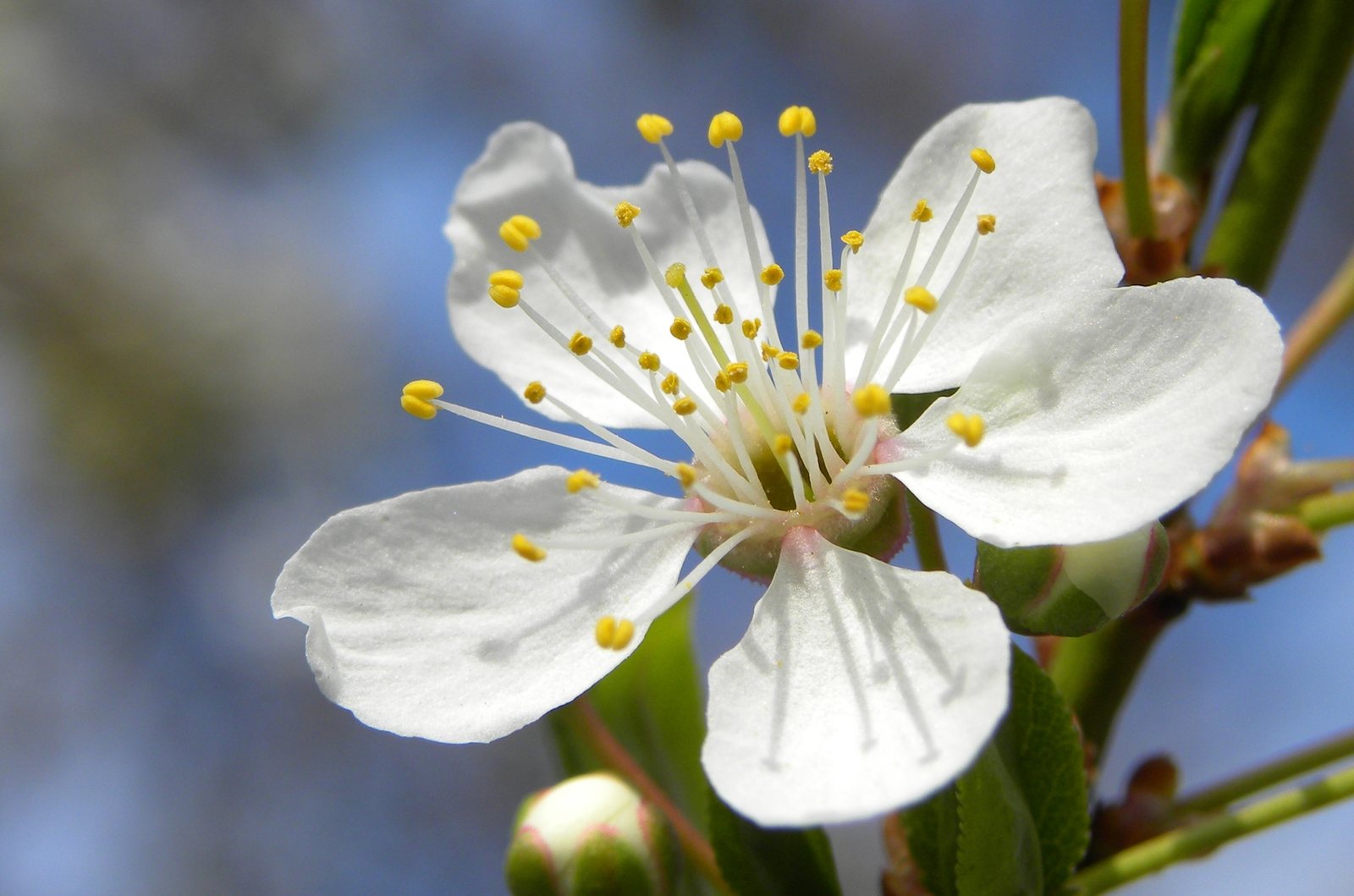
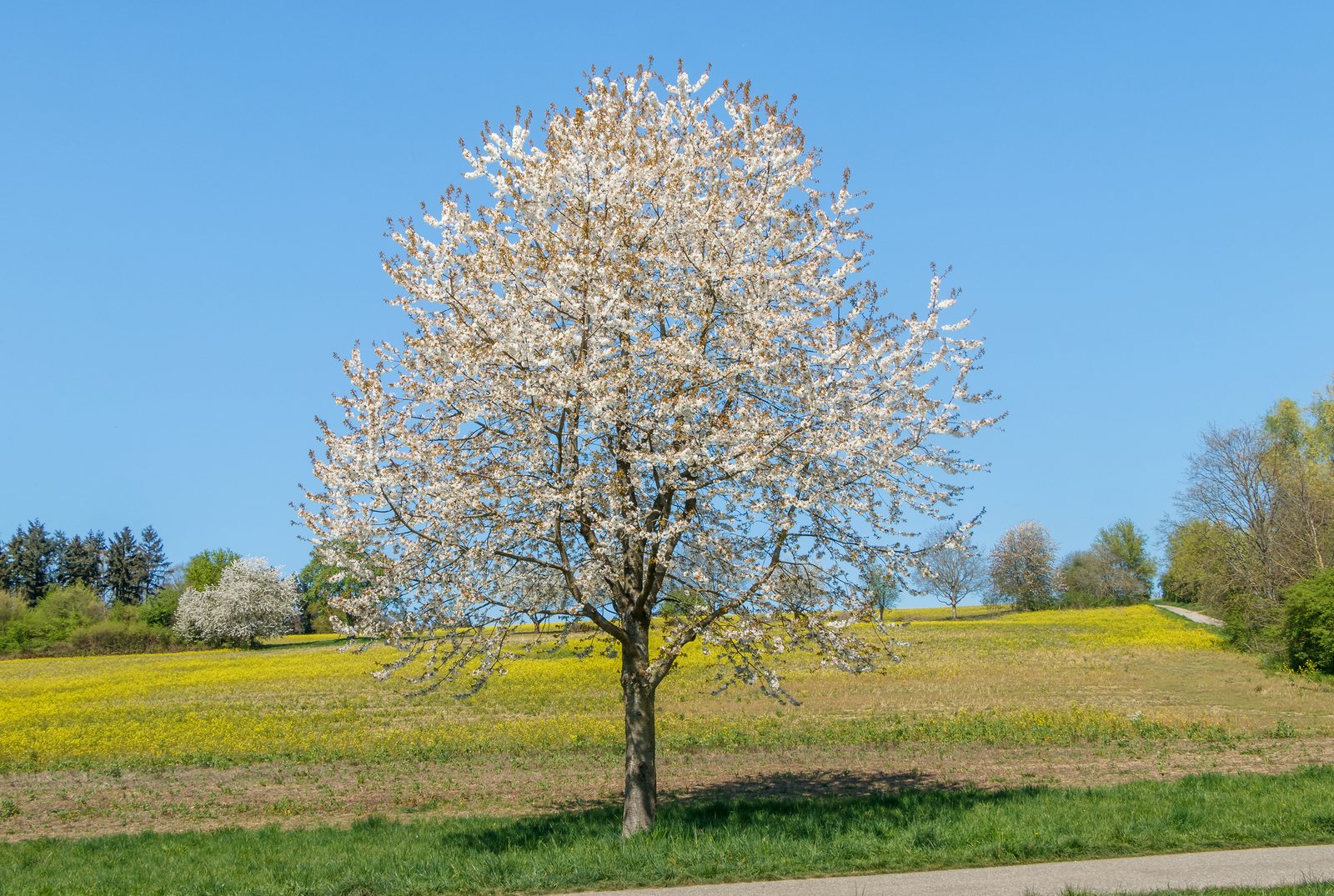
A small, deciduous ornamental cherry with strongly weeping branches covered in white flowers before the leaves open in spring. Gardeners grow it as a specimen tree for its cascading shape, spring blossom and yellow to orange autumn foliage; its eventual height depends partly on how it was grafted and trained.
At a glance
- Sun
- Full sun for the best flowering; tolerates light partial shade.
- Water
- Keep evenly moist while establishing. Once established, water deeply during prolonged dry spells; avoid constantly wet soil.
- Soil
- Fertile, well-drained loam is ideal. Tolerates clay or sandy soil if drainage and moisture retention are adequate, and grows in mildly acidic to mildly alkaline conditions.
- Height
- 8-15 ft (2.4-4.6 m), depending on graft height and training
- Spread
- 6-12 ft (1.8-3.7 m)
- Flowers
- Early to mid-spring; single white flowers on bare, arching and trailing branches.
- Foliage
- Pointed, toothed green leaves turn yellow, gold or orange in autumn.
- Growth
- Moderate
- Care needed
- Medium
The year at a glance
- Pollinators
- Low allergen
| J | F | M | A | M | J | J | A | S | O | N | D | |
|---|---|---|---|---|---|---|---|---|---|---|---|---|
| Flowers | ||||||||||||
| Plant |
Northern hemisphere months. In Australia, shift them by six.
- Difficulty
- Moderate
- Toughness
- Fairly tough
Will it suit your garden?
Pick your zone, country, light and whether you have pets.
Full sun is 6 or more hours of direct sun a day, part shade 3 to 6 hours, shade under 3.
How it grows
Planting day
7 ft (2 m)
After 1 year
7 ft (2.1 m)
After 2 years
7 ft (2.2 m)
After 3 years
7 ft (2.2 m)
After 5 years
8 ft (2.4 m)
About 20 years to full size.
From a typical nursery size, at an average rate for this kind of plant. A rule of thumb, not a forecast.
Good to know
- Cats and dogs
- Toxic
- Growth rate
- Moderate
Care
Jobs through the year
- WaterApr–May, Sep–Oct, every 14 days
- Water established trees if soil is dry; new trees need more frequent watering for two seasons.
- WaterJun–Aug, every 7 days
- During prolonged dry spells, water deeply without leaving the soil constantly wet.
- MulchMar–Apr
- Maintain 5–8 cm of organic mulch, keeping the trunk and graft clear.
- FeedMar–Apr
- Feed lightly only if growth is weak or a soil test identifies a deficiency.
- PruneMay–Sep, every 28 days
- Remove rootstock suckers and shoots below the graft promptly.
- PruneJun–Aug
- In dry weather remove damaged or crossing wood and obstructive tips; retain the weeping framework.
- ProtectOct–Nov
- Collect diseased fallen leaves and any shrivelled fruit to reduce disease carryover.
- ProtectJan–Feb
- Check young-tree ties and guards for rubbing or constriction.
- Plant with the root flare at soil level and the graft union well above the soil.
- Water deeply through the first two growing seasons whenever the root zone begins to dry.
- Apply 2-3 in (5-8 cm) of organic mulch, keeping it clear of the trunk.
- Feed lightly in spring only if growth is weak or a soil test indicates a deficiency; avoid heavy nitrogen feeding.
- Stake only if the root ball is unstable, and remove supports once the tree is firmly rooted.
- Remove shoots from the rootstock or below the graft promptly, and keep lawn equipment away from the bark.
Pruning. Prune sparingly in dry weather in summer to reduce the risk of silver leaf and bacterial canker. Remove dead, damaged or crossing branches and shorten only those trailing shoots that obstruct paths; do not shear the crown or remove its natural weeping framework.
Through the year
- Spring
- Plant container-grown trees when the soil is workable, water thoroughly and check that the graft remains above soil level.
- Early spring
- Refresh mulch and feed lightly only if needed.
- Late spring
- Check young shoots for aphids and remove any shoots growing below the graft.
- Summer
- Carry out light pruning during a dry spell and water deeply during extended drought.
- Autumn
- Collect fallen diseased leaves and check that mulch is not touching the trunk.
- Winter
- Check ties and guards for rubbing or constriction; avoid routine dormant-season pruning.
In the garden
- Use as a single specimen in a small lawn, leaving room for the branches to reach their natural width.
- Place beside a patio or courtyard where the spring flowers and weeping outline can be seen close up, without blocking circulation.
- Underplant with spring bulbs and low perennials for a layered display before the canopy fills out.
- Use near a pond or in a Japanese-inspired garden, but plant above waterlogged ground.
Garden styles it suits: Japanese, Modern courtyard, Cottage garden, Romantic rose garden, White garden and Small-space.
Plant it with: Snowdrops, Crocuses, Daffodils, Hellebores, Epimediums and Hardy geraniums.
Wildlife: The single flowers provide pollen and nectar for early bees. Occasional small fruits may be eaten by birds, but this is primarily an ornamental tree rather than a dependable fruit source.
Problems to watch for
- Bacterial canker or silver leaf: watch for sunken bark, dieback or persistently silvered leaves; prune affected wood in dry summer weather, disinfect tools and seek an arborist's advice if the trunk is involved.
- Brown rot blossom blight: remove blighted flower clusters and dead twig tips in dry weather, collect any shrivelled fruit and keep the crown open without heavy pruning.
- Aphids: inspect curled young leaves, rinse small colonies off with water and encourage ladybirds and other predators.
- Root rot and poor establishment in wet soil: correct drainage before planting and avoid overwatering; do not bury the root flare.
Safety
Leaves, stems, bark and seeds contain cyanogenic compounds and are toxic if eaten by cats, dogs, horses or people. Wilted leaves and chewed or crushed seeds are particularly hazardous; substantial ingestion can cause severe, potentially fatal poisoning. Do not allow livestock access to fallen foliage or prunings, and seek urgent veterinary or medical advice after suspected ingestion.
Easily confused with
Pink weeping cherry (Prunus pendula 'Pendula Rosea')
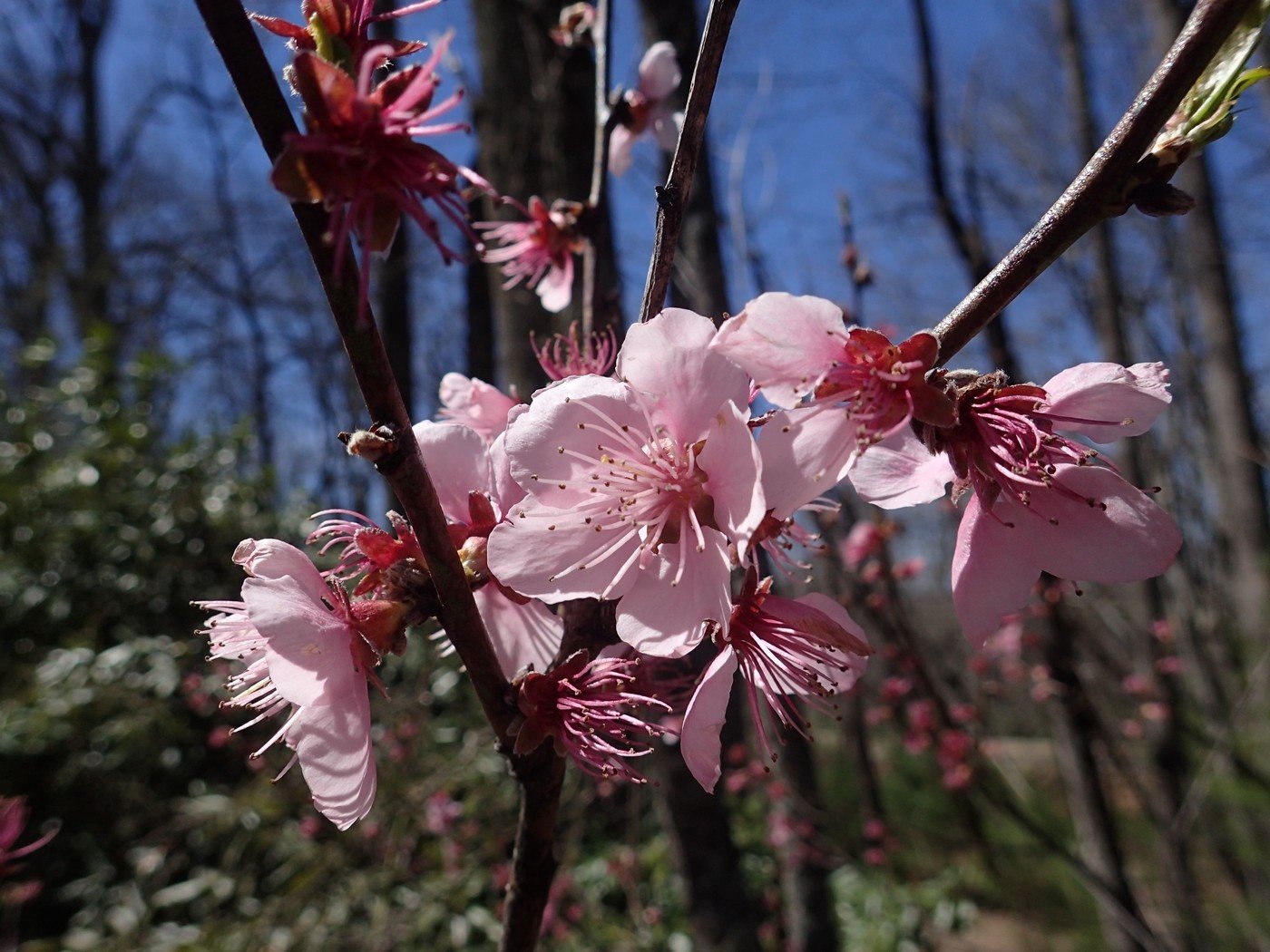
Has single pink flowers rather than white and generally develops into a larger tree.
Cheal's weeping cherry (Prunus 'Kiku-shidare-zakura')
Has densely double, deep pink flowers and bronze young foliage, unlike the single white flowers and green foliage of Snow Fountains.
The name
Snow Fountains refers to the fountain-like cascade of white blossom, while Prunus is the Latin name for plum trees and their relatives.
Propagation. Usually propagated commercially by budding or grafting onto a compatible cherry rootstock. Seedlings will not reliably match 'Snofozam'; propagation from cuttings requires specialist conditions and can be difficult.
Checked against open data
- Accepted botanical name
- Prunus
Sources: GBIF (CC BY 4.0). The care and design notes are LandscapeGPT's own.
See it in your own yard.
Upload a photo of your yard and see it redesigned with plants that suit your climate, each checked against your zone.