Snow Queen oakleaf hydrangea
Hydrangea quercifolia 'Snow Queen'. Family Hydrangeaceae. Shrub.
Also called Snow Queen hydrangea, Hydrangea quercifolia 'Flemygea'.
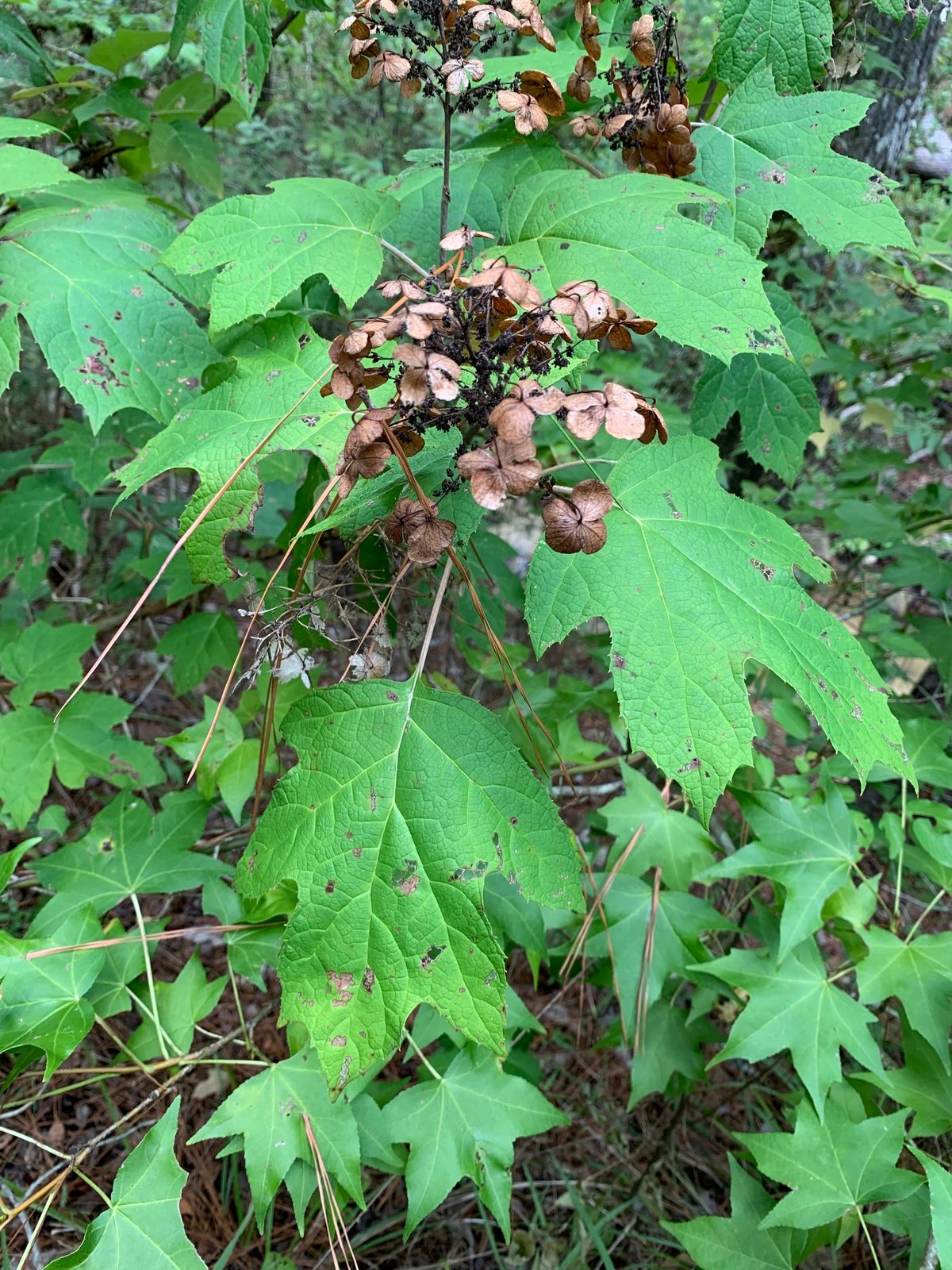
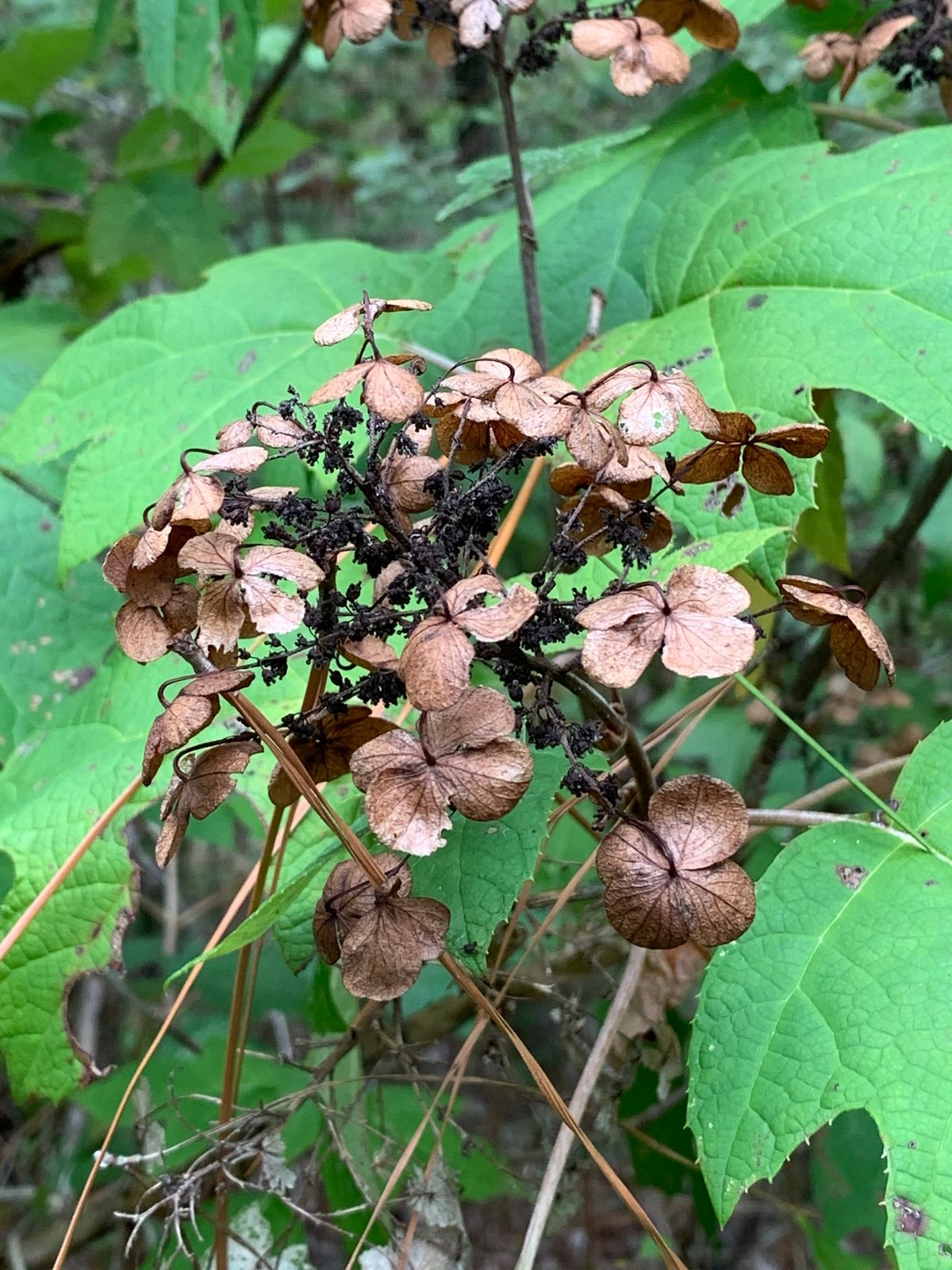
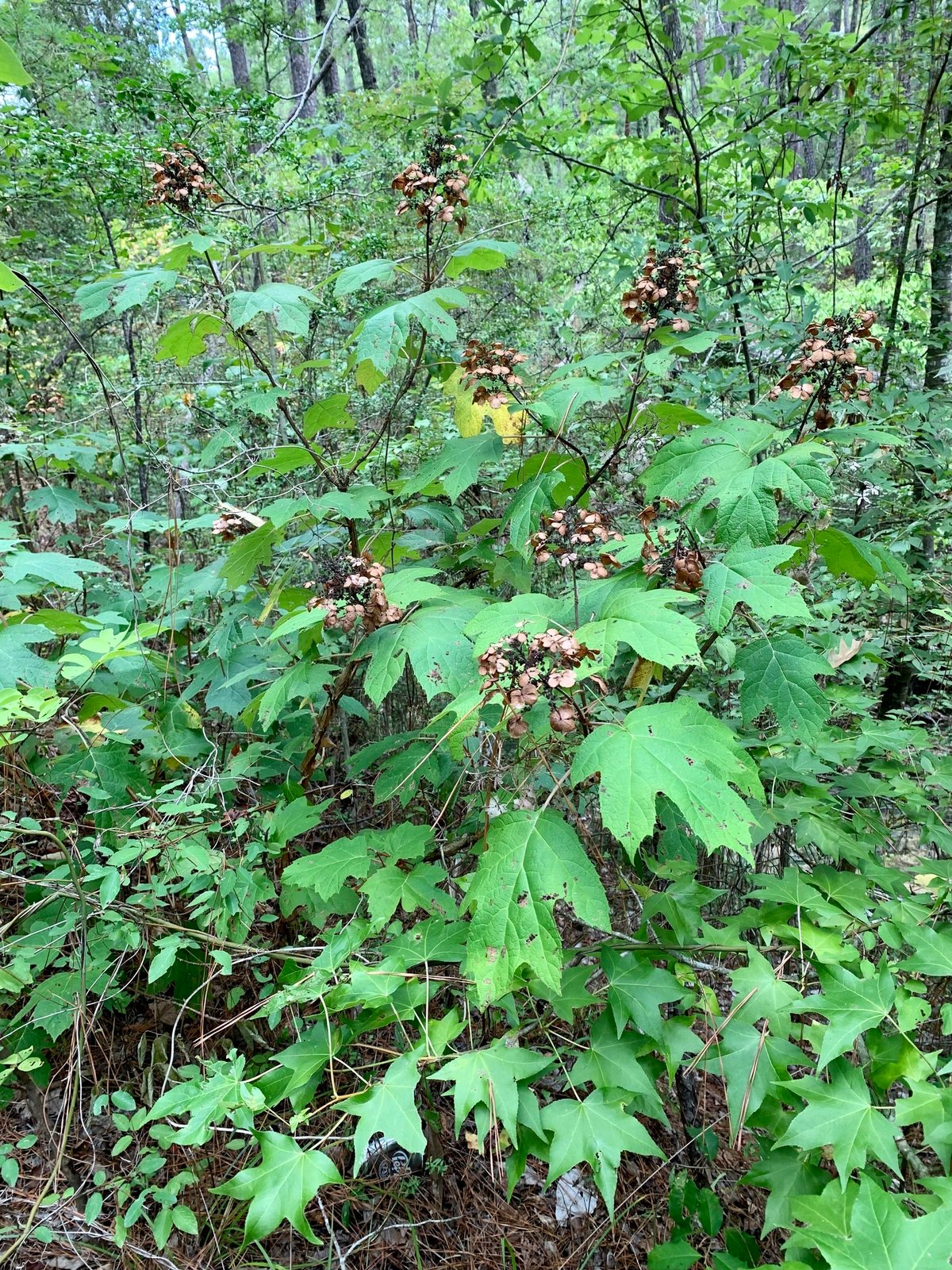
This deciduous cultivar of the southeastern US native oakleaf hydrangea has upright cones of white flowers, large lobed leaves and burgundy autumn colour. Gardeners grow it for its long season of interest, including fading pink flower heads and peeling bark on older stems.
At a glance
- Sun
- Partial shade, preferably with morning sun and afternoon shade in hot climates. Full sun is suitable in cooler areas if the soil stays moist.
- Water
- Keep evenly moist during establishment and water established plants during prolonged dry spells. Avoid waterlogged ground.
- Soil
- Moist, well-drained soil enriched with organic matter; acidic to neutral soil is ideal. It tolerates clay if drainage is good.
- Height
- 4-6 ft (1.2-1.8 m)
- Spread
- 6-8 ft (1.8-2.4 m)
- Flowers
- Early to midsummer; upright, cone-shaped clusters open white, then age pink and eventually brown. Soil pH does not turn the flowers blue.
- Foliage
- Large, deeply lobed, oak-like green leaves turn red, burgundy or purple in autumn; colour varies with climate and exposure.
- Growth
- Moderate
- Care needed
- Low
The year at a glance
- Pollinators
- Heat tolerant
- Wildlife
- Low allergen
| J | F | M | A | M | J | J | A | S | O | N | D | |
|---|---|---|---|---|---|---|---|---|---|---|---|---|
| Flowers | ||||||||||||
| Plant |
Northern hemisphere months. In Australia, shift them by six.
- Difficulty
- Easy
- Toughness
- Fairly tough
Will it suit your garden?
Pick your zone, country, light and whether you have pets.
Full sun is 6 or more hours of direct sun a day, part shade 3 to 6 hours, shade under 3.
How it grows
Planting day
1.6 ft (0.5 m)
After 1 year
2.3 ft (0.7 m)
After 2 years
3 ft (0.9 m)
After 3 years
4 ft (1.1 m)
After 5 years
5 ft (1.5 m)
full size
About 5 years to full size.
From a typical nursery size, at an average rate for this kind of plant. A rule of thumb, not a forecast.
Good to know
- Cats and dogs
- Toxic
- Native to
- the US
- Growth rate
- Moderate
Care
Jobs through the year
- WaterApr–May, Sep–Oct, every 14 days
- Water established shrubs if the root zone is dry; keep young plants evenly moist for two growing seasons.
- WaterJun–Aug, every 7 days
- Check established shrubs and water deeply during dry spells, avoiding waterlogged soil.
- MulchMar–Apr
- Top-dress with compost and renew organic mulch, leaving stem bases uncovered.
- FeedApr
- Use a modest shrub feed only if growth is weak despite compost and suitable moisture.
- PruneApr
- Once buds open, remove only confirmed dead wood.
- PruneJul–Aug
- If needed, reduce selected stems immediately after flowering; retain old wood carrying next year's buds.
- ProtectApr–May
- Cover emerging growth with fleece when late frost is forecast, removing it after the cold passes.
- Water deeply through the first two growing seasons whenever the root zone begins to dry.
- Apply 2-3 in (5-8 cm) of organic mulch, keeping it clear of the stems.
- Top-dress with compost in spring; use a modest amount of shrub fertiliser only if growth is weak.
- Shelter from drying winds and strong afternoon sun in hot regions.
- Remove unwanted rooted suckers if the shrub begins spreading beyond its allotted space.
Pruning. Prune only when necessary, immediately after flowering, shortening selected stems or removing a few old stems at ground level. It flowers on old wood, so autumn or spring pruning can remove the next crop of flowers; remove confirmed dead wood once growth resumes.
Through the year
- Early spring
- Check for winter damage as buds open, removing only clearly dead stems.
- Spring
- Top-dress with compost and renew mulch without covering the stem bases.
- Late spring
- Protect emerging growth from forecast late frosts, especially in colder gardens.
- Summer
- Water deeply during dry spells, particularly while the shrub is establishing.
- After flowering
- Make any necessary size-reduction cuts promptly, before next year's flower buds develop.
- Autumn
- Plant in mild climates while soil is warm, and leave dried flower heads for winter structure if desired.
In the garden
- Place at a woodland edge with ferns and hostas, where the broad leaves provide a bold contrast.
- Use as a specimen in a generous mixed border, allowing room for its spreading outline.
- Plant in loose groups beneath high-canopied deciduous trees for summer flowers and autumn colour.
- Combine with white-flowered perennials in a partly shaded white garden.
Garden styles it suits: Woodland, Traditional, Southern, White garden, Autumn colour and Low-maintenance.
Plant it with: Hosta, Christmas fern, Japanese forest grass, Foamflower, Virginia sweetspire and Solomon's seal.
Wildlife: The small fertile flowers within the showy clusters can attract bees and other insects. The branching growth provides cover for birds, but deer may browse it.
Problems to watch for
- Few or no flowers: winter cold, late frost or poorly timed pruning may destroy flower buds. Choose a sheltered position and prune only just after flowering.
- Leaf scorch or wilting: hot afternoon sun and dry soil can damage the large leaves. Mulch, water deeply and provide afternoon shade.
- Root rot: persistently wet soil can kill roots. Improve drainage or move the shrub to a better-drained position.
- Leaf spots or powdery mildew: allow good air circulation, water at soil level and remove fallen diseased leaves.
Safety
Toxic if eaten by cats, dogs, horses or people. All parts, particularly leaves and flower buds, contain cyanogenic compounds; ingestion usually causes digestive upset, while large amounts can cause more serious poisoning. Keep children and animals from chewing it and seek medical or veterinary advice after ingestion.
Easily confused with
Snowflake oakleaf hydrangea (Hydrangea quercifolia 'Brido')
Snowflake has layered, double showy florets and often more drooping flower heads; Snow Queen has single showy florets in more upright clusters.
Panicle hydrangea (Hydrangea paniculata)
It also has cone-shaped flower heads, but its leaves are oval and unlobed rather than oak-shaped.
Bigleaf hydrangea (Hydrangea macrophylla)
Its leaves are broad and toothed but not deeply lobed, and its flowers usually form rounded mopheads or flatter lacecaps.
The name
The species name quercifolia means oak-leaved, referring to the deeply lobed leaves that also give oakleaf hydrangea its common name.
Propagation. Root softwood cuttings in late spring or early summer, or layer a low branch. Seedlings will not reliably retain Snow Queen's characteristics.
Checked against open data
- Accepted botanical name
- Hydrangea quercifolia
- In the US and Canada
- Native in the lower 48 states.
- Native range
- Alabama, Florida, Georgia, Louisiana, Mississippi, South Carolina and Tennessee.
- Measured
- Soil pH 4.6 to 7.5. Average height 183 cm.
Sources: GBIF (CC BY 4.0), USDA PLANTS and Trefle (CC BY 4.0). The care and design notes are LandscapeGPT's own.
See it in your own yard.
Upload a photo of your yard and see it redesigned with plants that suit your climate, each checked against your zone.