Soft shield fern
Polystichum setiferum. Family Dryopteridaceae. Fern.
Also called Bristle fern.
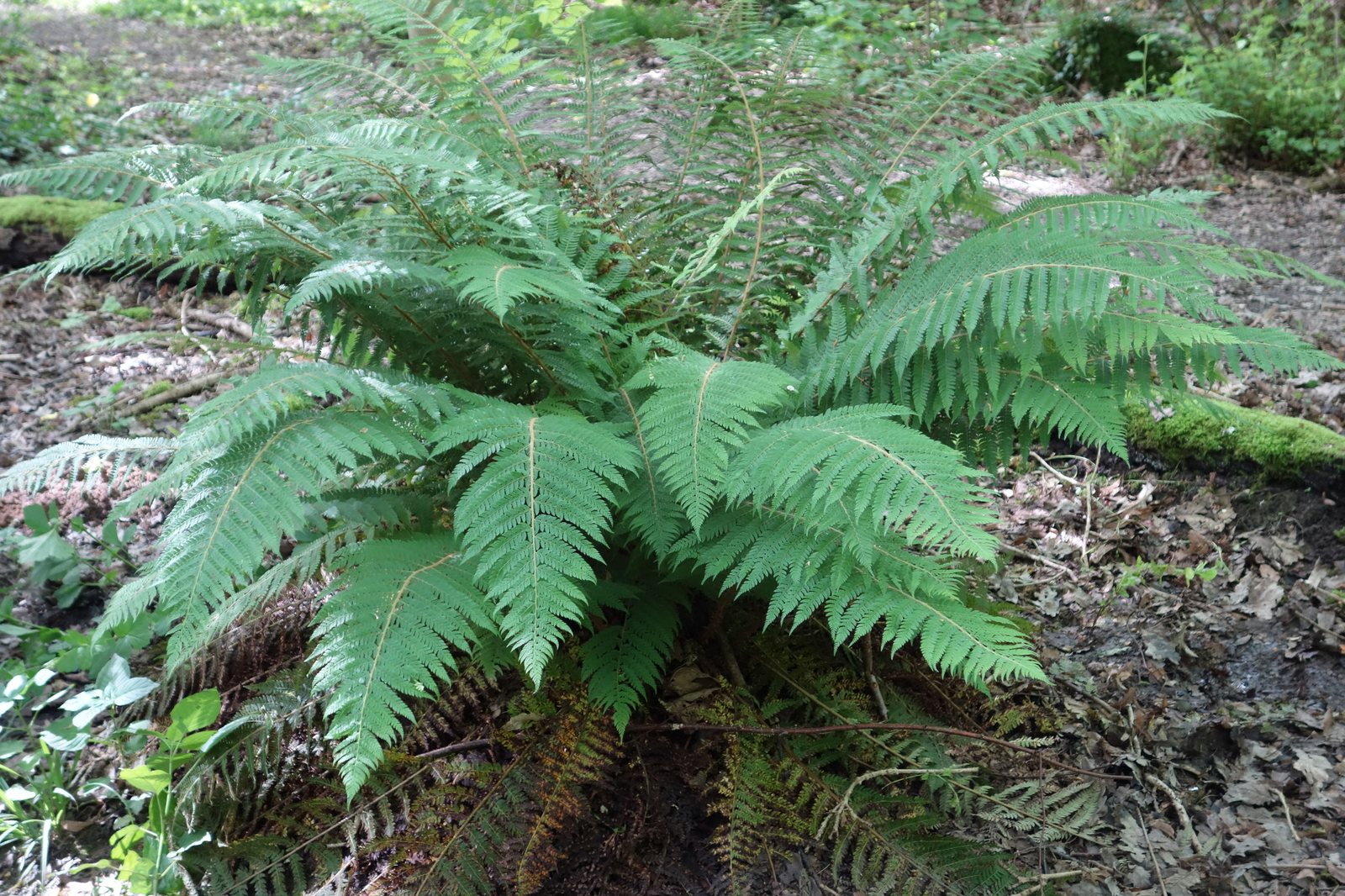
Soft shield fern forms a broad clump of finely divided, arching fronds, giving shaded borders a soft, layered texture. It is usually evergreen in sheltered gardens, though hard frost can damage the foliage.
At a glance
- Sun
- Partial to full shade; avoid hot afternoon sun and exposed, drying sites.
- Water
- Keep evenly moist while establishing. Established plants tolerate occasional dry spells, but prolonged drought causes browning and poor growth.
- Soil
- Humus-rich, well-drained soil, from slightly acidic to alkaline; avoid waterlogged ground.
- Height
- 2-3 ft (0.6-0.9 m)
- Spread
- 2-4 ft (0.6-1.2 m)
- Foliage
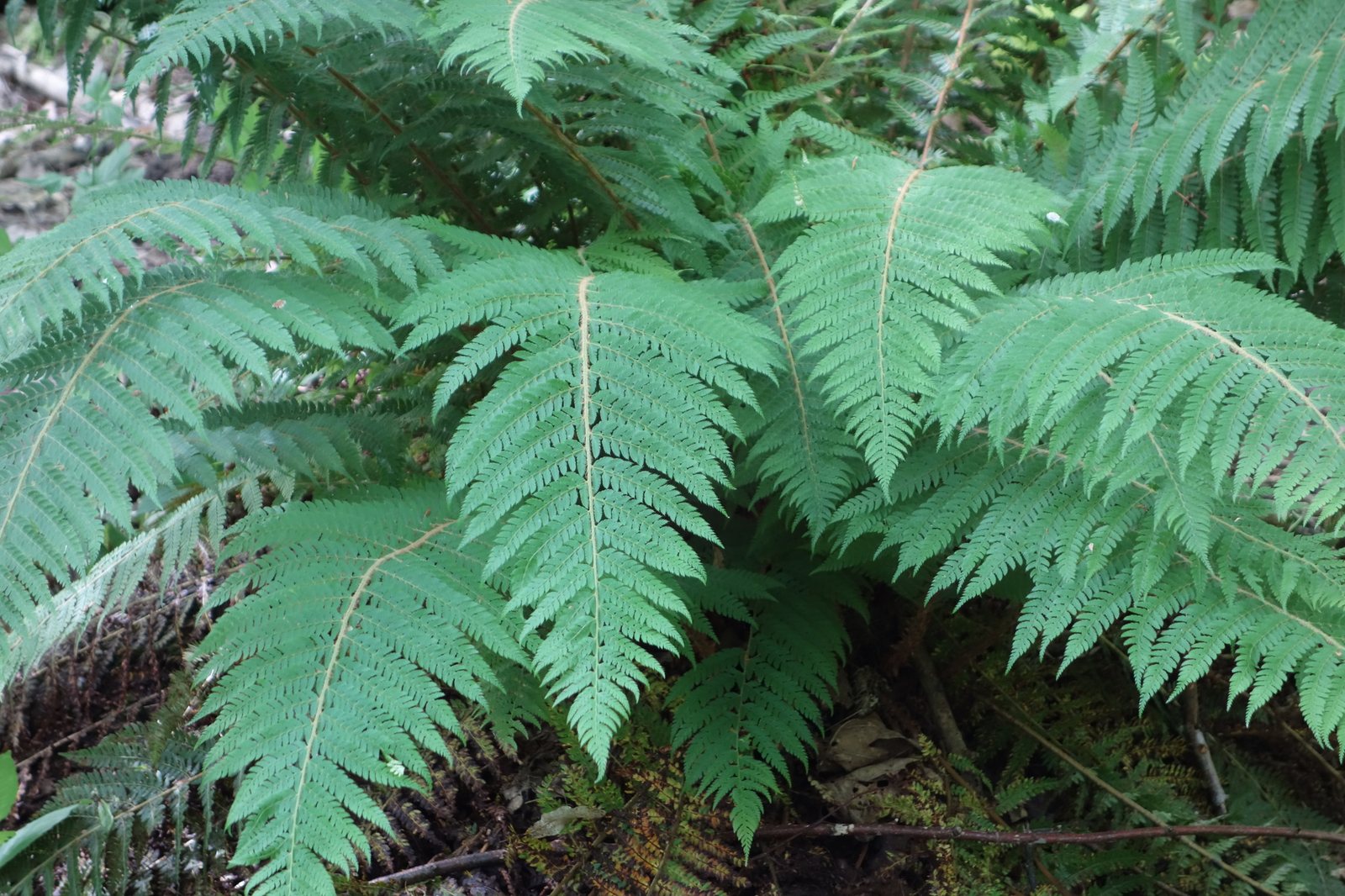
- Evergreen. Soft-textured, finely divided green fronds with bristle-tipped leaflets and brown scales on the stalks. Fronds arch outward from a central crown.
- Growth
- Moderate
- Care needed
- Low
The year at a glance
- Deer resistant
- Wildlife
- Low allergen
| J | F | M | A | M | J | J | A | S | O | N | D | |
|---|---|---|---|---|---|---|---|---|---|---|---|---|
| Plant |
Northern hemisphere months. In Australia, shift them by six.
- Difficulty
- Easy
- Toughness
- Fairly tough
Will it suit your garden?
Pick your zone, country, light and whether you have pets.
Full sun is 6 or more hours of direct sun a day, part shade 3 to 6 hours, shade under 3.
How it grows
Planting day
1 ft (0.3 m)
After 1 year
1.5 ft (0.45 m)
After 2 years
2 ft (0.6 m)
After 3 years
2.5 ft (0.75 m)
full size
About 3 years to full size.
From a typical nursery size, at an average rate for this kind of plant. A rule of thumb, not a forecast.
Good to know
- Cats and dogs
- Safe
- Native to
- the UK
- Growth rate
- Moderate
Care
Jobs through the year
- WaterApr–May, Sep–Oct, every 14 days
- Water established clumps if soil dries; keep newly planted ferns evenly moist.
- WaterJun–Aug, every 7 days
- Water deeply during dry spells, avoiding both prolonged drought and saturated soil.
- PruneFeb–Mar
- Cut damaged or collapsed fronds at the base before new croziers unfurl.
- MulchMar–Apr
- Apply leaf mould or well-rotted compost around the plant without covering its crown.
- DivideMar–Apr
- Divide mature clumps only when more plants are wanted; replant crowns at soil level.
- ProtectOct–Nov
- Clear thick mats of fallen leaves from the crown, retaining light mulch around it.
- Plant with the crown at soil level in a sheltered, shaded position.
- Water deeply during the first growing season and during prolonged dry weather.
- Apply leaf mould or well-rotted compost each spring, keeping it clear of the crown.
- Feed lightly in spring only if growth is weak; rich soil usually needs no additional fertiliser.
- Divide mature clumps in spring only when you need more plants.
Pruning. In late winter or early spring, cut damaged and collapsed fronds close to the base before new croziers unfurl. Leave healthy green fronds unless a complete tidy-up is needed, and avoid cutting emerging growth.
Through the year
- Late winter
- Remove frost-damaged or flattened fronds before new growth begins.
- Spring
- Plant or divide clumps, keeping crowns at soil level.
- Mid-spring
- Mulch with leaf mould or compost without burying the crown.
- Summer
- Check soil moisture during dry spells and water thoroughly when needed.
- Autumn
- Remove thick mats of fallen leaves from the crown, but retain a light leaf mulch around the plant.
- Winter
- Leave sound fronds standing for cover and winter structure.
In the garden
- Plant beneath deciduous trees where filtered light and leaf-enriched soil suit its woodland habit.
- Combine with hostas and lungwort for contrasting leaf shapes in a shaded border.
- Repeat clumps along a shaded path to create a soft, continuous edge.
- Use beside mossy rocks or shaded steps for year-round green structure.
Garden styles it suits: Woodland, English country, Japanese, Green on green, Secret garden and Low-maintenance.
Plant it with: Hostas, Lungwort, Hellebores, Epimediums, Siberian bugloss and Snowdrops.
Wildlife: Dense clumps provide shelter for small invertebrates and other ground-dwelling wildlife. It has no flowers, nectar or pollen.
Problems to watch for
- Brown, crisp fronds usually indicate drought, hot sun or drying wind; water deeply, mulch and provide better shelter.
- Crown rot can develop in waterlogged soil or with a buried crown; improve drainage and keep mulch away from the growing point.
- Slugs and snails may damage emerging fronds; inspect during damp evenings and use wildlife-conscious controls where needed.
- Winter scorch can leave foliage flattened or brown; remove damaged fronds before spring growth and shelter plants from cold winds.
Safety
Not known to be toxic to people, cats, dogs or horses. No part is recognised as poisonous, but species-specific toxicity information is limited; do not treat the fronds or young shoots as edible.
Easily confused with
Hard shield fern (Polystichum aculeatum)
Its fronds are firmer, stiffer and usually glossier, with a blade that narrows more noticeably toward the base. Soft shield fern has softer fronds and more distinctly stalked small leaflets.
Western sword fern (Polystichum munitum)
Its fronds have a single row of undivided leaflets along each side of the stalk; soft shield fern has leaflets divided again into smaller segments.
Male fern (Dryopteris filix-mas)
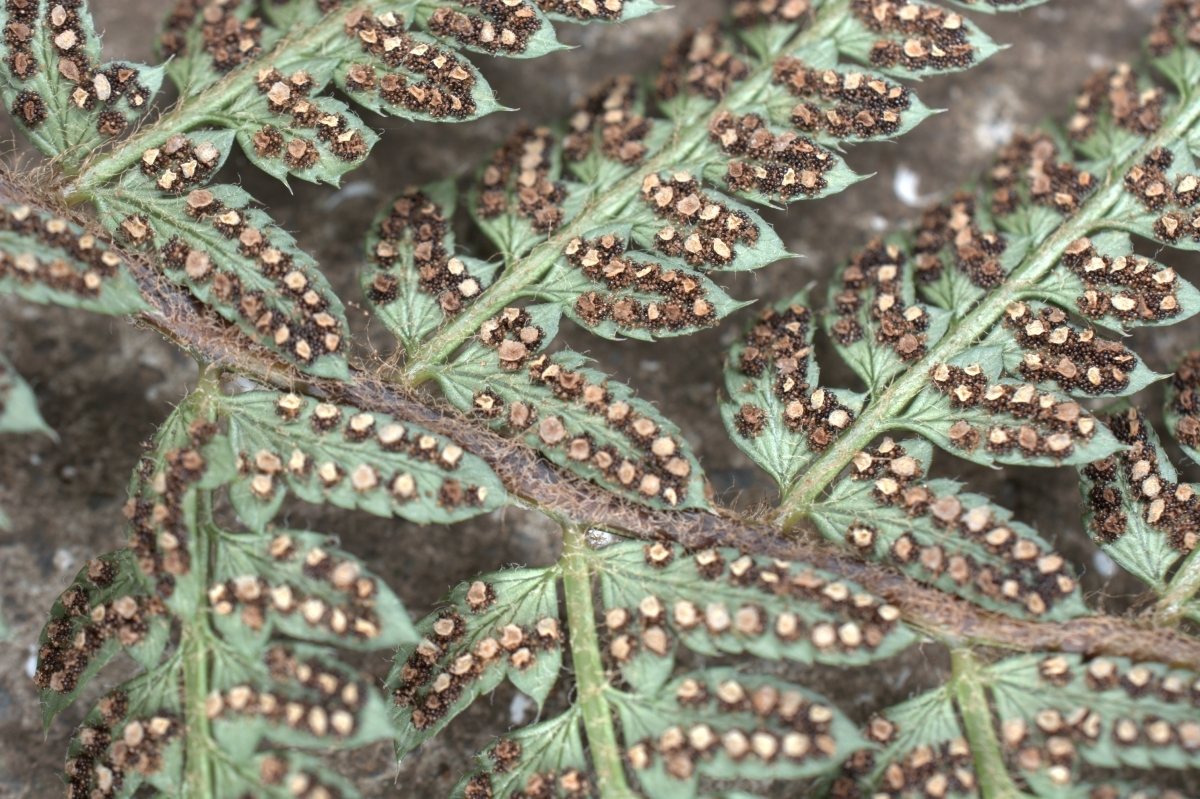
Its leaflet tips lack the conspicuous fine bristles of soft shield fern. On fertile fronds, its spore clusters have kidney-shaped covers rather than the round, centrally attached covers of shield ferns.
The name
Polystichum means 'many rows', referring to the arrangement of spore clusters, while setiferum means 'bristle-bearing', referring to the bristle-tipped leaflets.
Propagation. Divide established crowns carefully in spring, retaining roots and growing points on each piece. It can also be raised from spores, though this is slow and named cultivars may not come true.
Checked against open data
- Accepted botanical name
- Polystichum setiferum
- Native range
- Albania, Algeria, Austria, Azores, Baleares, Belgium, Bulgaria, Canary Is., Corse, France, Germany and Great Britain.
- Measured
- Soil pH 5.5 to 6.5. Average height 90 cm.
Sources: GBIF (CC BY 4.0) and Trefle (CC BY 4.0). The care and design notes are LandscapeGPT's own.
See it in your own yard.
Upload a photo of your yard and see it redesigned with plants that suit your climate, each checked against your zone.