Sour cherry
Prunus cerasus. Family Rosaceae. Tree.
Also called Tart cherry, Pie cherry.
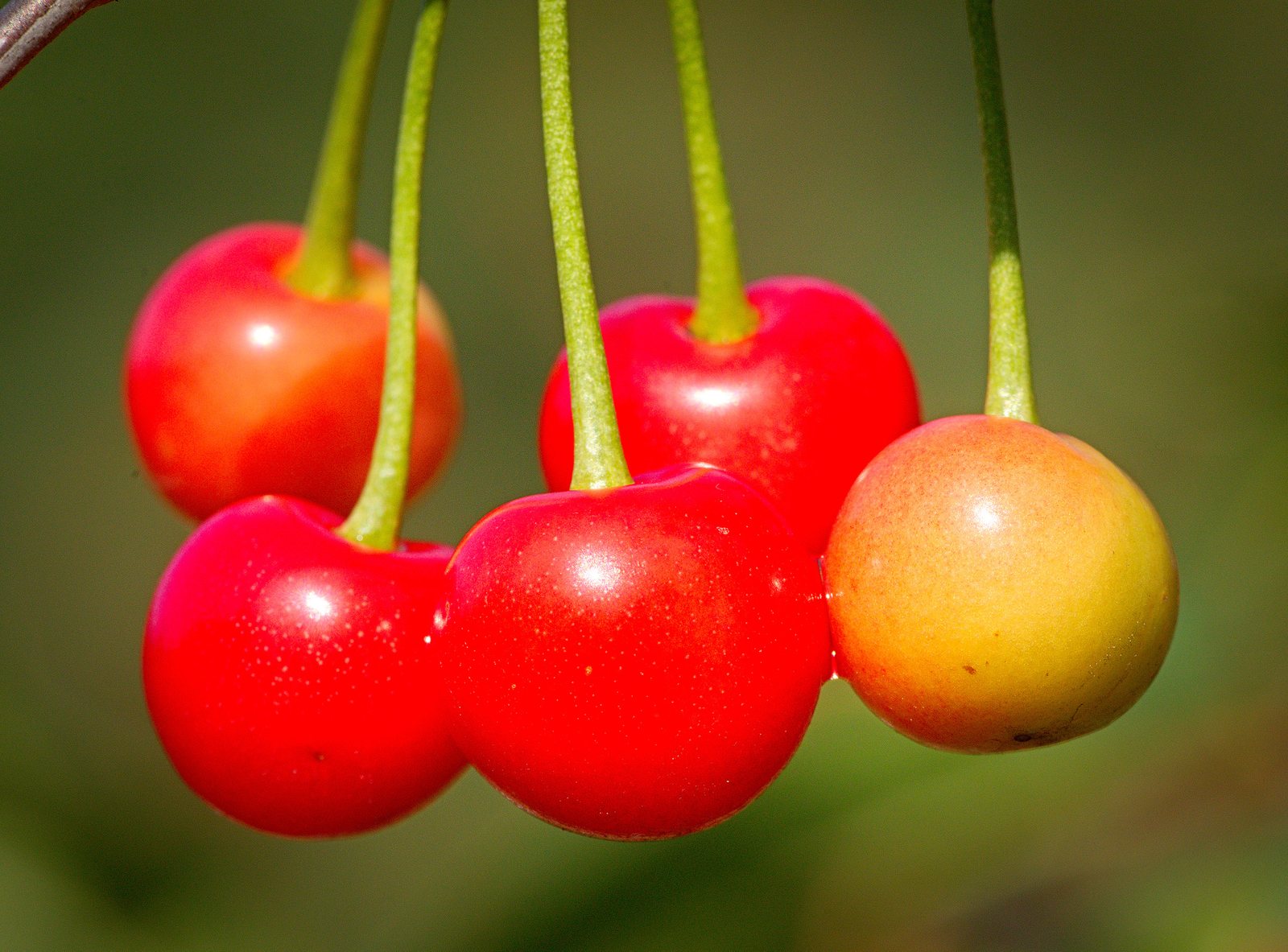
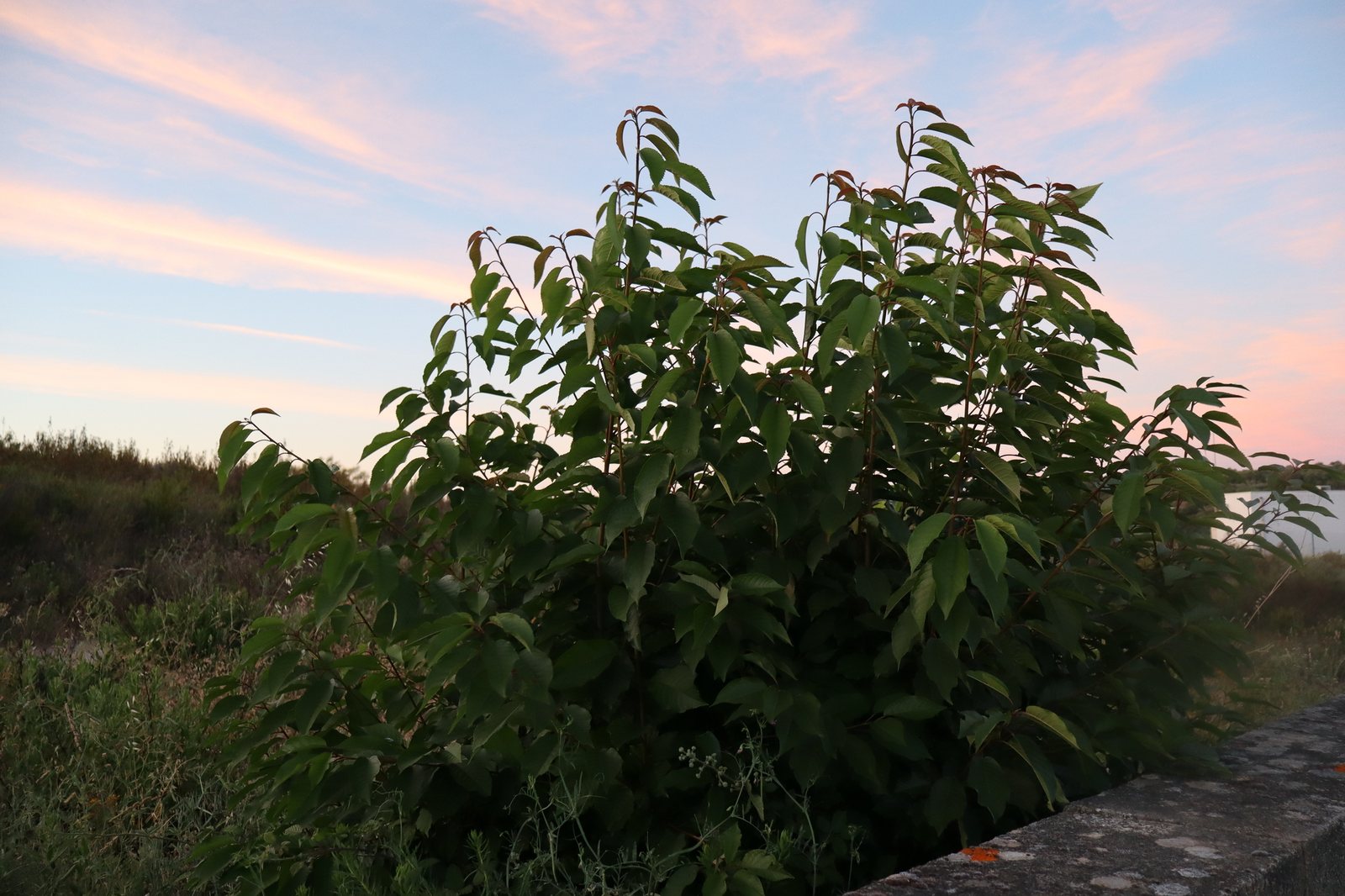
Sour cherry is a deciduous fruit tree grown for spring blossom and sharp-flavoured cherries used in pies, preserves and sauces. Most cultivars are self-fertile, so one tree can produce fruit, but reliable cropping needs a cold winter and flowers that escape late frosts. It suits cool-temperate gardens, including colder parts of Australia; rootstock strongly affects its eventual size.
At a glance
- Sun
- Full sun gives the best crops; tolerates partial shade, but fruiting is reduced.
- Water
- Water deeply during establishment and during dry spells as fruit develops; avoid waterlogged soil.
- Soil
- Fertile, well-drained loam with a slightly acidic to neutral pH; tolerates heavier soil if drainage is good.
- Height
- 12-25 ft (3.7-7.6 m), depending on cultivar and rootstock
- Spread
- 12-20 ft (3.7-6.1 m), depending on cultivar, rootstock and training
- Flowers
- White flowers in clusters in mid-spring, usually as the leaves emerge.
- Foliage
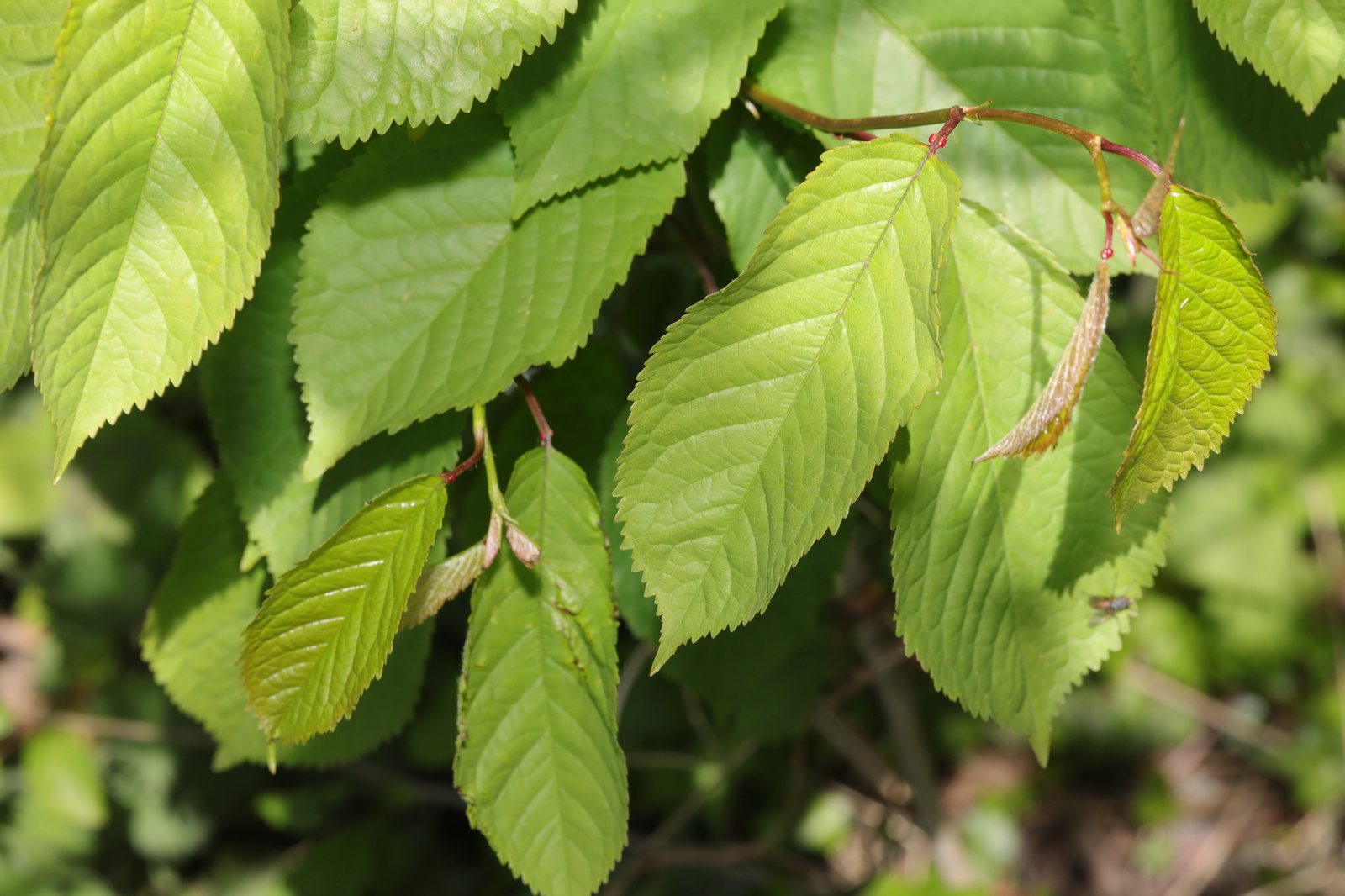
- Oval, pointed, finely toothed green leaves, sometimes turning yellow in autumn.
- Growth
- Moderate
- Care needed
- Medium
The year at a glance
- Pollinators
- Cold hardy
- Wildlife
- Low allergen
- Edible
| J | F | M | A | M | J | J | A | S | O | N | D | |
|---|---|---|---|---|---|---|---|---|---|---|---|---|
| Flowers | ||||||||||||
| Fruit | ||||||||||||
| Plant |
Northern hemisphere months. In Australia, shift them by six.
- Difficulty
- Moderate
- Toughness
- Fairly tough
Will it suit your garden?
Pick your zone, country, light and whether you have pets.
Full sun is 6 or more hours of direct sun a day, part shade 3 to 6 hours, shade under 3.
How it grows
Planting day
7 ft (2 m)
After 1 year
7 ft (2.2 m)
After 2 years
8 ft (2.4 m)
After 3 years
8 ft (2.5 m)
After 5 years
10 ft (2.9 m)
About 20 years to full size.
From a typical nursery size, at an average rate for this kind of plant. A rule of thumb, not a forecast.
Good to know
- Cats and dogs
- Toxic
- Growth rate
- Moderate
Care
Jobs through the year
- WaterApr–May, Sep–Oct, every 14 days
- Water established trees deeply during dry spells; young trees need more frequent watering.
- WaterJun–Aug, every 7 days
- Water deeply if rainfall is insufficient, especially during fruit development.
- FeedMar
- Feed modestly only if growth is weak; avoid excess nitrogen.
- MulchMar
- Apply 5–8 cm of organic mulch, leaving a clear gap around the trunk.
- ProtectApr–May
- Cover small flowering trees with fleece on frosty nights; uncover by day.
- ProtectMay–Jul
- Enclose colouring fruit with taut, framed wildlife-safe mesh; check daily.
- HarvestJun–Jul
- Pick fully coloured, juicy fruit with stalks attached and refrigerate or process promptly.
- PruneJul–Aug
- Prune after harvest in dry weather, retaining young shoots to replace older fruiting wood.
- PruneApr–Aug
- Remove rootstock suckers promptly.
- ProtectOct–Nov
- Clear fallen leaves and fruit and remove mummified cherries.
- ProtectJan–Feb, Dec
- Check stakes and guards; remove temporary support once roots hold firmly.
- Plant with the graft union above soil level, away from frost pockets and standing winter water.
- Water deeply through the first two growing seasons and during prolonged drought once established.
- Apply a 2-3 in (5-8 cm) organic mulch, keeping it clear of the trunk.
- Feed modestly in early spring if growth is weak; avoid excess nitrogen, which encourages leafy growth rather than fruit.
- Stake young trees if needed for stability, check ties regularly and remove support once roots hold firmly.
- Remove rootstock suckers promptly and use wildlife-safe, taut netting if birds take the crop.
Pruning. Prune in dry weather in summer, usually just after harvest, to reduce the risk of silver leaf and bacterial canker. Keep an open framework, remove dead or crossing branches, and gradually replace older fruited wood with young shoots because much of the crop forms on the previous year's growth.
Harvest
Pick cherries in early to midsummer when fully coloured for the cultivar, juicy and easily detached; taste a few because sour cherries remain tart when ripe. Pick gently with their stalks attached if storing briefly, and refrigerate or process promptly. Grafted trees usually give their first worthwhile crop about 3-5 years after planting, depending on rootstock and growing conditions.
Through the year
- Late autumn
- Collect fallen fruit and leaves, and remove mummified cherries to reduce disease carry-over.
- Winter
- Plant dormant bare-root trees when the soil is workable and not waterlogged; check stakes and guards.
- Early spring
- Renew mulch and feed lightly if needed; keep mulch away from the trunk.
- Mid-spring
- Watch for blossom frost; protect small trees with horticultural fleece overnight and remove it during the day.
- Early summer
- Water during dry spells and protect colouring fruit from birds with safely secured netting.
- Summer
- Harvest ripe cherries, then prune in dry weather to renew fruiting shoots.
In the garden
- Use as a small orchard tree with enough space around the crown for picking and pruning.
- Train as a fan against a wall or fence to make fruit accessible in a narrow garden.
- Choose a suitable dwarfing rootstock for an edible courtyard or small lawn specimen.
- Combine spring blossom with nearby low-growing herbs and bulbs, leaving a clear mulched area around the trunk.
Garden styles it suits: Backyard orchard, Edible landscape, Potager (kitchen garden), Cottage garden, Homestead and Food forest.
Plant it with: Chives, Thyme, Yarrow, Crocus and Calendula.
Wildlife: Blossom supplies nectar and pollen for bees and other insects. Birds readily eat the cherries, and the branches provide perching and nesting cover.
Problems to watch for
- Brown rot: remove rotting and mummified fruit promptly, prune for airflow and avoid damaging ripening cherries.
- Cherry leaf spot: collect fallen leaves, improve airflow and avoid wetting foliage; seek locally approved treatment if repeated early leaf loss weakens the tree.
- Bacterial canker and silver leaf: prune only in dry summer weather, remove affected wood and disinfect tools between diseased cuts.
- Black cherry aphids: inspect curled shoot tips, encourage natural predators and use an insecticidal soap labelled for edible cherries if necessary.
Safety
Ripe cherry flesh is edible for people. Leaves, stems and the kernels inside the stones contain cyanogenic compounds and can cause serious poisoning in people, cats, dogs and horses if chewed and eaten; wilted foliage is especially hazardous to livestock. Stones also pose choking and intestinal blockage risks, so remove them before serving fruit.
Easily confused with
Sweet cherry (Prunus avium)
Usually a larger tree with larger, more drooping leaves and sweeter ripe fruit; leaf stalks commonly have conspicuous reddish glands. Size alone is unreliable because both species are grafted onto dwarfing rootstocks.
Duke cherry (Prunus × gondouinii)
A hybrid between sweet and sour cherry, with intermediate foliage and fruit that is often less acid than sour cherry; a reliable nursery label is the best guide.
Nanking cherry (Prunus tomentosa)
A bushy shrub with noticeably hairy leaves and small cherries on very short stalks, rather than the smooth leaves and longer-stalked fruit of sour cherry.
The name
The common name describes the fruit's acidity, while Prunus is the Latin name for plum and cerasus is the Latin word for cherry.
Propagation. Named cultivars are usually budded or grafted onto suitable cherry rootstocks. Seed-grown trees vary in fruit quality and may take considerably longer to crop; suckers from a grafted tree usually belong to the rootstock, not the named cultivar.
Checked against open data
- Accepted botanical name
- Prunus cerasus
- In the US and Canada
- Introduced in Canada and the lower 48 states.
- Native range
- North Caucasus.
- Measured
- Average height 1000 cm.
Sources: GBIF (CC BY 4.0), USDA PLANTS and Trefle (CC BY 4.0). The care and design notes are LandscapeGPT's own.
See it in your own yard.
Upload a photo of your yard and see it redesigned with plants that suit your climate, each checked against your zone.