Spartan juniper
Juniperus chinensis 'Spartan'. Family Cupressaceae. Tree.
Also called Spartan Chinese juniper.
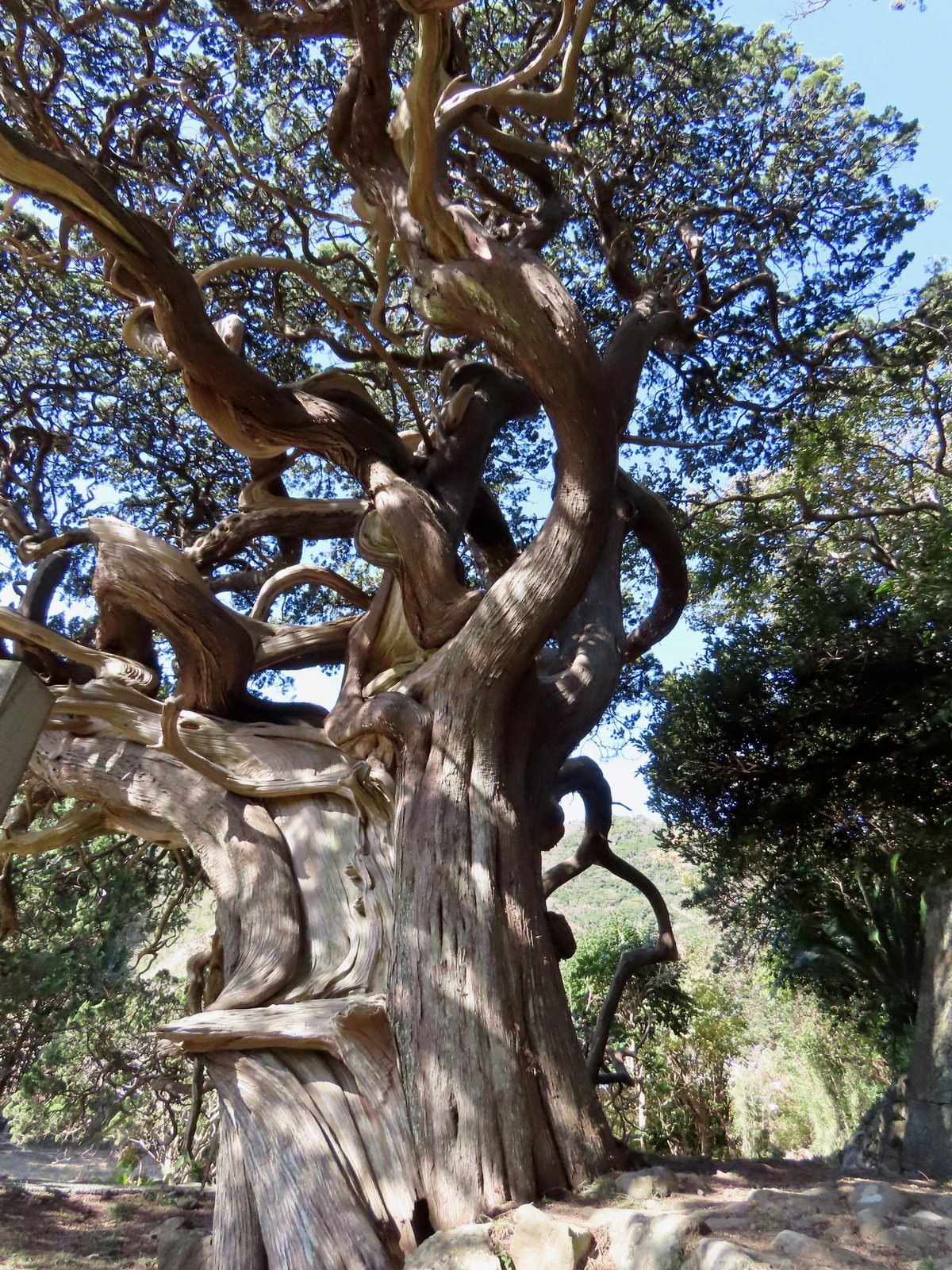
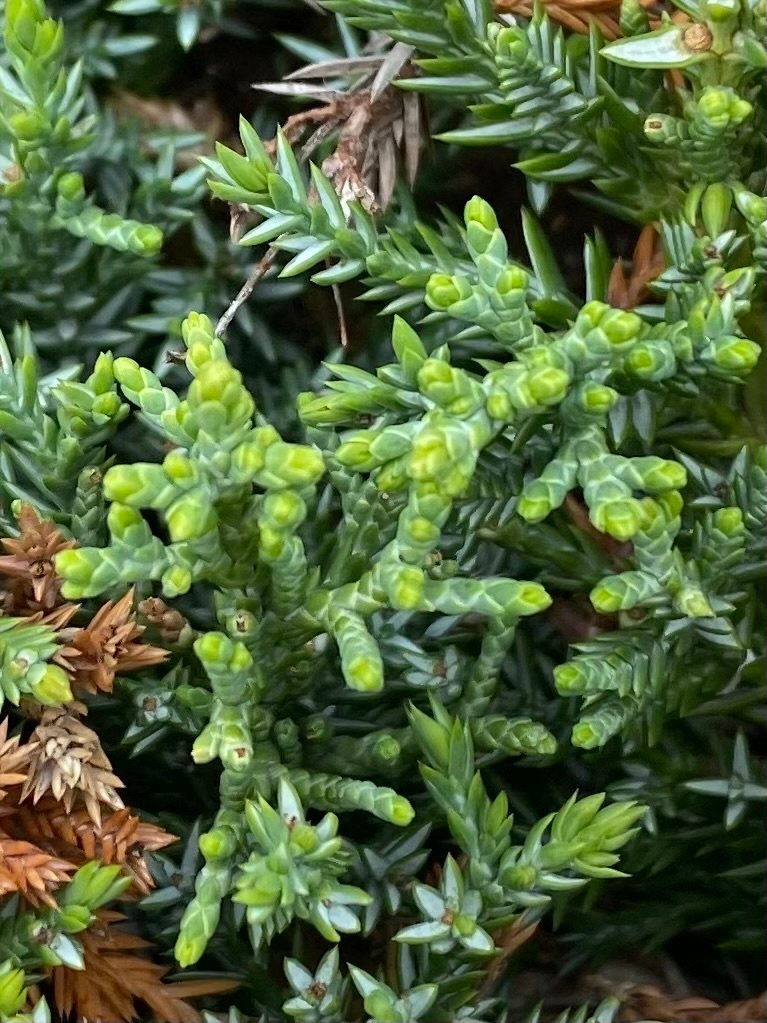
Spartan juniper is an upright evergreen conifer with dense, dark green foliage and a naturally narrow, pyramidal crown. Grow it for year-round screening, a formal accent or repeated vertical shapes without the frequent clipping needed by many hedging plants.
At a glance
- Sun
- Full sun; shade makes the crown thinner and less compact.
- Water
- Water regularly while establishing; drought-tolerant once rooted into the surrounding soil. Avoid persistently wet ground.
- Soil
- Well-drained soil, including sandy, gravelly or clay soil that does not stay waterlogged; tolerates acidic to alkaline conditions.
- Height
- 15-20 ft (4.6-6.1 m), sometimes taller with age
- Spread
- 4-6 ft (1.2-1.8 m)
- Foliage
- Evergreen. Dense, dark green, mainly scale-like foliage on upright branches; some shoots may carry prickly juvenile leaves.
- Growth
- Moderate, often 6-12 in (15-30 cm) per year once established.
- Care needed
- Low
The year at a glance
- Deer resistant
- Drought tolerant
- Heat tolerant
- Wildlife
| J | F | M | A | M | J | J | A | S | O | N | D | |
|---|---|---|---|---|---|---|---|---|---|---|---|---|
| Plant |
Northern hemisphere months. In Australia, shift them by six.
- Difficulty
- Easy
- Toughness
- Very tough
Will it suit your garden?
Pick your zone, country, light and whether you have pets.
Full sun is 6 or more hours of direct sun a day, part shade 3 to 6 hours, shade under 3.
How it grows
Planting day
7 ft (2 m)
After 1 year
7 ft (2.2 m)
After 2 years
8 ft (2.3 m)
After 3 years
8 ft (2.5 m)
After 5 years
9 ft (2.8 m)
About 20 years to full size.
From a typical nursery size, at an average rate for this kind of plant. A rule of thumb, not a forecast.
Good to know
- Cats and dogs
- Mildly toxic: may upset a stomach
- Growth rate
- Moderate
Care
Jobs through the year
- WaterApr–May, Sep–Nov, every 21 days
- Water established trees only during prolonged dry weather while soil is unfrozen; young trees need more frequent watering.
- WaterJun–Aug, every 14 days
- During prolonged drought, water established trees deeply; water more often during the first two growing seasons.
- MulchMar–Apr
- Maintain 5–8 cm of organic mulch over the root area, keeping it clear of the trunk.
- FeedApr
- Feed lightly only if growth is weak and a soil test confirms a nutrient shortage.
- PruneMay–Jun
- Trim wayward shoots only if needed, keeping cuts within green foliage and preserving the natural taper.
- ProtectMay–Aug, every 14 days
- Inspect for mites and bagworms; remove bags and use locally appropriate controls if needed.
- ProtectJan–Feb, Dec
- Gently remove loose heavy snow without striking or bending frozen branches.
- Plant with the root flare at soil level, leaving enough room for the mature width.
- Water deeply during dry spells for the first two growing seasons; let the soil begin to dry between waterings.
- Apply 2-3 in (5-8 cm) of mulch over the root area, keeping it away from the trunk.
- Feed lightly in spring only if growth is weak and a soil test indicates a nutrient shortage.
- Avoid overhead irrigation and keep surrounding plants from crowding the lower branches.
Pruning. Prune lightly in late spring or early summer to shorten wayward shoots, keeping cuts within green foliage. Remove dead branches when noticed; do not cut back into bare old wood, which usually will not regrow.
Through the year
- Late winter
- Check for broken branches and gently remove loose, heavy snow without striking frozen foliage.
- Spring
- Plant when the soil is workable and not waterlogged; refresh mulch around established plants.
- Late spring
- Trim stray shoots if needed, preserving the natural taper and green outer growth.
- Summer
- Water young plants deeply during dry weather and inspect browning foliage for mites or bagworms.
- Autumn
- Water before the ground freezes if autumn has been dry, especially for recently planted trees.
In the garden
- Plant in a row for a narrow evergreen screen, allowing room for the mature crowns.
- Use matching specimens beside an entrance for a formal vertical accent.
- Repeat through a gravel garden with lavender and ornamental grasses for contrasting shapes.
- Place behind low shrubs and perennials to provide a dark green winter backdrop.
Garden styles it suits: Formal, Architectural minimal, Low-maintenance, Dry gravel garden, Winter interest and Mediterranean.
Plant it with: Lavender, Catmint, Russian sage, Stonecrop, Blue fescue and Dwarf spirea.
Wildlife: Dense branches provide shelter and nesting cover for birds. Berry-like cones, if produced, may be eaten by birds.
Problems to watch for
- Root rot in wet soil: improve drainage or move the plant; do not keep watering a declining plant without checking soil moisture.
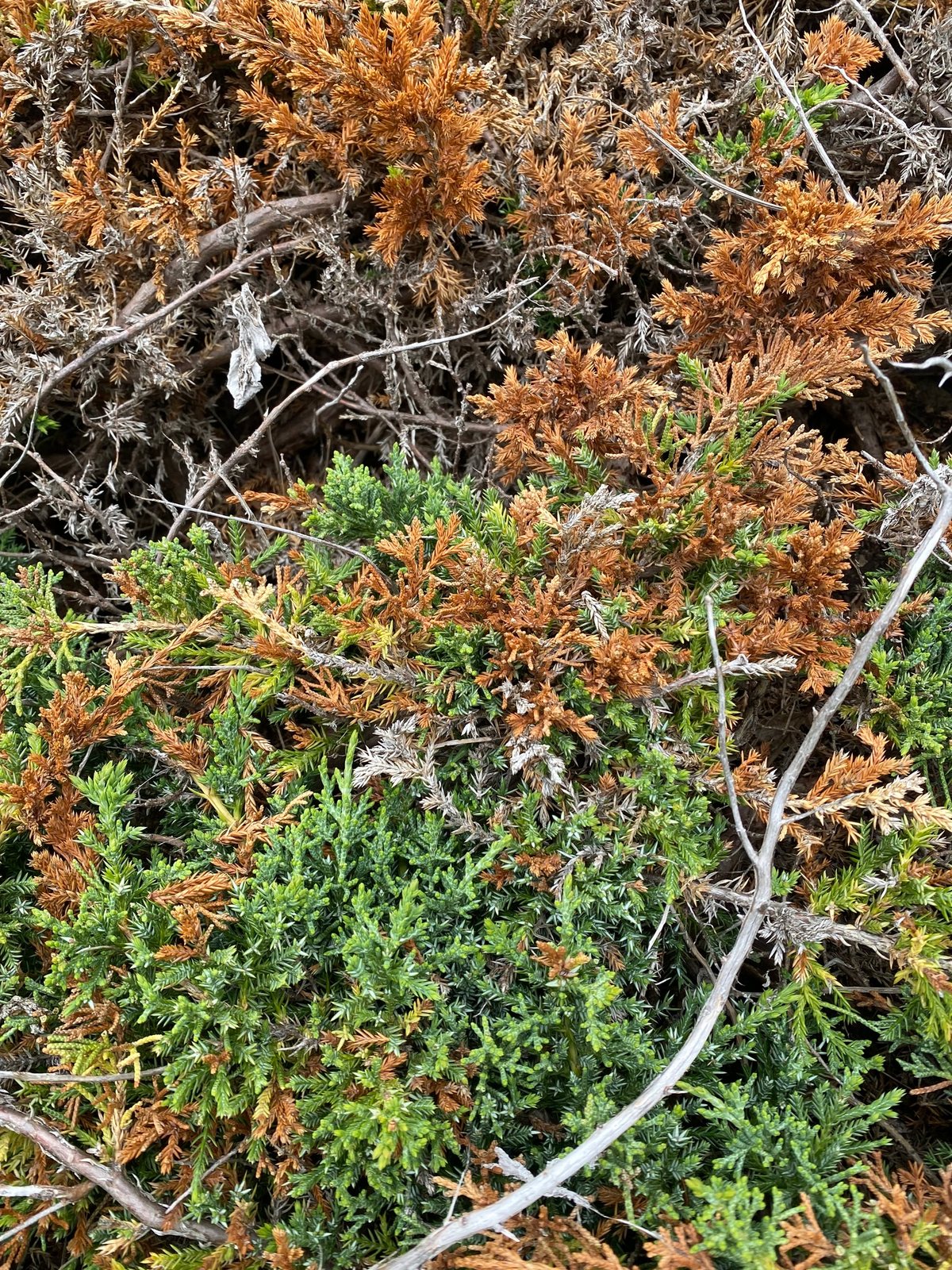
- Spider mites causing stippled, bronzed foliage: inspect closely during hot, dry weather and dislodge mites with a firm water spray; use a labelled treatment if damage continues.
- Bagworms, particularly in parts of the United States: remove attached bags before eggs hatch and treat young feeding larvae if necessary.
- Juniper rusts causing swollen growths or orange gelatinous masses: remove affected shoots in dry weather; seek local advice where nearby apples or crab apples are also affected.
Safety
Do not use its berry-like cones as culinary juniper berries. Foliage and cones contain oils that may cause digestive upset if eaten by people, cats or dogs; sap and foliage can irritate skin. Toxicity to horses is not well established, so keep it out of forage.
Easily confused with
Skyrocket juniper (Juniperus scopulorum 'Skyrocket')
Usually much narrower, with blue-grey foliage rather than Spartan's dark green foliage.
Emerald Green arborvitae (Thuja occidentalis 'Smaragd')
Has conspicuously flattened, fan-shaped foliage sprays and small woody cones rather than juniper's berry-like cones.
Hollywood juniper (Juniperus chinensis 'Kaizuka')
Develops irregular, twisting branches and uneven foliage masses instead of a dense, regular pyramid.
The name
Juniperus is the Latin name for juniper, and chinensis means 'from China'.
Propagation. Root semi-ripe cuttings in late summer under humid, well-drained conditions; rooting can be slow. Seed does not reliably reproduce the cultivar.
Checked against open data
- Accepted botanical name
- Juniperus chinensis
- Native range
- China North-Central, China South-Central, China Southeast, Inner Mongolia, Japan, Khabarovsk, Korea, Kuril Is., Manchuria, Myanmar, Primorye and Sakhalin.
- Measured
- Soil pH 4.5 to 7.5. Average height 2000 cm.
Sources: GBIF (CC BY 4.0) and Trefle (CC BY 4.0). The care and design notes are LandscapeGPT's own.
See it in your own yard.
Upload a photo of your yard and see it redesigned with plants that suit your climate, each checked against your zone.