Spiral ginger
Costus barbatus. Family Costaceae. Perennial.
Also called Red tower ginger.
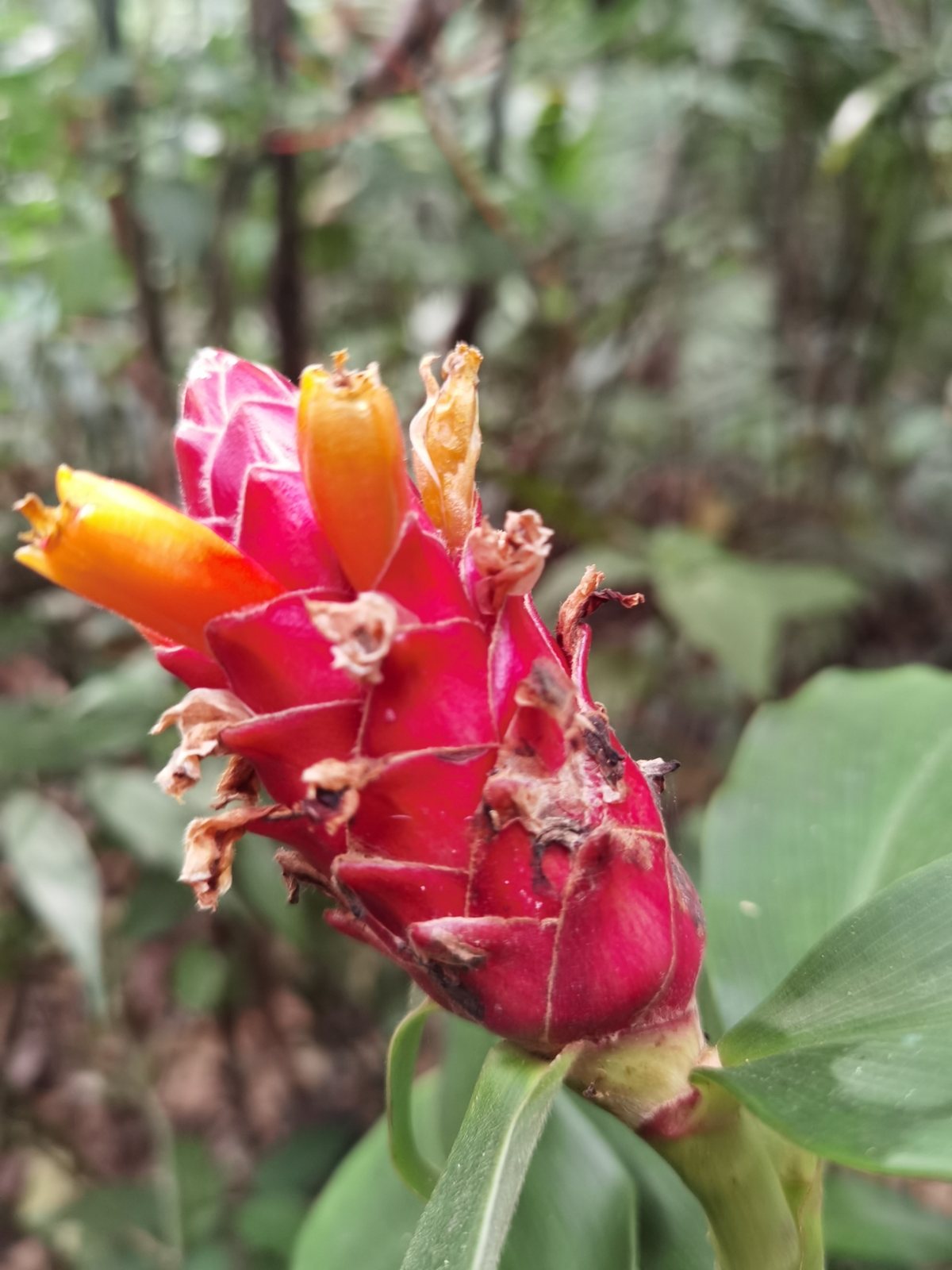
Spiral ginger is a tropical, clump-forming perennial grown for spiralling leafy stems and upright red flower cones that produce yellow flowers. It makes a bold feature in warm, sheltered gardens or large containers, but needs frost-free winter accommodation in colder climates. Plants sold under this name are sometimes the closely related Costus comosus.
At a glance
- Sun
- Partial shade or filtered sun; morning sun is suitable where soil stays moist. Shelter from hot afternoon sun and strong wind.
- Water
- Keep evenly moist during active growth without leaving the roots waterlogged. Water less in winter, especially under cool indoor conditions.
- Soil
- Humus-rich, fertile soil that holds moisture but drains freely; slightly acidic to neutral soil is suitable.
- Height
- 6-8 ft (1.8-2.4 m)
- Spread
- 3-5 ft (0.9-1.5 m)
- Flowers
- Usually summer to autumn, with yellow tubular flowers emerging successively from long-lasting red cones; flowering may extend longer in tropical climates.
- Foliage
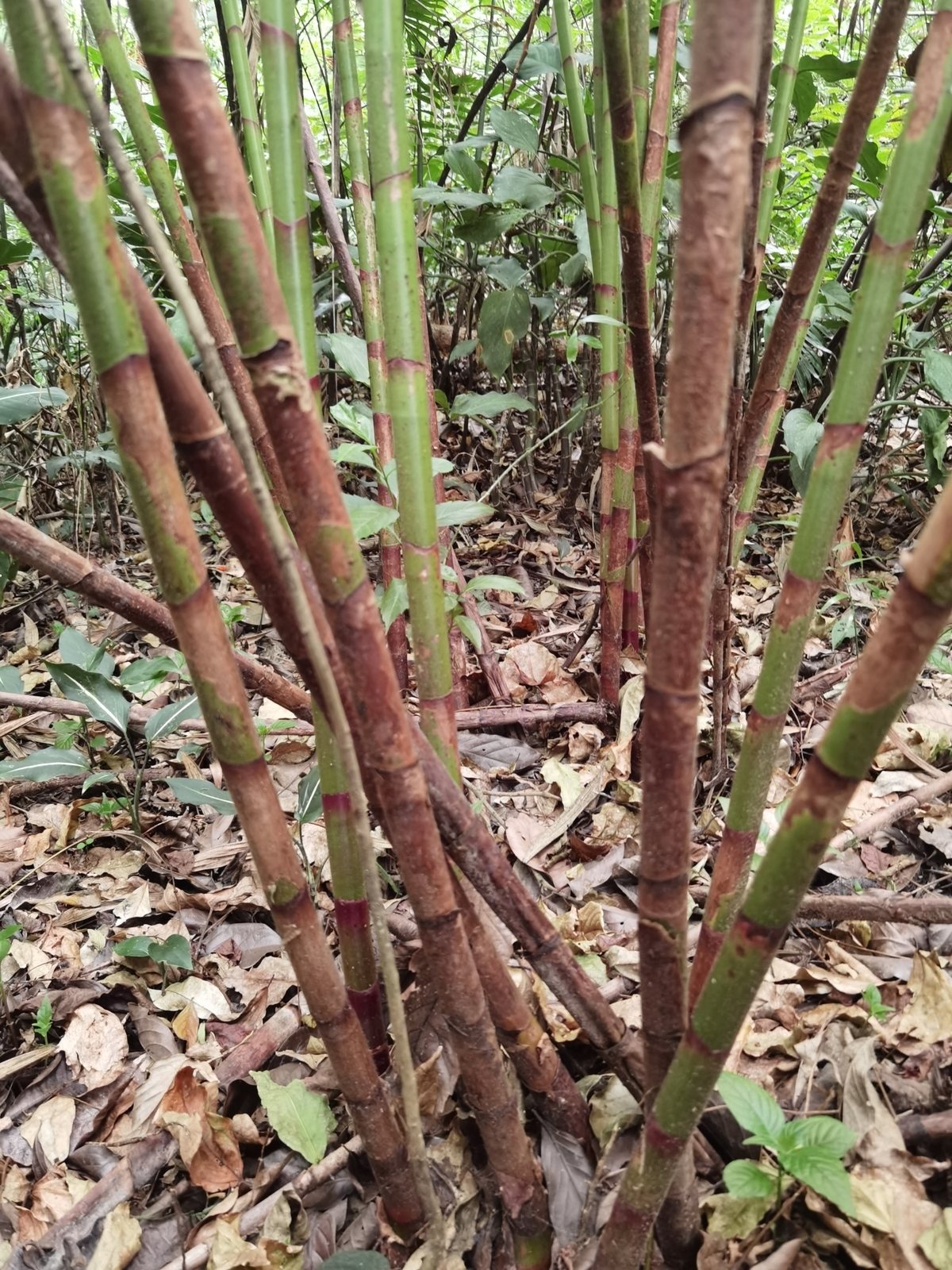
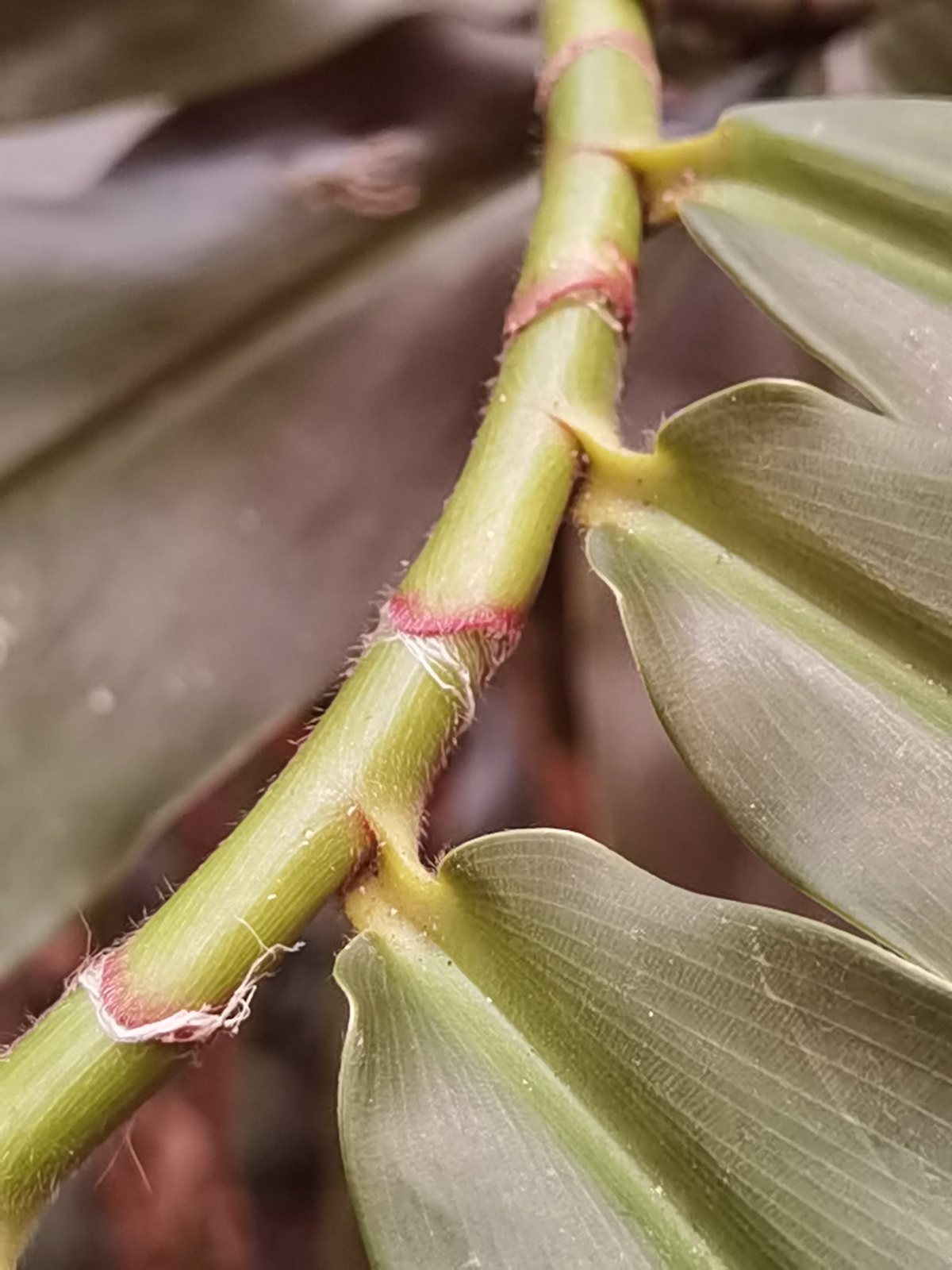
- Evergreen. Large, elongated green leaves arranged spirally around upright stems, with noticeably soft, hairy undersides.
- Growth
- Fast in warm, humid conditions with adequate water.
- Care needed
- Medium
The year at a glance
- Heat tolerant
- Low allergen
| J | F | M | A | M | J | J | A | S | O | N | D | |
|---|---|---|---|---|---|---|---|---|---|---|---|---|
| Flowers | ||||||||||||
| Plant |
Northern hemisphere months. In Australia, shift them by six.
- Difficulty
- Hard
- Toughness
- Needs looking after
Will it suit your garden?
Pick your zone, country, light and whether you have pets.
Full sun is 6 or more hours of direct sun a day, part shade 3 to 6 hours, shade under 3.
How it grows
Planting day
1 ft (0.3 m)
After 1 year
4 ft (1.2 m)
After 2 years
7 ft (2.1 m)
full size
About 2 years to full size.
From a typical nursery size, at an average rate for this kind of plant. A rule of thumb, not a forecast.
Good to know
- Cats and dogs
- Safe
- Growth rate
- Fast
Care
Jobs through the year
- WaterApr–May, Sep, every 7 days
- Keep established ground plants evenly moist while growing; check containers more often.
- WaterJun–Aug, every 3 days
- Water established ground plants as the surface starts drying; adjust for rain and check pots daily.
- WaterJan–Mar, Oct–Dec, every 14 days
- Check sheltered plants and water sparingly as needed, never allowing complete drying or cold saturation.
- FeedApr–Aug, every 28 days
- Apply balanced fertiliser during active growth at the product's labelled rate.
- MulchMay–Jun
- Mulch with compost or leaf mould, keeping stem bases clear.
- DivideApr–May
- Divide crowded clumps as new growth begins, retaining healthy roots and shoots on each section.
- PruneApr–May
- Remove dead or cold-damaged stems after growth resumes.
- PruneAug–Oct
- Cut flowered stems to ground level only once their cones and foliage deteriorate.
- ProtectJan–May, Sep–Dec
- Overwinter indoors in bright light, preferably above 10°C; return outside only when nights stay warm.
- Water deeply when the soil surface starts to dry during warm weather.
- Apply a balanced fertiliser at the label rate during active spring and summer growth.
- Mulch with compost or leaf mould, keeping mulch clear of the stem bases.
- Grow container plants in a rich, free-draining potting mix and repot when crowded.
- Move pots into a bright, frost-free space before nights turn cold; keep above about 50°F (10°C) where possible.
Pruning. Cut spent flowering stems back to ground level once their cones and foliage deteriorate, leaving healthy new shoots intact. Remove dead or cold-damaged stems in spring after growth resumes.
Through the year
- Spring
- Remove dead stems and divide or repot crowded plants as new growth begins.
- Late spring
- Move overwintered pots outside once nights are consistently warm, gradually introducing them to outdoor light.
- Summer
- Maintain even soil moisture and feed container plants regularly at the label rate.
- Late summer
- Remove deteriorating flowered stems while protecting emerging shoots.
- Autumn
- Bring containers under cover before cold nights or frost; reduce feeding as growth slows.
- Winter
- Keep protected plants bright and frost-free, watering sparingly without letting the root ball dry completely.
In the garden
- Use behind lower tropical foliage plants to create a tall, leafy backdrop with red flower accents.
- Grow in a large courtyard container where the spiral leaf arrangement can be seen closely.
- Plant in sheltered, partly shaded borders alongside ferns and broad-leaved perennials.
- Use beside a pond or water feature in moist but well-drained soil, not standing water.
Garden styles it suits: Tropical, Modern tropical, Luxury resort, Balinese, Modern courtyard and Architectural minimal.
Plant it with: Elephant ears, Bird's-nest fern, Bromeliads, Peace lily and Shell ginger.
Wildlife: The tubular flowers attract hummingbirds where these birds occur naturally. Wildlife value elsewhere depends on local flower visitors.
Problems to watch for
- Spider mites can cause pale, stippled leaves indoors: rinse leaf undersides and treat persistent infestations with a labelled insecticidal soap.
- Mealybugs collect in leaf axils: isolate affected pots, remove visible insects and repeat treatment with a suitable labelled product.
- Root and rhizome rot develops in cold, saturated soil: improve drainage, reduce winter watering and remove rotten tissue when repotting.
- Cold or dry air can brown leaves and stop growth: provide frost-free shelter, steady warmth and adequate moisture.
Safety
Not known to be toxic to people, cats, dogs or horses, but species-specific safety information is limited. No particular part is established as poisonous; do not assume its leaves, flowers or rhizomes are edible because it is called ginger.
Easily confused with
Red tower ginger (Costus comosus var. bakeri)
Very frequently sold as Costus barbatus and similarly bears red cones with yellow flowers. True C. barbatus generally has more conspicuously soft, hairy leaf undersides and a taller habit;
Red button ginger (Costus woodsonii)
Usually shorter, with smaller, glossy leaves and compact red cones producing orange to orange-red flowers rather than yellow flowers.
Crepe ginger (Cheilocostus speciosus)
Has conspicuous white, crinkled, open flowers rather than the narrow yellow flowers of spiral ginger.
The name
The species name barbatus means 'bearded', referring to its hairiness, while spiral ginger describes the arrangement of leaves around the stems.
Propagation. Divide established rhizome clumps in spring or early in the warm growing season, giving each division healthy roots and at least one growing shoot. Keep divisions warm, moist and shaded until established.
Checked against open data
- Accepted botanical name
- Costus barbatus
- Native range
- Costa Rica.
Sources: GBIF (CC BY 4.0) and Trefle (CC BY 4.0). The care and design notes are LandscapeGPT's own.
See it in your own yard.
Upload a photo of your yard and see it redesigned with plants that suit your climate, each checked against your zone.