Spotted emu bush
Eremophila maculata. Family Scrophulariaceae. Shrub.
Also called Spotted fuchsia bush, Native fuchsia.
Spotted emu bush is an evergreen Australian shrub grown for its tubular, often spotted flowers and tolerance of dry conditions. It suits sunny, freely drained gardens in mild climates; in colder parts of the United States, Canada and the United Kingdom, grow it in a container that can be moved under frost protection.
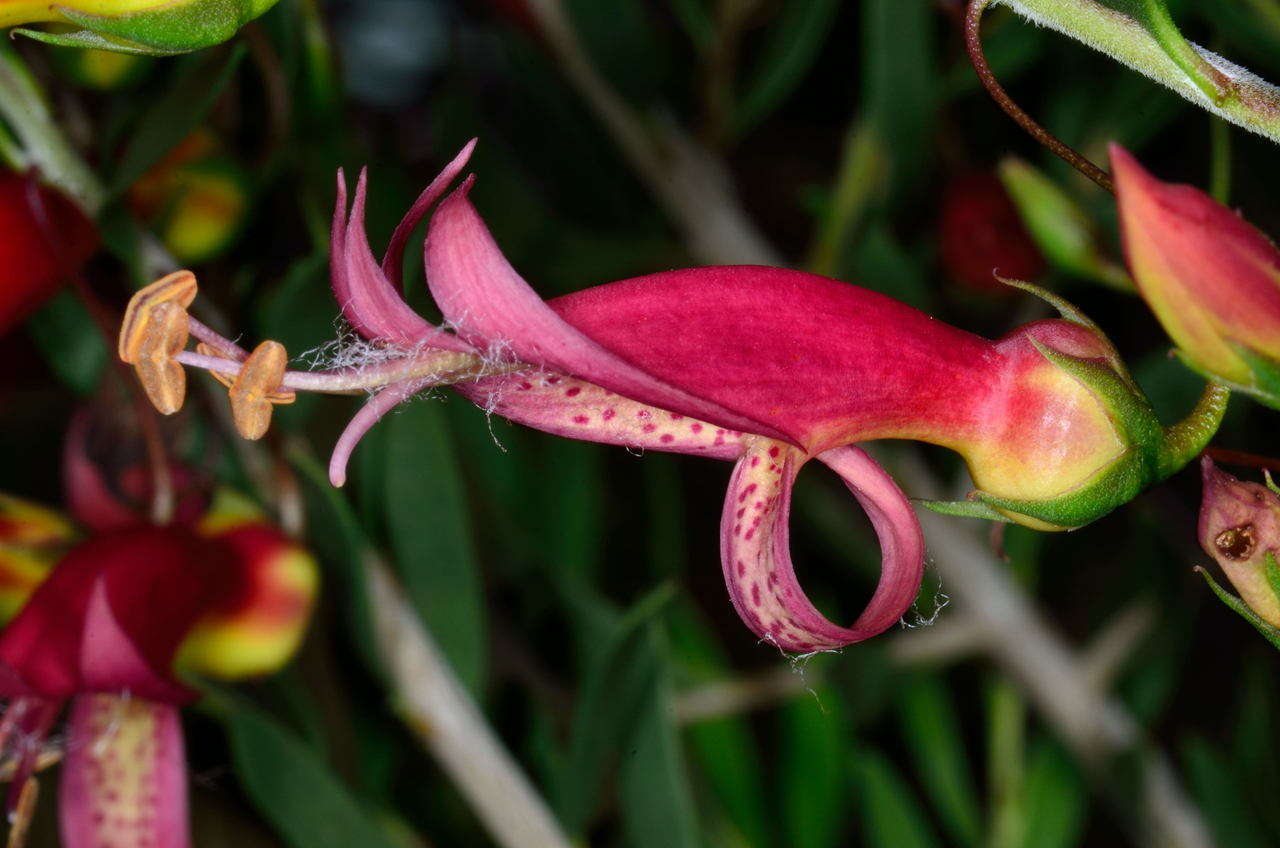
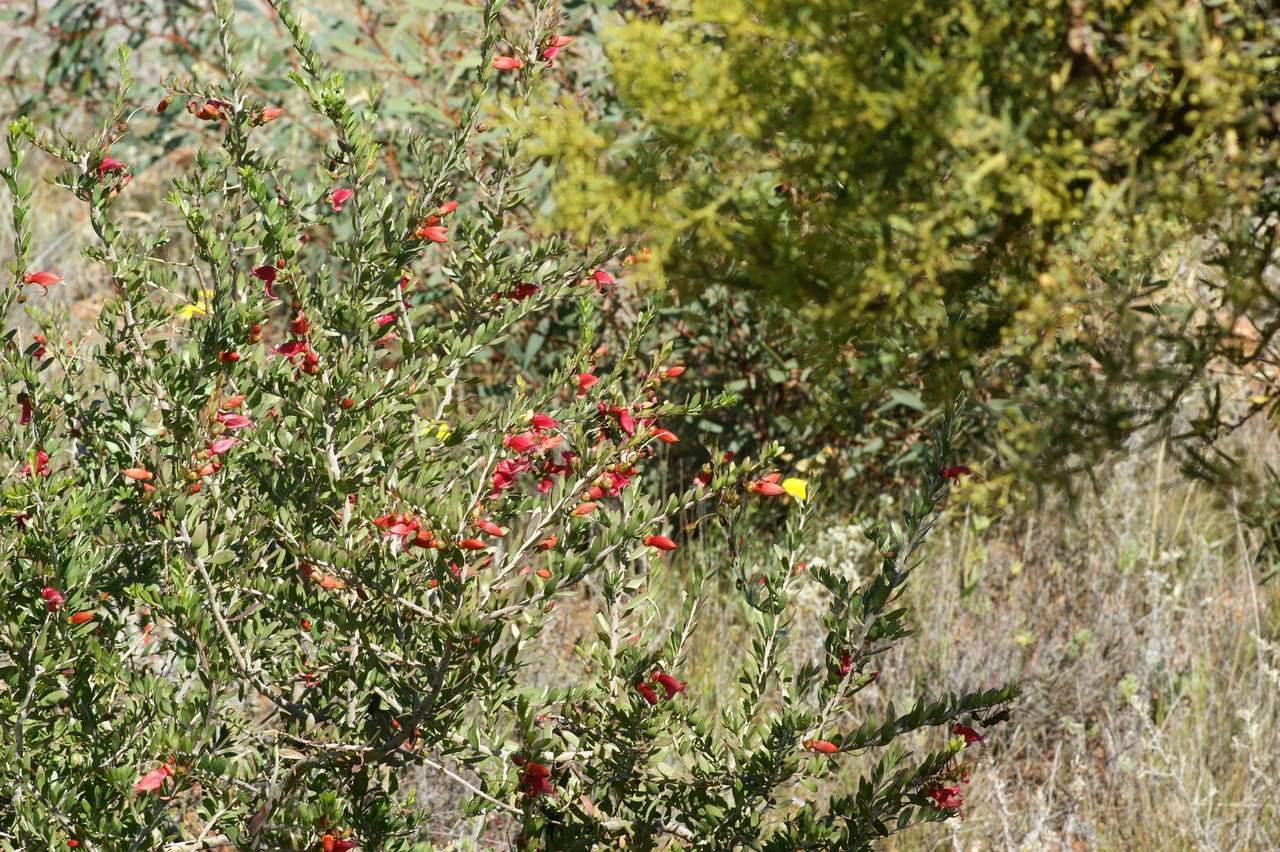
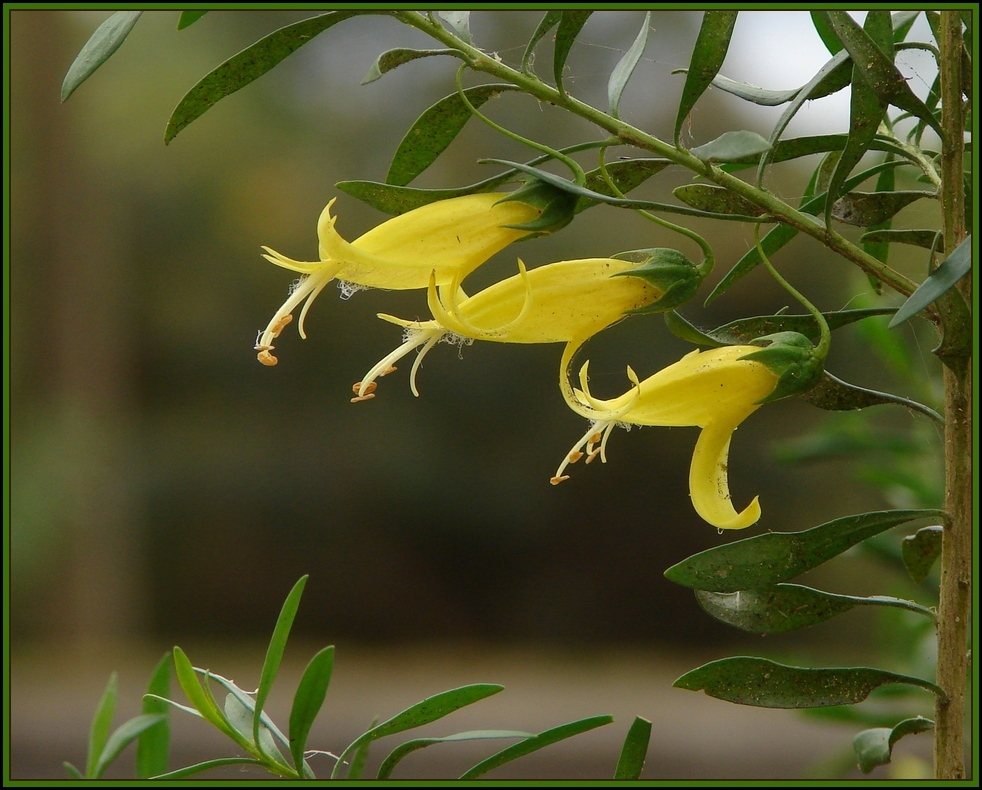
At a glance
- Sun
- Full sun; tolerates light shade but flowers less freely.
- Water
- Low once established. Water young plants regularly while roots establish, then water deeply only during prolonged dry spells.
- Soil
- Well-drained sandy, gravelly or loamy soil; tolerates clay where drainage is good. Avoid persistently wet ground.
- Height
- 3-8 ft (0.9-2.4 m)
- Spread
- 3-8 ft (0.9-2.4 m)
- Flowers
- Mainly winter through spring, with scattered flowers at other times in suitable conditions. Tubular flowers may be red, pink, orange, yellow or cream, often with darker spots inside.
- Foliage
- Evergreen. Small, narrow to oval green leaves; leaf size and shape vary considerably between forms.
- Growth
- Moderate
- Care needed
- Low
The year at a glance
- Pollinators
- Drought tolerant
- Heat tolerant
- Wildlife
- Low allergen
| J | F | M | A | M | J | J | A | S | O | N | D | |
|---|---|---|---|---|---|---|---|---|---|---|---|---|
| Flowers | ||||||||||||
| Plant |
Northern hemisphere months. In Australia, shift them by six.
- Difficulty
- Hard
- Toughness
- Fairly tough
Will it suit your garden?
Pick your zone, country, light and whether you have pets.
Full sun is 6 or more hours of direct sun a day, part shade 3 to 6 hours, shade under 3.
How it grows
Planting day
1.6 ft (0.5 m)
After 1 year
2.4 ft (0.73 m)
After 2 years
3 ft (0.96 m)
After 3 years
4 ft (1.2 m)
After 5 years
5 ft (1.7 m)
full size
About 5 years to full size.
From a typical nursery size, at an average rate for this kind of plant. A rule of thumb, not a forecast.
Good to know
- Cats and dogs
- Toxic
- Native to
- Australia
- Growth rate
- Moderate
Care
Jobs through the year
- WaterApr–May, Sep, every 21 days
- For established ground plants, water deeply only in prolonged drought; water young plants more often.
- WaterJun–Aug, every 14 days
- Water established ground plants only if soil is dry; containers need more frequent checks.
- WaterJan–Mar, Oct–Dec, every 21 days
- In frost-free shelter, water pots sparingly only when nearly dry.
- FeedApr
- Feed lightly with low-phosphorus native-plant fertilizer only if growth is weak.
- PruneMay–Jun
- Lightly shorten shoots after flowering; avoid cutting into bare old wood.
- MulchMay
- Apply a light mulch, keeping stems and crown uncovered.
- ProtectJan–Apr, Sep–Dec
- Not reliably hardy in zones 6–7; move pots into bright, frost-free shelter before frost.
- Plant in a sunny position with sharp drainage; raise the planting area if soil stays wet.
- Water deeply during establishment, allowing the soil to partly dry between waterings.
- Once established, avoid frequent irrigation, especially in cool weather.
- Feed sparingly in spring with a low-phosphorus fertiliser formulated for Australian native plants, if growth is weak.
- Keep mulch clear of the stems and crown.
- In cold climates, use a freely draining container mix and overwinter in a bright, frost-free place.
Pruning. Lightly shorten shoots after the main flowering flush to encourage a dense shape, and remove dead or damaged wood. Avoid cutting an old, neglected shrub hard into bare wood, as recovery can be unreliable.
Through the year
- Spring
- Plant after damaging frost has passed, and water thoroughly to settle the roots.
- After spring flowering
- Lightly trim long shoots to maintain a compact framework.
- Summer
- Check young plants and containers for dryness; water deeply rather than little and often.
- Late summer
- Take semi-ripe cuttings from healthy, non-flowering shoots.
- Autumn
- Reduce container watering as growth slows and move tender plants under cover before frost.
- Winter
- Keep sheltered plants bright and barely moist; check outdoor plants for waterlogging.
In the garden
- Use as a flowering shrub among gravel, rocks and drought-tolerant grasses.
- Combine with other Australian shrubs in an informal, low-water border.
- Plant beside a sunny path where the spotted flower throats can be seen closely.
- Use compact forms in large containers on sunny patios, with winter shelter where needed.
Garden styles it suits: Australian native, Desert / xeriscape, Dry gravel garden, Mediterranean, Wildlife garden and Low-maintenance.
Plant it with: Westringia, Kangaroo paw, Lomandra, Dianella, Lavender and Rockrose.
Wildlife: Flowers provide nectar for honeyeaters in Australia and may attract hummingbirds where grown in North America. Bees and other insects also visit the flowers.
Problems to watch for
- Root rot and sudden decline in wet soil: improve drainage, reduce irrigation and avoid planting in low spots.
- Frost damage to shoots: choose a sheltered position, protect young plants and wait until spring growth begins before removing damaged wood.
- Sparse growth and poor flowering in shade: move container plants into full sun or reduce surrounding shade.
- Aphids on soft new growth: wash off small colonies with water and encourage natural predators.
Safety
The foliage contains cyanogenic compounds and is known to poison livestock; ingestion can cause serious or fatal cyanide poisoning. Keep it away from horses and other grazing animals. Evidence specific to cats, dogs and people is limited, so do not assume it is safe: prevent chewing or ingestion and seek veterinary or poison-service advice if it is eaten.
Easily confused with
Tar bush (Eremophila glabra)
Also has variable foliage and tubular flowers, but its stamens usually project beyond the flower mouth; those of spotted emu bush generally remain inside. Its flowers usually lack the conspicuous spotted throat.
Silky eremophila (Eremophila nivea)
Has conspicuously woolly, silver-white stems and foliage with mauve-purple flowers, rather than the green foliage and broader flower-colour range of spotted emu bush.
The name
Eremophila comes from Greek words meaning desert-loving, while maculata means spotted, referring to the markings inside the flowers.
Propagation. Take semi-ripe cuttings in summer or early autumn and root in a sharply drained medium with gentle humidity. Seed germination can be slow and erratic; cuttings also preserve the parent plant's flower colour and growth habit.
Checked against open data
- Accepted botanical name
- Eremophila maculata
- Native range
- New South Wales, Northern Territory, Queensland, South Australia, Victoria and Western Australia.
- Measured
- Average height 150 cm.
Sources: GBIF (CC BY 4.0) and Trefle (CC BY 4.0). The care and design notes are LandscapeGPT's own.
See it in your own yard.
Upload a photo of your yard and see it redesigned with plants that suit your climate, each checked against your zone.