Spotted laurel
Aucuba japonica. Family Garryaceae. Shrub.
Also called Japanese laurel, Japanese aucuba, Gold dust plant.
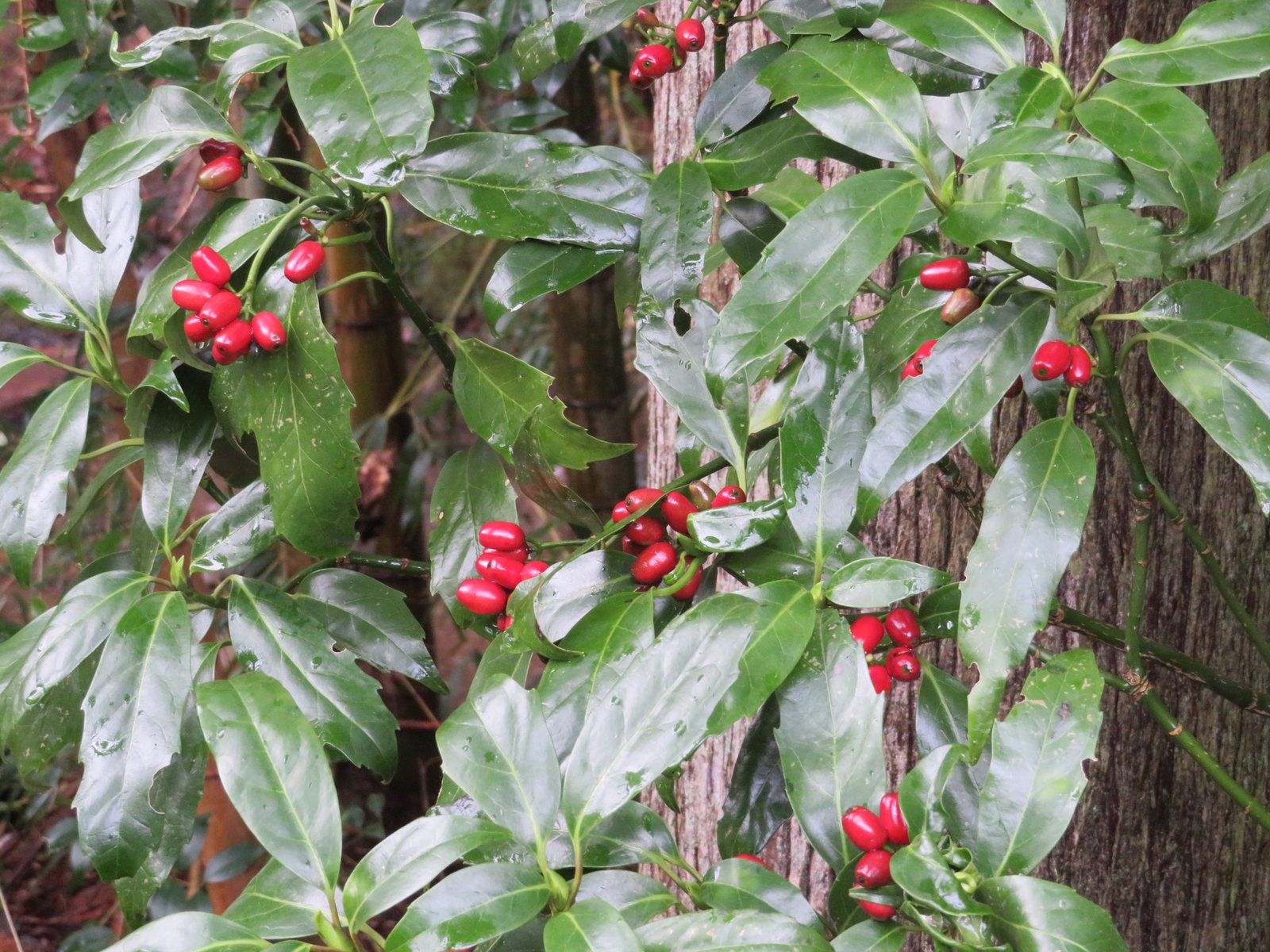
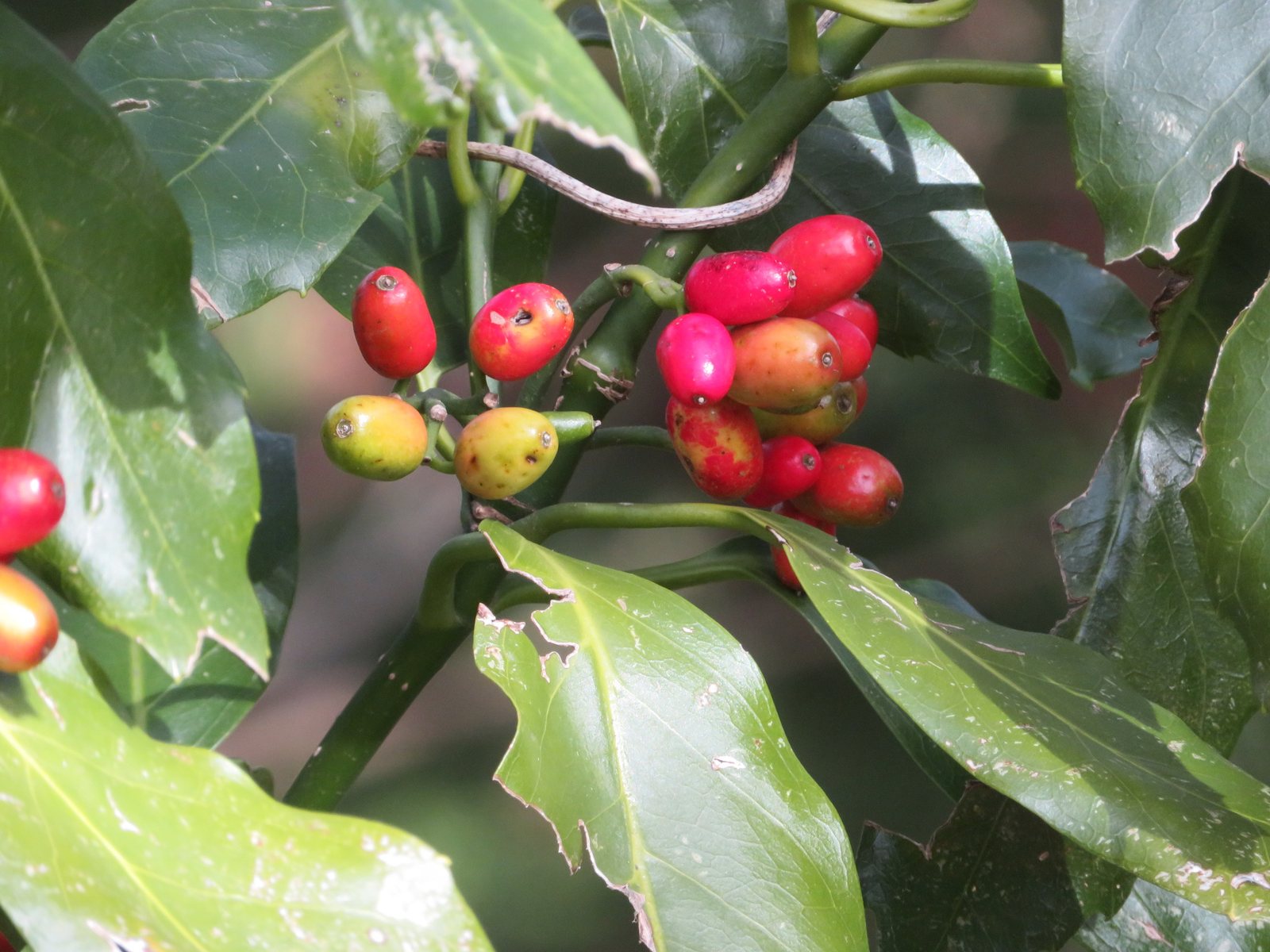
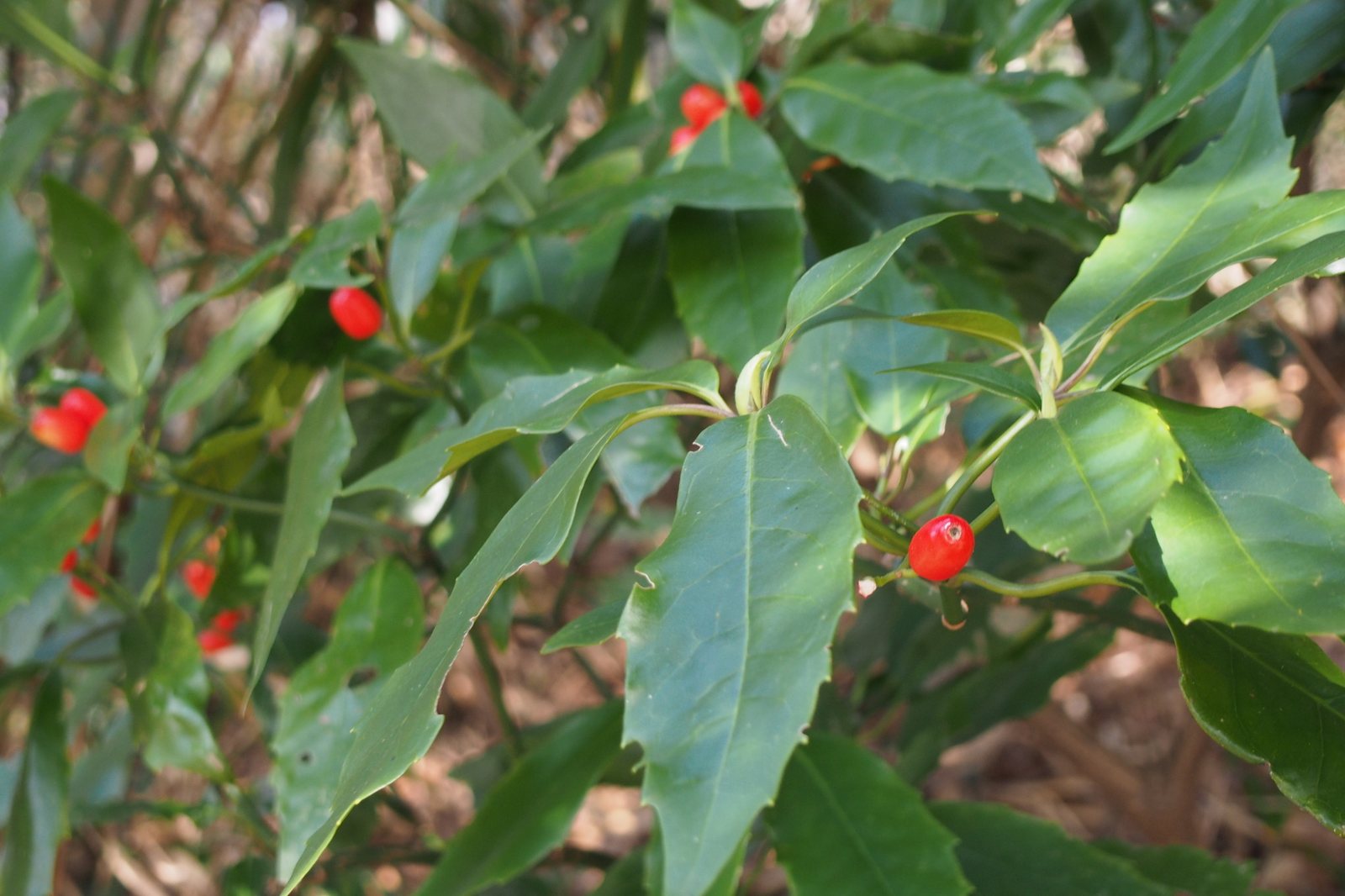
Spotted laurel is a broad-leaved evergreen shrub grown for its glossy foliage, often boldly marked with yellow spots. It brings year-round structure to shady gardens and tolerates dry shade once established. Female plants can carry red berries when a compatible male plant grows nearby.
At a glance
- Sun
- Partial to full shade; avoid strong afternoon sun, especially in hot climates.
- Water
- Water regularly while establishing; once established, water during prolonged dry spells. Avoid waterlogged roots.
- Soil
- Well-drained soil enriched with organic matter; tolerates clay if drainage is adequate, and a broad range of soil pH.
- Height
- 6-10 ft (1.8-3 m)
- Spread
- 6-10 ft (1.8-3 m)
- Flowers
- Small purple-maroon flowers in spring; usually inconspicuous among the leaves.
- Foliage
- Evergreen. Large, leathery, glossy leaves with toothed edges. Many garden forms have yellow speckles or blotches; plain green forms also occur.
- Growth
- Slow to moderate
- Care needed
- Low
The year at a glance
- Drought tolerant
- Heat tolerant
- Wildlife
- Low allergen
| J | F | M | A | M | J | J | A | S | O | N | D | |
|---|---|---|---|---|---|---|---|---|---|---|---|---|
| Flowers | ||||||||||||
| Fruit | ||||||||||||
| Plant |
Northern hemisphere months. In Australia, shift them by six.
- Difficulty
- Easy
- Toughness
- Very tough
Will it suit your garden?
Pick your zone, country, light and whether you have pets.
Full sun is 6 or more hours of direct sun a day, part shade 3 to 6 hours, shade under 3.
How it grows
Planting day
1.6 ft (0.5 m)
After 1 year
2.6 ft (0.79 m)
After 2 years
4 ft (1.1 m)
After 3 years
5 ft (1.4 m)
After 5 years
6 ft (2 m)
About 7 years to full size.
From a typical nursery size, at an average rate for this kind of plant. A rule of thumb, not a forecast.
Good to know
- Cats and dogs
- Safe
- Growth rate
- Slow
Care
Jobs through the year
- WaterApr–May, Sep–Oct, every 14 days
- Check established plants and water deeply only if soil is dry; water young shrubs more often.
- WaterJun–Aug, every 14 days
- Water established shrubs during prolonged drought; check young plants weekly for their first two summers.
- MulchMar–Apr
- Spread compost or leaf mould over the roots, keeping stems clear.
- FeedApr
- Apply a light balanced feed only if growth is weak or soil is poor.
- PruneApr–May
- After severe frosts, remove damaged shoots and selectively shorten growth; avoid shearing leaves.
- ProtectJan–Mar, Nov–Dec
- Shelter from drying winds; use fleece during severe freezes, especially in zone 6.
- Water deeply during dry weather through the first two growing seasons.
- Mulch with compost or leaf mould in spring, keeping it clear of the stems.
- Feed lightly in spring only if growth is weak or the soil is poor.
- Shelter from cold, drying winds and strong afternoon sun.
- For berries, plant a known female with a compatible male nearby; most plants have separate male and female flowers.
Pruning. Prune in mid- to late spring, once severe frosts have passed, removing damaged wood and shortening wayward shoots with secateurs rather than shearing through the leaves. To renovate an overgrown shrub, remove up to one-third of the oldest stems near ground level each spring.
Through the year
- Early spring
- Check for winter damage, but wait until the risk of severe frost has passed before cutting it out.
- Spring
- Apply an organic mulch and water newly planted shrubs during dry weather.
- Mid- to late spring
- Prune selectively to shape the shrub or remove old stems.
- Summer
- Check soil moisture during prolonged drought, particularly under trees and beside walls.
- Late summer
- Take semi-ripe cuttings from healthy, non-flowering shoots.
- Autumn
- Plant in mild regions while the soil is still warm; in colder areas, leave planting until spring.
In the garden
- Use yellow-speckled forms to brighten a shaded border beside dark evergreen foliage.
- Plant beneath established trees where roots and shade limit the choice of shrubs, allowing extra water while it establishes.
- Grow as an informal evergreen screen in a sheltered, shaded boundary.
- Pair with ferns and hostas for contrasting leaf shapes in a woodland-style garden.
- Use a compact cultivar in a large, well-drained container in a shaded courtyard.
Garden styles it suits: Woodland, Japanese, Urban city garden, Traditional, Low-maintenance and Winter interest.
Plant it with: Hart's tongue fern, Japanese painted fern, Hosta, Hellebore, Japanese skimmia and Lilyturf.
Wildlife: Dense evergreen growth provides shelter for birds. Birds may eat the ripe berries, although the shrub is not a major nectar source.
Problems to watch for
- Brown or bleached leaves: strong sun, drought or cold wind can scorch foliage; improve shelter, check soil moisture and remove damaged leaves after frost risk passes.
- Root rot: persistently wet soil causes wilting and dieback; improve drainage and avoid overwatering. Remove badly affected plants.
- Scale insects: check stems and leaf undersides; wipe off small infestations or use a labelled horticultural oil according to its directions.
- Blackened shoots or leaves: frost injury and dieback can look similar; cut back to healthy wood in spring, clean tools and correct drainage or moisture problems.
Safety
Leaves and berries can cause mild stomach upset if eaten by people, especially children. Aucuba japonica is generally classified as non-toxic to cats, dogs and horses, but it is not an edible plant and chewing it may still cause digestive upset.
Easily confused with
Gold dust dracaena (Dracaena surculosa)
Also has yellow-spotted leaves, but they have smooth rather than toothed margins and grow on slender, cane-like stems. It is a tropical houseplant in colder climates.
Cherry laurel (Prunus laurocerasus)
Has alternate rather than opposite leaves, upright clusters of white flowers and fruits that ripen black rather than red.
Japanese skimmia (Skimmia japonica)
Has smaller leaves with smooth edges, arranged alternately and clustered towards shoot tips, with conspicuous clusters of pale flowers and berries.
The name
Aucuba comes from the Japanese name aoki, japonica means 'of Japan', and spotted laurel refers to the yellow-marked, laurel-like leaves of common garden forms.
Propagation. Take semi-ripe cuttings in late summer and root them in a sheltered propagator or cold frame. Seed is slow and does not reliably preserve a cultivar's leaf markings; cuttings also preserve the parent plant's sex.
Checked against open data
- Accepted botanical name
- Aucuba japonica
- In the US and Canada
- Introduced in the lower 48 states.
- Native range
- China Southeast, Japan, Korea, Nansei-shoto and Taiwan.
- Measured
- Average height 200 cm.
Sources: GBIF (CC BY 4.0), USDA PLANTS and Trefle (CC BY 4.0). The care and design notes are LandscapeGPT's own.
See it in your own yard.
Upload a photo of your yard and see it redesigned with plants that suit your climate, each checked against your zone.