Spring Grove arborvitae
Thuja plicata 'Spring Grove'. Family Cupressaceae. Tree.
Also called Spring Grove western red cedar, Spring Grove western arborvitae.
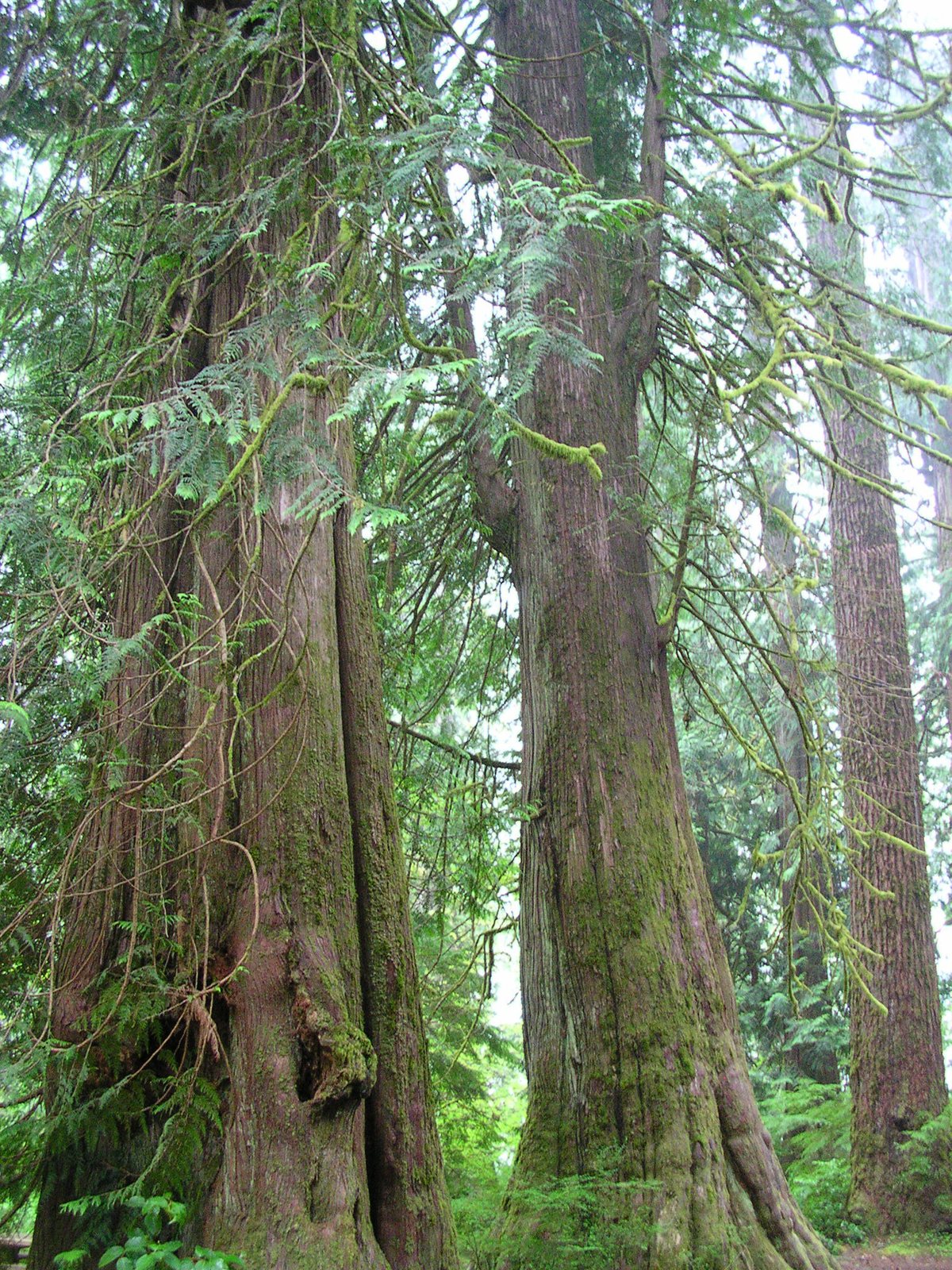
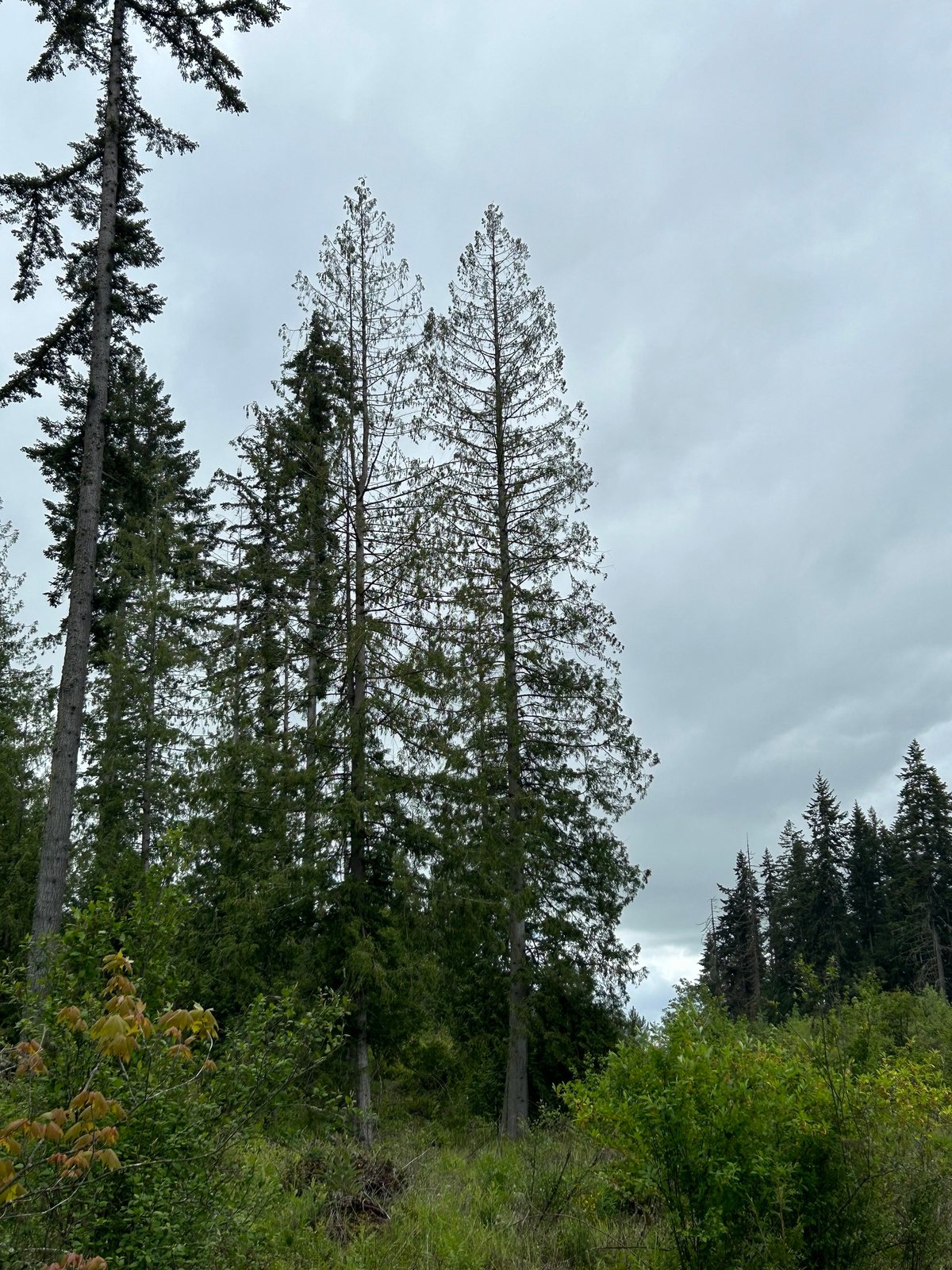
Spring Grove arborvitae is a large, broadly pyramidal evergreen grown for its dense green foliage and year-round screening. It needs generous space and reasonably moist soil; it is not a dwarf conifer or a good choice for a narrow foundation bed.
At a glance
- Sun
- Full sun to partial shade; growth is denser with good light.
- Water
- Moderate to high; keep the root zone evenly moist, especially during establishment and hot, dry weather.
- Soil
- Deep, moisture-retentive but well-drained soil. Tolerates clay if drainage is adequate, but struggles in very dry, shallow or persistently waterlogged ground.
- Height
- 20-30 ft (6-9 m) in many garden descriptions; can exceed 40 ft (12 m) over time
- Spread
- 10-15 ft (3-4.6 m), potentially wider with age
- Foliage
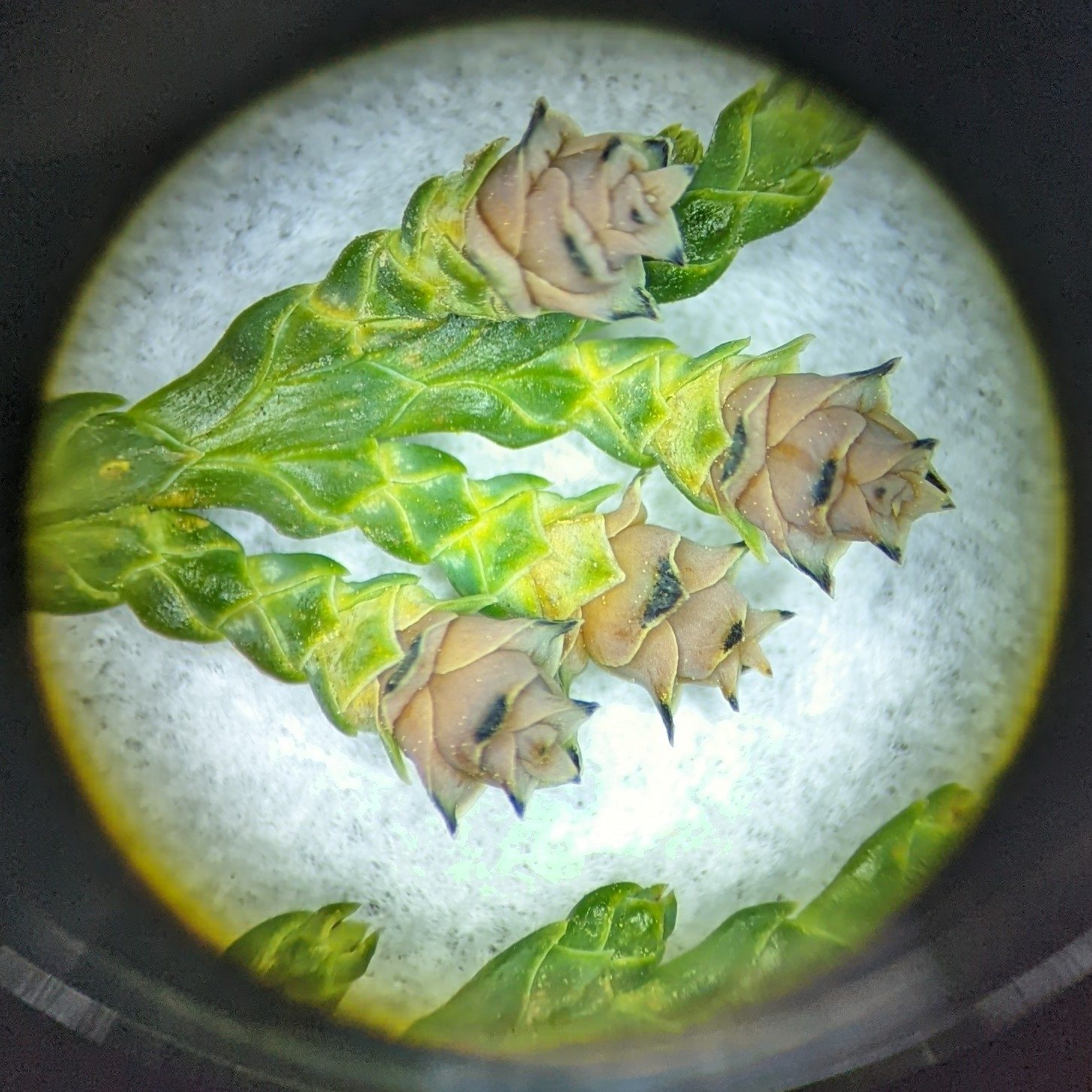
- Evergreen. Aromatic, flattened sprays of glossy, scale-like green leaves, with pale markings beneath. Selected for good winter colour, though exposed foliage can bronze or scorch in harsh conditions.
- Growth
- Moderate to fast once established, depending on moisture, soil and climate.
- Care needed
- Low
The year at a glance
- Wildlife
| J | F | M | A | M | J | J | A | S | O | N | D | |
|---|---|---|---|---|---|---|---|---|---|---|---|---|
| Plant |
Northern hemisphere months. In Australia, shift them by six.
- Difficulty
- Easy
- Toughness
- Fairly tough
Will it suit your garden?
Pick your zone, country, light and whether you have pets.
Full sun is 6 or more hours of direct sun a day, part shade 3 to 6 hours, shade under 3.
How it grows
Planting day
7 ft (2 m)
After 1 year
8 ft (2.3 m)
After 2 years
9 ft (2.7 m)
After 3 years
10 ft (3 m)
After 5 years
12 ft (3.7 m)
About 16 years to full size.
From a typical nursery size, at an average rate for this kind of plant. A rule of thumb, not a forecast.
Good to know
- Cats and dogs
- Toxic
- Native to
- Canada
- Growth rate
- Fast
Care
Jobs through the year
- WaterMar–May, Sep–Nov, every 14 days
- Water established trees deeply if soil is drying and unfrozen; young trees need more frequent checks.
- WaterJun–Aug, every 7 days
- Water established trees deeply during dry spells; skip if moist and check young trees more often.
- MulchApr, Oct
- Maintain 5-8 cm of organic mulch over the root zone, clear of the trunk.
- FeedApr
- Feed lightly only if growth is weak and soil fertility is poor.
- PruneFeb–Mar
- Remove dead or damaged branches without cutting healthy growth back into bare wood.
- PruneMay–Jun
- If grown as a hedge, trim leafy growth lightly and keep the base wider than the top.
- ProtectJan–Mar, Nov–Dec
- Fence against deer where needed and keep salt spray and salty shoveled snow away.
- Water deeply during dry spells for the first two growing seasons; established trees also need help during prolonged drought.
- Spread 2-3 in (5-8 cm) of organic mulch over the root zone, keeping it clear of the trunk.
- Plant with the root flare at soil level and allow room for the mature width.
- Feed in spring only if growth is weak and soil fertility is poor; avoid heavy nitrogen feeding.
- In cold climates, water before the ground freezes if autumn has been dry.
Pruning. Remove dead or damaged branches in late winter or early spring. For a hedge, trim lightly in late spring or early summer, keeping the base wider than the top; do not cut back into bare old wood, which usually does not regrow.
Through the year
- Early spring
- Check for winter scorch, broken branches and loose ties; remove damaged growth once its condition is clear.
- Spring
- Plant while conditions are cool and the soil is workable; water thoroughly and mulch.
- Late spring
- Lightly trim hedges if needed, staying within leafy growth.
- Summer
- Check soil moisture during dry weather and inspect foliage for mites or browning.
- Autumn
- Replenish mulch and water deeply if rainfall has been low.
- Winter
- Keep de-icing salt away from the root zone and avoid piling salty snow against the foliage.
In the garden
- Create a tall evergreen screen along a spacious boundary, allowing for its mature width.
- Use as a single pyramidal specimen in a large lawn or park-like garden.
- Provide a dark green backdrop for flowering shrubs, ferns and shade-tolerant perennials.
- Form a broad clipped hedge where there is room for regular access and maintenance.
Garden styles it suits: Traditional, Formal, Grand estate, Woodland, Pacific Northwest woodland and Winter interest.
Plant it with: Rhododendrons, Japanese maples, Oakleaf hydrangeas, Hostas, Western sword ferns and Japanese forest grass.
Wildlife: Dense foliage offers shelter and potential nesting sites for birds. Deer may browse the foliage, particularly in winter.
Problems to watch for
- Drought and winter scorch: water deeply during dry periods, mulch the root zone and shelter young plants from drying winds.
- Root rot in saturated soil: improve drainage or choose another site; do not leave roots standing in water.
- Spider mites: look for fine stippling and webbing during dry weather; rinse foliage and use a labelled treatment only if an active infestation persists.
- Deer browsing: western red cedar is not deer-proof; protect young trees with a substantial fence where browsing pressure is high.
Safety
Do not treat it as edible or livestock fodder. Foliage and especially concentrated leaf oil contain compounds that can be harmful if swallowed; sap or foliage may also irritate sensitive skin. Reliable species-specific poisoning information for cats, dogs and horses is limited, so keep clippings away from pets and grazing animals and seek veterinary advice after substantial ingestion.
Easily confused with
Eastern arborvitae (Thuja occidentalis)
Its foliage undersides generally lack the conspicuous pale butterfly-shaped markings typical of western red cedar. Cultivar shapes overlap, so check the nursery label.
Lawson cypress (Chamaecyparis lawsoniana)
It bears small, rounded woody cones rather than the elongated cones with overlapping scales found on Thuja.
Green Giant arborvitae (Thuja 'Green Giant')
This vigorous hybrid often develops a narrower, more strongly conical outline, but foliage alone is not a dependable distinction; a reliable plant label is the best guide.
The name
The species name plicata means folded or pleated, referring to the foliage, while arborvitae is Latin for tree of life.
Propagation. Propagate by semi-ripe cuttings in late summer, using a free-draining medium and humid conditions. Seedlings will not reliably retain the cultivar's characteristics.
Checked against open data
- Accepted botanical name
- Thuja plicata
- Native range
- Alaska, Alberta, British Columbia, California, Idaho, Montana, Oregon and Washington.
- Measured
- Soil pH 5.1 to 7.1. Average height 2030 cm.
Sources: GBIF (CC BY 4.0) and Trefle (CC BY 4.0). The care and design notes are LandscapeGPT's own.
See it in your own yard.
Upload a photo of your yard and see it redesigned with plants that suit your climate, each checked against your zone.