Star of Persia
Allium cristophii. Family Amaryllidaceae. Bulb.
Also called Persian onion.
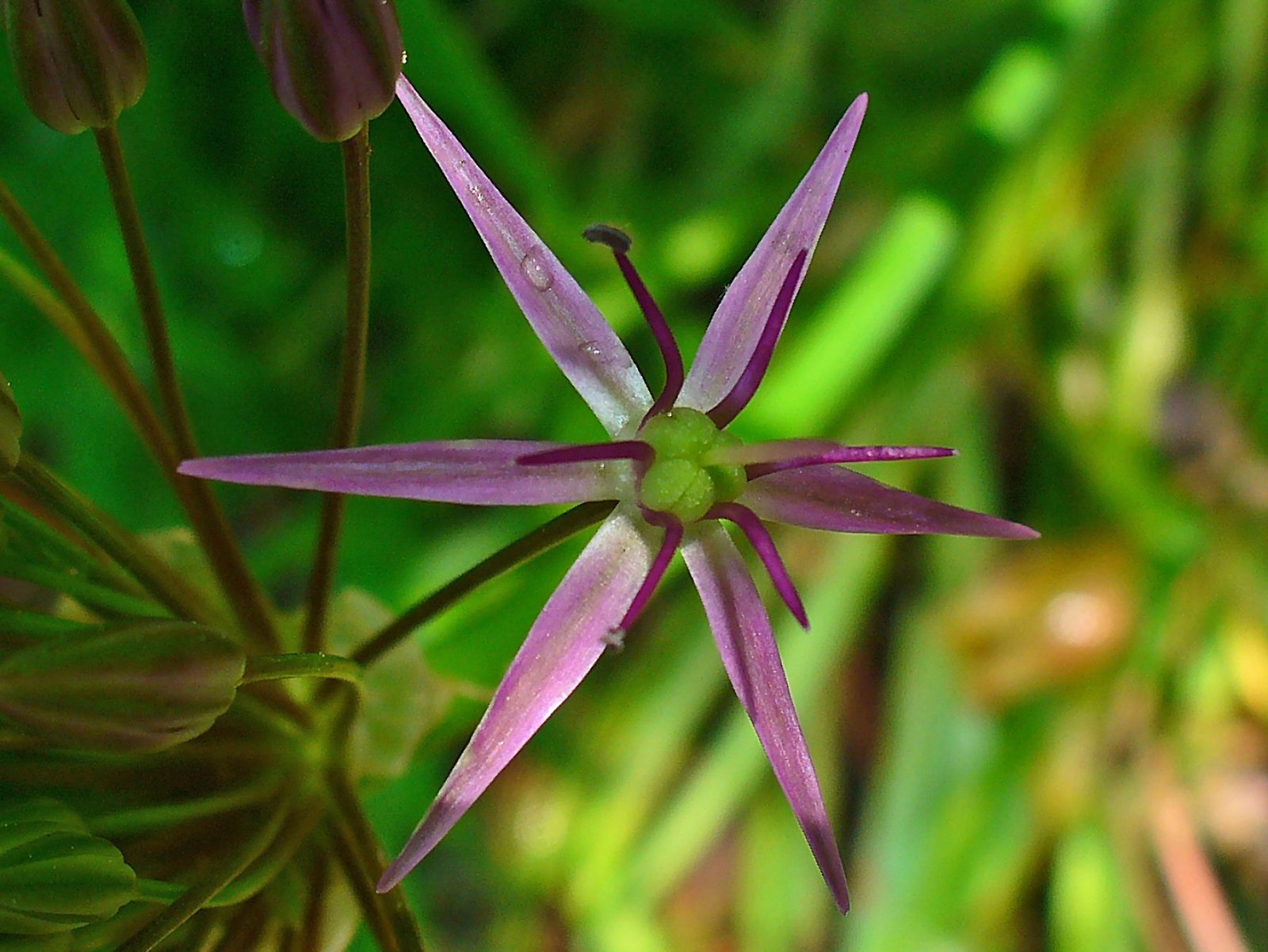
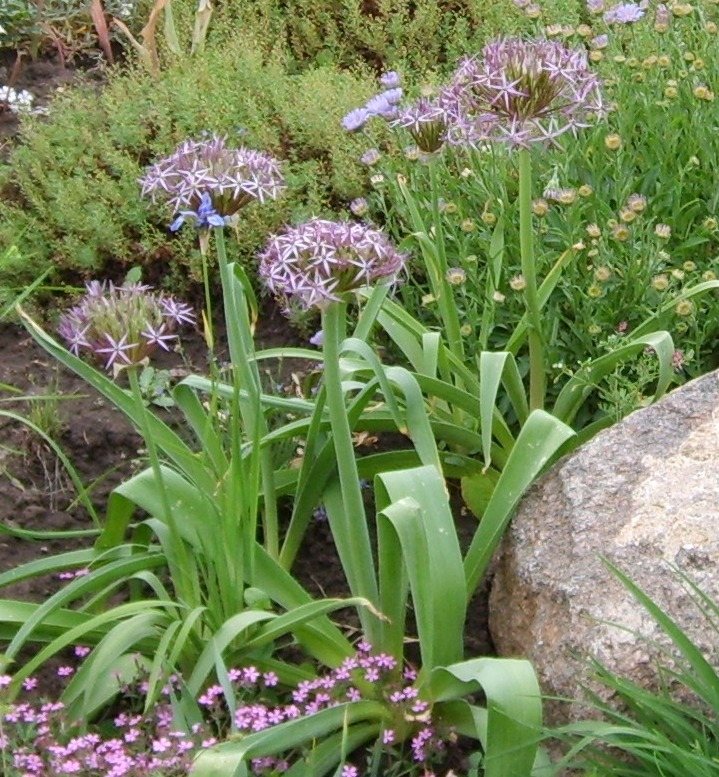
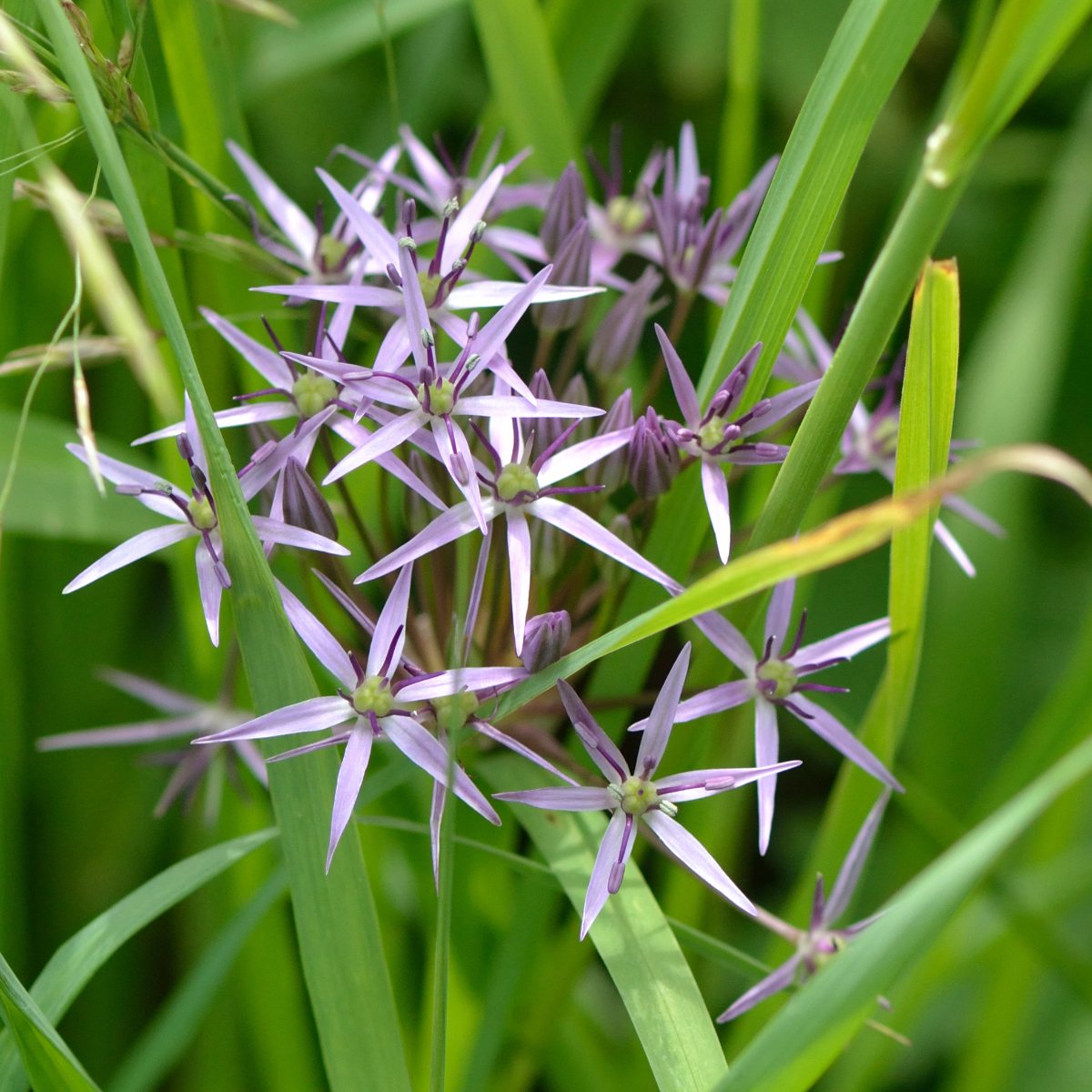
Star of Persia is a deciduous ornamental onion grown for large, open globes of metallic lilac-purple, star-shaped flowers in late spring and early summer. Its dried flower heads remain attractive after flowering, while the leaves die back and the bulb rests underground through summer.
At a glance
- Sun
- Full sun; flowering is weaker in shade.
- Water
- Water moderately during active growth, allowing the soil to drain between waterings. Keep relatively dry during summer dormancy and avoid winter waterlogging.
- Soil
- Well-drained sandy, loamy or gritty soil, preferably neutral to alkaline. Improve drainage in heavy soil or plant in a raised bed.
- Height
- 1-2 ft (0.3-0.6 m)
- Spread
- 0.5-1 ft (0.15-0.3 m)
- Flowers
- Late spring to early summer; metallic lilac-purple stars form open spherical heads up to 8-10 in (20-25 cm) across.
- Foliage
- Broad, strap-shaped, grey-green basal leaves with hairy margins; they often begin yellowing before the flowers open.
- Growth
- Moderate; established bulbs flower annually, but clumps enlarge slowly.
- Care needed
- Low
The year at a glance
- Pollinators
- Deer resistant
- Drought tolerant
- Low allergen
| J | F | M | A | M | J | J | A | S | O | N | D | |
|---|---|---|---|---|---|---|---|---|---|---|---|---|
| Flowers | ||||||||||||
| Fruit | ||||||||||||
| Plant |
Northern hemisphere months. In Australia, shift them by six.
- Difficulty
- Easy
- Toughness
- Very tough
Will it suit your garden?
Pick your zone, country, light and whether you have pets.
Full sun is 6 or more hours of direct sun a day, part shade 3 to 6 hours, shade under 3.
How it grows
Planting day
0.5 ft (0.15 m)
After 1 year
1.2 ft (0.38 m)
After 2 years
1.5 ft (0.45 m)
full size
About 1 years to full size.
From a typical nursery size, at an average rate for this kind of plant. A rule of thumb, not a forecast.
Good to know
- Cats and dogs
- Toxic
- Growth rate
- Slow
Care
Jobs through the year
- WaterMar–Apr, every 14 days
- Water established bulbs only during extended dry spells while leaves are green.
- WaterMay–Jun, every 10 days
- Water if soil is dry while foliage remains green; stop once bulbs become dormant.
- FeedMar
- Apply a light bulb fertiliser as shoots emerge only if soil is poor.
- PruneJun–Jul
- Remove fully yellow, withered leaves; retain dried flower heads for structure.
- DivideAug–Sep
- Lift and separate dormant bulbs only if crowded or flowering declines; replant promptly.
- ProtectJan–Feb, Nov–Dec
- Keep drainage clear and heavy, moisture-holding mulch away from bulb crowns.
- Plant bulbs in autumn, about 4-6 in (10-15 cm) deep and 8-12 in (20-30 cm) apart.
- Water during prolonged dry spells while leaves are green; stop routine watering once the foliage dies back.
- On poor soil, apply a light dressing of balanced bulb fertiliser as shoots emerge in spring.
- Keep heavy, moisture-holding mulch away from the bulb crowns, especially in wet climates.
- Leave bulbs undisturbed unless flowering declines or clumps become crowded; divide during dormancy.
Pruning. Leave the flower heads standing for their dried structure, or remove them after flowering to prevent seeding. Cut leaves off at ground level only once they are fully yellow and withered.
Through the year
- Autumn
- Plant bulbs in a sunny position with sharp drainage.
- Early spring
- Check emerging shoots for slug damage and feed lightly if the soil is poor.
- Spring
- Water during extended dry spells while foliage is actively growing.
- Late spring to early summer
- Leave flower heads to dry, or remove them before seeds ripen if seedlings are unwanted.
- Summer
- Remove fully dead foliage and avoid watering the dormant bulbs unnecessarily.
- Late summer
- Lift and separate crowded bulbs if needed, then replant promptly.
- Winter
- Check that beds and containers drain freely rather than remaining saturated.
In the garden
- Plant in loose groups through gravel gardens, where the spherical flowers contrast with stones and low cushions of foliage.
- Thread through catmint, hardy geraniums or lady's mantle to conceal the yellowing basal leaves.
- Repeat along the front or middle of a sunny border for a consistent late-spring accent.
- Leave dried heads among grasses and later-flowering perennials for summer structure.
Garden styles it suits: Dry gravel garden, New perennial (prairie), Cottage garden, Architectural minimal, Mediterranean and Pollinator garden.
Plant it with: Catmint, Hardy geranium, Lady's mantle, Lavender, Meadow sage and Lamb's ear.
Wildlife: Flowers provide nectar and pollen for bees and other visiting insects. Deer and rabbits usually avoid the onion-scented foliage, although no plant is completely browse-proof.
Problems to watch for
- Bulb rot in wet soil: improve drainage, use raised beds where necessary and avoid watering during dormancy.
- Slugs and snails eating emerging leaves: inspect young growth and use hand-picking or locally approved controls.
- Weak or absent flowering: move bulbs into full sun, avoid excessive nitrogen and allow leaves to die back naturally.
- Unwanted seedlings: remove flower heads before seeds ripen; pull young seedlings while their bulbs are small.
Safety
Treat all parts, including bulbs, leaves and flowers, as toxic to cats, dogs and horses if eaten; alliums can damage red blood cells and cause potentially serious anaemia. This ornamental species is not a food plant; ingestion by people may cause nausea, vomiting or diarrhoea. Seek veterinary advice promptly after a pet or horse eats it.
Easily confused with
Schubert's allium (Allium schubertii)
Its flower stalks are dramatically unequal in length, producing an irregular firework-like head rather than the more evenly rounded globe of Star of Persia.
Giant onion (Allium giganteum)
It has much taller stems and dense purple flower balls made of smaller, closely packed flowers; Star of Persia is shorter with large, clearly separated stars.
The name
Allium is the Latin name for garlic, while Star of Persia refers to the star-shaped flowers and the plant's association with the Persian region.
Propagation. Separate offsets from dormant bulbs in late summer or autumn. Alternatively, sow ripe seed in a container outdoors and allow natural winter chilling; seedlings can take several years to reach flowering size and may not appear all at once.
Checked against open data
- Accepted botanical name
- Allium cristophii
- Native range
- Iran, Turkey and Turkmenistan.
Sources: GBIF (CC BY 4.0) and Trefle (CC BY 4.0). The care and design notes are LandscapeGPT's own.
See it in your own yard.
Upload a photo of your yard and see it redesigned with plants that suit your climate, each checked against your zone.