Stella cherry
Prunus avium 'Stella'. Family Rosaceae. Tree.
Also called Stella sweet cherry, Self-fertile sweet cherry.
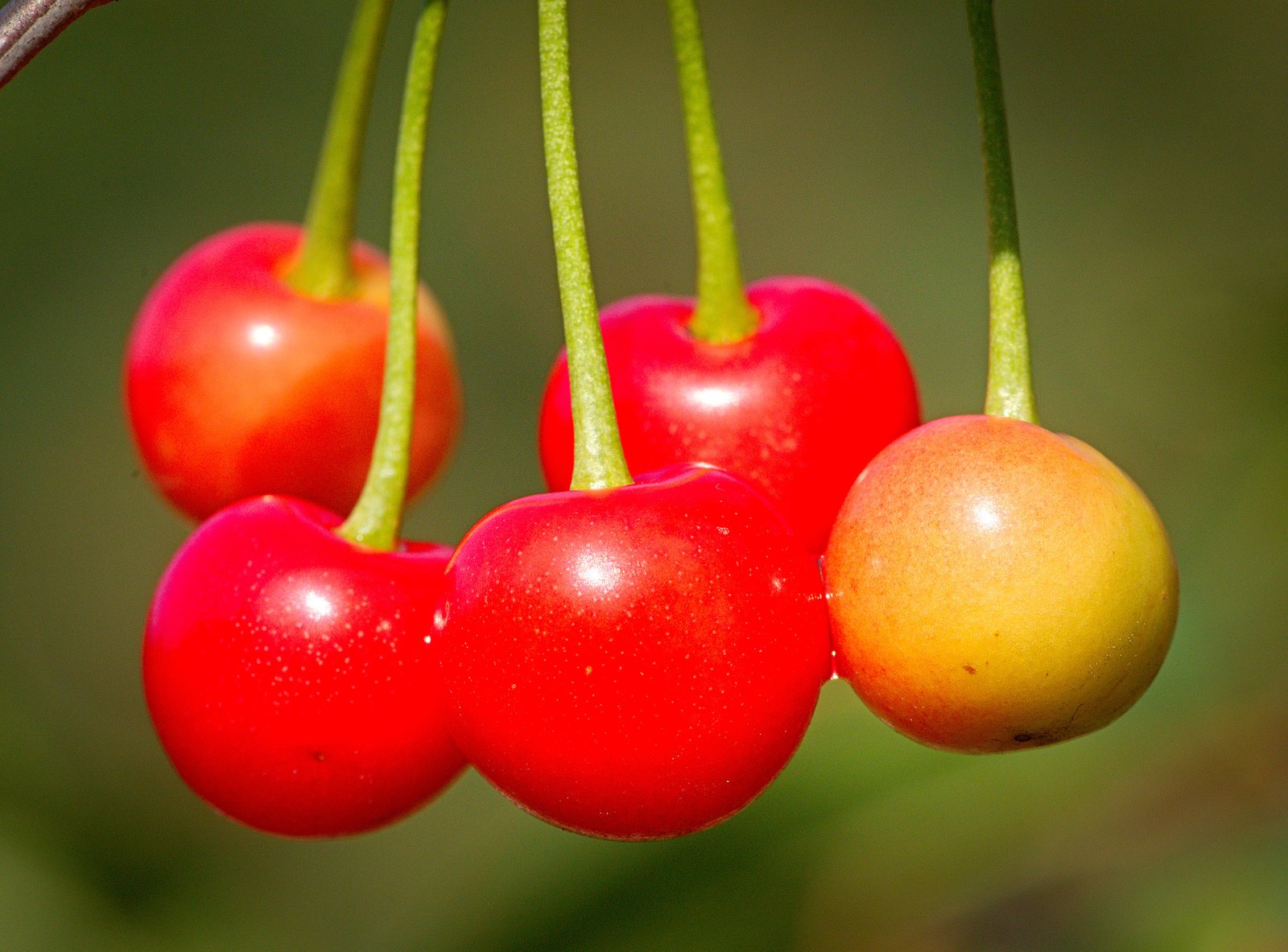
Stella is a deciduous sweet cherry grown for its large, dark red fruit and white spring blossom. It is self-fertile, so one tree can produce a crop, but it needs winter chilling, good drainage and protection from birds; its eventual size depends heavily on the rootstock.
At a glance
- Sun
- Full sun, preferably with at least 6-8 hours of direct light daily. Choose a sheltered position away from frost pockets.
- Water
- Water deeply during establishment and during dry spells as fruit develops. Keep moisture reasonably even without leaving the roots waterlogged.
- Soil
- Deep, fertile, well-drained loam, ideally pH 6.0-7.5. Avoid poorly drained clay and shallow, drought-prone soil.
- Height
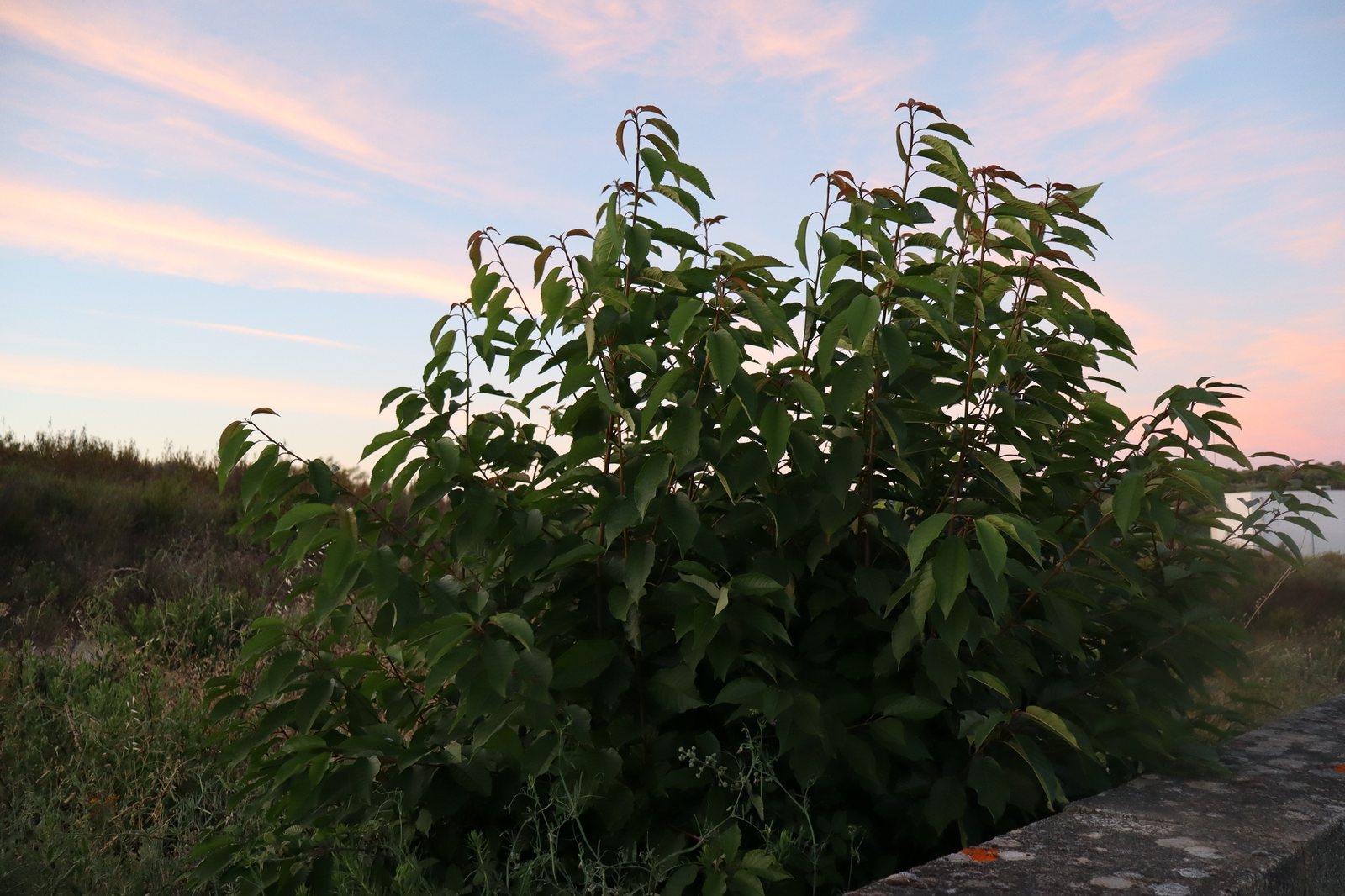
- 20-30 ft (6-9 m) on vigorous rootstock; about 8-12 ft (2.4-3.7 m) on dwarfing rootstock with suitable pruning
- Spread
- 15-25 ft (4.6-7.6 m) on vigorous rootstock; about 8-12 ft (2.4-3.7 m) on dwarfing rootstock
- Flowers
- White flowers in clusters in mid-spring, usually before or as the leaves unfold.
- Foliage
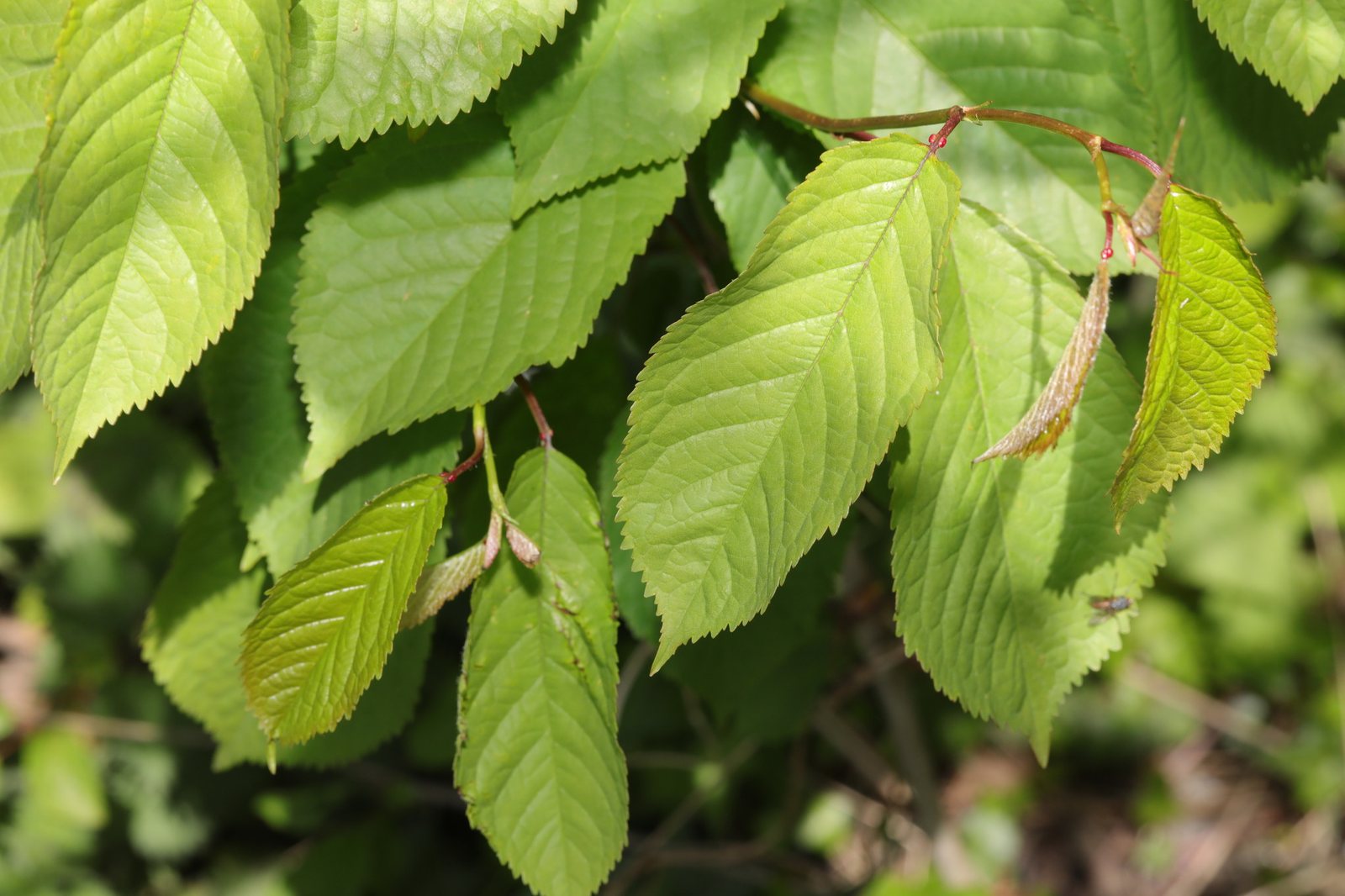
- Green, oval to elongated leaves with sharply toothed edges; usually yellow to orange in autumn.
- Growth
- Moderate; strongly influenced by rootstock, soil and pruning.
- Care needed
- High
The year at a glance
- Pollinators
- Wildlife
- Low allergen
- Edible
| J | F | M | A | M | J | J | A | S | O | N | D | |
|---|---|---|---|---|---|---|---|---|---|---|---|---|
| Flowers | ||||||||||||
| Fruit | ||||||||||||
| Plant |
Northern hemisphere months. In Australia, shift them by six.
- Difficulty
- Moderate
- Toughness
- Fairly tough
Will it suit your garden?
Pick your zone, country, light and whether you have pets.
Full sun is 6 or more hours of direct sun a day, part shade 3 to 6 hours, shade under 3.
How it grows
Planting day
7 ft (2 m)
After 1 year
7 ft (2.3 m)
After 2 years
8 ft (2.6 m)
After 3 years
9 ft (2.8 m)
After 5 years
11 ft (3.4 m)
About 20 years to full size.
From a typical nursery size, at an average rate for this kind of plant. A rule of thumb, not a forecast.
Good to know
- Cats and dogs
- Toxic
- Native to
- the UK
- Invasive in
- the US
- Growth rate
- Moderate
Care
Jobs through the year
- WaterApr–May, Sep–Oct, every 14 days
- Water deeply when dry; newly planted or dwarf-rootstock trees need closer moisture checks.
- WaterJun–Aug, every 7 days
- Maintain even moisture during fruit development; skip watering when rainfall keeps soil moist.
- FeedMar
- Feed lightly only if growth was weak; avoid heavy nitrogen applications.
- MulchMar–Apr
- Renew a 5–8 cm organic mulch, keeping the trunk and graft union clear.
- ProtectApr
- Cover small trees with fleece on frosty blossom nights; remove it by day for pollinators.
- ProtectJun–Jul
- Net fruit before colouring with taut wildlife-safe netting; check daily for trapped animals.
- HarvestJun–Jul
- Pick fully dark red, sweet cherries with stalks attached, protecting the fruiting spurs.
- PruneJul–Aug
- After harvest, prune lightly in dry weather and remove rootstock suckers; retain fruiting spurs.
- ProtectOct–Nov
- Remove fallen diseased fruit and leaves, check ties and guard young trunks from browsing.
- Plant with the graft union clearly above soil level; check the rootstock's mature size before buying.
- Water deeply through the first two growing seasons and during prolonged dry weather thereafter.
- Spread a 2-3 in (5-8 cm) layer of organic mulch over the root area, keeping it clear of the trunk.
- Feed lightly in early spring if growth is weak; avoid heavy nitrogen feeding, which encourages leafy growth rather than fruit.
- Stake newly planted trees where needed; some dwarfing rootstocks require permanent support.
- Protect ripening fruit with taut, wildlife-safe netting on a frame, checking it daily for trapped animals.
Pruning. Train young trees in dry weather in late spring or summer, and prune established trees lightly after harvest to remove dead, crossing or crowded branches. Avoid routine winter pruning, which increases the risk of silver leaf and bacterial canker, and retain the short fruiting spurs.
Harvest
Pick cherries when fully dark red, plump and sweet, usually in early to midsummer; they do not become sweeter after picking. Lift each fruit gently with its stalk attached without damaging the fruiting spur. Expect a first worthwhile crop about 3-5 years after planting on dwarfing rootstock, or 5-7 years on vigorous rootstock, depending on the tree's age and growing conditions.
Through the year
- Late autumn to late winter
- Plant dormant bare-root trees while the soil is workable and not waterlogged or frozen.
- Early spring
- Refresh mulch, check ties and apply a modest feed if growth was weak the previous year.
- Mid-spring
- Watch for blossom frost; protect small trees with horticultural fleece overnight, removing it during the day for pollinators.
- Late spring
- Check shoot tips for black cherry aphids and keep newly planted trees evenly watered.
- Early to midsummer
- Net before fruit colours, harvest ripe cherries and promptly remove rotten fruit.
- After summer harvest
- Prune lightly during a dry spell and remove unwanted rootstock suckers.
- Autumn
- Clear fallen fruit and diseased leaves, and check young trunks for browsing damage.
In the garden
- Use a dwarf-rootstock tree as the main fruiting feature in a small edible garden.
- Plant in a home orchard with access around the canopy for pruning, netting and picking.
- Train as a fan against a sunny wall or fence where space and a suitable rootstock allow.
- Combine spring blossom with a low border of flowering herbs, keeping the immediate trunk area clear.
Garden styles it suits: Backyard orchard, Edible landscape, Potager (kitchen garden), Cottage garden, Homestead and Traditional.
Plant it with: Chives, Thyme, Sweet alyssum, Calendula and Yarrow.
Wildlife: Spring flowers provide pollen and nectar for bees. Birds eat the cherries, and the canopy offers shelter; avoid insecticides during flowering.
Problems to watch for
- Bird damage: protect fruit before it starts colouring with securely fitted, wildlife-safe netting.
- Fruit cracking and brown rot: maintain even soil moisture, keep the canopy open and remove split, rotting and mummified fruit promptly; rain near harvest can still cause losses.
- Bacterial canker and silver leaf: prune only in dry late-spring or summer weather, disinfect tools between affected trees and remove diseased wood back to healthy growth.
- Black cherry aphids: inspect curled shoot tips, encourage ladybirds and other predators, and treat accessible colonies with a locally approved insecticidal soap if necessary.
Safety
Leaves, stems and the kernels inside the stones contain cyanogenic compounds and can cause serious poisoning in people, cats, dogs and horses if chewed and eaten. Wilted leaves are particularly hazardous to grazing livestock. Ripe fruit flesh is edible, but remove stones before sharing it with pets or young children; stones also pose choking and obstruction risks.
Where it spreads. The species Prunus avium is introduced and listed as invasive in parts of the eastern United States, including Pennsylvania and Virginia. Birds can disperse its seeds beyond gardens; this concern applies to the species rather than specifically to 'Stella'. Remove unwanted seedlings and rootstock suckers.
Easily confused with
Bing cherry (Prunus avium 'Bing')
Both bear large, dark sweet cherries and are difficult to distinguish reliably by appearance. 'Bing' generally needs a compatible pollination partner; use a trustworthy nursery label to confirm identity.
Lapins cherry (Prunus avium 'Lapins')
Another self-fertile, dark-fruited sweet cherry, usually ripening later than 'Stella' in the same garden. Appearance alone is not a dependable identification.
Morello cherry (Prunus cerasus 'Morello')
Its dark red fruit is distinctly sour and mainly used for cooking. Trees are generally smaller and more twiggy, although rootstock and training affect size.
The name
Prunus is the Latin name for plum trees, and avium means 'of birds', referring to birds eating the fruit.
Propagation. Propagate by budding or grafting onto a compatible cherry rootstock. Seedlings do not come true to 'Stella', and the rootstock determines much of the tree's size, anchorage and soil tolerance.
Checked against open data
- Accepted botanical name
- Prunus avium
- In the US and Canada
- Introduced in Canada and the lower 48 states.
- Native range
- Afghanistan, Albania, Algeria, Austria, Belarus, Belgium, Bulgaria, Corse, Cyprus, Czechoslovakia, Denmark and France.
- Measured
- Soil pH 5.5 to 6.5. Average height 1220 cm.
Sources: GBIF (CC BY 4.0), USDA PLANTS and Trefle (CC BY 4.0). The care and design notes are LandscapeGPT's own.
See it in your own yard.
Upload a photo of your yard and see it redesigned with plants that suit your climate, each checked against your zone.