Stock
Matthiola incana. Family Brassicaceae. Annual.
Also called Garden stock, Ten-week stock, Brompton stock, Gillyflower.
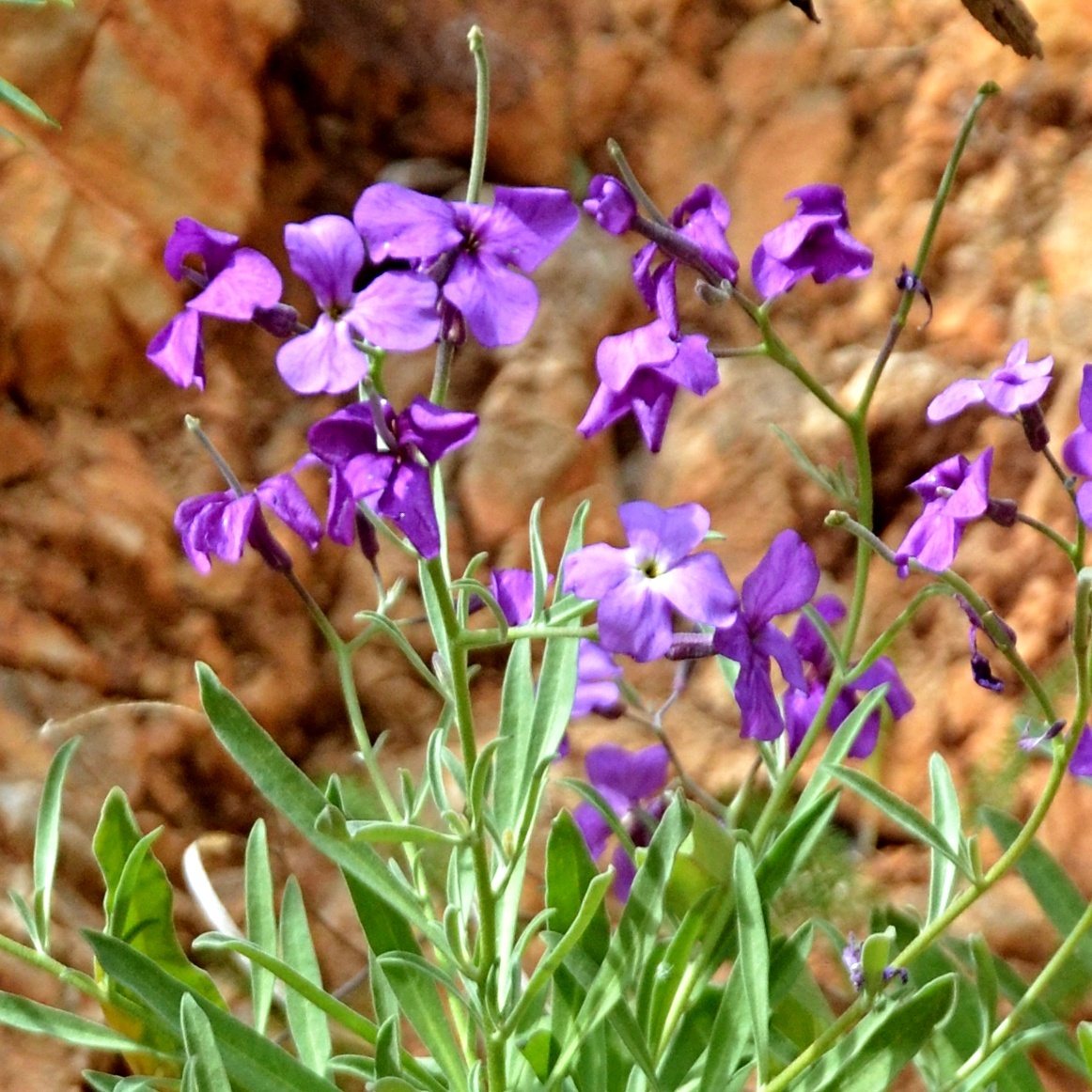
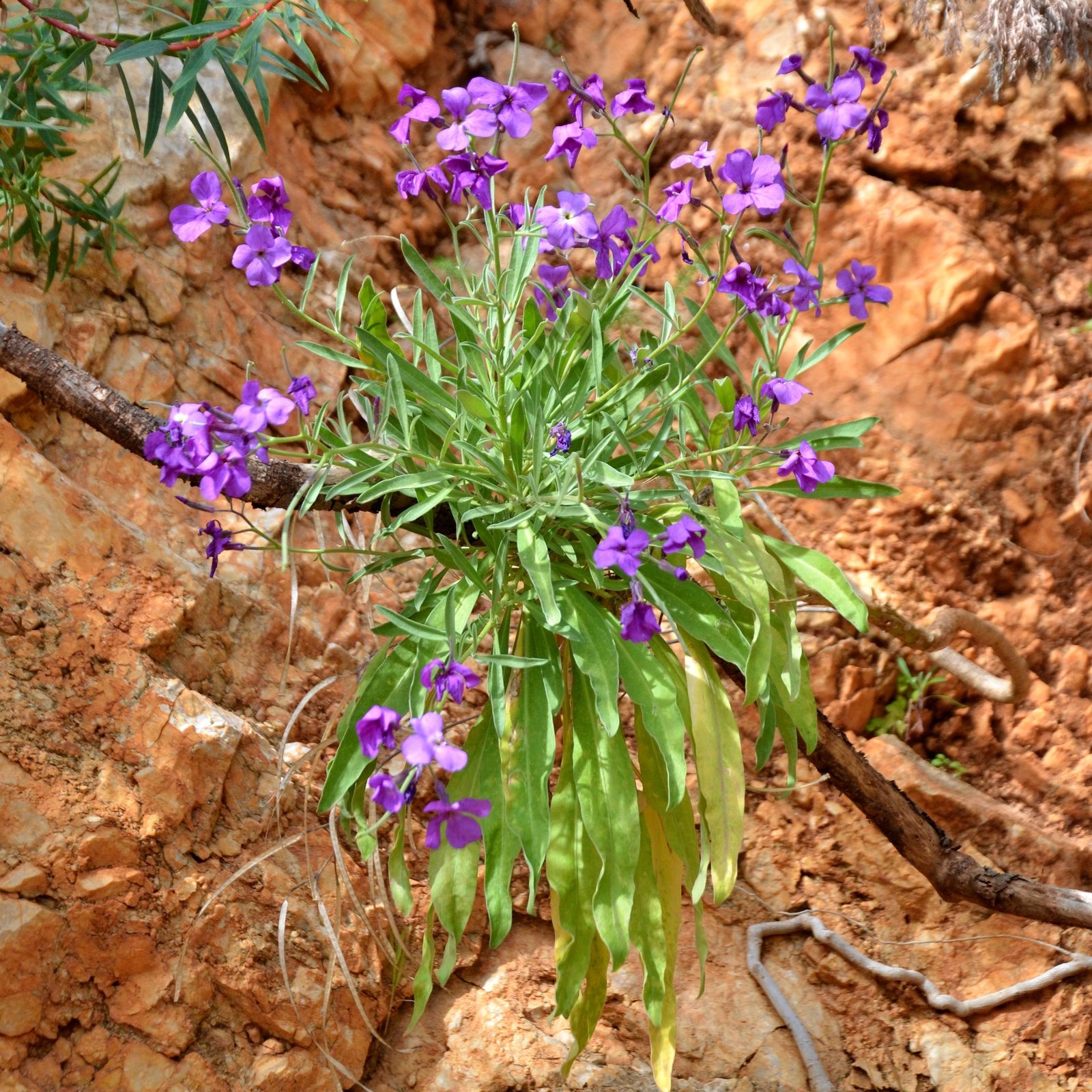
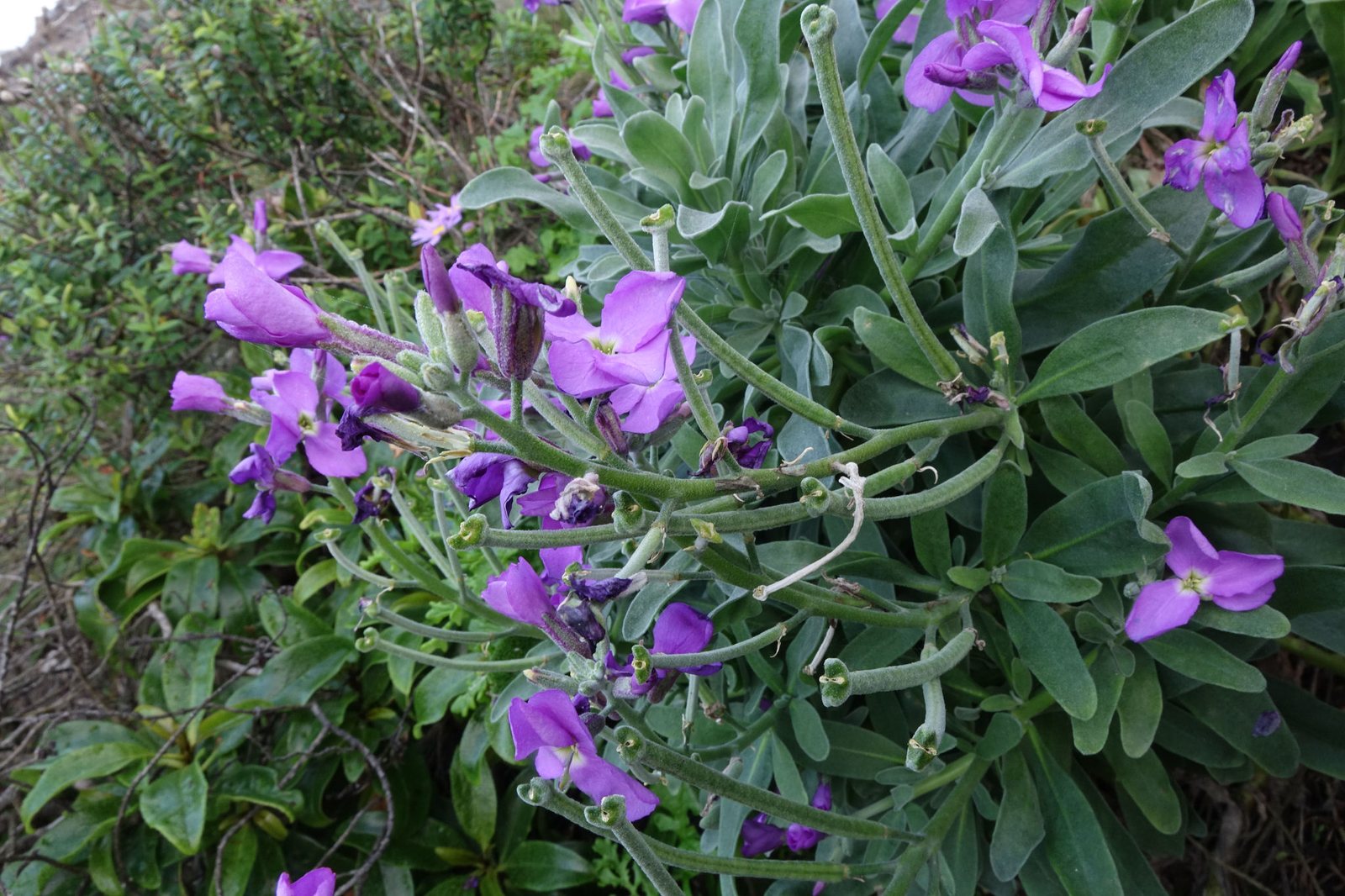
Stock is grown as an annual for its upright spikes of clove-scented flowers, especially in spring bedding, containers and cutting gardens. It is naturally a short-lived perennial with a woody base in mild climates, but most garden strains are treated as seasonal plants. It flowers best in cool weather and often declines in summer heat.
At a glance
- Sun
- Full sun; light afternoon shade can help in warmer gardens.
- Water
- Water regularly while establishing, then when the soil surface begins to dry. Keep evenly moist during flowering without leaving the roots waterlogged.
- Soil
- Fertile, well-drained soil, preferably neutral to slightly alkaline. Avoid wet, compacted ground.
- Height
- 1-3 ft (0.3-0.9 m), depending on strain
- Spread
- 0.5-1.5 ft (0.15-0.45 m)
- Flowers
- Spring to early summer, sometimes longer in cool climates; white, cream, pink, rose, red, lavender and purple, with single or double flowers.
- Foliage
- Narrow, softly hairy, grey-green leaves arranged along upright stems.
- Growth
- Fast; annual strains can flower within a few months of sowing.
- Care needed
- Medium
The year at a glance
- Pollinators
- Low allergen
- Fragrant
| J | F | M | A | M | J | J | A | S | O | N | D | |
|---|---|---|---|---|---|---|---|---|---|---|---|---|
| Flowers | ||||||||||||
| Plant |
Northern hemisphere months. In Australia, shift them by six.
- Difficulty
- Moderate
- Toughness
- Fairly tough
Will it suit your garden?
Pick your zone, country, light and whether you have pets.
Full sun is 6 or more hours of direct sun a day, part shade 3 to 6 hours, shade under 3.
How it grows
Planting day
0.5 ft (0.15 m)
After 1 year
2 ft (0.6 m)
full size
Full size in one season.
From a typical nursery size, at an average rate for this kind of plant. A rule of thumb, not a forecast.
Good to know
- Cats and dogs
- Safe
- Growth rate
- Fast
Care
Jobs through the year
- WaterMar–May, every 7 days
- Water established plants when the surface dries; new plants need more frequent checks.
- WaterJun–Jul, every 4 days
- Keep flowering plants evenly moist in dry weather, watering at soil level.
- FeedMar–May
- Incorporate mature compost before planting; extra feeding is usually unnecessary in good soil.
- MulchApr–May
- Apply a thin mulch, keeping it away from stems.
- ProtectMar–May
- Plant after hard frosts and support tall strains before flower spikes become heavy.
- DeadheadApr–Jul, every 7 days
- Remove faded spikes; do not pinch single-stem cutting strains.
- PruneJun–Aug
- Remove annual plants once flowering finishes or summer heat causes decline.
- Plant after hard frosts have passed, spacing plants about 8-12 in (20-30 cm) apart, or wider for branching strains.
- Water at soil level and avoid keeping the foliage wet overnight.
- Work compost into the soil before planting; feed container plants with a balanced liquid fertiliser according to the label.
- Support tall strains with discreet stakes or flower-support netting before the spikes become heavy.
- Use a thin mulch to conserve moisture, keeping it clear of the stems.
Pruning. Remove faded flower spikes promptly; branching strains may produce smaller side shoots. Do not pinch single-stem cutting strains, and remove annual plants once flowering finishes or heat causes them to decline.
Through the year
- Late winter
- Sow annual strains under cover in bright, cool conditions, roughly 6-8 weeks before planting out.
- Early spring
- Harden off young plants gradually and prepare a sunny bed with good drainage.
- Spring
- Plant out after hard frosts; water in and install supports for tall strains.
- Late spring
- Water during dry spells, remove faded spikes and check young growth for aphids.
- Summer
- Remove exhausted annual plants. Sow biennial Brompton strains for flowering the following spring where winters permit.
- Autumn
- In mild-winter regions, plant young stocks for cool-season flowering in a sheltered, freely draining position.
In the garden
- Plant beside paths or seating areas where the flower scent can be enjoyed at close range.
- Combine with pansies, violas and spring bulbs for cool-season bedding.
- Use tall strains in cutting beds or through the middle of cottage borders for upright flower spikes.
- Grow compact strains in containers near doors, keeping drainage holes unobstructed.
Garden styles it suits: Cottage garden, Romantic rose garden, Sensory garden, Pastel border, English country and White garden.
Plant it with: Pansies, Violas, Tulips, Forget-me-nots, Snapdragons and Sweet alyssum.
Wildlife: Single flowers provide nectar and pollen for bees and other visiting insects. Fully double flowers offer much less accessible food.
Problems to watch for
- Aphids cluster on buds and soft shoots: wash off small colonies with water or use insecticidal soap according to the label.
- Cabbage-family caterpillars chew leaves: inspect leaf undersides and remove caterpillars by hand.
- Clubroot causes swollen roots, stunting and wilting: remove affected plants, avoid moving contaminated soil and do not replant stocks or other cabbage-family plants in that bed.
- Wet conditions encourage grey mould and stem or root rot: improve drainage and airflow, water at soil level and remove affected plants or flowers.
Safety
Stock is not known to be toxic to people, cats, dogs or horses; no plant part is recognised as a significant poisoning hazard. It is grown as an ornamental, and eating garden plants may still cause stomach upset.
Easily confused with
Night-scented stock (Matthiola longipetala)
A looser, more slender annual with small, usually pale lilac, four-petalled flowers that open towards evening; garden stock has denser, showier spikes and often double flowers.
Common wallflower (Erysimum cheiri)
Usually has narrower, less woolly leaves and clusters of single flowers in yellow, orange, rust or red, rather than the often pastel, densely packed spikes of stock.
The name
Matthiola honours the Italian physician and botanist Pietro Andrea Mattioli, while incana means grey or hoary, referring to the softly hairy foliage.
Propagation. Sow seed for annual bedding strains in late winter or early spring, or in autumn where winters are mild. Sow biennial strains in summer for flowering the following year. Fully double flowers are generally sterile, so seed-raised batches may contain both single- and double-flowered plants.
Checked against open data
- Accepted botanical name
- Matthiola incana
- In the US and Canada
- Introduced in the lower 48 states.
- Native range
- Albania, Corse, France, Greece, Italy, Sardegna, Sicilia, Spain and Yugoslavia.
- Measured
- Soil pH 6.5 to 7. Average height 37 cm.
Sources: GBIF (CC BY 4.0), USDA PLANTS and Trefle (CC BY 4.0). The care and design notes are LandscapeGPT's own.
See it in your own yard.
Upload a photo of your yard and see it redesigned with plants that suit your climate, each checked against your zone.