Stokes' aster
Stokesia laevis. Family Asteraceae. Perennial.
Also called Stokes aster.
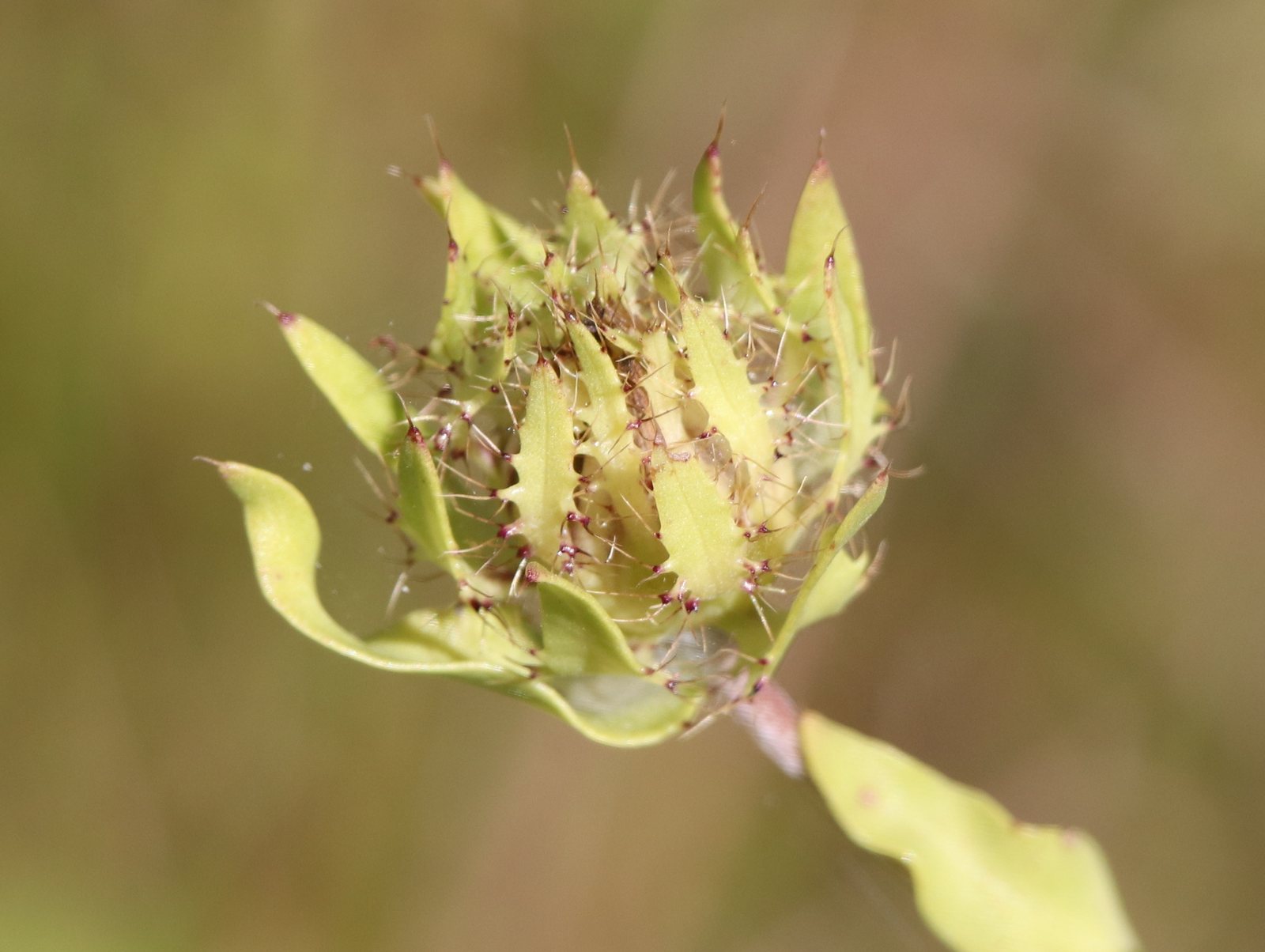
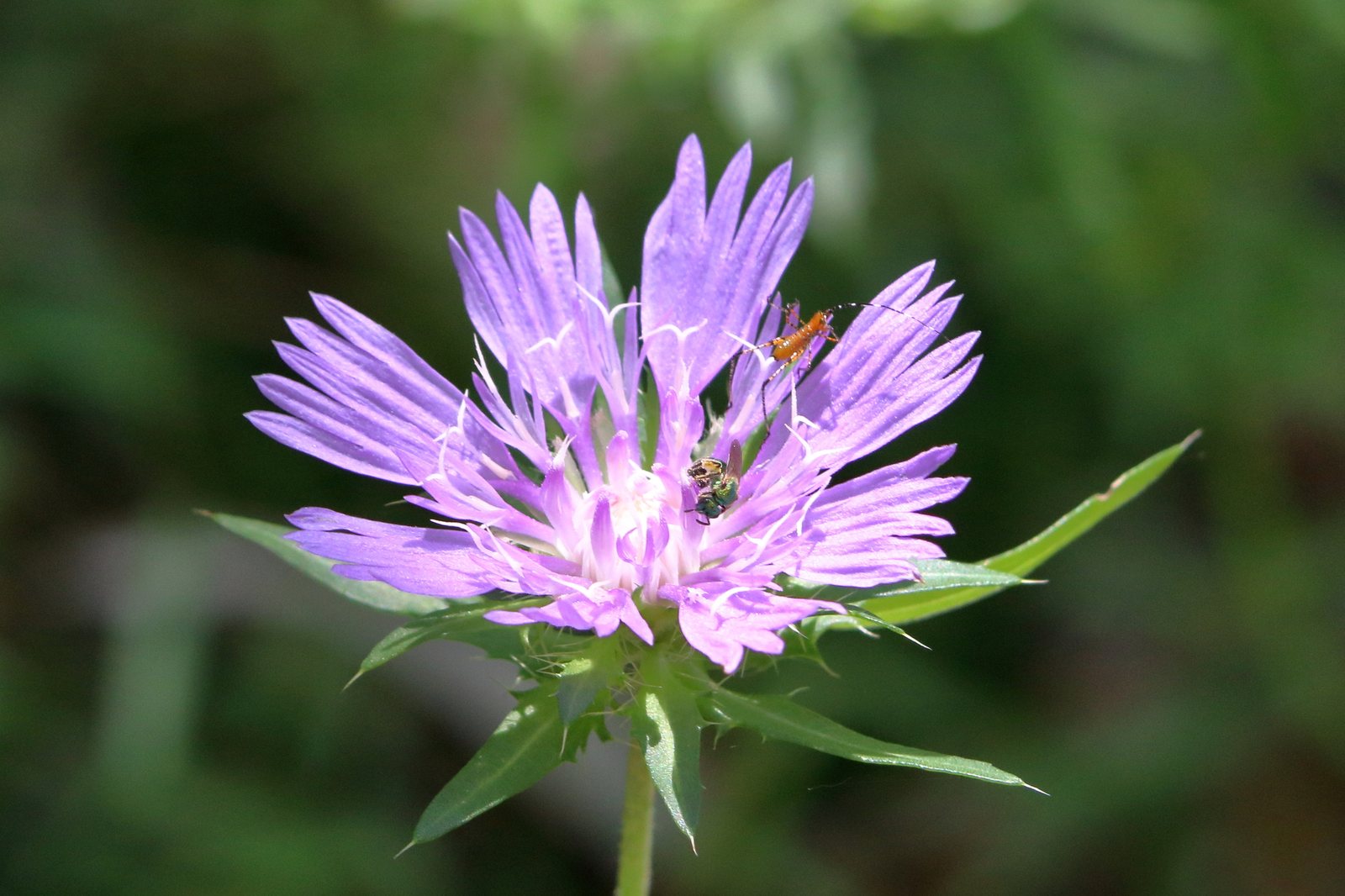
Stokes' aster is a clump-forming perennial native to the southeastern United States, grown for its large, fringed, cornflower-like summer flowers. It makes a useful front-of-border plant and attracts pollinating insects, but needs good drainage, especially through winter.
At a glance
- Sun
- Full sun gives the best flowering; light afternoon shade is useful in very hot climates.
- Water
- Water regularly during establishment. Once established, water during prolonged dry spells; avoid keeping the crown wet.
- Soil
- Well-drained, moderately fertile soil, preferably acidic to neutral. It tolerates sandy soil but performs poorly in waterlogged ground, especially in winter.
- Height
- 1-2 ft (0.3-0.6 m)
- Spread
- 1-1.5 ft (0.3-0.45 m)
- Flowers
- Summer into early autumn; usually lavender-blue to violet-blue, with white, pink and pale yellow available in named cultivars.
- Foliage
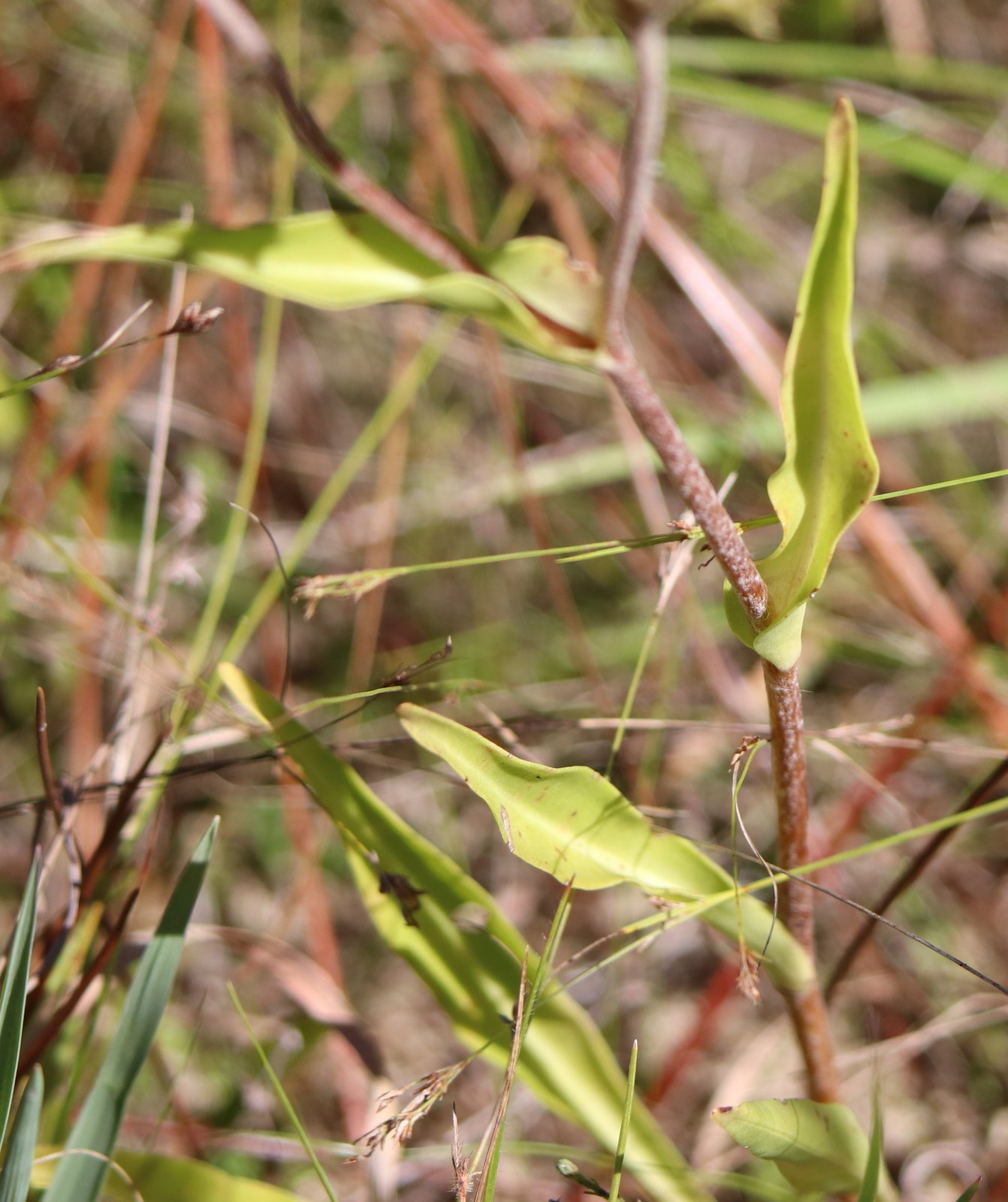
- Narrow, dark green leaves form a basal clump, with smaller leaves up the flowering stems. Evergreen to semi-evergreen in mild winters; foliage may die back in colder areas.
- Growth
- Moderate
- Care needed
- Low
The year at a glance
- Pollinators
- Deer resistant
- Drought tolerant
- Heat tolerant
- Low allergen
| J | F | M | A | M | J | J | A | S | O | N | D | |
|---|---|---|---|---|---|---|---|---|---|---|---|---|
| Flowers | ||||||||||||
| Fruit | ||||||||||||
| Plant |
Northern hemisphere months. In Australia, shift them by six.
- Difficulty
- Easy
- Toughness
- Fairly tough
Will it suit your garden?
Pick your zone, country, light and whether you have pets.
Full sun is 6 or more hours of direct sun a day, part shade 3 to 6 hours, shade under 3.
How it grows
Planting day
1 ft (0.3 m)
After 1 year
1.1 ft (0.35 m)
After 2 years
1.3 ft (0.4 m)
After 3 years
1.5 ft (0.45 m)
full size
About 3 years to full size.
From a typical nursery size, at an average rate for this kind of plant. A rule of thumb, not a forecast.
Good to know
- Cats and dogs
- Safe
- Native to
- the US
- Growth rate
- Moderate
Care
Jobs through the year
- WaterApr–May, Sep–Oct, every 14 days
- Water established plants only when soil is dry; new plants need more frequent watering.
- WaterJun–Aug, every 14 days
- Water established plants deeply during prolonged dry spells, allowing the surface to dry between waterings.
- FeedMar–Apr
- Apply a light compost dressing, keeping it clear of the crown; avoid heavy nitrogen feeding.
- PruneMar
- Remove dead stems and winter-damaged leaves while preserving healthy basal foliage.
- DivideApr–May
- Divide crowded clumps every three to four years if flowering declines.
- DeadheadJun–Sep, every 7 days
- Cut faded flower heads to a leaf or side shoot; retain a few late heads if seed is wanted.
- ProtectJan–Feb, Oct–Dec
- Clear wet debris from crowns and prevent standing water around plants.
- Plant with the crown at soil level in a position that drains freely.
- Water deeply during the first growing season, allowing the surface soil to dry between waterings.
- Apply a light compost dressing in spring; avoid heavy nitrogen feeding.
- Keep mulch clear of the crown, particularly in wet climates.
- Divide crowded clumps in spring every three to four years if flowering declines.
Pruning. Remove spent flower heads down to a leaf or side shoot to encourage further flowering. In late winter or early spring, cut away dead stems and damaged leaves without removing healthy basal foliage.
Through the year
- Early spring
- Remove winter-damaged foliage and apply a light compost dressing.
- Spring
- Plant new specimens or divide established clumps once the soil is workable.
- Summer
- Water new plants during dry weather and deadhead faded flowers.
- Early autumn
- Leave a few flower heads if you want to collect seed; seedlings may differ from named cultivars.
- Late autumn
- Clear fallen debris from the crown and check that water does not collect around the plant.
In the garden
- Plant groups along the front of a sunny mixed border for broad patches of blue summer flowers.
- Combine with purple coneflowers, coreopsis and fine-textured grasses in a pollinator planting.
- Use beside paths or seating areas where the fringed flowers can be seen closely.
- Grow in a container with drainage holes for summer colour on a sunny patio.
Garden styles it suits: Cottage garden, Southern, Pollinator garden, Wildlife garden, Blues and silvers and New perennial (prairie).
Plant it with: Purple coneflower, Black-eyed Susan, Threadleaf coreopsis, Meadow sage, Butterfly weed and Little bluestem.
Wildlife: Flowers provide nectar and pollen for bees and butterflies.
Problems to watch for
- Crown or root rot in wet soil: improve drainage or move the plant to a raised bed; discard badly rotted plants.
- Slugs and snails on young growth: remove hiding places, hand-pick after dark or use an approved iron-phosphate bait.
- Sparse flowering or floppy stems in shade: move to a sunnier position and avoid excessive fertiliser.
- Winter losses in cold, wet conditions: keep the crown free of wet mulch and choose a sheltered, freely draining site.
Safety
Not known to be toxic to cats, dogs, horses or people. No particular poisonous part is established, but species-specific toxicity information is limited; do not treat it as an edible plant.
Easily confused with
Cornflower (Centaurea cyanus)
Cornflower is an annual with smaller flower heads, slender branching stems and grey-green foliage; Stokes' aster forms a persistent basal clump with larger flowers.
China aster (Callistephus chinensis)
China aster is an annual with broader, toothed leaves and often densely double flowers; Stokes' aster has narrow basal leaves and conspicuously fringed flower heads.
The name
Stokesia honours the English physician and botanist Jonathan Stokes, while laevis means smooth, referring to the plant's largely hairless surfaces.
Propagation. Divide clumps in spring. Sow seed in spring, noting that seedlings from named cultivars may not resemble the parent; division preserves the cultivar.
Checked against open data
- Accepted botanical name
- Stokesia laevis
- In the US and Canada
- Native in the lower 48 states.
- Native range
- Alabama, Florida, Georgia, Louisiana, Mississippi and South Carolina.
Sources: GBIF (CC BY 4.0), USDA PLANTS and Trefle (CC BY 4.0). The care and design notes are LandscapeGPT's own.
See it in your own yard.
Upload a photo of your yard and see it redesigned with plants that suit your climate, each checked against your zone.