Stonecrop 'Cape Blanco'
Sedum spathulifolium 'Cape Blanco'. Family Crassulaceae. Succulent.
Also called Broad-leaved stonecrop 'Cape Blanco', Pacific stonecrop 'Cape Blanco'.
This low, evergreen succulent forms spreading mats of small, spoon-shaped leaves coated in silvery-white powder. Gardeners grow it for its pale rosettes, yellow summer flowers and ability to fill sunny rock crevices or shallow containers with sharply drained soil.
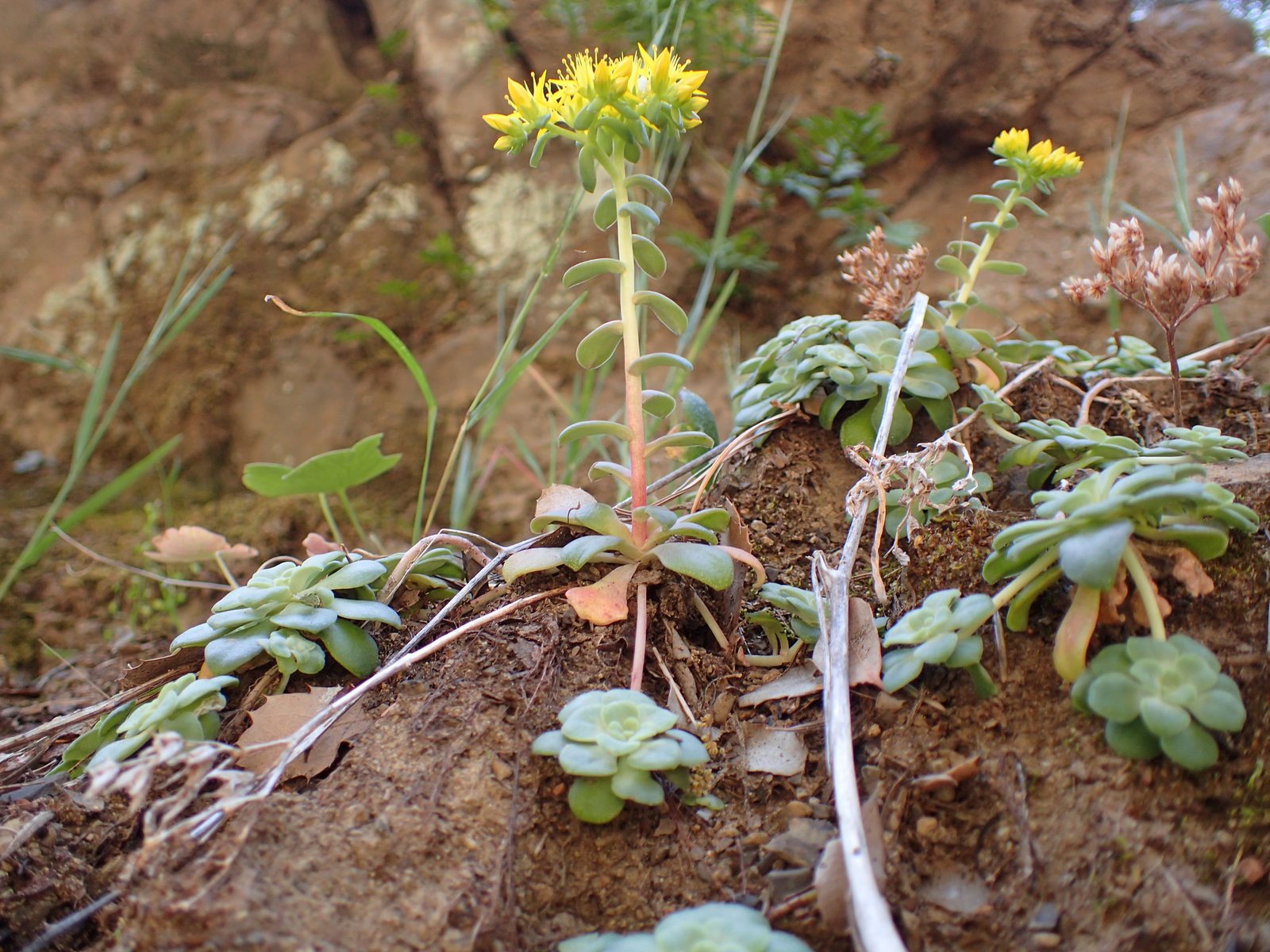
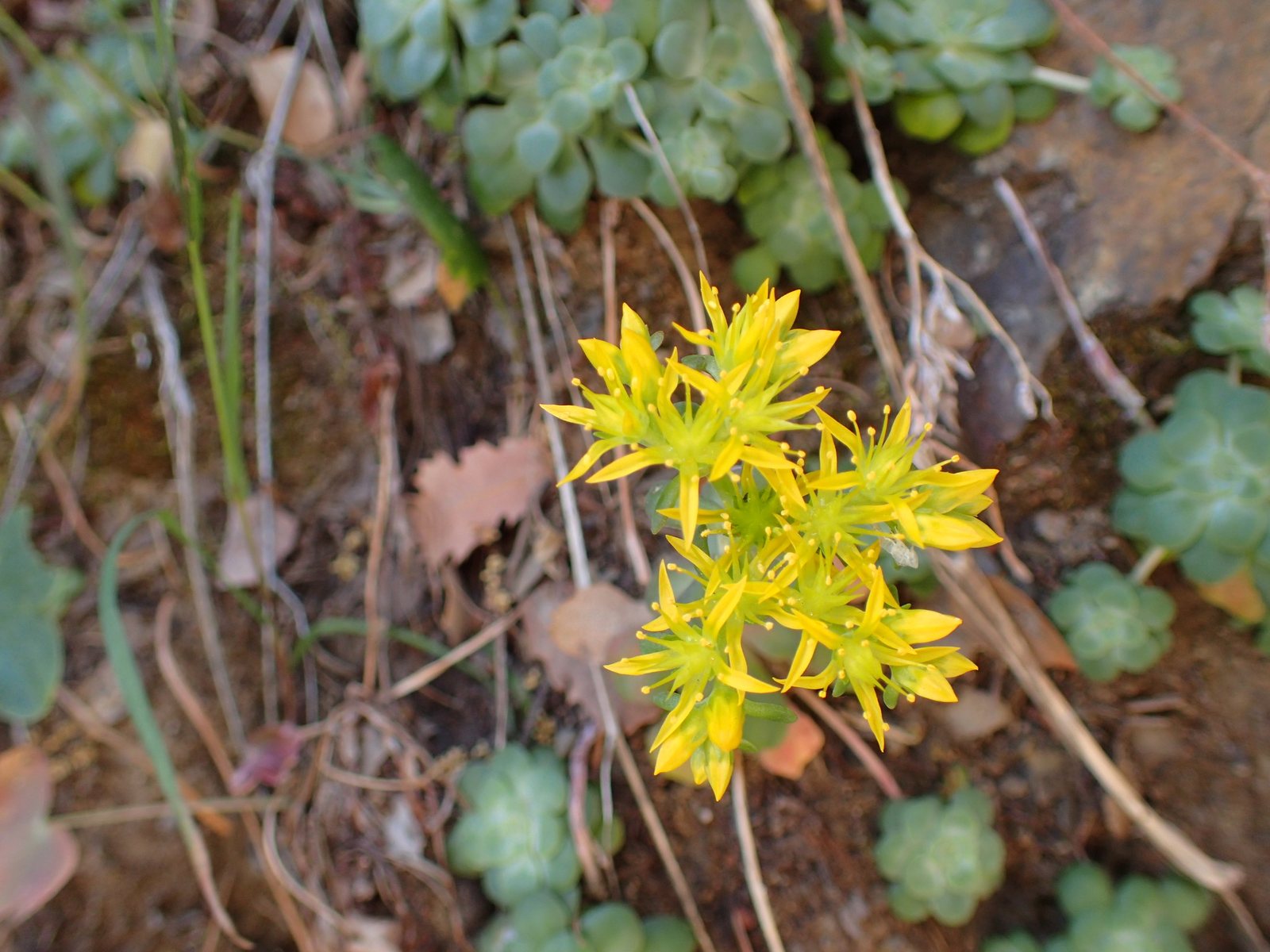
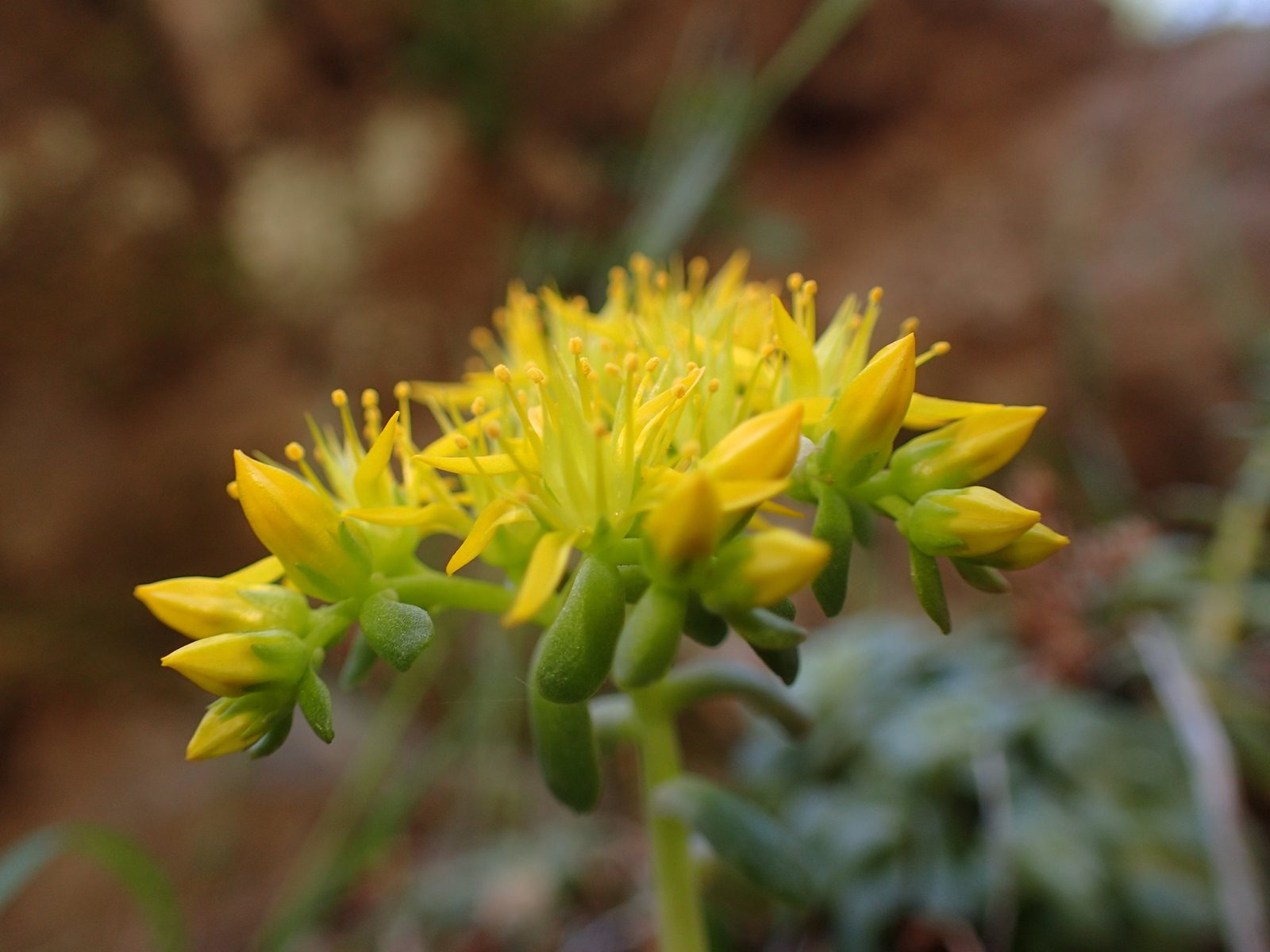
At a glance
- Sun
- Full sun to light partial shade; provide some afternoon shade in hot inland gardens.
- Water
- Low once established. Water during establishment and prolonged dry spells, allowing the soil to dry between waterings; keep especially dry in winter.
- Soil
- Lean, gritty or sandy soil with excellent drainage. Avoid heavy clay, rich compost and sites that remain wet in winter.
- Height
- 0.25-0.5 ft (0.08-0.15 m), including flowers
- Spread
- 1-1.5 ft (0.3-0.45 m)
- Flowers
- Clusters of small, star-shaped yellow flowers in late spring to early summer.
- Foliage
- Evergreen. Fleshy, spoon-shaped leaves in tight rosettes, covered with a silvery-white waxy bloom; pink or purple tones may develop in cold weather or strong sun.
- Growth
- Moderate; stems root as they spread.
- Care needed
- Low
The year at a glance
- Pollinators
- Drought tolerant
- Low allergen
| J | F | M | A | M | J | J | A | S | O | N | D | |
|---|---|---|---|---|---|---|---|---|---|---|---|---|
| Flowers | ||||||||||||
| Plant |
Northern hemisphere months. In Australia, shift them by six.
- Difficulty
- Easy
- Toughness
- Very tough
Will it suit your garden?
Pick your zone, country, light and whether you have pets.
Full sun is 6 or more hours of direct sun a day, part shade 3 to 6 hours, shade under 3.
How it grows
Planting day
0.4 ft (0.12 m)
full size
About 6 years to full size.
From a typical nursery size, at an average rate for this kind of plant. A rule of thumb, not a forecast.
Good to know
- Cats and dogs
- Mildly toxic: may upset a stomach
- Native to
- the US and Canada
- Growth rate
- Moderate
Care
Jobs through the year
- WaterApr–May, Sep, every 21 days
- Water established mats only in prolonged drought and after soil dries; new plants need more frequent checks.
- WaterJun–Aug, every 14 days
- During prolonged dry spells, water only if soil is dry; established mats usually need little extra water.
- MulchMar–Apr
- Use a thin grit or fine-gravel dressing, keeping rosettes above the surrounding surface.
- PruneMar–Apr
- Remove dead or rotten growth and trim stems that overrun neighbouring plants.
- DivideMar–May
- If centres become bare, lift and replant healthy rooted outer sections.
- DeadheadJun–Jul
- Optionally snip faded flower stems without cutting into the rosettes.
- ProtectJan–Feb, Oct–Dec
- Clear moisture-trapping fallen leaves and maintain sharp drainage through winter.
- Plant with the crown above surrounding soil level in a sharply drained position.
- Water new plants when the root zone dries; established mats need little supplementary water.
- Use grit or fine gravel around the crowns rather than moisture-holding organic mulch.
- Avoid routine feeding; rich conditions encourage loose growth.
- Lift and replant healthy rooted sections in spring if the centre becomes bare.
Pruning. Snip off spent flower stems after flowering without cutting into the rosettes. In spring, remove dead or rotten growth and trim spreading stems where they overrun neighbouring plants.
Through the year
- Spring
- Plant or divide once the soil is workable, choosing a sunny site with sharp drainage.
- Late spring
- Check newly planted rosettes for drying roots and water only when needed.
- Early summer
- Leave flowers for visiting insects, then remove faded flower stems if desired.
- Summer
- Take short stem cuttings or detach rooted rosettes to start new patches.
- Autumn
- Clear fallen leaves from the mat so they do not trap moisture.
- Winter
- Check container drainage and move pots out of persistent rain if the compost stays wet.
In the garden
- Tuck into rock-garden crevices, where the pale rosettes contrast with dark stone.
- Plant along sunny gravel-path edges, away from foot traffic.
- Use in shallow troughs with houseleeks and other small, hardy succulents.
- Let it trail over a low retaining wall beside creeping thyme or sea thrift.
Garden styles it suits: Alpine rock garden, Dry gravel garden, Coastal, Desert / xeriscape, Low-maintenance and Small-space.
Plant it with: Houseleeks, Creeping thyme, Sea thrift, Rock pinks and Dalmatian bellflower.
Wildlife: The open yellow flowers provide nectar and pollen for bees and other small insects.
Problems to watch for
- Root or crown rot in wet soil: improve drainage, reduce watering and replant healthy tips in fresh gritty soil.
- Vine weevil larvae in containers: inspect roots if plants loosen or collapse, remove affected compost and use an appropriate biological control where available.
- Slugs and snails damaging young rosettes: remove hiding places and use hand-picking or locally approved controls.
- Sparse growth in shade: move to a brighter position, while retaining afternoon shade in very hot climates.
Safety
Not known to be toxic to cats, dogs, horses or people. No part is recognised as a serious poisoning hazard, but it is not a food plant and eating it may cause digestive upset.
Easily confused with
Broad-leaved stonecrop 'Purpureum' (Sedum spathulifolium 'Purpureum')
It has similar spoon-shaped rosettes but stronger reddish-purple foliage rather than the conspicuous silvery-white coating of 'Cape Blanco'.
White stonecrop (Sedum album)
Its leaves are small and rounded to cylindrical rather than broad and spoon-shaped, and its flowers are white rather than yellow.
The name
The species name spathulifolium means spoon-leaved, referring to the broad, rounded leaf tips and narrower bases.
Propagation. Divide rooted sections in spring or take short, non-flowering stem cuttings in spring or summer. Let cut ends dry briefly before inserting them into gritty compost; keep barely moist until rooted. Vegetative propagation preserves the cultivar's silver foliage.
Checked against open data
- Accepted botanical name
- Sedum spathulifolium
- In the US and Canada
- Native in Canada and the lower 48 states.
- Native range
- British Columbia, California, Oregon and Washington.
Sources: GBIF (CC BY 4.0), USDA PLANTS and Trefle (CC BY 4.0). The care and design notes are LandscapeGPT's own.
See it in your own yard.
Upload a photo of your yard and see it redesigned with plants that suit your climate, each checked against your zone.