Strawberry begonia
Saxifraga stolonifera. Family Saxifragaceae. Perennial.
Also called Strawberry saxifrage, Creeping saxifrage, Mother of thousands.
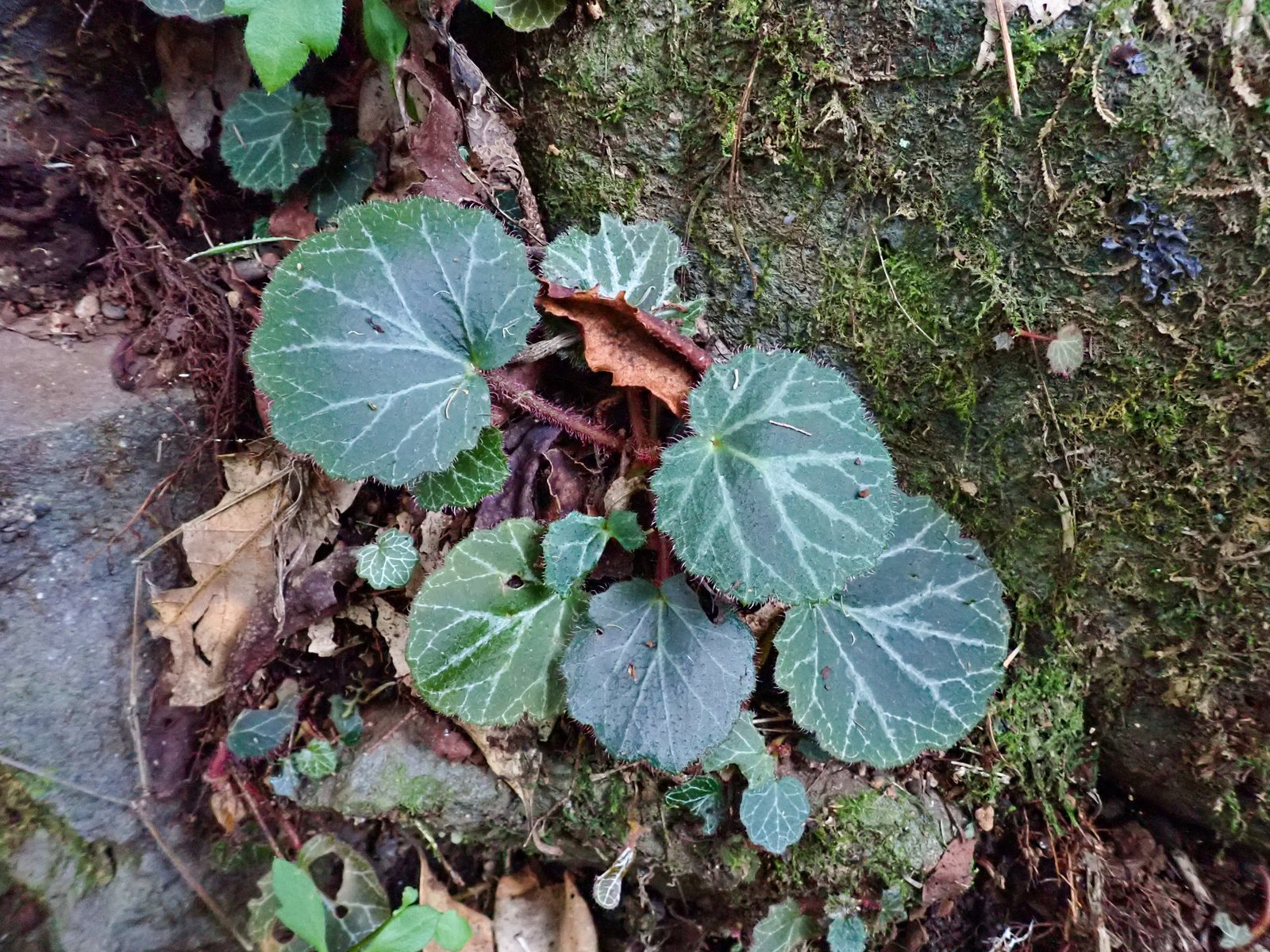
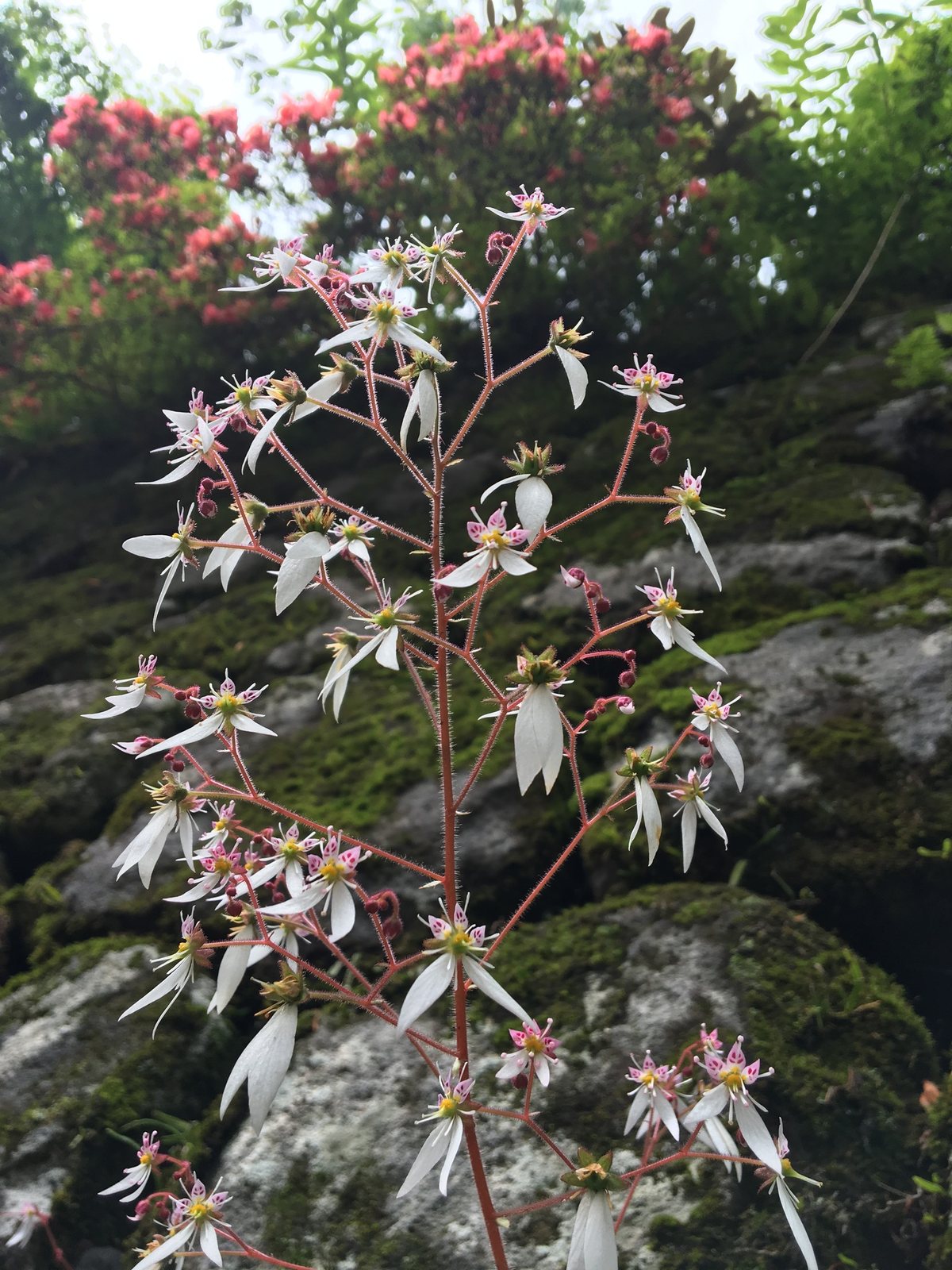
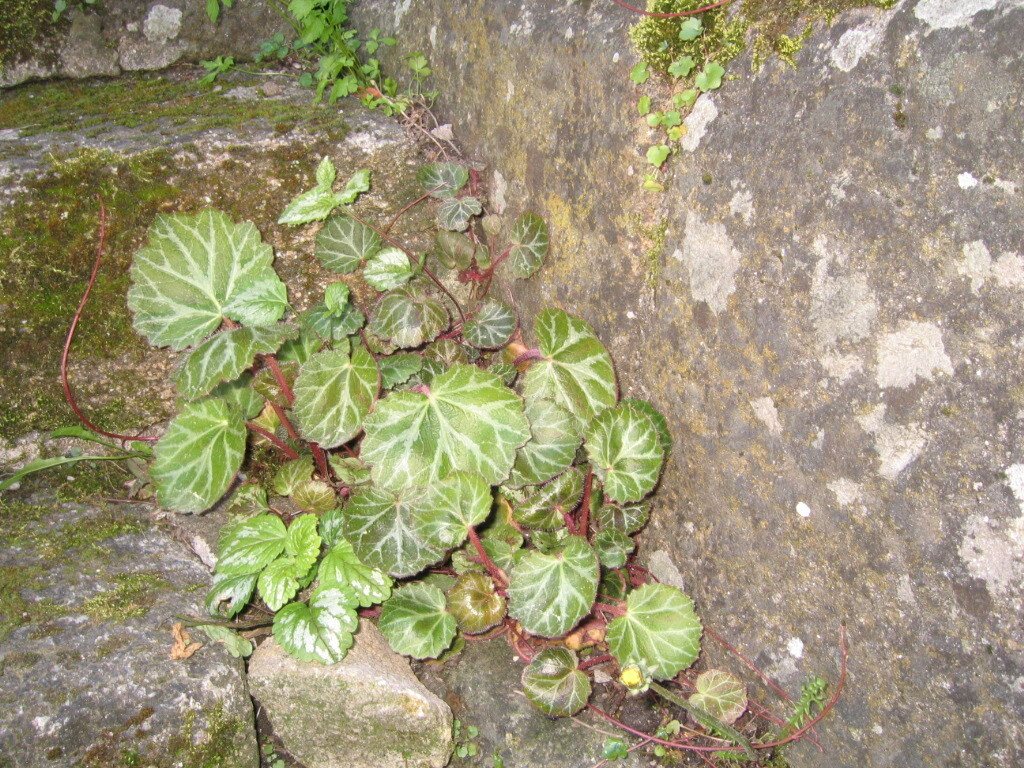
Strawberry begonia is a low, spreading perennial grown for its silver-veined leaves, red runners and airy sprays of white flowers. It makes a useful groundcover in sheltered shade or a trailing plant in containers; despite its common name, it is neither a strawberry nor a begonia.
At a glance
- Sun
- Partial to full shade outdoors; bright, indirect light indoors. Gentle morning sun is usually suitable, but avoid hot afternoon sun.
- Water
- Keep the soil evenly moist but not saturated during active growth. Water less in winter, allowing the surface to dry slightly between waterings.
- Soil
- Humus-rich, well-drained soil that holds some moisture; slightly acidic to neutral soil is ideal. Avoid heavy, waterlogged ground.
- Height
- 0.5-0.75 ft (0.15-0.23 m) in leaf; 1-2 ft (0.3-0.6 m) in flower
- Spread
- 1-2 ft (0.3-0.6 m), spreading farther over time through rooted runners
- Flowers
- Late spring to early summer: loose sprays of small white flowers, each with two conspicuously long lower petals and smaller upper petals marked pink or red.
- Foliage
- Evergreen. Rounded, softly hairy green leaves with pale silver veins, scalloped edges and reddish undersides; slender red runners carry small plantlets.
- Growth
- Moderate; faster in moist, sheltered shade
- Care needed
- Low
The year at a glance
- Pollinators
- Heat tolerant
- Wildlife
- Low allergen
| J | F | M | A | M | J | J | A | S | O | N | D | |
|---|---|---|---|---|---|---|---|---|---|---|---|---|
| Flowers | ||||||||||||
| Plant |
Northern hemisphere months. In Australia, shift them by six.
- Difficulty
- Easy
- Toughness
- Fairly tough
Will it suit your garden?
Pick your zone, country, light and whether you have pets.
Full sun is 6 or more hours of direct sun a day, part shade 3 to 6 hours, shade under 3.
How it grows
Planting day
0.6 ft (0.19 m)
full size
About 2 years to full size.
From a typical nursery size, at an average rate for this kind of plant. A rule of thumb, not a forecast.
Good to know
- Cats and dogs
- Safe
- In the garden
- Spreads vigorously: plan to contain it.
- Growth rate
- Fast
Care
Jobs through the year
- WaterApr–May, Sep–Oct, every 7 days
- Water established plants when the surface begins drying; keep lightly moist and check new plants more often.
- WaterJun–Aug, every 5 days
- In dry weather, water established plants at soil level; check more often beneath trees and around new plants.
- WaterJan–Mar, Nov–Dec, every 21 days
- Water only if soil is dry and unfrozen; allow the surface to dry slightly and avoid winter saturation.
- MulchMar–Apr
- Top-dress lightly with compost, keeping the crown exposed.
- PruneMar–Apr
- Remove winter-damaged leaves without cutting into the crown.
- DeadheadJun–Jul
- Cut spent flower stems back to their bases.
- PruneMay–Sep, every 30 days
- Snip unwanted runners before their plantlets root.
- DivideApr–May
- Divide congested clumps after severe frost has passed and water sections in.
- ProtectJan–Feb, Nov–Dec
- Shelter from cold, drying winds; use loose mulch around roots but keep crowns free of wet leaves.
- Water during dry spells so the root zone stays lightly moist, especially beneath trees or in containers.
- Work leaf mould or compost into the soil before planting; keep the crown at soil level.
- Apply a light compost dressing in spring; feed container plants monthly at half strength during spring and summer.
- Keep winter mulch loose and away from the crown to reduce rotting.
- Remove unwanted runners before their plantlets root.
- Shelter from cold, drying winds; foliage may die back in colder gardens even where the roots survive.
Pruning. Remove dead or damaged leaves in spring and cut spent flower stems back to the base after flowering. Snip off runners whenever you need to limit its spread.
Through the year
- Spring
- Remove winter-damaged leaves and top-dress lightly with compost.
- Spring
- Plant or divide established clumps once the soil is workable and severe frost has passed.
- Late spring
- Check moisture as flower stems develop, especially in pots and beneath trees.
- Summer
- Water during dry spells and remove spent flower stems.
- Late summer
- Pot up rooted plantlets or remove runners spreading beyond their allotted space.
- Autumn
- Move containers under cover where winters are colder than its hardiness range.
- Winter
- Reduce watering and keep crowns free of wet, compacted leaves.
In the garden
- Plant beneath deciduous shrubs with ferns and hostas to create a low, silver-patterned carpet.
- Use along shaded paths where its small leaves soften paving edges without obscuring the route.
- Grow in hanging baskets or raised containers so the red runners and plantlets trail over the sides.
- Tuck into humus-filled pockets beside shaded rocks or walls where drainage is good.
Garden styles it suits: Woodland, Japanese, Cottage garden, Secret garden, Small-space and Moss and fern garden.
Plant it with: Hostas, Japanese painted fern, Epimediums, Hellebores, Foamflower and Japanese forest grass.
Wildlife: The small flowers provide accessible pollen and nectar for visiting insects. Dense patches can shelter small ground-dwelling invertebrates.
Problems to watch for
- Crown or root rot in waterlogged soil: improve drainage, keep the crown uncovered and reduce winter watering.
- Brown, scorched leaves in strong sun or dry soil: move to shade and water the root zone thoroughly.
- Slugs and snails chewing young leaves: remove hiding places, hand-pick at dusk or use a labelled iron-phosphate bait.
- Mealybugs on indoor plants: isolate affected pots and remove insects with a damp swab; use a labelled treatment if they persist.
Safety
Not known to be toxic to cats, dogs, horses or people; no poisonous part is recognised. It is grown as an ornamental, not a food plant, and eating it may still cause stomach upset.
Easily confused with
Strawberry (Fragaria × ananassa)
Strawberries have leaves divided into three leaflets and produce fleshy fruit; strawberry begonia has single rounded leaves and no strawberry fruit.
Rex begonia (Begonia rex-cultorum)
Rex begonias usually have larger, distinctly asymmetrical leaves and fleshy rhizomes, rather than thin red runners carrying plantlets.
Mother of thousands (Kalanchoe daigremontiana)
This unrelated succulent has thick, pointed leaves with plantlets along their edges; strawberry begonia has soft, rounded leaves and plantlets at the ends of runners.
The name
The common name combines its strawberry-like runners with its begonia-like leaves, while stolonifera means bearing stolons, or creeping runners.
Propagation. Root the runner-borne plantlets in small pots of moist potting mix while they remain attached to the parent, then cut the connecting runner once roots establish. Established clumps can also be divided in spring.
Checked against open data
- Accepted botanical name
- Saxifraga stolonifera
- In the US and Canada
- Introduced in the lower 48 states.
- Native range
- China North-Central, China South-Central, China Southeast, East Himalaya, Japan, Korea, Myanmar, Taiwan and Vietnam.
Sources: GBIF (CC BY 4.0), USDA PLANTS and Trefle (CC BY 4.0). The care and design notes are LandscapeGPT's own.
See it in your own yard.
Upload a photo of your yard and see it redesigned with plants that suit your climate, each checked against your zone.