Striped squill
Puschkinia scilloides. Family Asparagaceae. Bulb.
Also called Russian snowdrop, Lebanon squill.
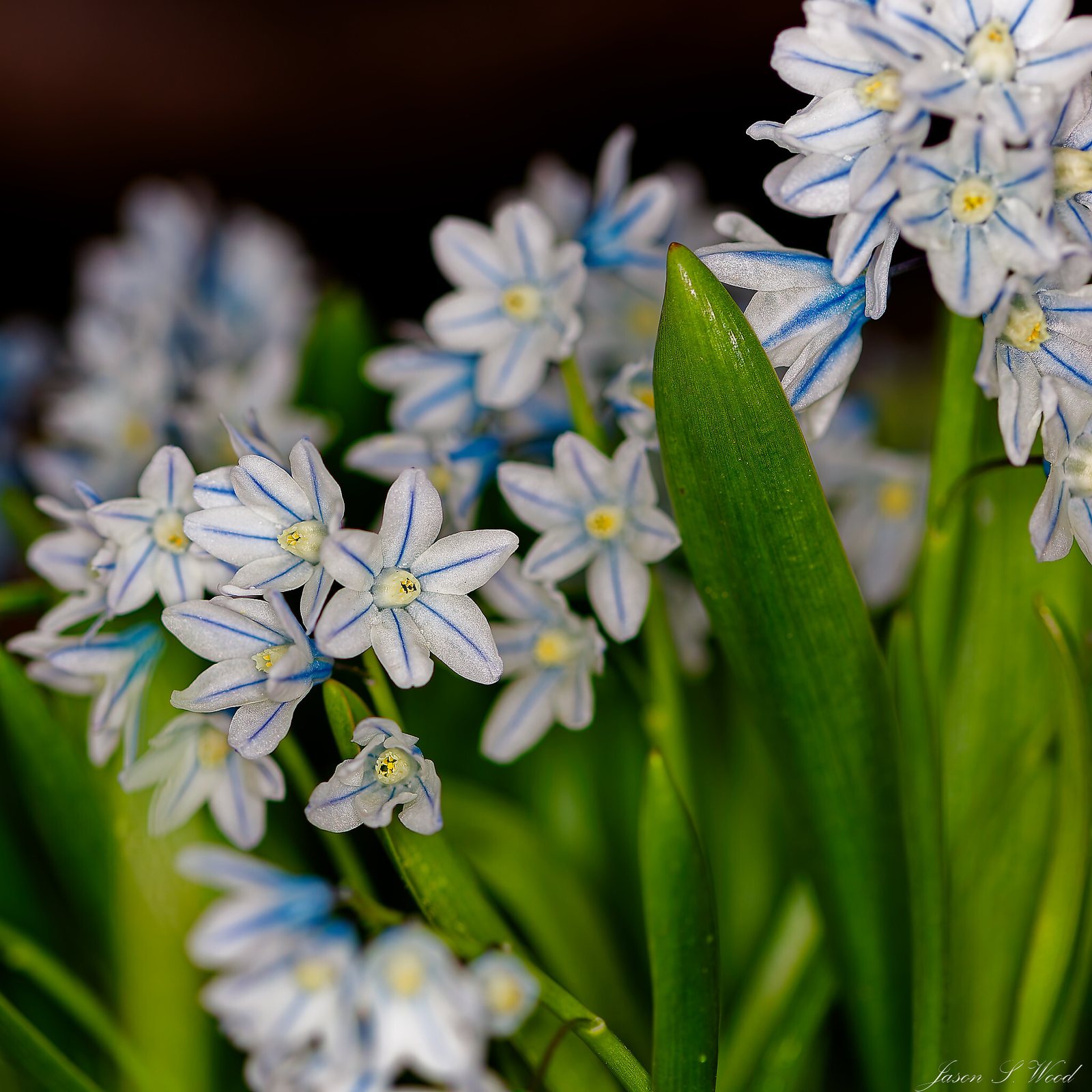
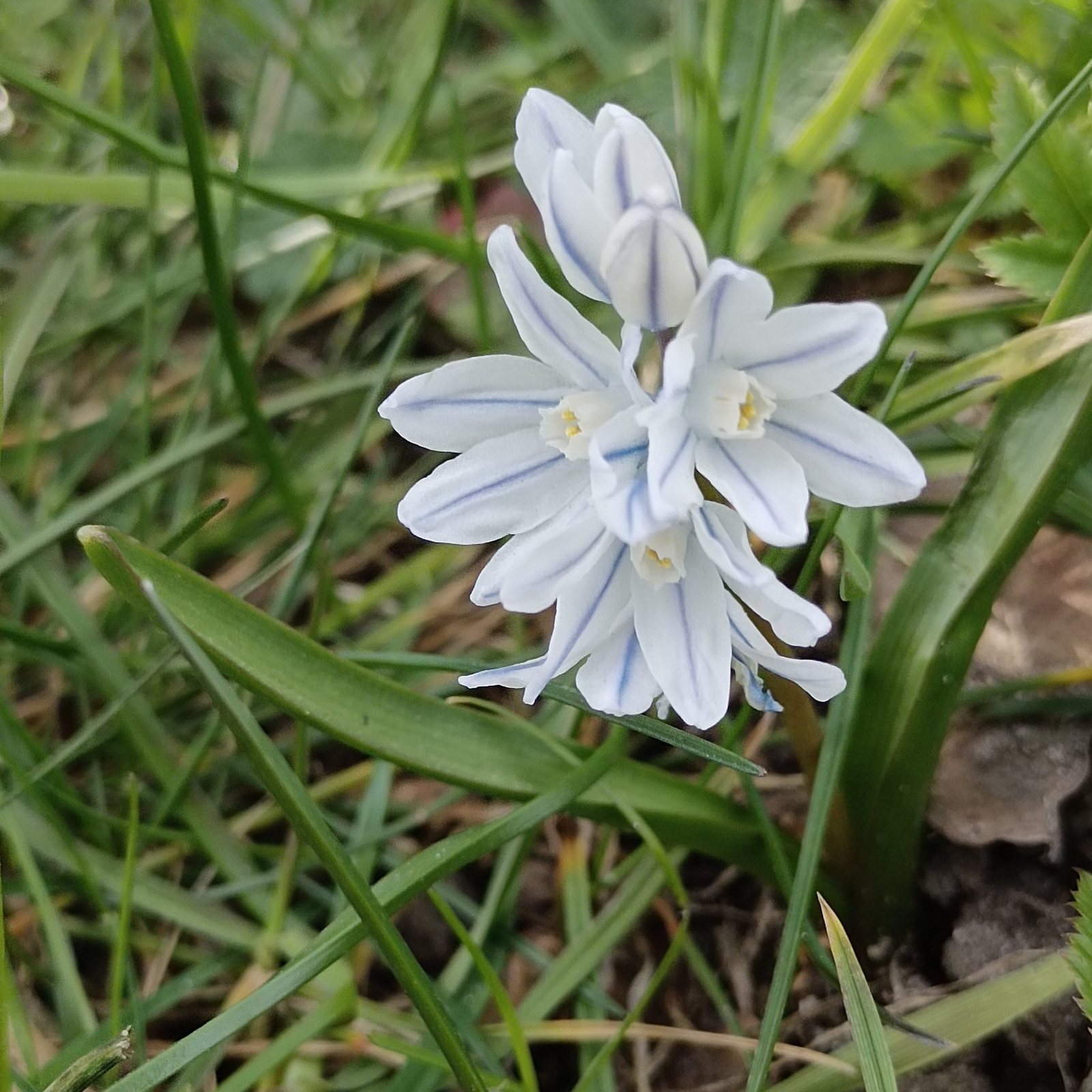
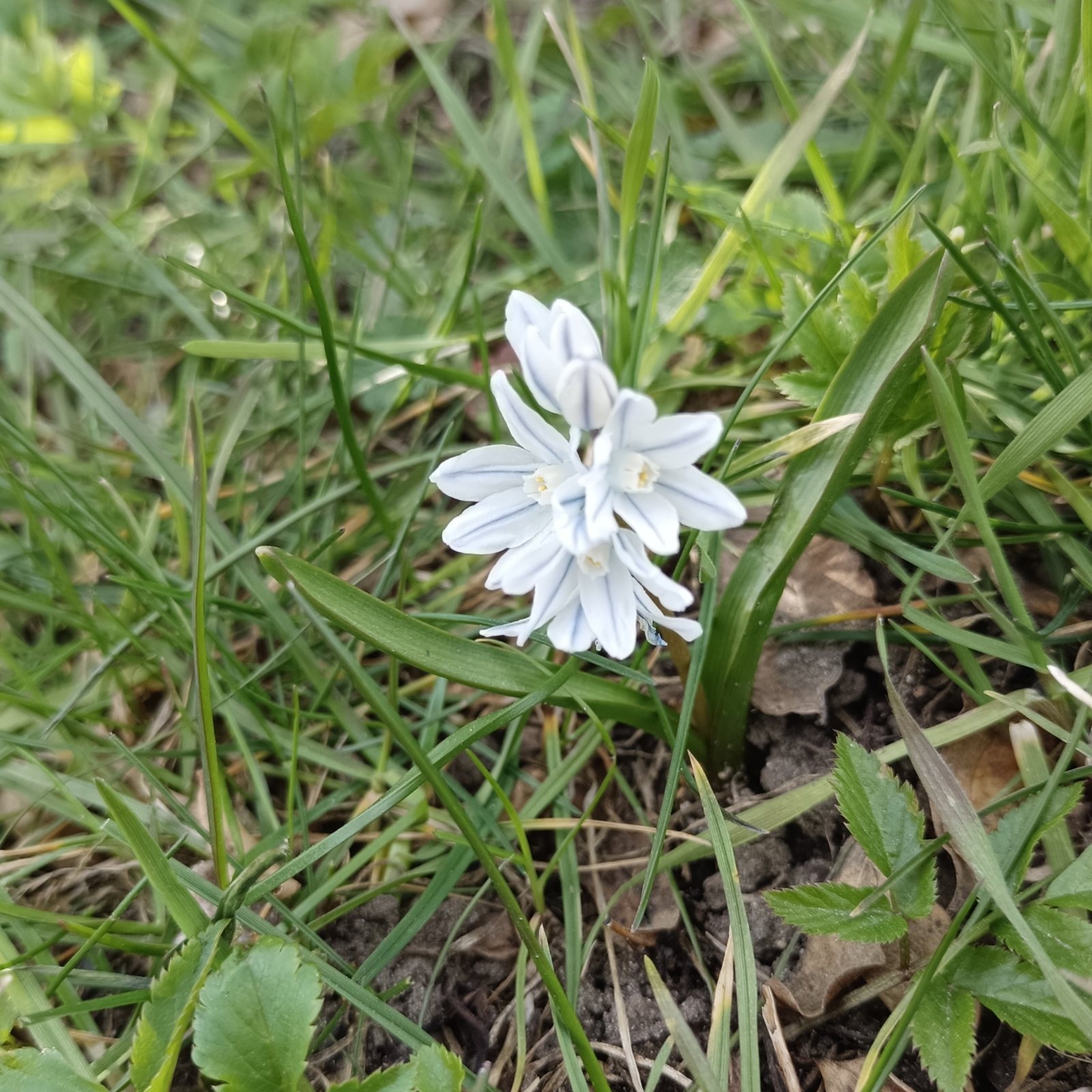
Striped squill is a small, spring-flowering bulb with pale blue-white flowers, each marked by a darker blue stripe. Gardeners grow it beneath deciduous trees, along border edges and in rock gardens, where it can gradually form colonies before disappearing underground for summer.
At a glance
- Sun
- Full sun to partial shade; suitable beneath deciduous trees that admit light in early spring.
- Water
- Keep soil moderately moist during autumn rooting and spring growth. Once dormant in summer, established bulbs need little additional water; avoid persistently wet ground.
- Soil
- Well-drained soil with some organic matter; tolerates chalk and a range of soil pH levels. Avoid compacted, waterlogged clay.
- Height
- 0.3-0.7 ft (0.1-0.2 m)
- Spread
- 0.2-0.3 ft (0.05-0.1 m) per bulb, forming wider colonies over time
- Flowers
- Early to mid-spring; pale blue to nearly white flowers with a darker blue stripe along each petal-like segment.
- Foliage
- A few narrow, fleshy, strap-shaped green leaves emerge around flowering time and die back by early summer.
- Growth
- Moderate; clumps expand gradually through offsets and self-seeding.
- Care needed
- Low
The year at a glance
- Pollinators
- Cold hardy
- Low allergen
| J | F | M | A | M | J | J | A | S | O | N | D | |
|---|---|---|---|---|---|---|---|---|---|---|---|---|
| Flowers | ||||||||||||
| Fruit | ||||||||||||
| Plant |
Northern hemisphere months. In Australia, shift them by six.
- Difficulty
- Easy
- Toughness
- Very tough
Will it suit your garden?
Pick your zone, country, light and whether you have pets.
Full sun is 6 or more hours of direct sun a day, part shade 3 to 6 hours, shade under 3.
How it grows
Planting day
0.5 ft (0.15 m)
After 1 year
0.5 ft (0.15 m)
full size
About 1 years to full size.
From a typical nursery size, at an average rate for this kind of plant. A rule of thumb, not a forecast.
Good to know
- Cats and dogs
- Safe
- Growth rate
- Moderate
Care
Jobs through the year
- WaterMar–May, every 14 days
- Water established bulbs only during prolonged dry spells while leaves are green; do not irrigate summer-dormant bulbs.
- WaterSep–Nov, every 14 days
- Water if autumn soil is dry; water newly planted bulbs thoroughly at planting.
- MulchOct–Nov
- Apply a thin compost dressing without creating a thick, wet layer.
- DeadheadApr
- Remove fading flower stems before capsules ripen only if seedlings are unwanted.
- PruneMay–Jun
- Remove foliage or mow naturalised patches only after leaves have fully yellowed.
- DivideJun–Jul
- Lift only crowded dormant clumps, separate offsets and replant promptly.
- Plant bulbs in autumn, about 3 in (8 cm) deep and 2-3 in (5-8 cm) apart.
- Water after planting and during prolonged dry spells while leaves are growing.
- Top-dress with a thin layer of compost in autumn; rich soil rarely needs additional fertiliser.
- Leave the foliage until it turns yellow naturally, and delay mowing naturalised patches until then.
- Lift and separate crowded clumps after the foliage dies back, replanting the bulbs promptly.
Pruning. No pruning is needed beyond removing yellowed foliage. Snip off spent flower stems before seed capsules ripen if you want to limit self-seeding.
Through the year
- Autumn
- Plant bulbs in well-drained ground and water them in.
- Late autumn
- Apply a thin compost mulch without leaving a thick, wet layer over the planting.
- Early spring
- Water during extended dry weather while shoots and flowers are developing.
- Mid-spring
- Remove fading flower stems if seedlings are not wanted; otherwise allow seed capsules to develop.
- Late spring
- Let leaves yellow completely before cutting them back or mowing nearby grass.
- Summer
- Divide crowded dormant clumps if needed and avoid unnecessary irrigation over resting bulbs.
In the garden
- Plant in loose drifts beneath deciduous shrubs and trees for colour before the canopy closes.
- Use along path edges or at the front of borders, where the small striped flowers can be seen closely.
- Tuck into rock gardens with gritty drainage and low-growing spring plants.
- Naturalise in lightly shaded grass that can remain unmown until the bulb foliage dies back.
- Combine with later-emerging perennials that cover the bare ground after summer dormancy.
Garden styles it suits: Woodland, Cottage garden, English country, Alpine rock garden, Low-maintenance and Blues and silvers.
Plant it with: Snowdrops, Crocuses, Dwarf daffodils, Hellebores, Brunnera and Hostas.
Wildlife: The early flowers provide nectar and pollen for bees active in cool spring weather.
Problems to watch for
- Bulb rot in waterlogged soil: improve drainage or move bulbs to a raised bed; discard soft, decaying bulbs.
- Slugs and snails eating emerging growth: check shoots during damp weather and use traps or locally approved controls if damage is significant.
- Poor flowering after premature leaf removal: allow leaves to die back naturally so bulbs can replenish their reserves.
- Unwanted seedlings: remove flower stems before seed ripens and lift stray bulbs while their foliage is visible.
Safety
Not known to be toxic, but reliable species-specific information for people, cats, dogs and horses is limited. No particular toxic part or severity is established; do not treat the bulbs, leaves or flowers as edible.
Easily confused with
Siberian squill (Scilla siberica)
Usually has deeper blue, nodding flowers without the conspicuous pale background and narrow blue stripe of striped squill.
Glory-of-the-snow (Scilla luciliae)
Has more open, upward-facing blue flowers with a distinct white central eye rather than a blue stripe along each segment.
The name
Puschkinia honours the Russian botanist Apollo Mussin-Pushkin, while scilloides means resembling Scilla, the squills.
Propagation. Separate bulb offsets after the foliage dies back and replant promptly. Alternatively, sow ripe seed outdoors in pots and leave exposed to seasonal cold; seedlings take several years to reach flowering size.
Checked against open data
- Accepted botanical name
- Puschkinia scilloides
- Native range
- Iran, Iraq, Lebanon-Syria, North Caucasus, Transcaucasus and Turkey.
- Measured
- Average height 25 cm.
Sources: GBIF (CC BY 4.0) and Trefle (CC BY 4.0). The care and design notes are LandscapeGPT's own.
See it in your own yard.
Upload a photo of your yard and see it redesigned with plants that suit your climate, each checked against your zone.