Summer savory
Satureja hortensis. Family Lamiaceae. Annual.
Also called Garden savory.
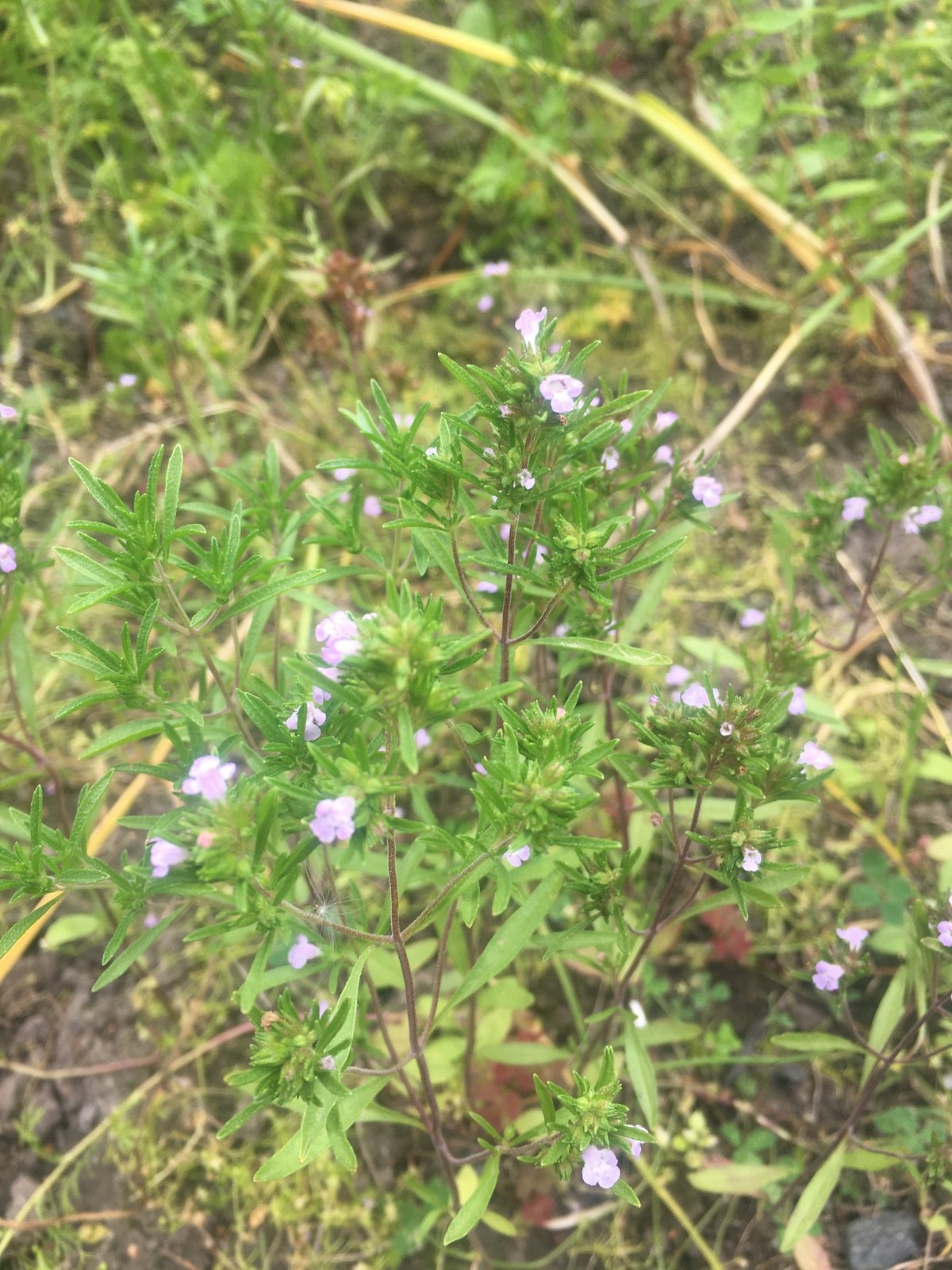
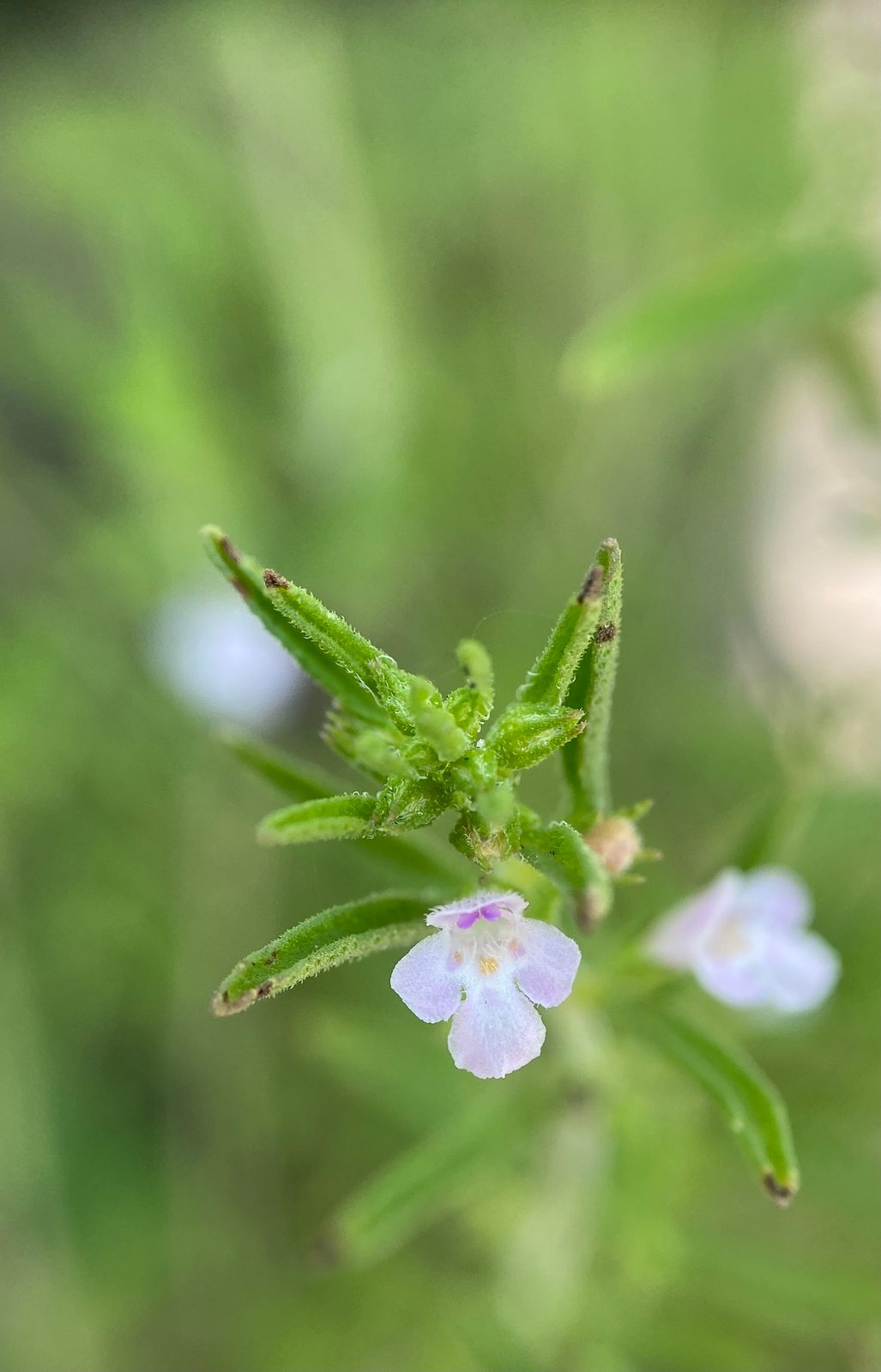
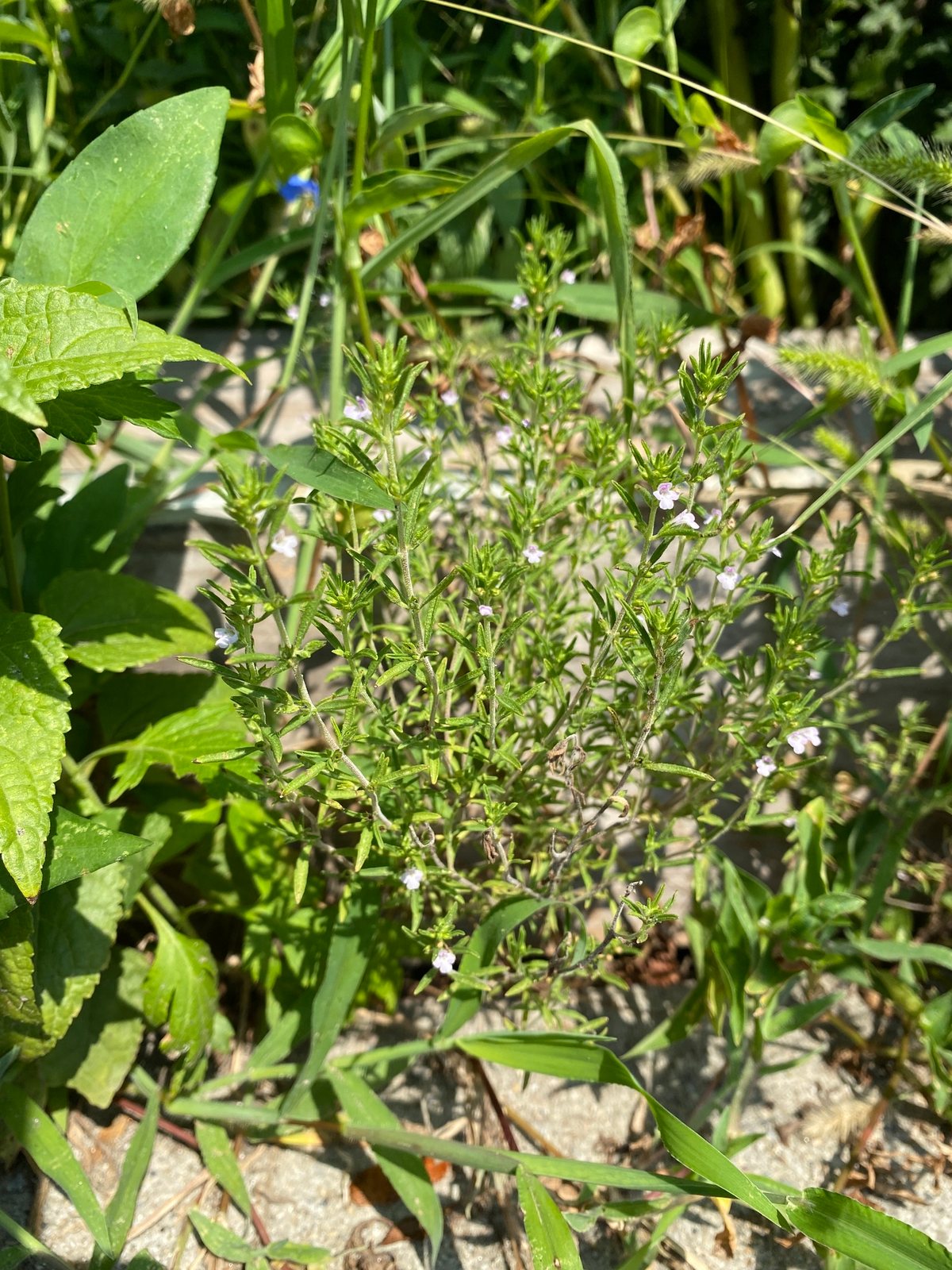
Summer savory is a small, aromatic herb grown as an annual for its peppery leaves, traditionally used with beans, vegetables and meat. It fits easily into herb beds and containers, and its small summer flowers attract pollinating insects.
At a glance
- Sun
- Full sun; light afternoon shade can help in very hot climates.
- Water
- Water moderately, allowing the soil surface to dry between waterings. Established plants tolerate brief dry spells but produce better leaves with steady moisture.
- Soil
- Well-drained sandy or loamy soil; average fertility is sufficient. Avoid heavy, waterlogged ground.
- Height
- 1-2 ft (0.3-0.6 m)
- Spread
- 0.5-1 ft (0.15-0.3 m)
- Flowers
- Summer to early autumn; tiny white, pale pink or pale lilac flowers in the leaf axils.
- Foliage
- Narrow, pointed green leaves on slender, branching stems; strongly aromatic when rubbed.
- Growth
- Fast; reaches harvestable size within one growing season.
- Care needed
- Low
The year at a glance
- Pollinators
- Drought tolerant
- Low allergen
- Fragrant
- Edible
| J | F | M | A | M | J | J | A | S | O | N | D | |
|---|---|---|---|---|---|---|---|---|---|---|---|---|
| Flowers | ||||||||||||
| Fruit | ||||||||||||
| Plant |
Northern hemisphere months. In Australia, shift them by six.
- Difficulty
- Easy
- Toughness
- Fairly tough
Will it suit your garden?
Pick your zone, country, light and whether you have pets.
Full sun is 6 or more hours of direct sun a day, part shade 3 to 6 hours, shade under 3.
How it grows
Planting day
0.5 ft (0.15 m)
After 1 year
1.5 ft (0.45 m)
full size
Full size in one season.
From a typical nursery size, at an average rate for this kind of plant. A rule of thumb, not a forecast.
Good to know
- Cats and dogs
- Safe
- Growth rate
- Fast
Care
Jobs through the year
- WaterMay, Sep, every 10 days
- Check established plants and water if the surface is dry; water seedlings more often.
- WaterJun–Aug, every 7 days
- Water established plants when the soil surface dries, allowing for rainfall.
- FeedMay
- Work in a little compost before planting; avoid heavy nitrogen feeding.
- PruneJun
- Pinch established shoot tips to encourage branching.
- HarvestJun–Oct, every 7 days
- Pick small amounts of leafy tips until frost; cut drying stems just before flowering.
- DeadheadJul–Sep, every 14 days
- Remove flower buds for leaf production, leaving some flowers for insects and seed.
- Thin or plant seedlings 8-12 in (20-30 cm) apart after frost danger has passed.
- Water young plants regularly until established, then water when the soil surface dries.
- Use only a light dressing of compost before planting; avoid heavy nitrogen feeding.
- Keep weeds down while seedlings are small, and keep mulch away from the stems.
- Grow in pots with drainage holes and empty saucers after watering.
Pruning. Pinch out shoot tips once plants are established to encourage branching. Continue light tip harvesting through summer, and remove flower buds if leaf production is your priority.
Harvest
Pick leafy shoot tips once plants are well established and branching, taking small amounts so plenty of foliage remains. For drying, cut leafy stems just before or as the first flowers open, then hang them in a dry, airy place out of direct sun.
Through the year
- Early spring
- Sow indoors in bright light, pressing seeds onto the surface of seed compost and covering only very lightly.
- Late spring
- Harden off indoor-raised plants and plant out after the last frost, or sow directly into warming soil.
- Early summer
- Thin crowded seedlings and pinch growing tips to encourage bushy plants.
- Summer
- Harvest leafy tips regularly and water during prolonged dry weather.
- Late summer
- Dry a supply of leaves; leave some flowers for pollinators and seed production.
- Autumn
- Collect ripe seed if wanted, then remove plants when frost kills them.
In the garden
- Edge a sunny kitchen-garden bed with low, regularly clipped plants.
- Combine with thyme and oregano in a well-drained herb container near the kitchen.
- Plant among vegetables in a potager for accessible harvesting and small flowers that attract insects.
- Use in an informal herb border, allowing some plants to flower for a loose, airy effect.
Garden styles it suits: Potager (kitchen garden), Herb parterre, Cottage garden, Edible landscape, Sensory garden and Small-space.
Plant it with: Thyme, Oregano, Sage, Bush beans, Calendula and Chives.
Wildlife: Flowers provide nectar and pollen for bees and other small pollinating insects. Regular harvesting delays flowering, so leave a few plants untrimmed if you want flowers.
Problems to watch for
- Root rot in wet soil: improve drainage, avoid standing water and let the soil surface dry between waterings.
- Damping-off in seedlings: use clean seed compost, sow thinly and provide good airflow without keeping the surface constantly wet.
- Aphids on soft shoots: rinse them off with water and check new growth regularly.
- Tall, floppy growth in shade or rich soil: move future plantings into full sun, reduce feeding and pinch young shoots.
Safety
Not known to be toxic to people, cats, dogs or horses. The leaves and tender shoots are culinary herbs; eating large amounts may cause stomach upset. Concentrated essential oil is not equivalent to the fresh herb and should not be given to pets.
Easily confused with
Winter savory (Satureja montana)
Winter savory is a perennial with a persistent woody framework and generally firmer, darker leaves; summer savory is softer, more slender and dies at the end of its growing season.
Common thyme (Thymus vulgaris)
Thyme is a woody perennial with much smaller leaves, often with rolled edges. Summer savory has longer, narrow pointed leaves and softer annual growth.
The name
The species name hortensis means 'of the garden', while 'summer savory' distinguishes this annual herb from perennial winter savory.
Propagation. Grow from seed each spring. Sow shallowly indoors a few weeks before the last frost, or directly outdoors after frost danger has passed; it may self-seed where seeds can ripen.
Checked against open data
- Accepted botanical name
- Satureja hortensis
- In the US and Canada
- Introduced in the lower 48 states.
- Native range
- Albania, Italy, Kazakhstan, Krym and Yugoslavia.
- Measured
- Average height 24 cm.
Sources: GBIF (CC BY 4.0), USDA PLANTS and Trefle (CC BY 4.0). The care and design notes are LandscapeGPT's own.
See it in your own yard.
Upload a photo of your yard and see it redesigned with plants that suit your climate, each checked against your zone.