Summer snowflake
Leucojum aestivum. Family Amaryllidaceae. Bulb.
Also called Loddon lily.
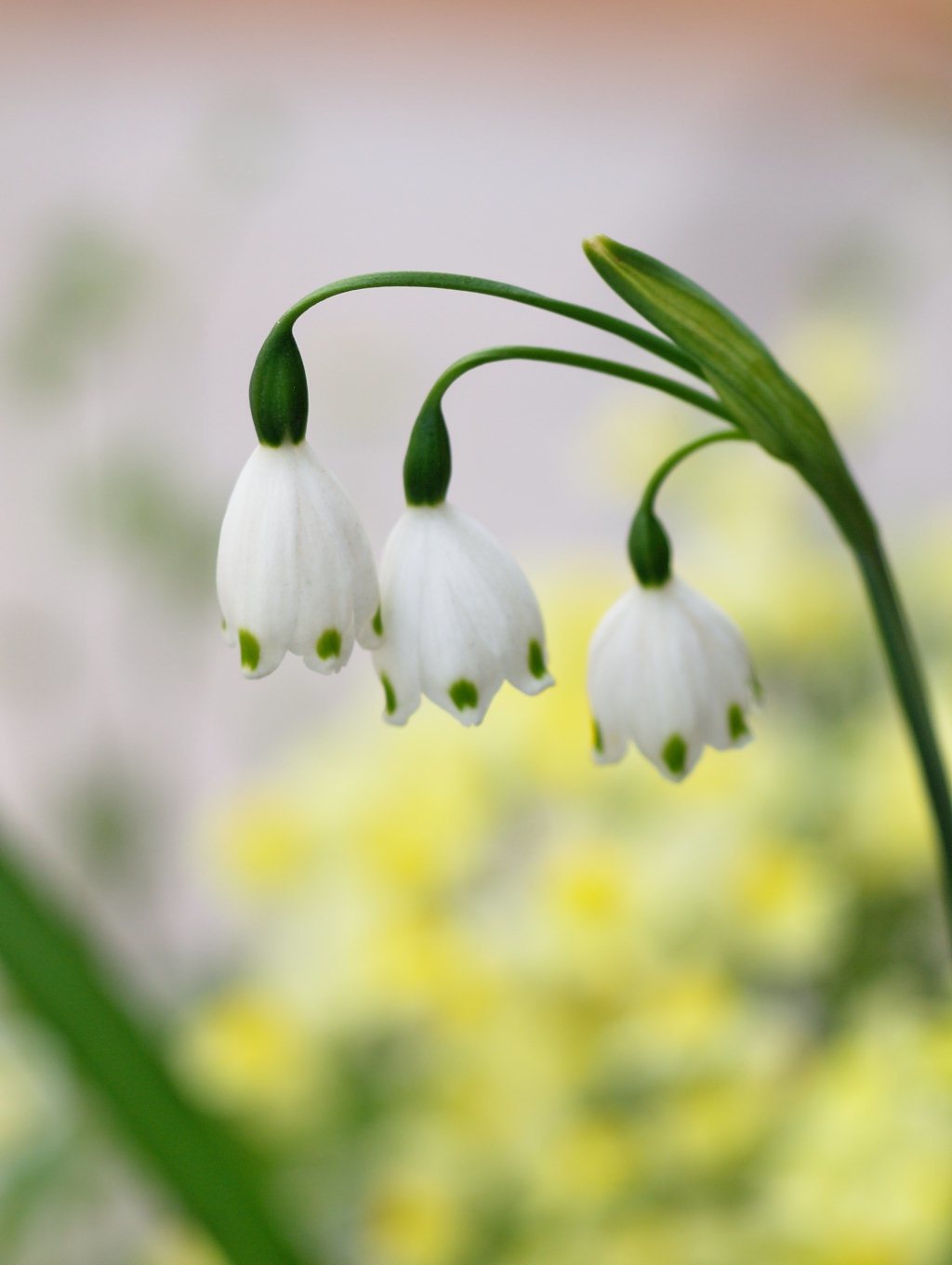
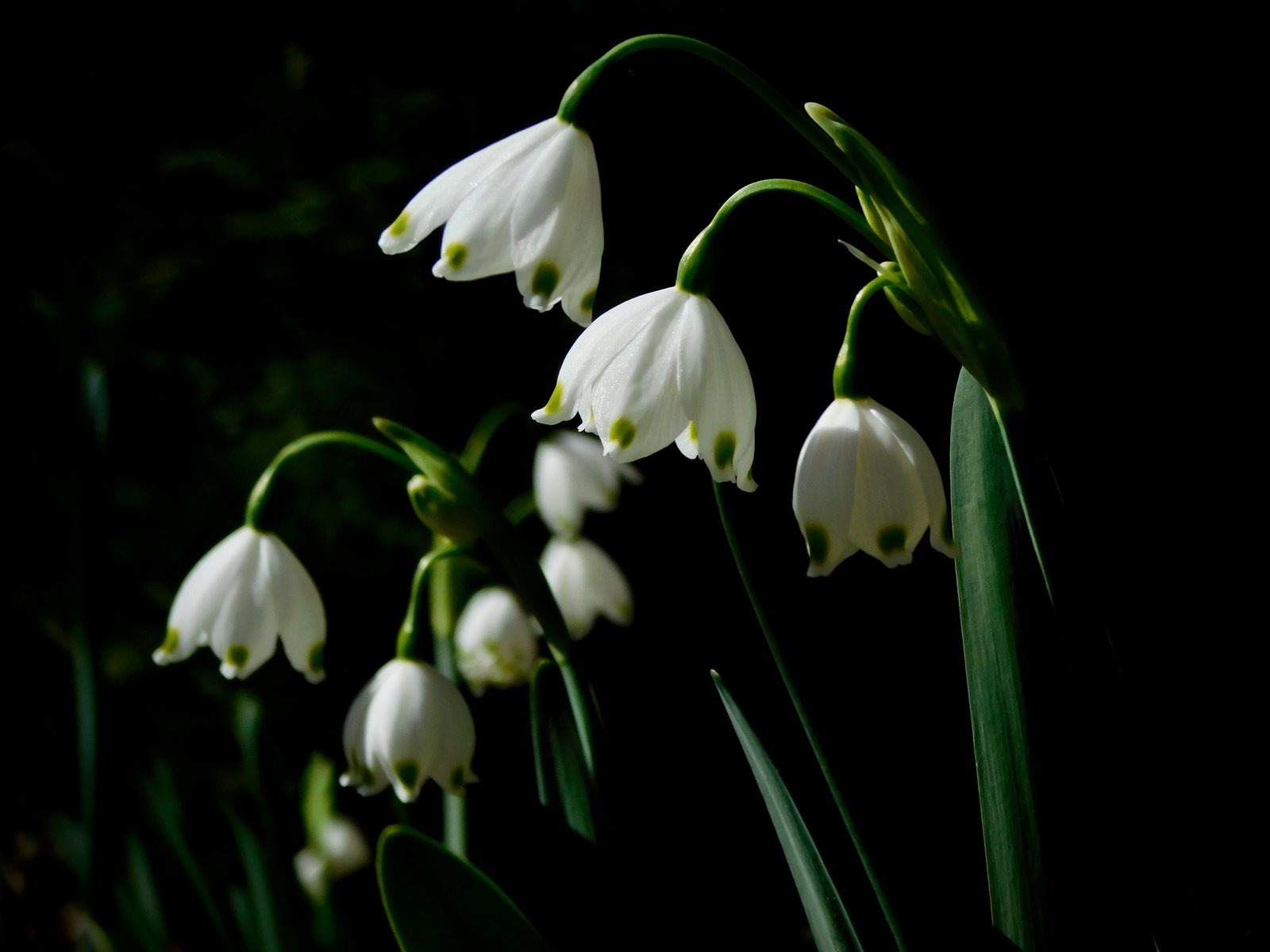
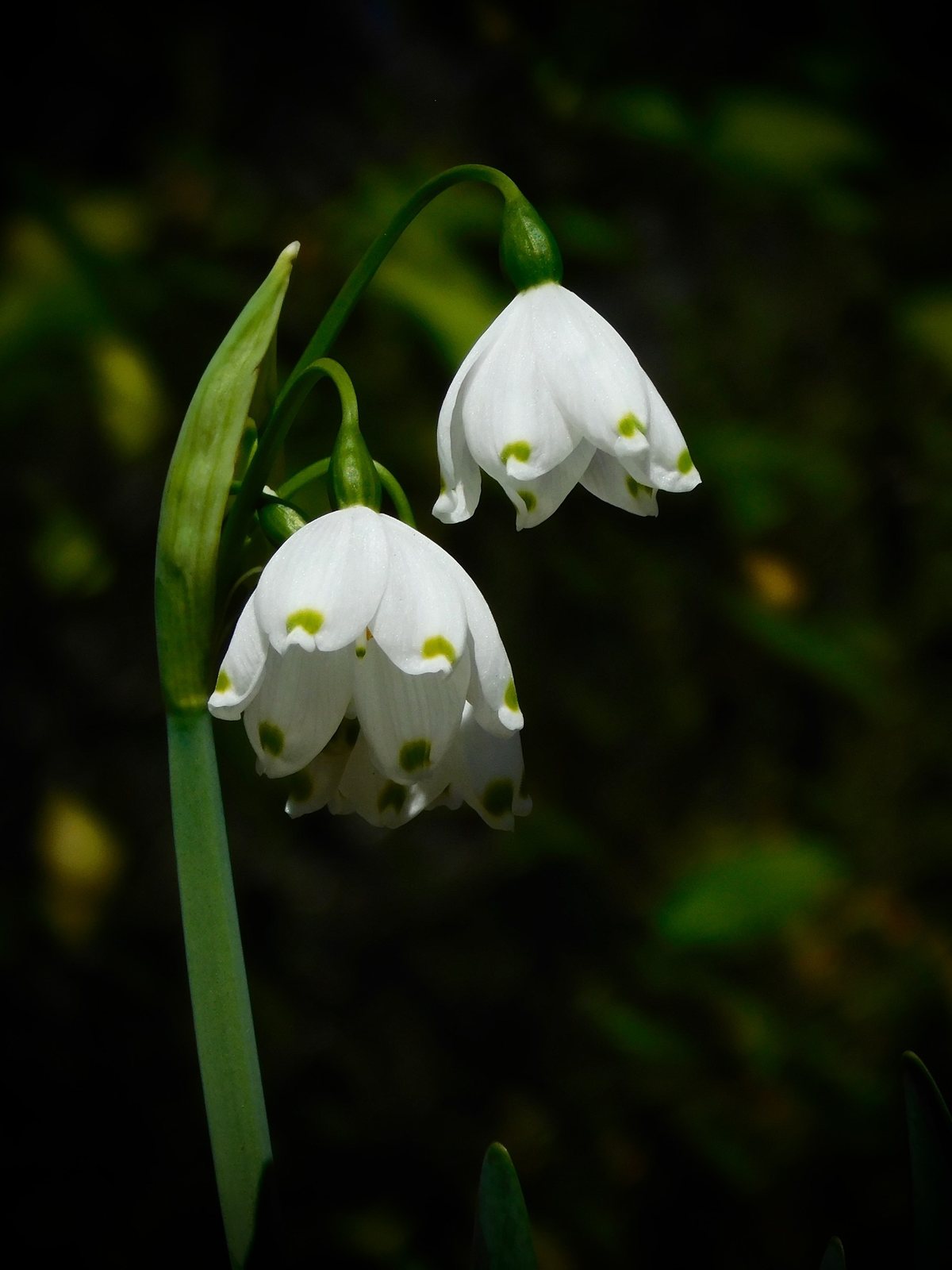
Summer snowflake is a long-lived bulb with arching stems of white, green-tipped bells above strap-shaped leaves. Despite its name, it usually flowers in mid- to late spring, making it useful for damp borders, pond margins and planting beneath deciduous trees.
At a glance
- Sun
- Full sun to partial shade; light shade is useful where spring weather is warm.
- Water
- Keep the soil consistently moist during growth and flowering. Established bulbs tolerate seasonal wetness, but do not plant them permanently submerged.
- Soil
- Humus-rich soil that holds moisture; tolerates clay and a broad range of soil pH.
- Height
- 1-2 ft (0.3-0.6 m)
- Spread
- 0.5-1 ft (0.15-0.3 m) per established clump, gradually widening
- Flowers
- Mid- to late spring, occasionally into early summer in cool districts; nodding white bells with a green spot near the tip of each petal-like segment.
- Foliage
- Upright to arching, dark green, strap-shaped leaves that yellow and die back after flowering.
- Growth
- Moderate; bulbs slowly multiply into clumps.
- Care needed
- Low
The year at a glance
- Pollinators
- Deer resistant
- Cold hardy
- Low allergen
| J | F | M | A | M | J | J | A | S | O | N | D | |
|---|---|---|---|---|---|---|---|---|---|---|---|---|
| Flowers | ||||||||||||
| Plant |
Northern hemisphere months. In Australia, shift them by six.
- Difficulty
- Easy
- Toughness
- Very tough
Will it suit your garden?
Pick your zone, country, light and whether you have pets.
Full sun is 6 or more hours of direct sun a day, part shade 3 to 6 hours, shade under 3.
How it grows
Planting day
0.5 ft (0.15 m)
After 1 year
1.2 ft (0.38 m)
After 2 years
1.5 ft (0.45 m)
full size
About 1 years to full size.
From a typical nursery size, at an average rate for this kind of plant. A rule of thumb, not a forecast.
Good to know
- Cats and dogs
- Toxic
- Invasive in
- the US
- In the garden
- Spreads vigorously: plan to contain it.
- Growth rate
- Slow
Care
Jobs through the year
- WaterFeb–Mar, every 14 days
- Water established bulbs if soil dries during active growth; new plantings need closer attention.
- WaterApr–Jun, every 7 days
- Keep soil consistently moist while leaves are green, watering only when rainfall is insufficient.
- MulchOct–Nov
- Top-dress with a thin layer of compost or leaf mould, leaving emerging shoots uncovered.
- FeedFeb–Mar
- In poor soil only, apply balanced fertilizer at the label rate as growth starts.
- DivideMay–Jun
- Divide congested clumps after flowering while leaves are green and replant immediately.
- DeadheadMay–Jun
- Remove spent flower stems if seedlings are unwanted.
- PruneJun–Jul
- Remove fully yellowed foliage; never cut or tie green leaves.
- ProtectFeb–Apr
- Inspect emerging growth for slugs and snails and control damage if needed.
- Plant bulbs in autumn about 4-6 in (10-15 cm) deep and 4-6 in (10-15 cm) apart; plant promptly rather than letting them dry in storage.
- Water during dry spells while leaves are green, especially in the first spring after planting.
- Spread a thin layer of compost or leaf mould over the soil in autumn, without burying emerging shoots.
- In poor soil, apply a balanced fertilizer at the label rate as growth begins; rich soil usually needs no extra feeding.
- Divide congested clumps after flowering, while the leaves are still green, and replant immediately.
Pruning. Remove spent flower stems if you do not want seedlings. Leave all foliage until it has yellowed and collapsed naturally, then remove it; do not tie or cut green leaves.
Through the year
- Autumn
- Plant dormant bulbs promptly in moisture-retentive soil and water them in.
- Late autumn
- Top-dress established clumps with compost or leaf mould.
- Late winter
- Check emerging shoots for slug and snail damage.
- Spring
- Keep the root zone moist during flowering and leaf growth.
- Late spring
- Divide crowded clumps after flowering and replant without allowing the roots to dry.
- Summer
- Remove fully yellowed leaves and mark dormant clumps to avoid digging through them.
In the garden
- Plant in loose groups beneath deciduous trees, where spring light reaches the bulbs before the canopy fills.
- Use along pond edges or damp swales, above the permanently submerged zone.
- Repeat clumps through a moist border with hostas and ferns, whose later foliage hides the dying leaves.
- Naturalize in damp grass that can remain unmown until the bulb foliage has died back.
- Combine with white spring flowers in a lightly shaded white garden.
Garden styles it suits: Woodland, Cottage garden, English country, White garden, Bog garden and Low-maintenance.
Plant it with: Hostas, Lady ferns, Siberian irises, Primroses, Brunnera and Astilbes.
Wildlife: Flowers provide some early-season food for visiting insects. Deer and rabbits usually leave the plant alone, although no plant is completely browsing-proof.
Problems to watch for
- Slugs and snails may chew emerging leaves and flowers; hand-pick them and use iron-phosphate bait according to the label if needed.
- Narcissus bulb fly larvae can hollow out bulbs; discard infested bulbs and avoid leaving exposed bulbs or planting holes after division.
- Bulb rot can occur in stagnant, poorly aerated ground; remove soft bulbs and move healthy ones to moist soil that is not permanently submerged.
- Sparse flowering can follow deep shade, overcrowding or early leaf removal; give clumps more spring light, divide when crowded and retain green foliage.
Safety
Toxic to people, cats, dogs and horses if eaten. All parts contain poisonous alkaloids, with the bulbs particularly hazardous; ingestion can cause vomiting, diarrhoea and abdominal pain, and larger amounts can cause serious poisoning. Do not confuse the bulbs or leaves with edible plants; seek medical or veterinary advice after ingestion.
Where it spreads. Can escape into damp woodland and stream margins and is reported as invasive in parts of the eastern United States, including Virginia. Avoid planting beside natural wetlands where it is locally listed, and remove unwanted seedlings.
Easily confused with
Spring snowflake (Leucojum vernum)
Usually shorter and earlier flowering, with one or occasionally two bells per stem; summer snowflake normally carries several bells on each taller stem.
Common snowdrop (Galanthus nivalis)
Has three long outer flower segments around three much shorter inner ones; summer snowflake has six nearly equal segments, each tipped with green.
Autumn snowflake (Acis autumnalis)
Flowers in late summer or autumn on much smaller stems, with narrow leaves and white bells lacking the conspicuous green tips.
The name
Leucojum comes from Greek words meaning 'white violet', while aestivum means 'of summer', although this species commonly flowers in spring.
Propagation. Separate offsets from established clumps after flowering and replant immediately at their previous depth. Fresh seed can also be sown outdoors in pots, but germination may be slow and seedlings take several years to flower.
Checked against open data
- Accepted botanical name
- Leucojum aestivum
- In the US and Canada
- Introduced in Canada and the lower 48 states.
- Native range
- Albania, Austria, Baleares, Belgium, Bulgaria, Corse, Czechoslovakia, France, Germany, Greece, Hungary and Iran.
- Measured
- Soil pH 7 to 7.5. Average height 45 cm.
Sources: GBIF (CC BY 4.0), USDA PLANTS and Trefle (CC BY 4.0). The care and design notes are LandscapeGPT's own.
See it in your own yard.
Upload a photo of your yard and see it redesigned with plants that suit your climate, each checked against your zone.