Sunchoke (Jerusalem artichoke)
Helianthus tuberosus. Family Asteraceae. Perennial.
Also called Jerusalem artichoke, Sunchoke, Earth apple.
A tall, tuber-forming sunflower native to North America, grown for its edible underground tubers and late-season yellow flowers. It makes a useful seasonal screen, but even small tubers left behind can regrow, so give it a permanent, contained patch rather than space among other vegetables.

At a glance
- Sun
- Full sun; tolerates light shade but usually produces fewer tubers and flowers.
- Water
- Water during prolonged dry spells, particularly while tubers are swelling in late summer and autumn. Avoid waterlogged ground.
- Soil
- Loose, well-drained soil enriched with compost; tolerates clay and relatively poor soil, but harvesting is easier in loam.
- Height
- 6-10 ft (1.8-3 m)
- Spread
- 3-5 ft (0.9-1.5 m) per clump initially; underground stems can spread much farther over time.
- Flowers
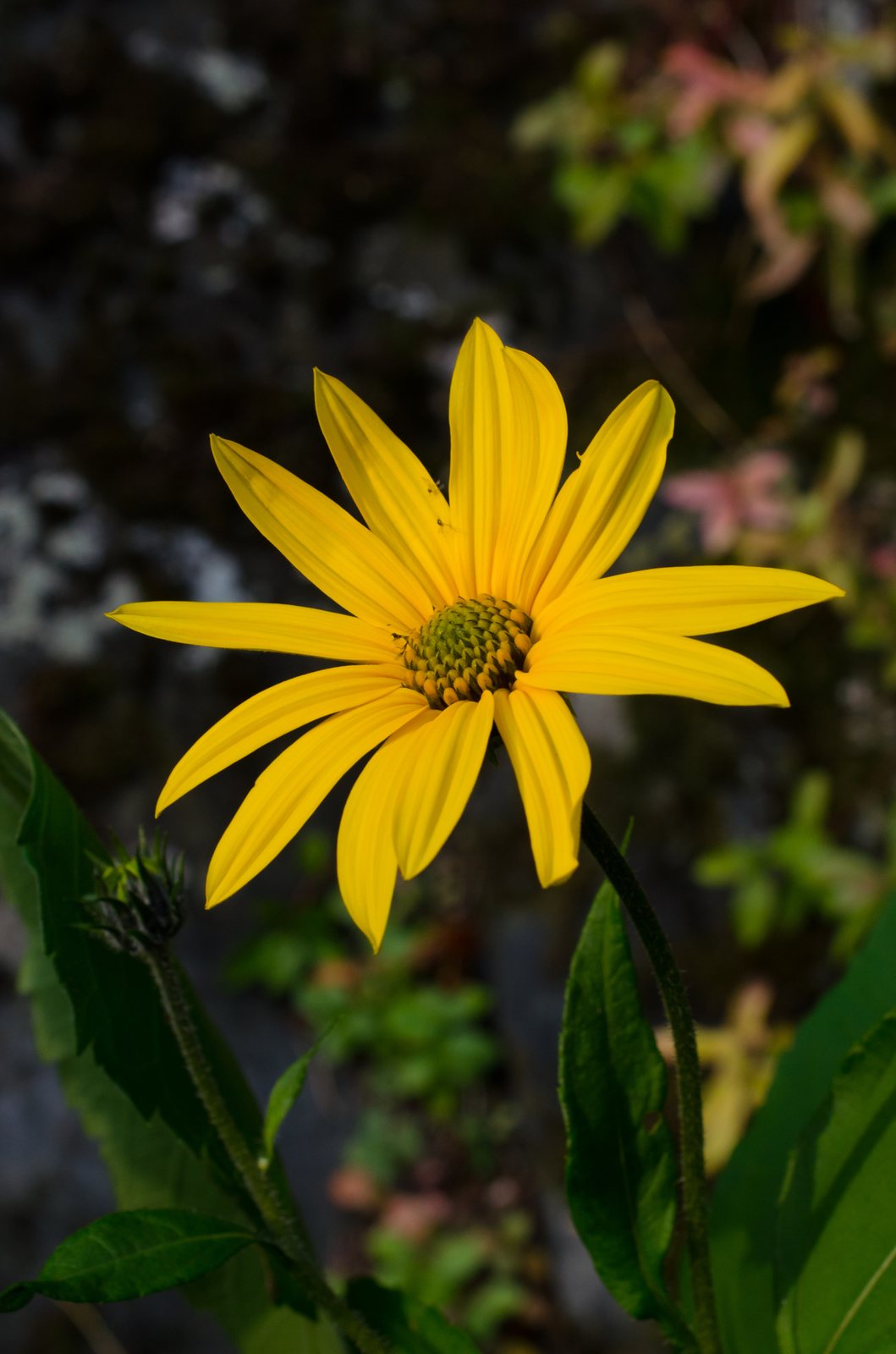
- Yellow, sunflower-like flowers in late summer and autumn; some food cultivars flower sparsely or not at all before frost in cool regions.
- Foliage
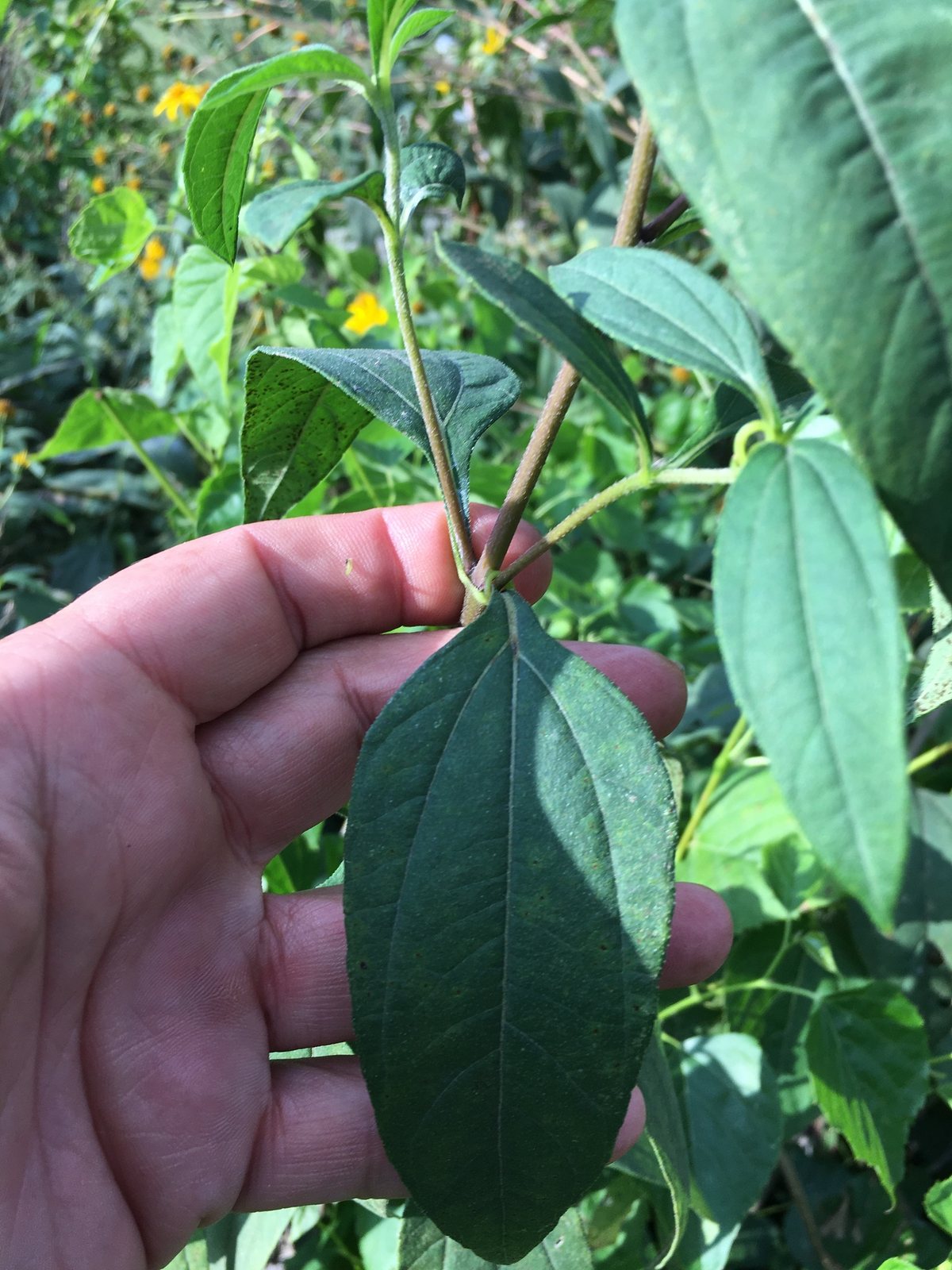
- Coarse, rough-textured green leaves on sturdy, hairy stems; leaves and stems die back in winter.
- Growth
- Fast; forms tall stems in one growing season and expands readily through tubers.
- Care needed
- Medium
The year at a glance
- Pollinators
- Drought tolerant
- Cold hardy
- Heat tolerant
- Wildlife
- Low allergen
- Edible
| J | F | M | A | M | J | J | A | S | O | N | D | |
|---|---|---|---|---|---|---|---|---|---|---|---|---|
| Flowers | ||||||||||||
| Fruit | ||||||||||||
| Plant |
Northern hemisphere months. In Australia, shift them by six.
- Difficulty
- Easy
- Toughness
- Very tough
Will it suit your garden?
Pick your zone, country, light and whether you have pets.
Full sun is 6 or more hours of direct sun a day, part shade 3 to 6 hours, shade under 3.
How it grows
Planting day
1 ft (0.3 m)
After 1 year
5 ft (1.4 m)
After 2 years
8 ft (2.4 m)
full size
About 2 years to full size.
From a typical nursery size, at an average rate for this kind of plant. A rule of thumb, not a forecast.
Good to know
- Cats and dogs
- Safe
- Native to
- the US and Canada
- In the garden
- Spreads vigorously: plan to contain it.
- Growth rate
- Fast
Care
Jobs through the year
- WaterMay–Jul, every 14 days
- Water established plants deeply during prolonged dry spells; keep newly planted tubers from drying out.
- WaterAug–Oct, every 7 days
- Water during dry weather as tubers swell, avoiding waterlogged soil.
- MulchMar–Apr
- Apply compost to the bed without adding heavy nitrogen feed.
- ProtectMay–Jun
- Install stout stakes and twine before stems become tall in exposed sites.
- PruneMay–Sep, every 14 days
- Check bed edges and dig out escaping shoots with their attached tubers.
- PruneOct–Nov
- After frost kills the tops, cut stems to 15 cm to mark the crop.
- MulchNov
- Insulate the bed in cold areas to delay freezing and allow winter harvesting.
- HarvestJan–Mar, Nov–Dec, every 7 days
- Lift as needed while soil is workable, finishing before spring regrowth; refrigerate promptly.
- DivideFeb–Mar
- Lift and thin the patch annually, retaining only selected healthy planting tubers.
- Plant sound tubers in spring, 4-6 in (10-15 cm) deep and 12-18 in (30-45 cm) apart.
- Choose a dedicated bed away from small plants; check its edges each year for escaping shoots.
- Water deeply during extended drought, especially in late summer.
- Apply compost in spring; avoid heavy nitrogen feeding, which encourages excessive leafy growth.
- Support exposed plants with stout stakes and twine before the stems become tall.
- Lift and thin crowded patches annually, retaining only the tubers needed for next year's crop.
Pruning. After frost kills the tops, cut stems to about 6 in (15 cm) above ground so you can still locate the crop. Remove unwanted shoots during the growing season, digging out their attached tubers where possible.
Harvest
Lift tubers with a garden fork from late autumn, once the foliage has died back; flavour often improves after frost. Harvest as needed through winter where the soil remains workable, finishing before spring growth starts. Tubers shrivel quickly out of the ground, so refrigerate freshly lifted crops and leave only selected planting tubers behind.
Through the year
- Spring
- Plant tubers once the ground is workable; remove unwanted regrowth from last year's patch.
- Late spring
- Thin crowded shoots and install supports in windy positions.
- Summer
- Water during dry spells and inspect the bed edges for spreading shoots.
- Late summer
- Maintain moisture as tubers swell; secure tall stems before autumn winds.
- Late autumn
- Cut back dead stems and begin lifting mature tubers.
- Winter
- Harvest while soil is workable; mulch the bed in cold regions to delay soil freezing.
In the garden
- Plant along the northern edge of a vegetable garden in the Northern Hemisphere, or the southern edge in Australia, to reduce shading of shorter crops.
- Use a contained row as a summer and autumn screen for a compost area or service space.
- Place behind robust coneflowers and black-eyed Susans for a tall, informal late-season backdrop.
- Grow in a separate edible-landscape bed where annual lifting and control are easy.
Garden styles it suits: Potager (kitchen garden), Cottage garden, Edible landscape, Homestead, Wildlife garden and Farmhouse.
Plant it with: Sweetcorn, Squash, Purple coneflower and Black-eyed Susan.
Wildlife: Flowers provide pollen and nectar for bees and other insects when plants bloom. Dense summer growth offers cover, although spreading colonies can displace other vegetation.
Problems to watch for
- Unwanted spread: lift tubers thoroughly and repeatedly dig out new shoots with their underground stems; do not dump tubers in garden waste or wild areas.
- Powdery mildew: allow space for airflow, water the soil rather than foliage, and remove badly affected dead growth.
- Slugs and snails on young shoots: check after dark, remove by hand, and protect emerging growth.
- Rotting tubers in winter: improve drainage or move the crop to a raised bed; discard soft, decaying tubers.
Safety
Not known to be toxic to people, cats, dogs or horses. The edible tubers contain inulin, which can cause substantial wind, bloating or diarrhoea in people, especially in large portions; try a small serving first.
Where it spreads. Spreads aggressively by underground stems and tubers in gardens in the United States, Canada, the United Kingdom and Australia. It is invasive in parts of continental Europe, including Germany and Switzerland, particularly along waterways and disturbed ground; keep tubers out of natural areas.
Easily confused with
Annual sunflower (Helianthus annuus)
Usually has larger flower heads and does not form the edible, knobbly underground tubers of Jerusalem artichoke.
Maximilian sunflower (Helianthus maximiliani)
Has much narrower, often folded leaves and flowers arranged along the upper stems; Jerusalem artichoke has broader leaves and conspicuous edible tubers.
The name
Helianthus means 'sun flower' and tuberosus means 'tuberous'; 'Jerusalem' is generally understood as a corruption of the Italian girasole, meaning sunflower, rather than a reference to the city.
Propagation. Plant whole small tubers in spring, or cut large tubers into pieces with at least one sound bud each. Vegetative propagation preserves the crop's characteristics; seed is uncommon and unreliable for maintaining named varieties.
Checked against open data
- Accepted botanical name
- Helianthus tuberosus
- In the US and Canada
- Native in Canada and the lower 48 states.
- Native range
- Alabama, Arkansas, Colorado, Connecticut, Delaware, District of Columbia, Florida, Georgia, Idaho, Illinois, Indiana and Iowa.
- Measured
- Soil pH 4 to 7. Average height 185 cm.
Sources: GBIF (CC BY 4.0), USDA PLANTS and Trefle (CC BY 4.0). The care and design notes are LandscapeGPT's own.
See it in your own yard.
Upload a photo of your yard and see it redesigned with plants that suit your climate, each checked against your zone.