Swan River daisy
Brachyscome iberidifolia. Family Asteraceae. Annual.
Also called Swan River everlasting, Brachycome.
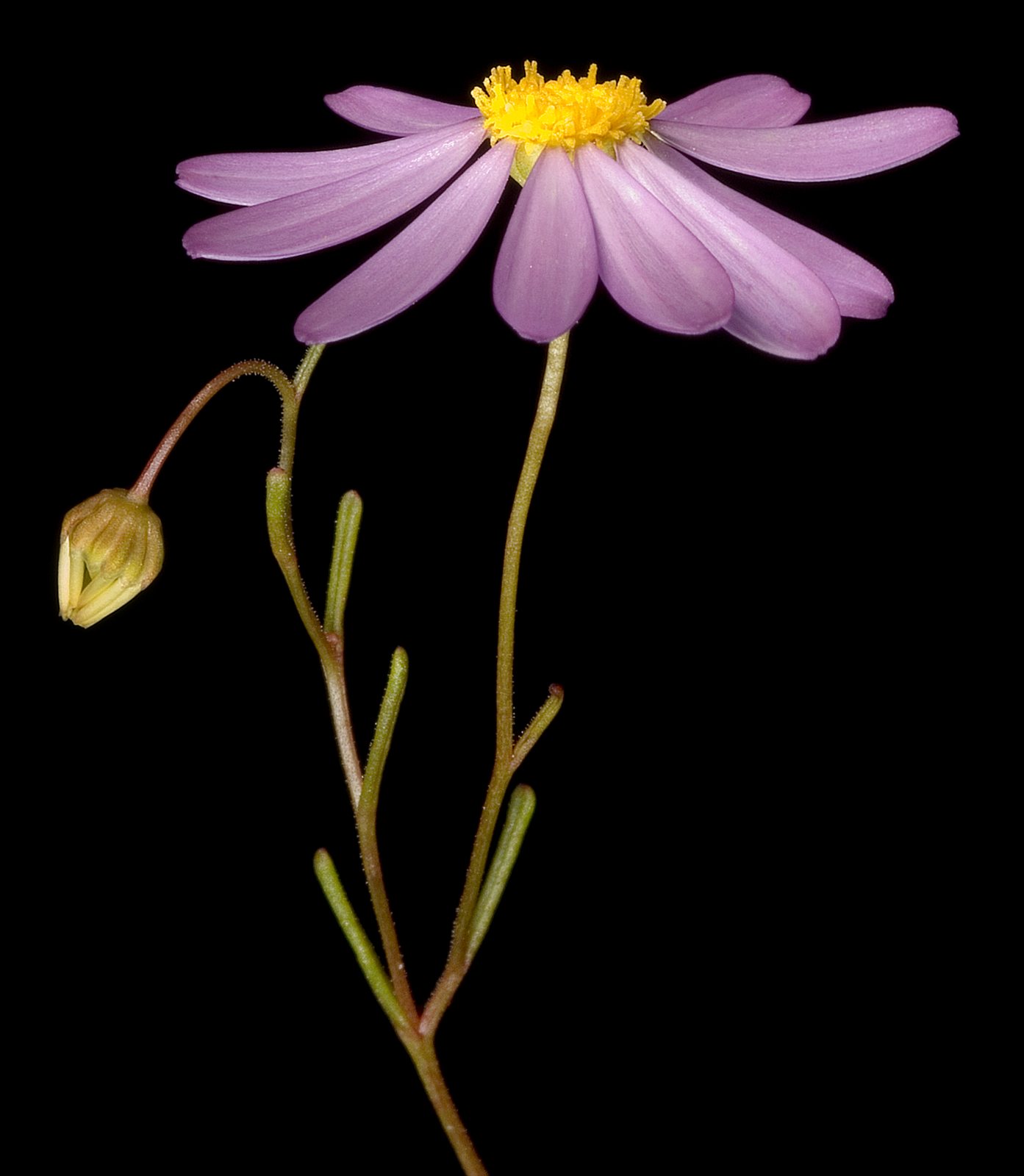
Swan River daisy is a finely branched Australian wildflower grown as an annual for its small, abundant daisy flowers. Its loose mounds suit border edges, containers and gaps between longer-lived plants, especially where summers are not intensely hot and humid.
At a glance
- Sun
- Full sun; light afternoon shade can help in hot climates.
- Water
- Moderate; water during establishment, then when the soil surface dries. Established plants tolerate brief dry spells but flower less during prolonged drought.
- Soil
- Well-drained sandy or loamy soil with modest fertility; avoid heavy, waterlogged ground.
- Height
- 0.75-1.5 ft (0.23-0.45 m)
- Spread
- 0.75-1.5 ft (0.23-0.45 m)
- Flowers
- Late spring through summer, often into autumn in mild conditions; blue, violet, pink or white daisies with yellow or dark centres, depending on the seed strain.
- Foliage
- Soft green, finely divided leaves on slender, branching stems.
- Growth
- Fast; flowers in the first growing season from seed.
- Care needed
- Low
The year at a glance
- Pollinators
- Low allergen
| J | F | M | A | M | J | J | A | S | O | N | D | |
|---|---|---|---|---|---|---|---|---|---|---|---|---|
| Flowers | ||||||||||||
| Fruit | ||||||||||||
| Plant |
Northern hemisphere months. In Australia, shift them by six.
- Difficulty
- Easy
- Toughness
- Fairly tough
Will it suit your garden?
Pick your zone, country, light and whether you have pets.
Full sun is 6 or more hours of direct sun a day, part shade 3 to 6 hours, shade under 3.
How it grows
Planting day
0.5 ft (0.15 m)
After 1 year
1.1 ft (0.34 m)
full size
Full size in one season.
From a typical nursery size, at an average rate for this kind of plant. A rule of thumb, not a forecast.
Good to know
- Cats and dogs
- Safe
- Native to
- Australia
- Growth rate
- Fast
Care
Jobs through the year
- WaterMay, Sep–Oct, every 7 days
- Water established border plants if the surface has dried; seedlings need more frequent checks.
- WaterJun–Aug, every 5 days
- Water established border plants as soil dries, allowing slight surface drying between soakings.
- PruneMay–Jun
- Pinch young shoot tips to encourage bushy growth.
- DeadheadJun–Oct, every 7 days
- Remove faded flowers, leaving a few late heads if seed is wanted.
- PruneJul–Aug
- Lightly shear straggly plants after the first flush and water to encourage fresh growth.
- ProtectMay–Jun
- Plant out only after frost risk has passed and protect seedlings from slugs.
- Plant out after the last frost, spacing plants about 0.75 ft (0.23 m) apart.
- Water at soil level and let the surface dry slightly between waterings.
- Use containers with drainage holes and a free-draining potting mix.
- Feed container plants lightly with a balanced liquid fertiliser; avoid heavy feeding in borders.
- Keep mulch away from the stems to reduce dampness around the crown.
Pruning. Pinch young shoot tips to encourage branching. Remove faded flowers, or lightly shear tired plants after their first flush and water them to encourage fresh growth.
Through the year
- Early spring
- Sow seed indoors in a bright position, covering it only lightly.
- Late spring
- Harden off seedlings and plant outside after frost; alternatively, sow directly into prepared soil.
- Early summer
- Pinch young plants if needed and check containers regularly for drying.
- Summer
- Remove faded flowers and lightly trim plants that become straggly.
- Autumn
- Allow a few flower heads to dry if you want seed, then remove plants when flowering finishes or frost kills them.
In the garden
- Edge sunny paths and borders with low mounds of fine foliage and small flowers.
- Plant in window boxes and mixed containers with compact annuals.
- Fill seasonal gaps among drought-tolerant perennials in well-drained beds.
- Combine blue and violet forms with white sweet alyssum for a soft, cool-coloured display.
Garden styles it suits: Cottage garden, Australian native, Pollinator garden, Pastel border, Small-space and Dry gravel garden.
Plant it with: Sweet alyssum, California poppy, Verbena, Lavender, Dianthus and Lobelia.
Wildlife: The open flower heads provide pollen and nectar for bees, hoverflies and other small insects.
Problems to watch for
- Slugs and snails can destroy seedlings; inspect after dark, remove hiding places and use suitable barriers or labelled bait where necessary.
- Aphids may cluster on soft tips; rinse them off with water or use insecticidal soap according to its label.
- Root and stem rot develop in persistently wet soil; improve drainage and avoid watering already damp ground.
- Extreme heat and humidity can reduce flowering and cause decline; provide afternoon shade in hot regions and avoid crowding plants.
Safety
Not known to be toxic to people, cats, dogs or horses. Species-specific safety information is limited, so do not treat any part as food or allow pets to eat large amounts.
Easily confused with
Cut-leaf daisy (Brachyscome multifida)
A closely related perennial with a persistent crown and typically narrower, more linear leaf divisions; Swan River daisy completes its life cycle as an annual.
Blue marguerite (Felicia amelloides)
Has simple, undivided leaves and a woody, shrubby base, rather than finely divided leaves on soft annual stems.
The name
The common name refers to the Swan River region of Western Australia, while iberidifolia means leaves resembling those of Iberis, or candytuft.
Propagation. Grow from seed sown indoors several weeks before the last frost, or directly outdoors once frost has passed. Cover seed lightly and keep evenly moist until germination; saved seed from mixed strains may produce different flower colours.
Checked against open data
- Accepted botanical name
- Brachyscome iberidifolia
- Native range
- Northern Territory, South Australia and Western Australia.
- Measured
- Average height 23 cm.
Sources: GBIF (CC BY 4.0) and Trefle (CC BY 4.0). The care and design notes are LandscapeGPT's own.
See it in your own yard.
Upload a photo of your yard and see it redesigned with plants that suit your climate, each checked against your zone.